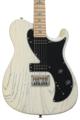
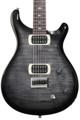
Yes, it’s really a vibrato arm, since it changes the pitch of the guitar up or down when you pull up or push down on it. But ever since Leo Fender began using the terms tremolo and vibrato interchangeably (keep in mind Leo was not a guitar player), other companies decided to more or less play along, knowing that the majority of guitar players would understand the inherent difference between the two. While vintage Strat tremolos (and even later, the early American Standard series) had screw-in arms, Paul Reed Smith came up with a way to quickly drop in the arm, which would stay at a precise angle once installed. Essentially, the metal arm fits into a hole in the lower side of the tailpiece assembly and is held there by friction between the metal and a delrin bushing. On the rear of the tailpiece there’s a small hole, which is where you’d insert the (included) hex key (or hex wrench, as some call it) and either tighten or loosen the fit. Tightened up, the arm requires a bit of effort to move it into playing position, while loosening it will allow the arm to swing into position with only the smallest amount of pressure. PRS guitars with vibrato tailpieces typically ship with the arm adjusted somewhere between these two extremes. Fortunately, the hex key is a standard size, since it’s small and thus prone to being lost.