

Powered Mixers
Get More at Sweetwater
Refine Your Search
Availability
Brand
Price Range
Financing
What is this?Type of Deal
Series
Channels
What is this?Total Power
Rackmountable
Related Searches
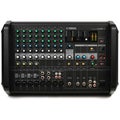


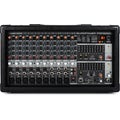


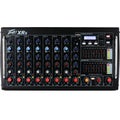
If you want to compare another product, please remove one of your earlier choices.
The Benefits of a Powered Mixer for Small Venues and Portable Rigs
Whether you’re outfitting a rehearsal space, dialing in a busking rig, or building a compact sound system for your house of worship, a powered mixer can be a true game-changer. By combining amplification and mixing into one streamlined unit, powered mixers simplify your setup, save space, and deliver reliable power and control no matter where your sound takes you. From café open-mic nights to weekend wedding retreats, a powered PA mixer gives you the flexibility and features to make yourself heard in any environment.
Interested in finding the perfect powered mixer for your practice room, small venue, or compact PA? You’ll find the answers you need in our powered mixer buying guide below.
Why Powered Mixers Are the Smart Choice for Compact PA Setups
Looking to put together a compact PA system for your practice room or small venue? Perhaps portability is your main concern. A powered mixer is a great way to get a lot of bang for your buck while keeping your rig compact and easy to set up and dial in.
If you’ve ever used an hourly rehearsal studio, you’ll recognize the ubiquitous black, brick-shaped unit in the corner. Those puppies are indeed the workhorses of the practice space. Still, there are many different styles kitted out with lots of channels, effects, and options that make powered mixers a versatile tool for many situations.
Streamline Your PA Setup with Built-In Power and Effects
The great thing about powered mixers is that they eliminate the need for a bank of external power amps and effects processors between your mixer and your passive PA speakers. This saves space in your rig trailer and simplifies your PA, saving you time and effort in setup and tear-down.
Wattage and Channel Count: Key Considerations for Your Powered Mixer
Your two biggest decisions when choosing a powered mixer are power rating and channel count. Both are somewhat dictated by the live sound scenarios in which you’re likely to be working.
Sizing your power requirements isn’t just about how loud it is with the faders pushed all the way up. Power amps aren’t designed to be constantly run full blast. You’ll need to figure in some overhead when deciding how many watts of power you need. For buying purposes, check whether wattage is listed as RMS (continuous) or peak power — RMS is the more reliable measure.
Be sure to also consider the size of the space where you’ll be operating and the number of channels you’ll need. For instance: are you hosting karaoke nights where a maximum of two microphones will be needed at any given time? Or are you mixing 10-piece bands where every performer needs a mic or line input?
In both cases, it’s usually better to have more power and channels than you need, but keep in mind that wattage and inputs directly impact the size and weight of your mixer.
Onboard EQ and Effects Take Your Live Mix to the Next Level
Powered mixers also include a variety of options for onboard equalization and effects. Nearly every box-style mixer comes with basic channel equalization. However, many larger-format, console-style mixers may be equipped with fully sweepable mids and full-featured mains and monitor sections rivaling your favorite live soundboards.
Need even more control? Consider looking for a mixer with global graphic EQ and RTA room analysis, per-channel compression, and enough effects to incorporate your favorite outboard gear.
Stereo Inputs and DI Channels
If you plan to incorporate stereo sources, such as a laptop output or a modern turntable, choose a mixer with stereo inputs or mono/stereo switchable channel pairs. Some units even include a couple of DI channels, which can be very handy when you suddenly realize you lent out all your DI boxes. In many cases, powered mixers also include high-impedance instrument inputs that let you plug in a guitar or bass directly without an external DI box.
Don’t Blow It! Pairing Powered Mixers with the Right Passive PA Speakers
When you piece together your PA system, you have to make sure your PA speakers will work properly with your powered mixer. If you mismatch the ohms or wattage, you could damage your equipment. Look for the speaker’s load impedance rating (commonly 4, 8, or 16 ohms) and ensure it matches the mixer’s output range to avoid overloads. We can also help you size your powered mixer for your application. Give us a call, and let our knowledgeable Sales Engineers help you sort out the details. We’ll work with you to make sure your powered mixer and your existing PA equipment play nicely together and sound great.
What are the most popular brands for Powered Mixers on Sweetwater.com?
What are the most popular Powered Mixers on Sweetwater.com?
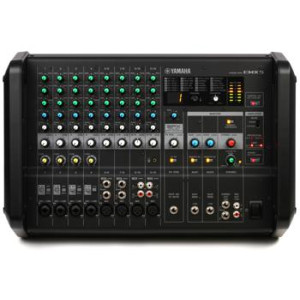

Why shop Powered Mixers at Sweetwater.com?
With a curated selection of Powered Mixers, free shipping, a free 2-year warranty, 24/7 access to award-winning support - and more - Sweetwater gives you more than any other retailer! If you have any questions about Powered Mixers, make sure to give your personal Sales Engineer a call at (800) 222-4700.
