One year ago, on October 6, 2020, the music world lost a once-in-a-generation musician with the passing of Edward Van Halen.
From the arrival of his first album in 1978, Van Halen singlehandedly caused electric guitarists to look at their instruments through an entirely different lens. Over his 40-plus-year career, he proved to be a creative dynamo, a guitar virtuoso, an inveterate tinkerer, a tone chaser, and a talented songwriter. His guitar playing influenced millions, and his band’s music supplied the soundtrack for millions more.
Though he is no longer with us, Eddie’s music and massive impact — as well as his patented grin — will never be forgotten.
To celebrate one of the most important people to ever plug in a guitar, here we dig into the stories behind a dozen instrumentals that span the Van Halen studio-album output. Needless to say, amazing solos, riffs, instrumental sections — and songs, of course — abound throughout Van Halen’s catalog. However, this list focuses exclusively on EVH instrumentals that are listed with their respective albums.
Ranging from the groundbreaking to perhaps the more obscure, these 12 instrumentals showcase Edward’s technical prowess, his penchant for experimentation, his compositional skills, and — above all — his limitless creativity and unfettered enthusiasm.
“Eruption” from Van Halen (1978)
Simply put, “Eruption” was a game changer. A guitar explosion like no other before or since, it stands as a one-minute, 42-second time capsule of the genius of Eddie Van Halen. From pinch harmonics, hyper-bluesy runs, and tremolo picking to open-string pull-off licks, two-handed tapping, and whammy bar antics, all of Eddie’s techniques are on display. Essentially an afterthought on the group’s debut album (more on that below), it evolved into an auditory museum exhibit for generations of guitarists to admire and to attempt to emulate.
But “Eruption” is far from some slapped-together shred showpiece — there is structure lurking within. Broken down, there are three sections, each connecting seamlessly and propelled by bursts of furious guitar momentum. Eddie also drew on his classical influences to tie the piece together: the tremolo-picked passage (at 0:30) quotes Etude no. 2 by French violinist Rodolphe Kreutzer; the famous tapped arpeggios (at 0:57) outline a classically inspired cadence.
For the sonic blast that concludes “Eruption,” Van Halen used a Univox EC-80 echo box that he purchased for $50. He hit the harmonic on the low E string of his original “Frankenstein” guitar at the 12th fret and turned the unit, in his words, “all the way up.”
It’s hard to fathom a guitar universe without “Eruption,” but it wasn’t originally planned to be on the group’s debut album. “I showed up at the recording studio early one day and started to warm up because I had a gig on the weekend, and I wanted to practice my solo guitar spot,” Van Halen told Guitar Player in 1996. “Our producer, Ted Templeman, happened to walk by, and he asked, ‘What’s that? Let’s put it on tape!'”
“Spanish Fly” from Van Halen II (1979)
How do you follow “Eruption”? While most would likely choose a similar direction, EVH threw a classical guitar–inspired curveball. The result is a brilliant marriage of modern guitar meets “Malagueña.”
Leading with tapped harmonics (which are tapped with the right hand one octave above the open string or fretted note), “Spanish Fly” twists and turns through liquid tapping runs and furious sextuplets that mix hammer-ons and alternate picking, all delivered with a convincing flamenco-guitar flavor. Van Halen threads the piece with a tapped harmonic sequence similar to the one he outlined in the introduction.
Played on an Ovation nylon-string guitar, “Spanish Fly” proved to be another happy accident. On New Year’s Eve 1978, the group attended a party at producer Ted Templeman’s house. With an acoustic guitar sitting in the corner, Eddie proceeded to pick it up and play parts of “Spanish Fly.”
Templeman asked, “You can play acoustic?” Van Halen retorted, “What’s the difference — it’s got six strings!”
“Sunday Afternoon in the Park” from Fair Warning (1981)
This ominous synth-based track is featured on what is widely considered the darkest chapter in Van Halen’s oeuvre, Fair Warning. Van Halen used an Electro-Harmonix Mini-Synthesizer for this brooding piece, which would not sound out of place as a cue for a horror film. Backed by a hypnotic beat, courtesy of brother Alex Van Halen, Eddie leads with long, drawn-out notes that give way to fiendish tendrils in 7/8 time. The result is an unsettling atmosphere that perfectly presages the LP’s final track, “One Foot out the Door.”
Fittingly, the inspiration behind this track was no weekend picnic. Van Halen composed “Sunday Afternoon in the Park” after quarreling with then-fiancée, actress Valerie Bertinelli.
“We only had a small window in which to schedule [our] wedding,” Bertinelli recalled in her 2008 autobiography. “The stress of planning the wedding got to both of us. . . . Ed told me that I’d inspired the song ‘Sunday Afternoon in the Park.’ . . . He said it was us fighting all the time.”
“Cathedral” from Diver Down (1982)
The first of three instrumentals from Diver Down, “Cathedral” was a piece Eddie played live as part of his solo spot dating back to 1980. In a bid to conjure the regal sounds of a church organ, EVH used a 1961 Fender Stratocaster with generous amounts of chorus and echo. The introduction features lush chords that give way to a major triad–based sequence that is executed by Van Halen fretting notes with his left hand and manipulating the volume knob with his right hand, all aided by delay. (To achieve this effect, make sure your guitar’s volume knob is in good working order and set your delay to approximately 400ms.)
In a 1982 interview with journalist Jas Obrecht, Eddie cited “Cathedral” and the tune that follows, “Secrets,” as his favorites on Diver Down. He saw pieces like “Cathedral” as important elements to help inject some variety into an LP’s listening experience.
“What I like to do on records is have things in between songs,” he told Obrecht. “Little segues to keep your interest, as opposed to one song, next song, next song. I love making the album flow from beginning to end.”
“Intruder” from Diver Down (1982)
As the saying goes, necessity is the mother of invention. In prepping to release a video for their cover of Roy Orbison’s “Oh, Pretty Woman,” the group needed some additional music since the video running time was longer than their recording. Enter “Intruder.”
While “Oh, Pretty Woman” could be constituted as bright and sunny, “Intruder” is anything but. It’s eerie and makes for a disturbing bridge into Van Halen’s take on the timeless pop song. The band tracked “Intruder” live with vocalist David Lee Roth playing the synth part on a Minimoog. For his sparse guitar parts, Van Halen threw the kitchen sink at the track.
“It took a minute and 40 seconds to do — no overdubs, nothing,” Van Halen told Obrecht. “In the very beginning, I twirled my vibrato bar, and it kind of sounds like a chain. The next thing you hear was done by rubbing a can of Schlitz Malt against the low E. The cricket sound was picking above the nut with the vibrato bar all the way down. And I rubbed the springs on the back. . . . It was so much fun.”
“Little Guitars (Intro)” from Diver Down (1982)
Once again, Eddie picked up a classical guitar for this quiet interlude. Inspired by renowned flamenco guitarist Carlos Montoya, this “Spanish-sounding thing” was performed in one take. Bookended by open-string chords and punctuated with a dash of harmonics, EVH executed the main theme by using his right hand to tremolo pick the high E string while his left hand hammered on to the low E string.
Ultimately, this piece — and “Spanish Fly” before it — is a prime example of Eddie’s ability to channel inspiration into something all his own.
“I bought a couple of Montoya records,” Van Halen told Obrecht. “I am hearing this guy fingerpicking, and I’m going, ‘My God, this [guy’s] great. I can’t do that.’ So, what I did, I just kind of listened to that style of playing for a couple of days. . . . If there’s something that I want to do, I won’t give up until I can figure out some way to make it sound similar to what I really can’t do.”
“1984” from MCMLXXXIV (1984)
MCMLXXXIV, Van Halen’s final studio album from the classic Roth-led era, was the first to be recorded at EVH’s new home studio, 5150. With a brand-new sonic laboratory, Eddie sought to experiment with different sounds and textures. As a result, synthesizers dominated three of the album’s nine tracks, including the no. 1 hit “Jump.”
“1984,” a title suggested by Bertinelli, was actually the first track he recorded in his new studio. Eddie played the same instrument he played on “Jump”: an Oberheim OB-Xa.
“I was out there noodling on a synthesizer, and [engineer] Donn [Landee] was recording it without my knowledge,” Van Halen told Guitar World in 1985. “It was 45 minutes of me noodling like that. And we ended up using part of it [for ‘1984’].”
While Van Halen’s use of keyboards on the album was met with some skepticism, EVH saw their use as a natural progression of his musicianship.
“Nothing can replace the guitar in my life. But I also love keyboards,” Van Halen told Hit Parader in 1984. “I’ve always written a lot of our material on keyboards, it’s just that in the past I’d reinterpret it on guitar. On this album, I didn’t do that. This only expands our sound.”
“316” from For Unlawful Carnal Knowledge (1991)
The lone solo guitar piece of the Sammy Hagar era of Van Halen, “316” is undeniably EVH’s most personal instrumental. When his then-wife Bertinelli was pregnant, Eddie would play a lullaby with his acoustic guitar literally pointed at her bulging tummy. The resulting acoustic ditty — which had roots as far back as 1986’s tour in support of 5150 — was refined and released on For Unlawful Carnal Knowledge. It was christened “316” as a direct nod to his son Wolfgang’s birth date, March 16. EVH used a Chet Atkins acoustic with an Eventide H3000 harmonizer to widen the tone.
As fate would have it, Wolfgang joined Van Halen as the group’s bassist in 2007, a post he held until his father’s passing. While Eddie always loved playing music, the chance to do so alongside his son gave him the greatest joy of all.
“It’s an amazing feeling. I’m just so truly blessed,” Van Halen told Guitar World in 2012. “I’ll never forget the day I saw his foot tapping along in beat! I knew then, I couldn’t wait for the day I’d be able to make music with my son. I don’t know what more I could ask for.”
“Strung Out” from Balance (1995)
Arguably the oddest Van Halen instrumental, “Strung Out” has a bizarre backstory to match. More than a decade prior, in 1983, Van Halen and Bertinelli spent a summer at composer Marvin Hamlisch’s beach house in Malibu, California. In and around his vacationing, Van Halen had his way with the Academy Award winner’s white Yamaha piano, eliciting mayhem that was more John Cage than J.S. Bach.
“I was sticking everything but the kitchen sink in it: ping-pong balls, D-cell batteries, knives, forks — I even broke a few strings,” Van Halen told Guitar World in 1995. “Actually, it started off with me playing the strings with my fingers. I would create harmonics by hitting the key and muffling the string up and down to bring harmonics out like on a guitar. I have like 10 tapes of this stuff, and [producer] Bruce [Fairbairn] picked out this little part. He loved it.”
The resulting piece is 89 seconds of atonal tomfoolery that — in true light and shade fashion — gives way to the gorgeous ballad “Not Enough.”
“Baluchitherium” from Balance (1995)
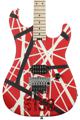
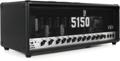
“Baluchitherium” was slated to have vocals on it until producer Bruce Fairbairn nixed the idea, making it a rare Van Halen instrumental to feature a full rhythm section. Instead, Eddie overdubbed a lead-guitar track that veered more toward the melodic than the pyrotechnical. At this point, Eddie was using his signature Ernie Ball Music Man model guitar, his 5150 amp, and effects such as an Eventide harmonizer to achieve his shimmery tone.
The inspiration for the title again came from Bertinelli, who was thumbing through a book on prehistoric animals. “I started reading, and it turns out that the Baluchitherium was the biggest mammal that lived in the prehistoric age,” Van Halen told Guitar World.
Appropriately, EVH brought a menagerie of beastly guitar sounds to the table. “It sounds like a bunch of animals — like a zoo,” said Van Halen. “There’s a bunch of birds and chirps and dinosaur calls, and the elephant sounds I’ve always made. It just felt like a fun thing to do. You can even hear my dog Sherman howling on there.”
“Neworld” from Van Halen III (1998)
Comprising the quietest moments to usher in a Van Halen album, “Neworld” leads the group’s lone album with Extreme front man Gary Cherone. Following the departure of Sammy Hagar and a failed David Lee Roth reunion, Eddie assumed a more hands-on role with this VH incarnation. In addition to his usual instrumental duties, he co-produced and co-engineered the album — with co-producer Mike Post ultimately lending an objective ear.
The introspective “Neworld” certainly telegraphs to the listener that III is a different slice of Van Halen. It simply features EVH on acoustic guitar with piano accompaniment supplied by Post. Ever musical, Eddie tastefully picks single-note lines and a sequence of arpeggios — he also plucks a harmonic-based melody that foreshadows the main hook of the next track, and the album’s lead single, “Without You.”
“Every **** thing on this record is for real and from the heart. There’s not a contrived note or lyric on it,” Van Halen told The Boston Globe in 1998.
“Primary” from Van Halen III (1998)
For the Jimmy Page–esque “Primary,” Eddie again cast aside his electric guitar, this time picking up a Coral sitar. In addition to six main strings, a Coral sitar features sympathetic strings located on the left side of the instrument, adding additional resonance and texture. Eddie tuned his sitar’s main strings to A with the low E string replaced by an A bass string; he described the sympathetic strings as being tuned to “sound like a doorbell.”
EVH assembled the psychedelic minute-plus piece rather quickly, designing it to be an intro for the politically tinged “Ballot or the Bullet.”
“I thought, ‘This song could use an intro,'” Van Halen told Fuzz magazine in 1998. “So I just plugged in, took one pass at it, played it for the guys, and they liked it.”
Though III was the group’s least successful studio album in terms of sales and chart performance, EVH was in impressive creative form throughout. A track like “Primary” typifies the LP’s raw, unpredictable guitar excursions that are everything that makes Eddie Van Halen one of the all-time greats — and yet are nothing like what you’d heard from him prior.
“I’m just an open wound, I’m letting it flow. I’m not afraid to fall on my face,” Van Halen told Guitar World about his playing on III. “There’s mistakes, there’s slop, there’s whatever — but it’s real emotion. It’s human. It’s really me at my most vulnerable.”
Find Your Own Voice
Of course, these 12 instrumentals represent a small tip of the proverbial Van Halen iceberg. While any of his works could yield immense benefits from intensive study, the true underlying lesson here is one of finding your own musical voice. Whether it’s picking up a new instrument, using a soda can or ping-pong balls, or exploring a specific effect, Eddie is a testament to the notion that inspiration is always just a moment away. Or, as he more succinctly once put it, “To hell with the rules. If it sounds right, then it is.”
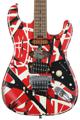
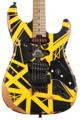
For those looking to channel EVH’s tone, Sweetwater carries a range of official EVH gear. Contact your Sales Engineer at (800) 222-4700 and get on your fast track to breaking the rules all over again.