In this article, we’re going to take a look at some of the stompboxes that the late, great Edward Van Halen used so well in crafting his unique, signature sound. We’ll also touch on a few tips and tricks that will hopefully help add some Eddie-isms to your playing. This isn’t one of those “Deep Dive into Duplicating Eddie’s ‘brown sound'” pieces though. This is all about how and why EVH used his pedals and how you can do the same to Van Halen-ize your tone . . . while still keeping it yours, of course!
And, just so you know, a video that accompanies this piece can be found here.
The much-missed Edward Van Halen left us all a plethora of wonderful gifts when he sadly departed this mortal coil on October 6, 2020. The most obvious ones were:
- Edward’s inspirational, game-changing playing and techniques — including his innovative use of harmonics, the whammy bar, and, of course, two-handed tapping.
- An amazing legacy of music spanning some 40 years that included 12 studio albums, two live albums, and countless memorable riffs, licks, and solos.
And last but certainly not least . . .
- His always jaw-dropping and inspirational tone. A self-confessed “tone chaser,” Edward’s sound remains the holy grail for many.
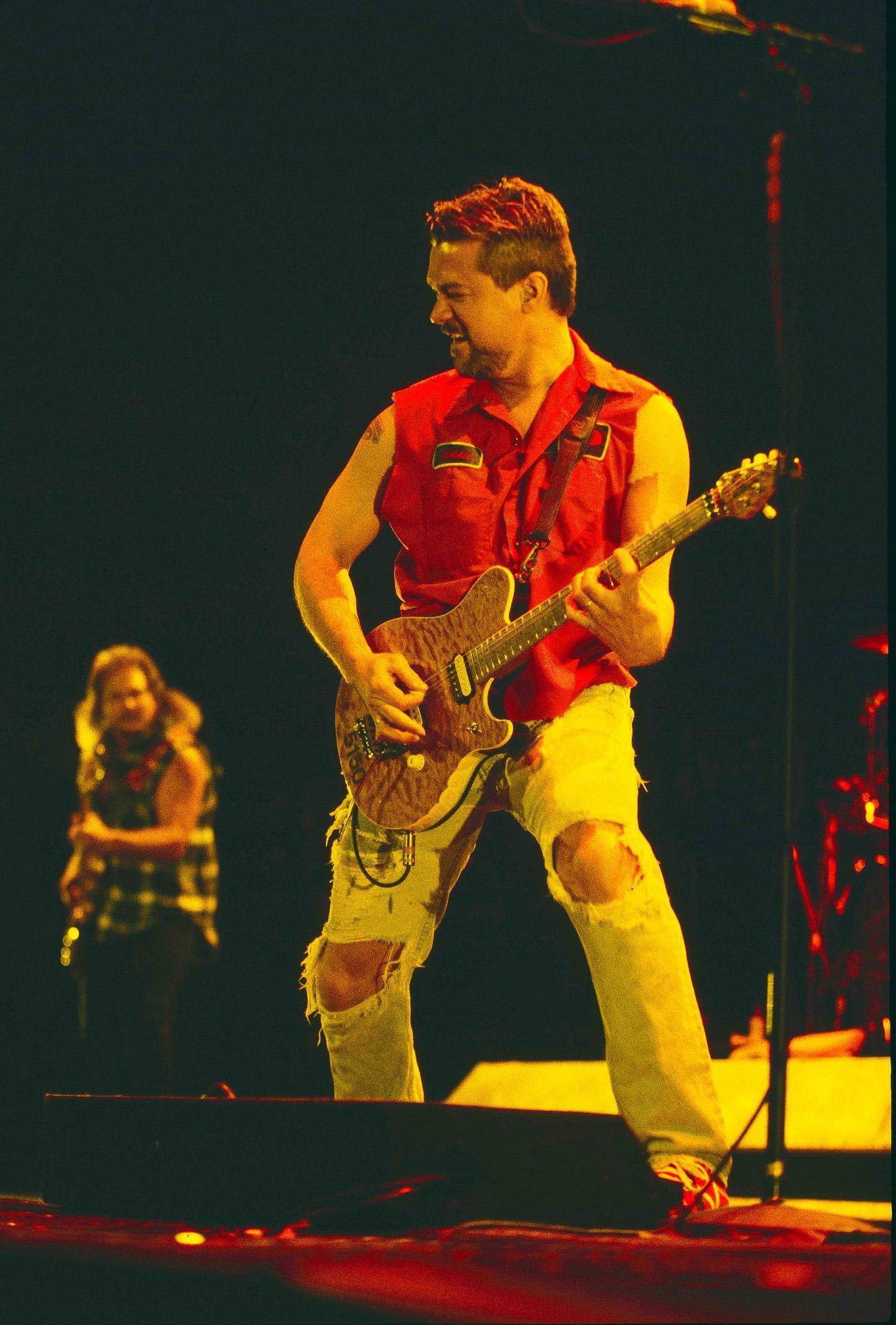
As I’m sure you know though, ultimately, a player’s sound isn’t just about the gear and the settings used — it’s about his or her heart and hands. And let’s not forget those seemingly small but vital things such as pick attack, articulation, phrasing, slurs, and vibrato. To that end, you could have 10 guitarists play the same lick on the same exact guitar through the same exact rig, and they’d all sound different. Make sense? In fact, later I’ll share a story from Edward that exemplifies this truth.
That important disclaimer stated — back to the plot.
In addition to the three points just mentioned, there’s one more gift from Edward that we can’t ignore, and it’s a pretty darned pivotal one. What is it? All the great gear that bears his EVH initials, of course. While a lot of great players deservedly enjoy the accolade of having signature gear, Edward had his own signature gear brand — a first for a rock guitar player to my knowledge. Such was his innovative spirit and drive.
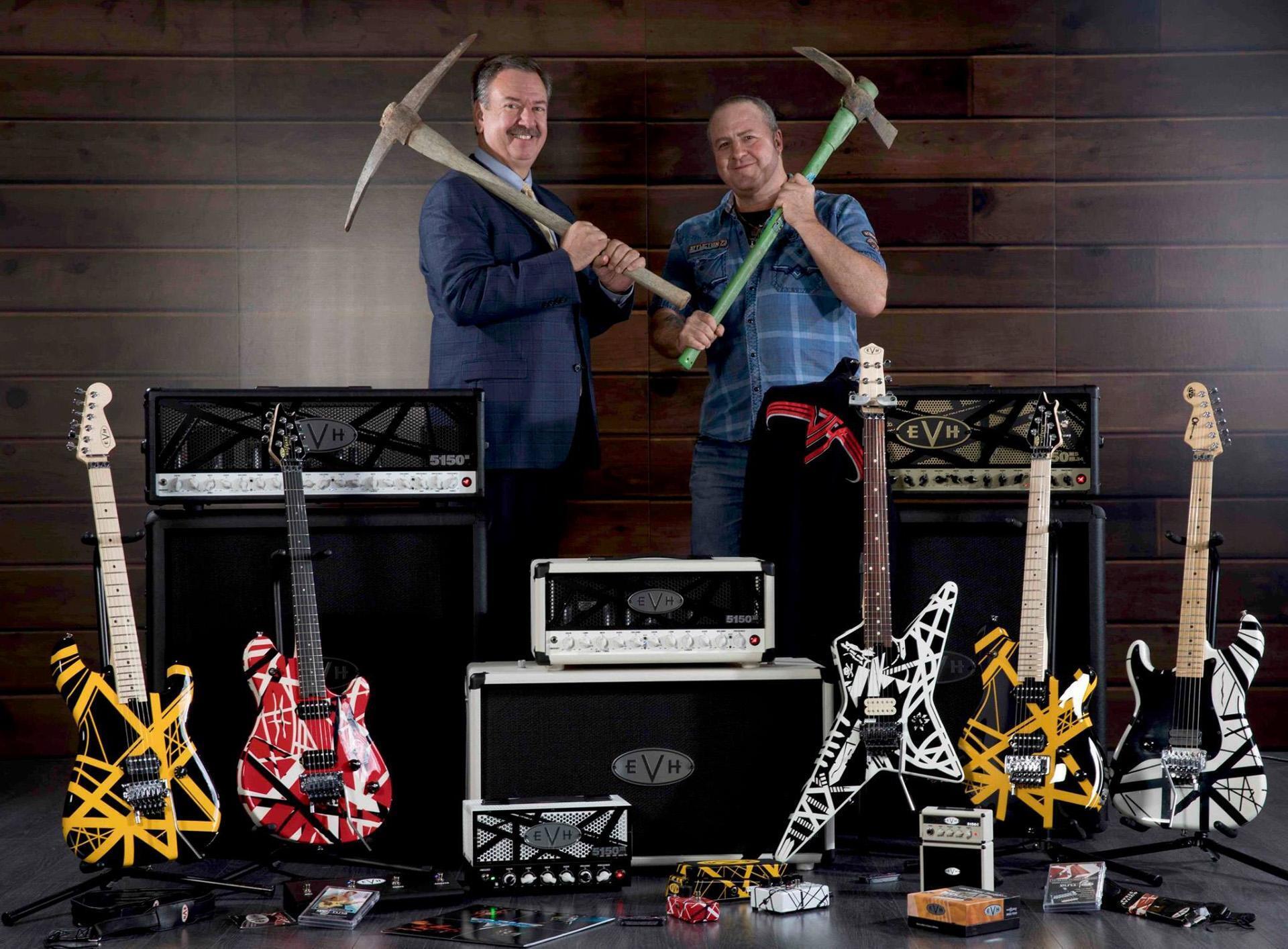
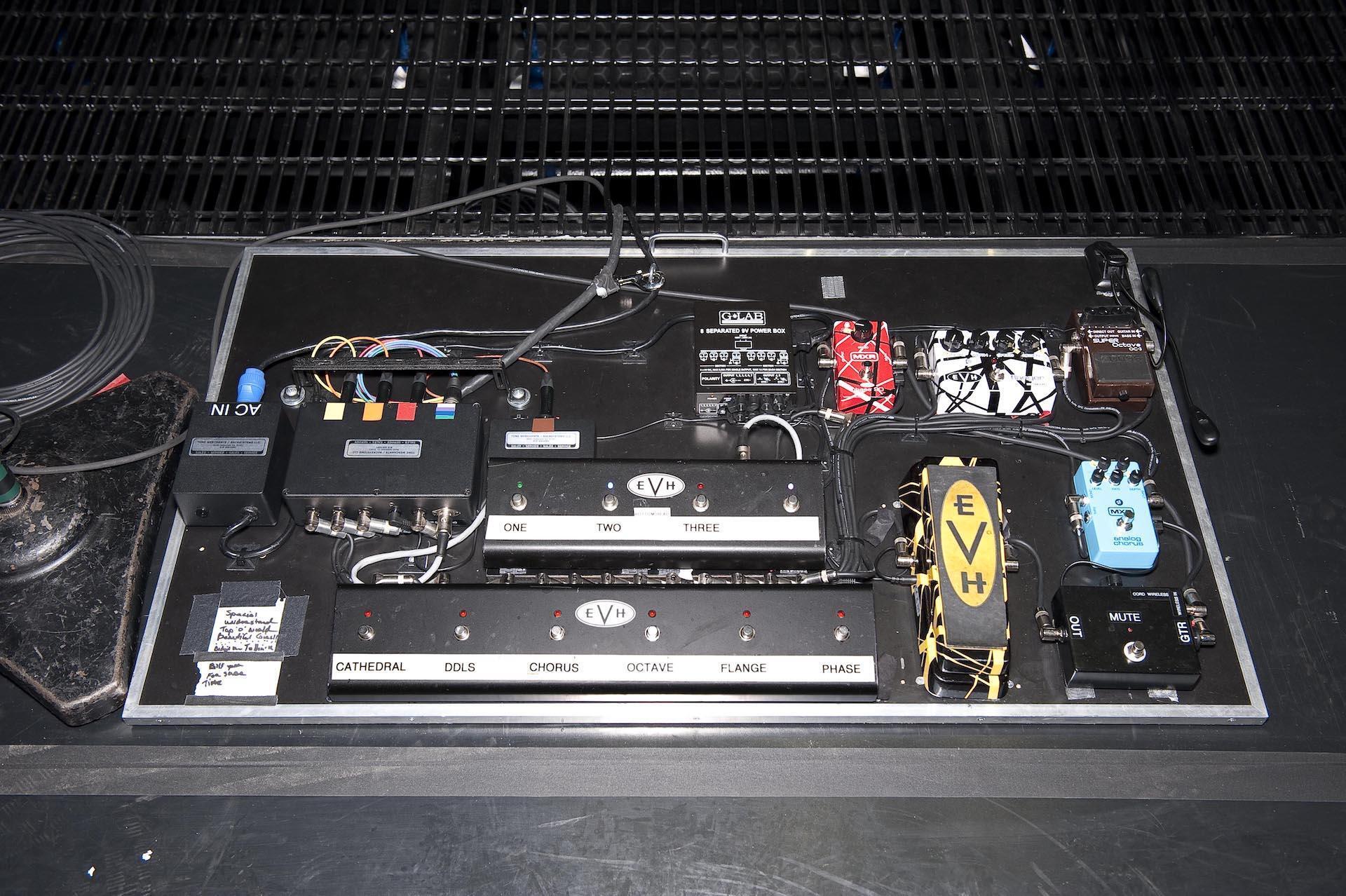
First and foremost, there’s a bunch of EVH guitars, amp heads, cabs, and combos. Then there are EVH pickups, straps, strings, and picks. And let’s not forget his revolutionary D-Tuna system. Then, as further sonic icing on an already awesome cake, there are no fewer than five EVH pedals: the MXR EVH 5150 Overdrive, the MXR EVH 5150 Chorus, the MXR EVH117 Flanger, the Dunlop EVH95 Eddie Van Halen Signature EVH Cry Baby Wah, and the MXR EVH Phase 90.
Edward didn’t merely put his famous initials on these pedals. Like all EVH products, he was intimately involved from conception to fruition, which means they’re all 5150% “tone chaser” approved and used. Perfect.
Let’s take a quick look at these five EVH stompboxes and at a couple of other pedals, too, that’ll help you Eddie-ize your sound.
In the Beginning…
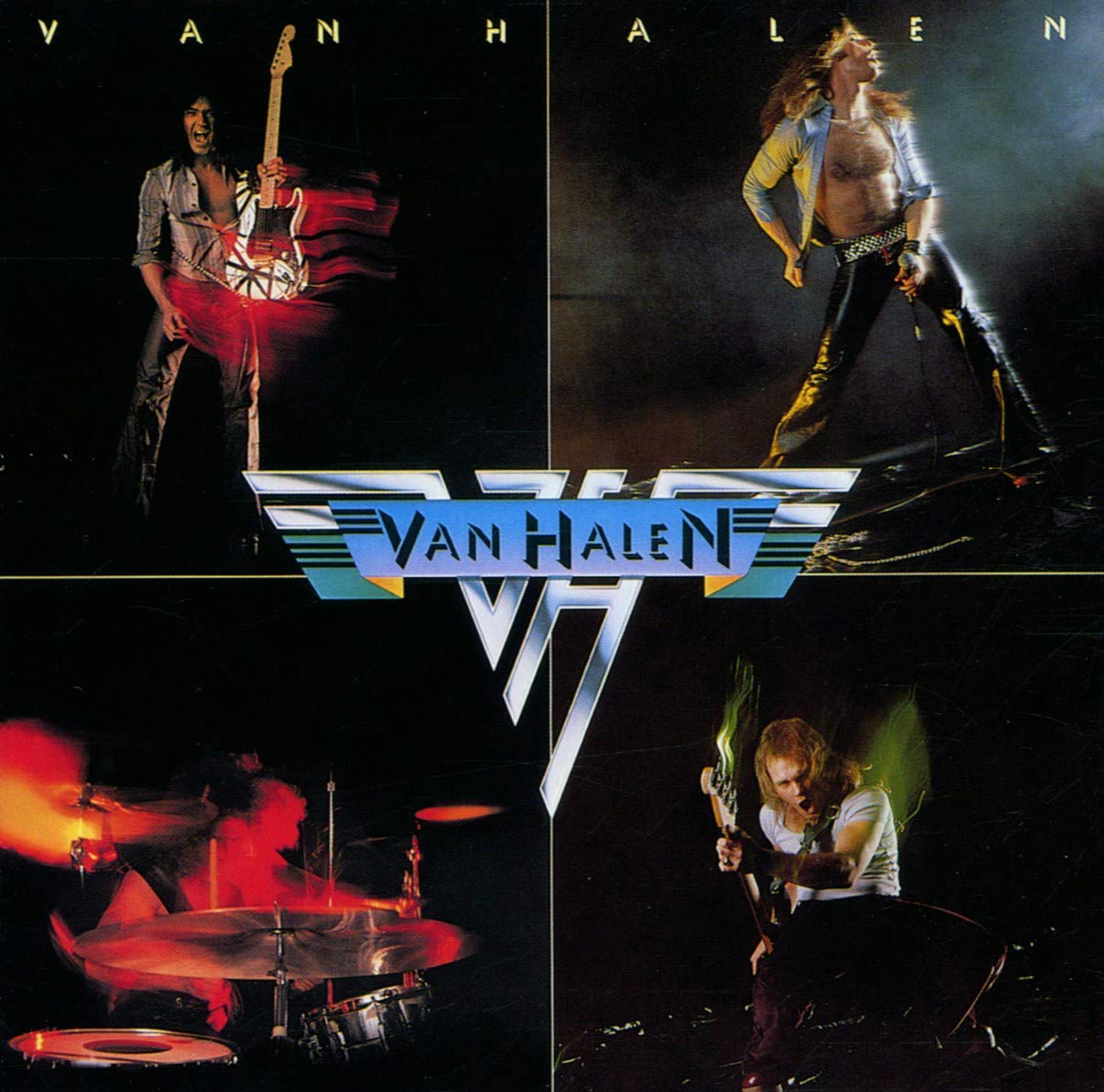
As is now part of rock history, when Van Halen’s eponymously titled debut album hit the streets on February 10, 1978, it quite literally changed the way rock guitar was both played and perceived. Edward’s fiery tone and technique grabbed the guitar-playing world by the throat and shook it hard — really, really hard. And it was all delivered by a skinny, 21-year-old kid from Pasadena armed only with a Marshall stack, a homemade guitar, a couple of pedals taped on a piece of plywood, and a disarmingly impish grin. Edward’s pedals of choice back then? A script-logo MXR Phase 90, an MXR Flanger, and a couple of Echoplex tape delays.
Going Through a Phase
If I had to pick just one pedal to add a little EVH to my sound, then I’d immediately go for an MXR Phase 90 — the script-logo version as opposed to its more pronounced-sounding predecessor, the block-logo version. According to an interview Edward did with Chris Gill of Guitar World, he first got into the idea of using a Phase 90 when he saw a friend of his using one. His pal’s band used to play a lot of Robin Trower covers, and so he was using the Phase 90 with the Speed control set around two o’clock to create that “fast, swirling sound,” Van Halen revealed. “I decided to pick one up for myself. I was into Robin Trower too, but we didn’t play any of his songs, so I used it with the control set between 9 and 10 o’clock. I still use it the same way today. I just locked into that one setting, and I’ve used it ever since.”
Reasons To Be Slow but Steady
The reason Edward preferred this slower speed setting was twofold. The first one is this:
“I thought it sounded unique. I never heard that before. It didn’t sound like the phase shifters made by other companies, where the phase sweep is more heavy and pronounced, almost more like a flanger. The [script-logo] Phase 90 produces a very light change of the sound. It’s not an over-the-top effect. It’s very subtle.”
The second reason was that he found that kicking on his Phase 90 during his solos helped make them stand out better in the mix. “I did that in the early days because it would make the solo pop. Suddenly, it became a different sound, which helped me stand out in the mix, because back then, in the club days, we usually had lousy PA systems and lousy sound guys. It didn’t boost the signal, but it made it pop out, so the solo was more audible. It enhanced the tone.”
You can hear Edward using his slow-speed Phase 90 setting to great effect on many classic Van Halen songs including “Ice Cream Man,” “Atomic Punk,” and — of course — the incendiary 1-minute, 42-second-long epic that is “Eruption.”
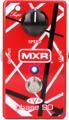
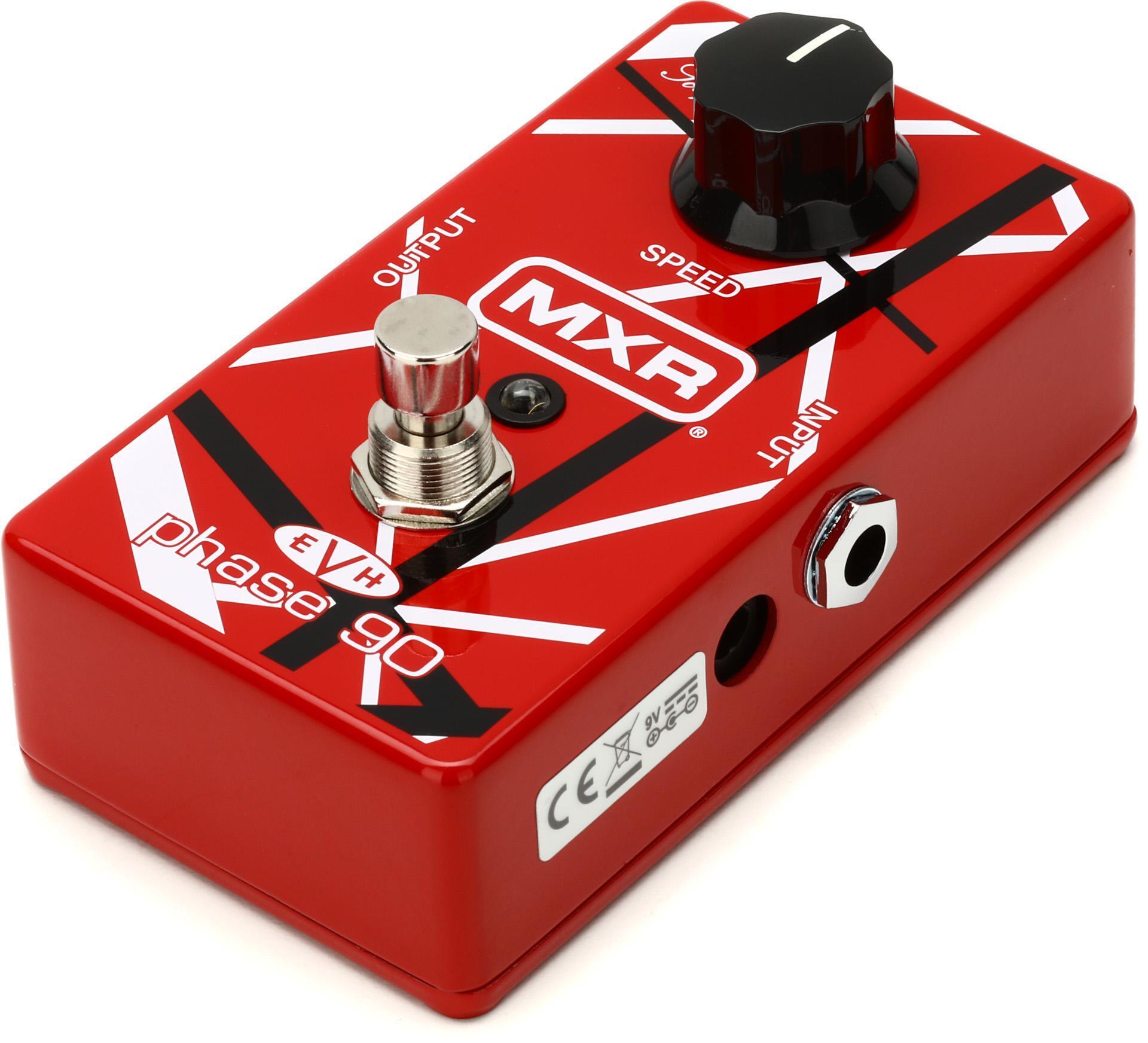
Not surprisingly, MXR offers a signature EVH Phase 90 pedal. Resplendent in the artist’s red, white, and black “Frankenstein” finish, this pedal features a “Script” button that allows you to toggle between the subtle phasing effect of the script-logo unit and the more pronounced block-logo version.
In addition to helping his solos “pop,” Edward also used his Phase 90 to create the percussive, “swishing” intro to “Atomic Punk.” He did this by simply rubbing the strings by the bridge with the heel of the palm of his picking hand with his Phase 90 engaged. This simple but effective trick is shown in the accompanying video. Apparently, the palm-rubbing idea was born when Ed was writing “Light Up the Sky” — so, he decided to see what it sounded like using his phaser. And, talking of “Atomic Punk,” that segues us neatly into the second EVH pedal we’re gonna look at — the white with black stripes EVH Flanger.
Flanging Unchained
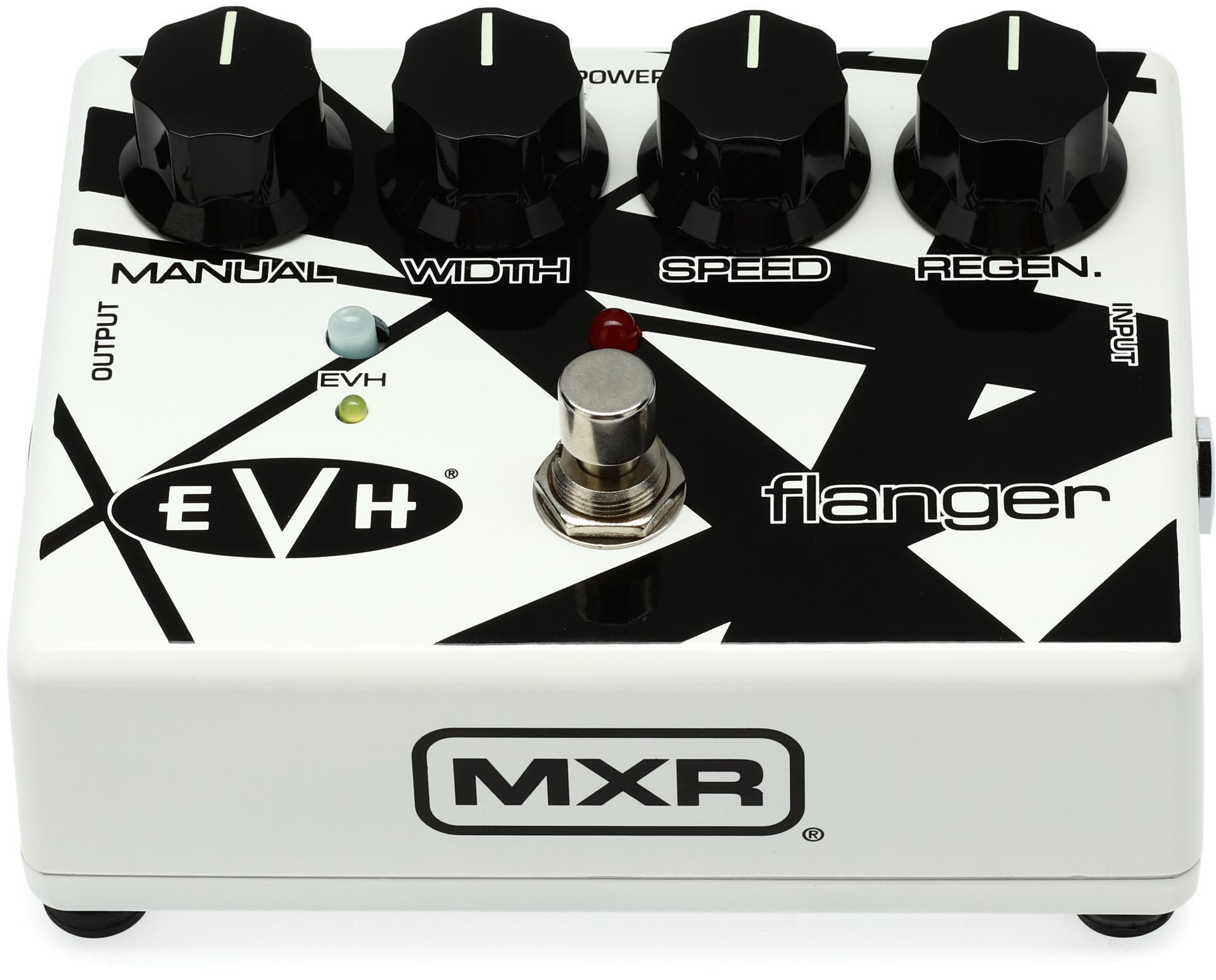
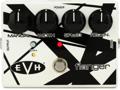
After the solo in “Atomic Punk,” Edward revisits his palm-rubbing trick, but this time he uses an MXR Flanger to make it swirl. For most players though (myself included), his most memorable flanging moments occur in the main riffs of “Ain’t Talkin’ ’bout Love” and, of course, the Drop D chug in “Unchained.” To create these memorable moments, the guitarist used his “normal setting” and admits that his brilliant “Unchained” use was “totally by accident . . . my normal setting just happened to fit the tempo of the song,” he revealed, once again, to my pal Chris Gill. “Nothing I’ve ever done is really all that thought out. I just wing stuff, and if it sounds cool I would do it again.”
So, what, pray tell, is EVH’s “normal setting” on his MXR Flanger? Apparently, it’s this: “the three knobs on the left between 11 o’clock or 11:30, and the last knob on the right [Regeneration] is all the way up. I might fine tune the speed a little to match the tempo of the song, like on ‘Unchained.'”
To save you the grief of nailing his “normal setting” exactly though, Ed and the good folk at MXR have been good enough to include a button labeled “EVH” on his signature unit, and — when it’s engaged — hey voilà, you’ve instantly got his hallowed “Unchained” setting. Nice.
Less Is More
At this point in the proceedings, I should quickly point out the fact that, while both of these pedals are “key ingredients” to EVH’s instantly recognizable sonic signature, he always used both of them sparingly — invariably kicking them in for key moments rather than leaving them switched on as I’m often guilty of! I love this pedal-use analogy he once shared with Guitar World:
“They enhance the sound of what I’m playing. In certain spots I would use them if I needed them. It wasn’t a set thing; I’d just wing it, and nine times out of ten it would work. I have to have an idea for a song first, then I’ll putz around and add or take away things. It’s like making a steak: you have to have the steak first, then you can make it better by adding a little seasoning, but not too much because you want to taste the steak, not the seasoning.”
Yep, less is indeed more.
Wah’s Up?
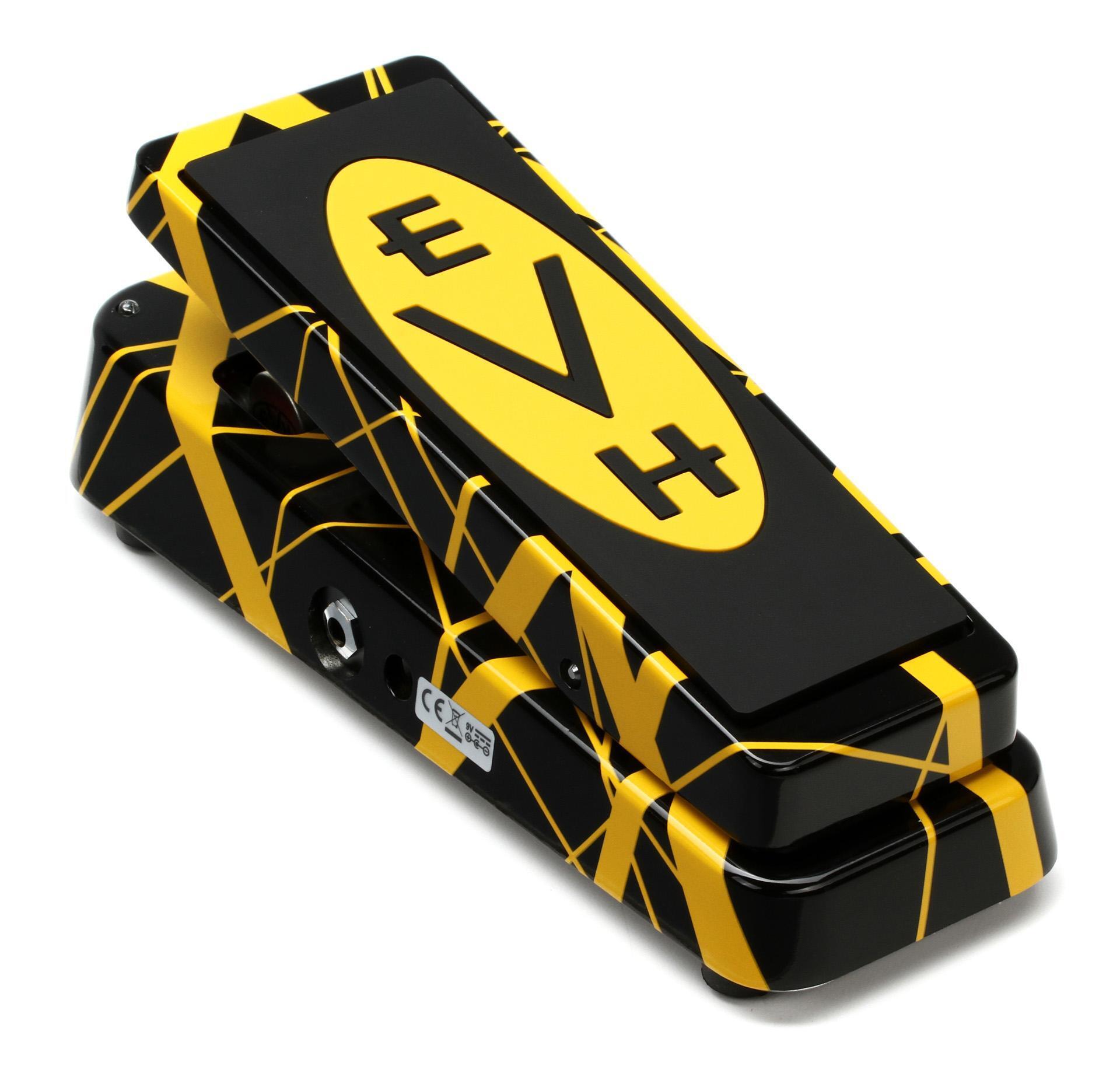
To be honest — as opposed to lying — I never used to associate Mr. Van Halen with a wah pedal. After all, those all-important first few albums were completely devoid of this highly expressive device, even though he once revealed that the wah was probably the first pedal he ever used. That all changed on the 1988 album OU812 though, and the solo in “A.F.U. (Naturally Wired)” became the first time Edward recorded with the wah. And, in usual EVH fashion, he “didn’t wah wah out”; he used the effect subtly. Since then, the wah became as omnipresent on his pedalboard as his faithful MXR phaser and flanger. If you listen carefully to this great man’s final two recorded offerings — A Different Kind of Truth (2012) and Tokyo Dome Live in Concert (2015) — you can hear just how well Ed used his wah pedal to wonderful effect, often just kicking it on for a chord or two.
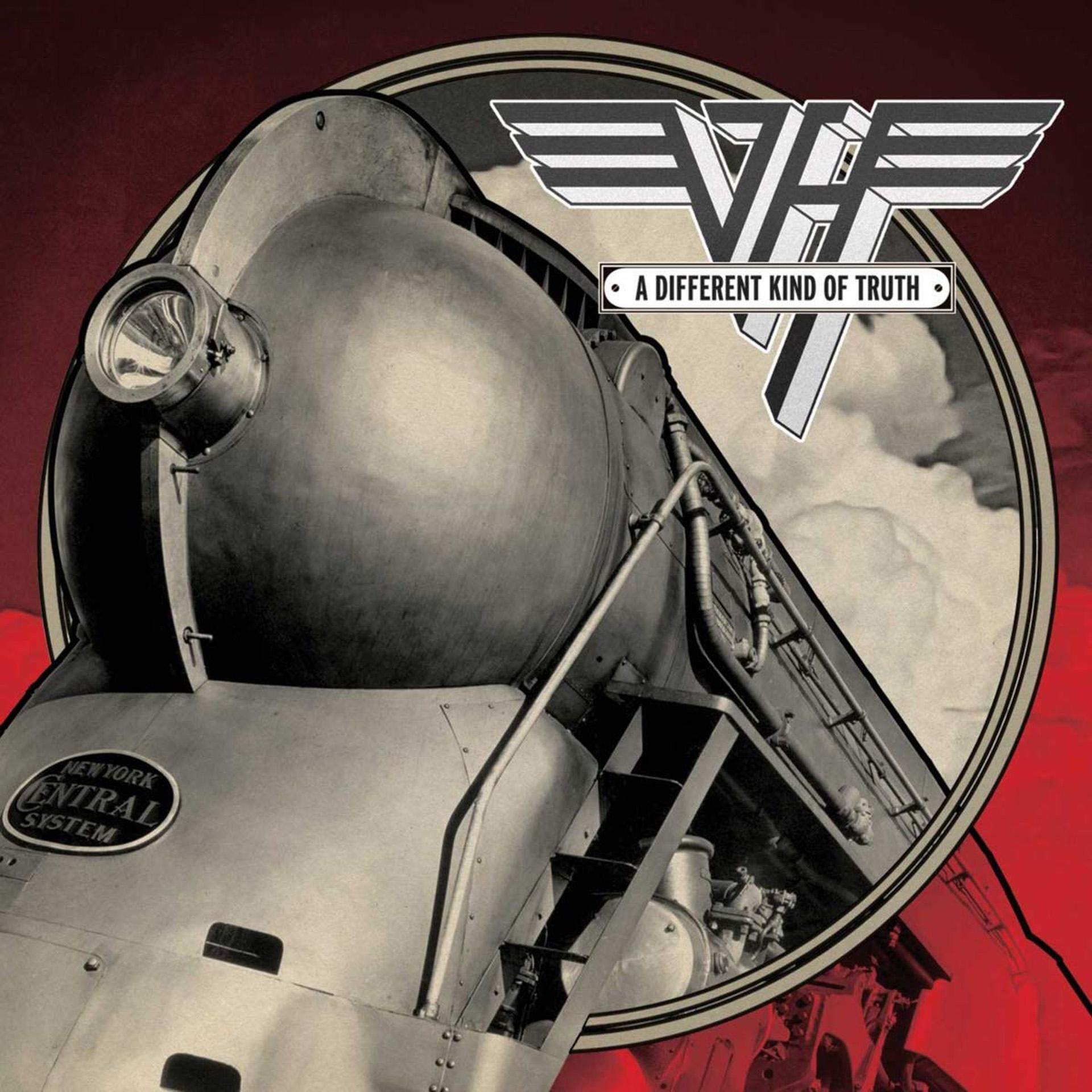
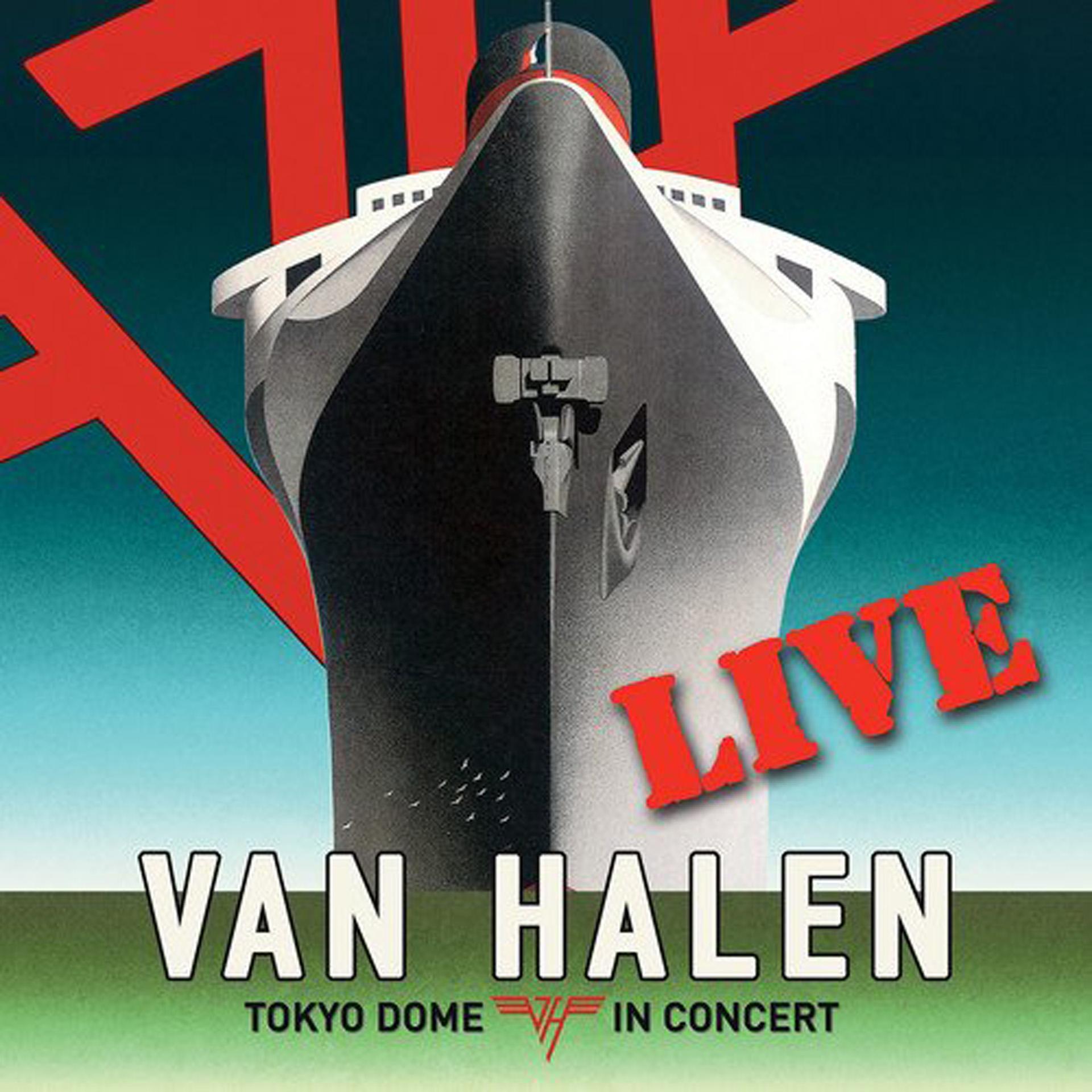
Two excellent examples of EVH using effects as seasoning on already tasty sonic steaks!
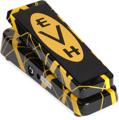
The black with yellow stripes Dunlop EVH95 Eddie Van Halen Signature Cry Baby Wah is an exact clone of the guitarist’s “Holy Grail” pedal — a standard Cry Baby he had customized in the ’90s to give it an even more vocal-like tone. The EVH95 even re-creates the “worn-in” feel and sweep of the pot in his trusty, old wah.
Chorus Line: Double or Nothing
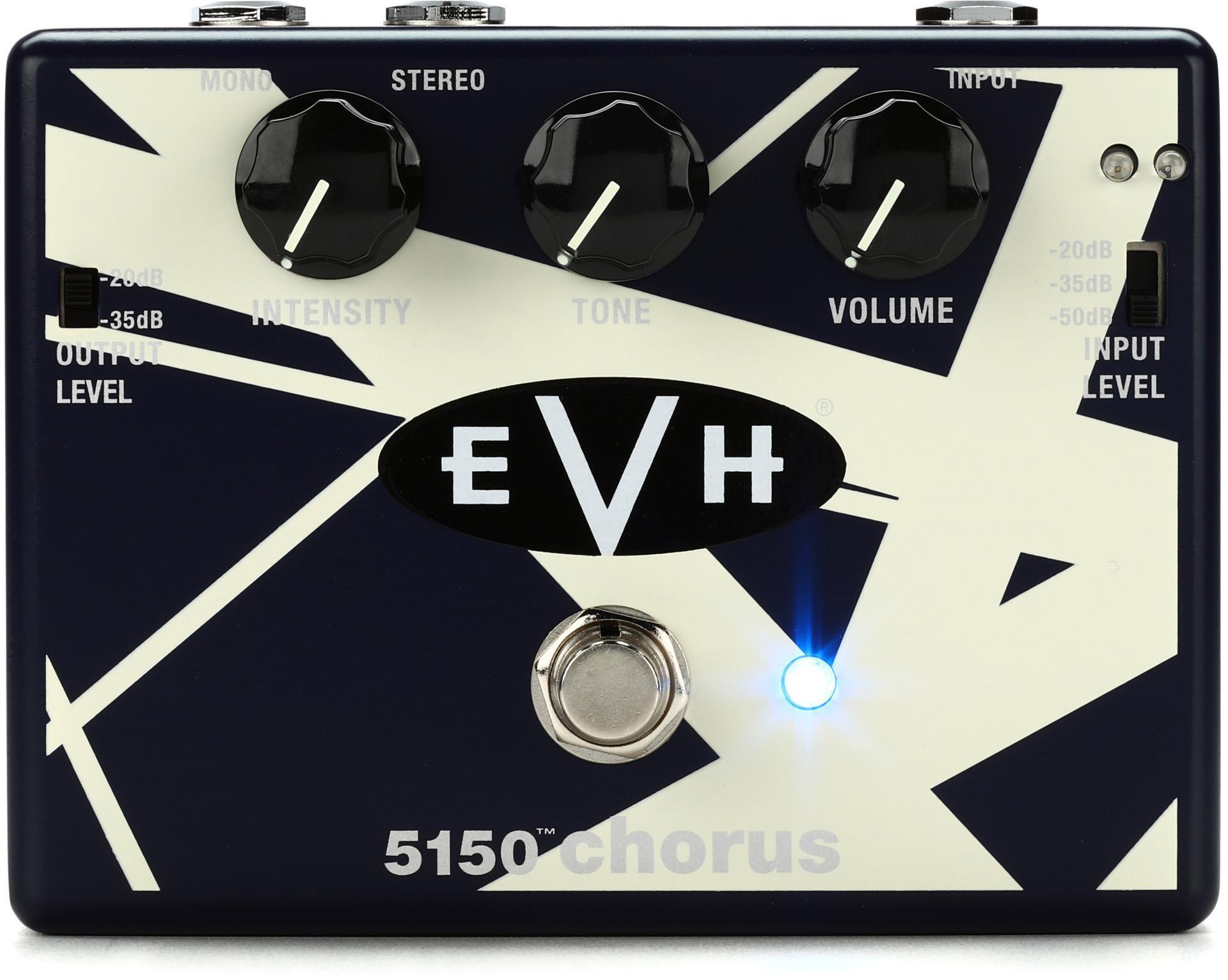
Just like the wah, chorus isn’t really an effect you’d immediately associate with Eddie Van Halen. That said, a rackmounted Roland DC-30 Analog Chorus Echo unit reared up to, er, great effect on 1982’s Diver Down — especially on Van Halen’s chart-topping single “(Oh) Pretty Woman,” a cover of the Roy Orbison classic. The K.I.S.S. (keep it simple, stupid) EVH 5150 Chorus pedal successfully captures that sound in a blue stompbox with cream stripes. Boosting controls for intensity, tone, and volume — but not one for speed — this stereo pedal can create a subtle but intoxicating doubling effect, especially when the intensity is set really low. In fact, it does a nice job of aping the sound of a doubling effect — which is something Edward used to do via an Eventide H949 Harmonizer back in the day. I especially like the almost subliminal “thickening” effect this pedal creates when the Intensity control is pretty much off as it’s one of those things you hardly notice — until you switch it off!
Insane Overdrive: The 5150 Amp’s Blue Channel “in a Box”
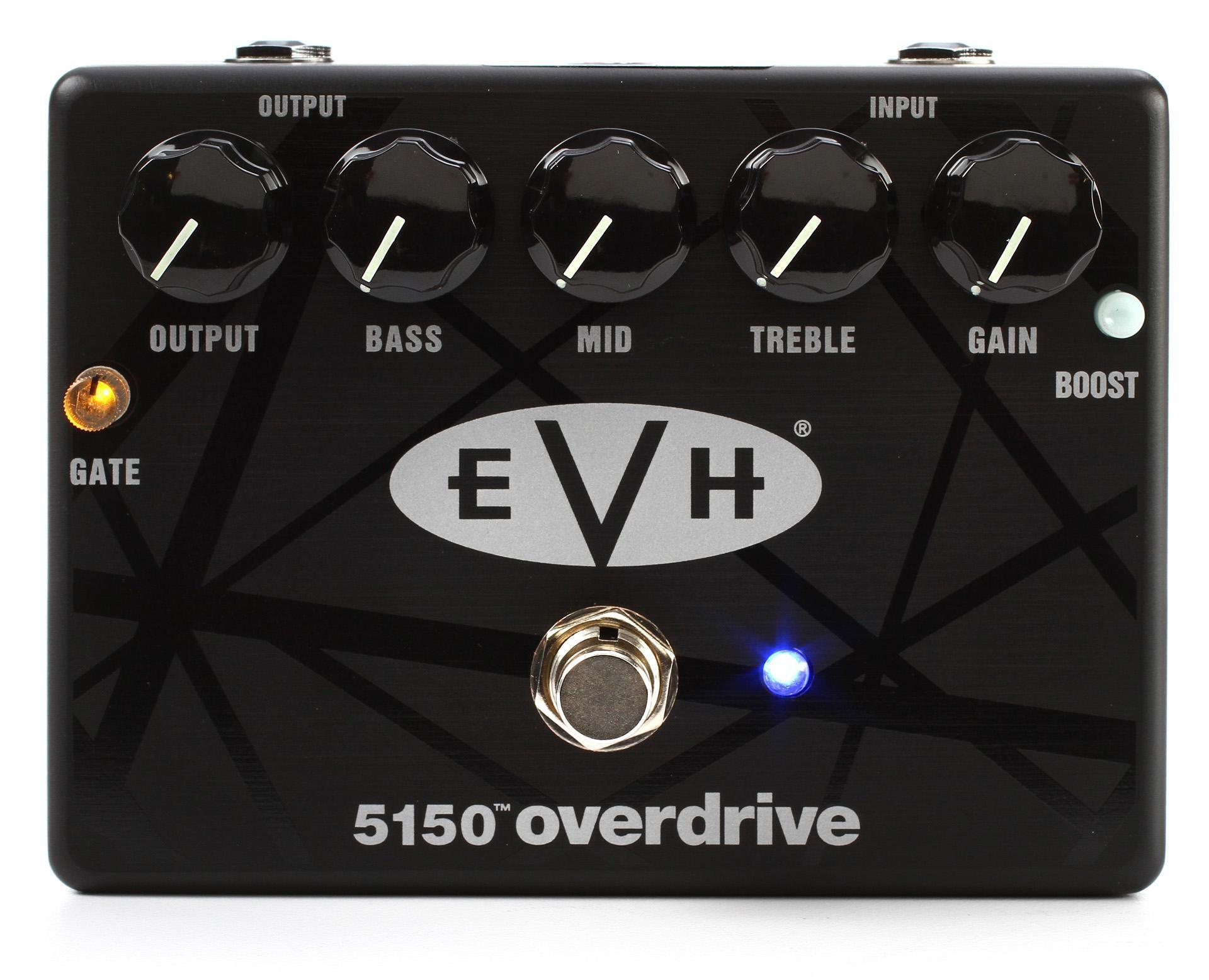
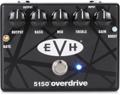
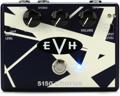
The saturated yet articulate high-gain overdrive of an EVH 5150III amp’s blue channel is one of hard rock’s most revered and respected sounds. To make this sound more affordably accessible to many, Eddie Van Halen and the boffins at MXR collaborated to create the EVH 5150 Overdrive pedal. By cleverly using hand-tweaked multi-stage MOSFETs, the resulting pedal is one of the best “amps in a box” out there. In addition to the “usual suspect” controls — Gain, Treble, Mid, Bass, and Output — the 5150 OD also has a push-button boost, which adds even more gain and compression, plus a very effective built-in, adjustable noise gate to keep things nice and quiet. I’ve used this pedal plugged straight into a clean amp when playing as a guest at shows, and the resulting tone always impresses all — especially the soundperson at the board! I, personally, really like the way the pedal feels and sounds when you back off the Gain control and engage the Boost switch as it creates a nice “driving the front end of an amp with a clean boost” vibe.
So ends our quick overview of the five pedals that proudly bear the EVH logo. Hopefully, a few of the ideas mentioned will prove useful in your tonal adventures! Don’t go yet; we’re not quite done!
But Wait! There’s More!
This tour wouldn’t be completely effective (sorry!) unless I quickly touched on two more sonically significant stompboxes used in the accompanying video: delay and reverb.
Echo, Echo, Echo…
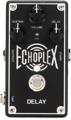
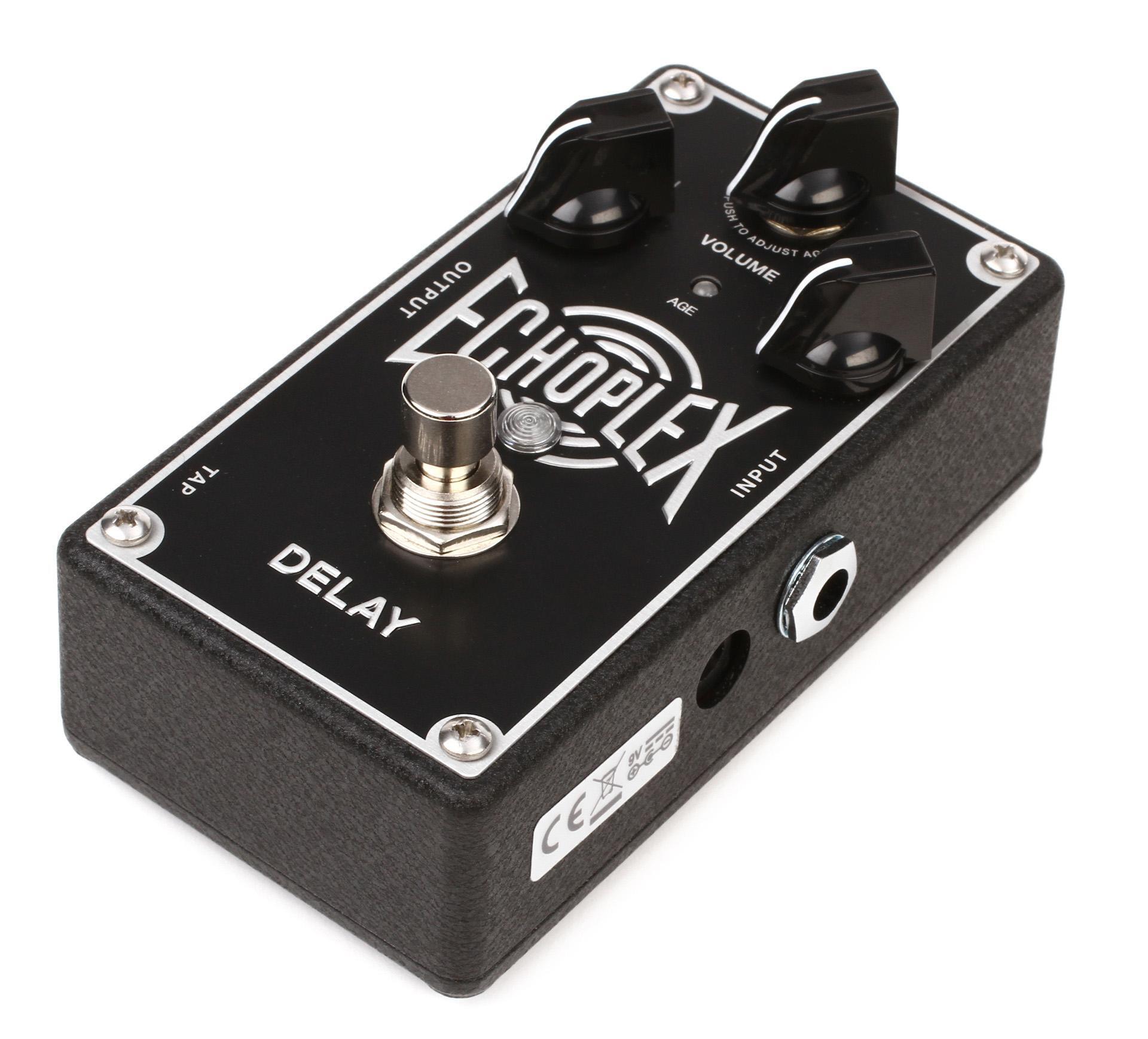
As already mentioned, Eddie’s seemingly primitive yet highly effective setup included an Echoplex tape-echo unit. He also used “a $50 piece of junk” Univox EC-80 echo unit he mounted in an old World War II practice bomb he picked up from a junkyard. What did he use these two “pieces of junk” for? To create the wonderful, growling octave dive-bomb effect that “Eruption” ends with, that’s what! So, if — like me — you’ve been trying for years to duplicate that stunning climax with your Floyd Rose and failing, you now know why! It wasn’t a whammy-bar dive after all. Darn! But, at least, now you know . . .
Ed invariably set his echo for a single pretty-fast repeat (normally 300ms or less) and, as always, used it sparingly. Try doing the same; it really can make a difference and is often one of those things you don’t notice until you switch it off! His use of a single short repeat during “Ain’t Talkin’ ’bout Love” and also during the chorus of “On Fire” was clever, very clever. He also used a slightly longer (roughly 385ms) single repeat magnificently during the volume-pot “swelling” brilliance that is “Cathedral.” Once again, emphasis on the single repeat aspect of this setting!
Wet/Dry/Wet
On the mammoth 2015 Van Halen tour, Ed used the wet/dry/wet setup he pioneered a good 30 years ago. In a nutshell, this comprises a “dry” (read “no delay”) 4×12-inch cabinet flanked on either side by 4×12-inch cabinets getting a delayed signal: hence the “wet/dry/wet” name. On that tour, the left cab was getting a 398ms delay from a Roland SDE-3000 while the right cab was getting a 798ms delay. Why? Once again, here’s what Ed told my Guitar World journalist friend, Chris Gill. “I don’t want to hear the delay itself. I just want it to fill in some holes and make my sound bigger, like reverb, although using delays this way sounds better than reverb. It gives my sound some added depth without getting in the way of the main dry signal.”
TONAL GEEK NOTE: Talking of Edward’s much lauded wet/dry/wet trailblazing antics: In the early days of his exploration of this — notably during the Sammy Hagar period of Van Halen — Edward used an Eventide Pitch Shifter (or two!) to great, er, effect. To increase the “width” of his tone, he’d have one of his “wet” signals with the pitch dropped by about 9 cents and the other one with the pitch raised by 9 cents. When these two were combined with the dry signal coming straight down the middle, the resulting “width” was impressive — especially when played by the GOAT!
I’ve heard people refer to this sound as “the Balance tone” after the 1995 album of the same name. That said, Edward was using this technique way before said album. Anyway, the resulting sound is often referred to as “still” or “static” chorus. Why? Because the slight detuning produces that rich, 12-string-like tonal “thickness” without any modulation, that’s why! If you’re interested in learning more about this sonic period of EVH’s fascinating “tone chasing” history, then the always-excellent Pete Thorn has a great YouTube video on this titled “80’s/90’s EVH TONES + DELAY! Eventide MicroPitch Pedal.” Check it out!
Interesting stuff — and, whilst on the subject of ambience . . .
Early Reverberations…
If you’ve ever listened to the first Van Halen album on headphones, then you’ll notice that the guitar is panned hard left with the reverb panned hard right (except for “Eruption”). I didn’t realize this back in the day until I took my LP over to a friend’s house and the left speaker of his stereo wasn’t working! The result — the amazing guitar playing was effectively in a distant cave! All I could hear was the reverb!
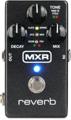
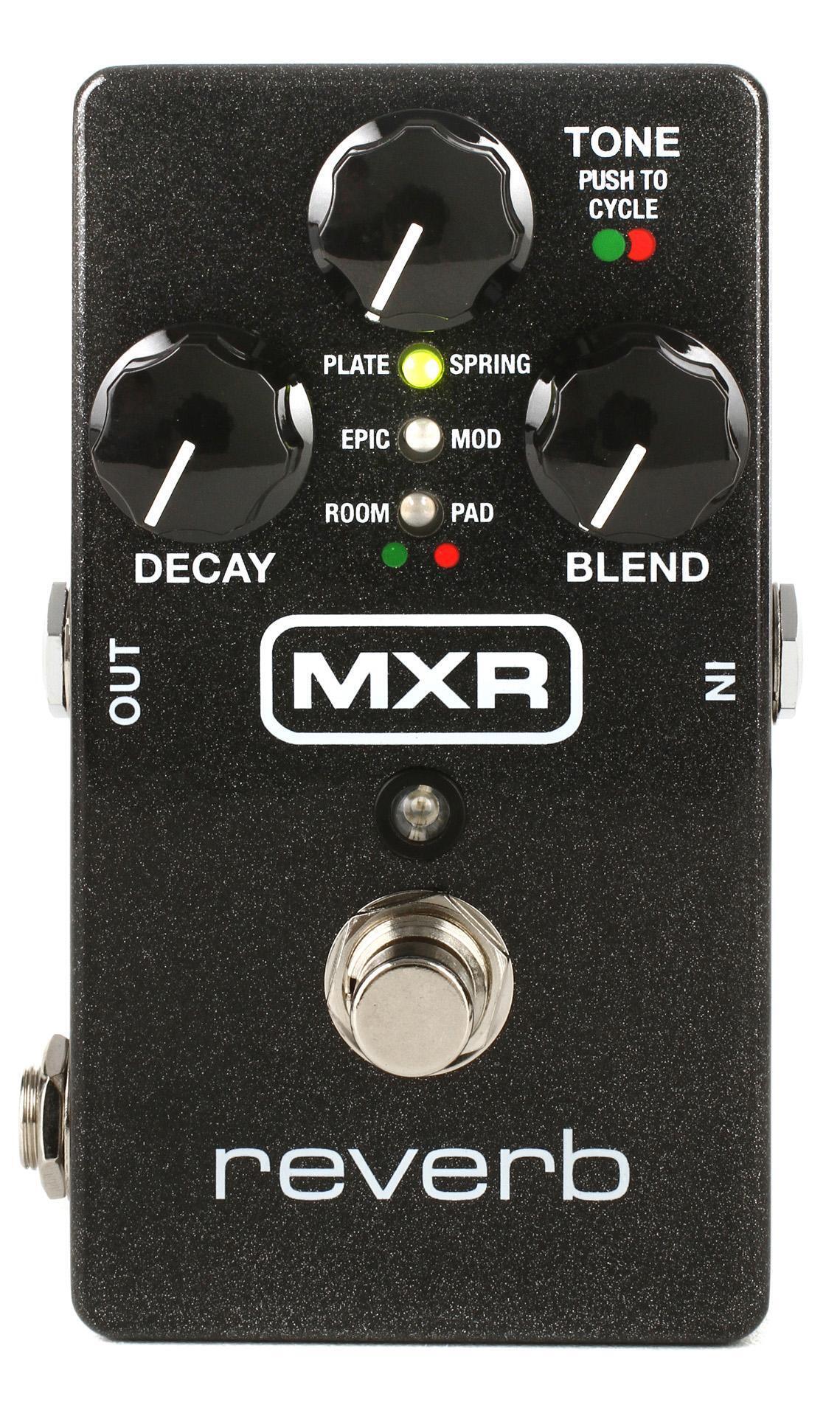
As that album literally changed my life, to get even close to that amazing tone, a healthy portion of reverb is called for. To achieve said nirvana, I invariably use the Plate or Epic settings on my MXR Reverb pedal.
EVH: “There is so much EMT plate reverb on the mix, which is something I never had really heard before. It still holds up today to a certain extent. It’s not in your face or all that heavy, but the songs are great. If you heard us live, we sounded different. We were much heavier than what you heard on the record, and that’s what Alex and I expected to hear on the record.”
Interviewer: Your guitar tone became drier on each successive album. On 1984 I really only hear reverb on “Panama.”
EVH: “That came from my dislike of that EMT plate reverb that our first album is bathed in. It had its time and place, but it strikes a bad nerve with my brother and me.”
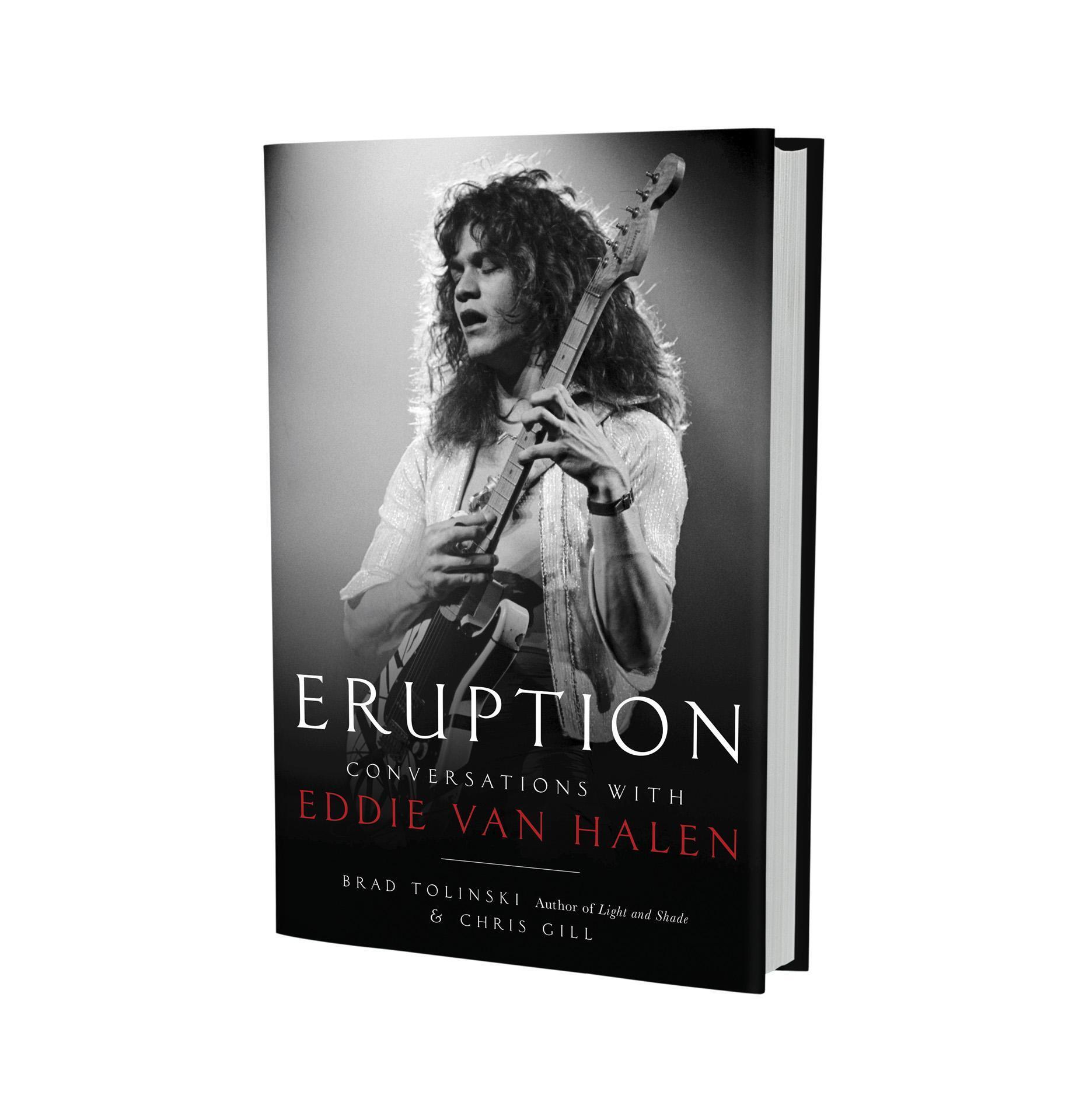
Excerpt from Eruption: Conversations with Eddie Van Halen by Brad Tolinski and Chris Gill
As the saying goes, you learn something new every day! That stated — I still love the guitar sound on that album, reverb and all!
Closing Thoughts: Practice and Passion Make Perfect
As revealed in one of his first major interviews with Guitar Player magazine in 1978, Edward’s dedication to his chosen craft was absolute: “If you want to be a rock guitarist you have to enjoy what you’re doing. You can’t pick up a guitar and say, ‘I want to be a rock star,’ just because you want to be one. You have to enjoy playing guitar. If you don’t enjoy it, then it’s useless. I know a lot of people who really want to be famous, but they don’t really practice the guitar. They think all you have to do is grow your hair long and look freaky and jump around, and they neglect the musical end. It is tough to learn music; it’s like having to go to school to be a lawyer. But you have to enjoy it. If you don’t enjoy it, forget it.”
Thanks for all the wonderful music, memories, inspiration, and gear, Edward. You are much missed, but your songs and solos will always live on.