Rejoice, effects pedal nerds! We live in a golden age of stompboxes. Though it’s not difficult to imagine that guitarists decades in the future will gripe that the “25th Anniversary Reissue” of their favorite transparent overdrive pedal “just isn’t as good as they built it back in the day,” the truth is, there’s never been a better time for overdrive, reverb, delay, and fuzz fanatics in the history of electric guitars.
However, there’s one minor issue — with so many different pedals to pick from, how do you decide which one to buy? Long, long ago, a search of “overdrive” or “reverb pedal” on Sweetwater’s website would bring up a few options. But today, we’re positively spoiled for choice by the sheer number of available options for any effect you can imagine. Here at Sweetwater, we want to make things easier for you. So, here are our suggestions for the year’s best guitar pedals, masterfully curated by Sweetwater’s stompbox experts! Want to learn how to buy the best guitar pedal for you? Check out our Guitar Pedal Buying Advice below!
Note: At Sweetwater, we know there’s no such thing as “best” when it comes to music gear. Every player and artist has unique tastes, which is what makes selecting gear so fun! The items on this list feature some of our favorite products from top manufacturers to help you start your buying journey! Explore these recommendations and dive into Sweetwater’s massive collection of gear on our online store. For personalized picks and expert advice, please contact our knowledgeable Sweetwater Sales Engineers at (800) 222-4700!
Best Electric Guitar Pedals — Our Picks
- Boost, Overdrive, Distortion & Fuzz
- Modulation
- Delay
- Reverb
- Tone & Dynamic Effects
- Multi-effects
- Best Guitar Pedal Buying Advice
Boost, Overdrive, Distortion & Fuzz
Ibanez TS9 Tube Screamer Overdrive Pedal
The granddaddy of green overdrive pedals
There are few better ways to begin your overdrive arsenal than with the Ibanez TS9 Tube Screamer overdrive pedal — it’s arguably the most emulated overdrive on the planet. This reissue captures the same midrange-heavy magic that made the original such a hit back in the late 1970s, empowering your sound with a signature tube-flavored bite that slices right through any band mix. Three knobs are all you need to transform your base tone into the TS9’s signature crisp, compressed overdrive. And “transform” is the right word — this is no transparent overdrive pedal! The TS9 makes itself known from the second you stomp it on with a punchy push to your signal’s midrange response. And while it certainly colors your signal with a voice of its own, it’s a beloved voice that has established itself as the absolute bedrock of overdriven guitar tone for more than 40 years.
JHS PackRat 9-way Rodent-style Distortion Pedal
How many rats can you fit in a box?
Back in the late 1970s, an exceptional rodent-themed distortion pedal took the guitar world by storm with its raw sonic edge and extraordinarily versatile range of dirt. More than four decades later, countless pedal makers have paid tribute to that stompbox by putting their distinctive spins on the original. So, which version should you choose? If you ask JHS, then the answer is clear: you don’t choose one. Instead, you pack all the most iconic variations into a single box. The JHS PackRat 9-way Rodent-style distortion pedal offers a whopping nine iterations on the guitar world’s royal rodent on a single rotary switch, boasting everything from the vintage original to idiosyncratic boutique clones to JHS’s take. Best of all, these are no emulations — each setting is an all-analog mirror of the pedal that inspired it, right down to the same circuit.
Keeley Mini Katana Clean Boost Pedal
A clean boost that cuts like a blade
Billed as a straightforward “clean boost,” the Keeley Mini Katana clean boost pedal truly is a deceptively versatile little stompbox. Of course, the Mini Katana’s star feature is its +35dB of clean boost, making it easy to beef up a sterile single-coil or hit the front end of your amp with full force. However, under the Mini Katana’s 1-knob hood lie two dip switches to further tune your tone: Hi-Gain and Hi-Cut. As the name implies, flipping the Hi-Cut switch smooths over any harsh trebles in your signal. What about the Hi-Gain switch? This setting transforms the Mini Katana from a polite clean boost to a roaring overdrive wallop. Finally, the Mini Katana clean boost lives up to its “Mini” designation with a pint-size enclosure that easily integrates into even the busiest pedalboards.
Electro-Harmonix Big Muff Pi 2 Fuzz Pedal
When JHS founder Josh Scott uncovered an unreleased Big Muff schematic, he knew he had found gold. This red fuzz box yields a dynamic and woollier tone compared to past Big Muff models. The simple setup of volume, sustain, and tone controls will be instantly familiar to any fuzz fanatic. Additionally, this pedal features silent true-bypass switching, latching, and momentary modes. Simply put, the Big Muff 2 is one to get if you’re looking to expand your tonal arsenal.
Modulation
Walrus Audio Julia V2 Analog Chorus/Vibrato Pedal
A masterpiece of moody modulation
The Walrus Audio Julia V2 analog chorus/vibrato pedal is a longtime favorite of Sweetwater’s modulation maestros; it’s loaded with sound-sculpting features primed for brave sonic adventurers. The core of the Julia V2 is its 1-knob dry/chorus/vibrato control. This versatile setup allows you to sweep between all three sounds to explore their endless in-between possibilities. And while you get standard chorus/vibrato rate and depth controls to tweak your sound, the Julia V2’s toggleable analog LFO and swing-inducing lag control provide bold new sounds hitherto unheard. It’s a remarkable chorus that Sweetwater guitarists have long revered as one of the best guitar pedals in the Walrus Audio stable and a natural choice for the guitarist seeking a chorus pedal that ranges from bog-standard modulation to the furthest reaches of esoteric tonal experimentation.
MXR M101 Phase 90 Phaser Pedal
The single knob of the MXR M101 Phase 90 phaser pedal is all you need to cop the swirl and swoosh of the outlaw country, psychedelic, and alternative guitar greats. The Phase 90 offers a smooth, watery effect on chords, single-note leads, and more, sending listeners into a haze when they first hear it. The iconic single knob operation simply controls the speed of the phasing, leaving you less time worrying about controlling parameters and more time playing! There’s no wonder the greats, such as Josh Homme, Dave Grohl, Dave Gilmour, and more, have an MXR Phase 90 on their board.
EarthQuaker Devices Aurelius Tri-voice Chorus Pedal
“Playing it safe” is a phrase not found in EarthQuaker Devices’ vocabulary. Still, even for its idiosyncratic standards, the EarthQuaker Devices Aurelius tri-voice chorus pedal is no ordinary chorus pedal! The Aurelius is sonically inspired by the very first chorus pedal in history but ups the ante with three switchable modes of modulation: vibrato, chorus, and rotary. Width, rate, and balance controls give you plenty of room to sculpt your sound, and each knob can be sent to the expression pedal input for in-the-moment modulation madness. Finally, with so many sounds to choose from, you’re bound to pick up a few favorites. Thankfully, the Aurelius offers six preset slots to save and instantly recall your custom creations. From lush chorus/flange hybrids to classic rotating speaker sounds to seasick vibrato, the EarthQuaker Devices Aurelius is a masterful lesson in the art of modulation.
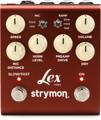
Strymon Lex Rotary Speaker Simulator Pedal V2
The rotary effect became synonymous in the 60’s and 70’s with guitarists using them to achieve a swirling chorus effect. There’s just one problem: today’s players don’t want to lug around a giant cabinet to gigs! Strymon came to the rescue with a modern take on the beloved effect with the Lex rotary speaker simulator. This pedal captures the enchantment of a rotating Leslie speaker in a stompbox. Additionally, the controls allow you to fine-tune the sound like never before. Lastly, the V2 model features MIDI, so you can change parameters on the fly with an external footswitch. If you’re looking for that classic Leslie-style rotary sound without busting the bank, the Strymon Lex rotary speaker simulator is for you!
Delay
BOSS SDE-3000EVH Dual Digital Delay Pedal
Rackmount delay power in a floor-based stompbox
Since 1978, Eddie Van Halen’s larger-than-life tone has been the envy of guitarists worldwide. Unfortunately for those looking to cop that massive tone, it was often the result of an equally massive 3-cabinet rig, packed to the brim with rack units and effects galore. The BOSS SDE-3000EVH Dual Digital Delay pedal condenses Van Halen’s delay setup into a much smaller form factor, with two discrete delay lines with up to 3,000ms, modulation accurate to the original unit, phase switches, filters, MIDI I/O, assignable footswitches, and much, much more. Plus, while the SDE-3000EVH perfectly mirrors the tone and functions of two vintage rackmount SDE-3000 units, it also sports an aesthetic that pays tribute to the original, all finished with iconic EVH stripes. If you’ve ever coveted Van Halen’s lush, spatial delay tone (and what Van Halen fan hasn’t?), then look no further than the BOSS SDE-3000EVH.
Keeley Halo Andy Timmons Dual Echo Pedal
Heavenly Andy Timmons–style dual echo
Everyone loves echo, so why not double it up in a single pedal? The Keeley Halo Andy Timmons dual echo pedal was custom-designed for the modern master of the 6-string — you guessed it — Andy Timmons. The Halo offers two different signal paths (A and B), allowing you to dial in two unique delay tones, that can be switched individually or combined into a single patch. A rhythm mode selector cycles between five unique delay types, from standard quarter- and dotted-eighth-note delays to tape-style echoes and, of course, Andy’s signature “halo” effect. Once you’ve fine-tuned your preferred setting using the Halo’s extensive tone-shaping controls, eight user presets are available to recall your custom creation instantly. Additionally, a host of performance-minded features, including tap tempo, infinite repeat/hold, remote switching, and programmable expression control, make the Halo an equally fitting choice for both studio and stage guitarists.
Line 6 DL4 MkII Delay Modeler Pedal
As an updated iteration of one of the most iconic delay units in guitar history, the Line 6 DL4 MkII delay modeler pedal returns with all the beloved features of the original, along with a slew of new features and modes. Fans of the first DL4 will appreciate how Line 6 retained the previous model’s layout but added some serious upgrades; for example, 15 HX-derived delay models (for a total of 30) offer a comprehensive assortment of all-new spacey echo tones. Plus, 4- and 1-switch loopers with 240 seconds of record time provide the same interactive feel that made the DL4 a stone-cold classic. An XLR microphone input, MIDI I/O, and microSD recording capability complete the package to deliver significantly upgraded configuration capabilities. Smaller, lighter, and more durable than the original — the Line 6 DL4 MkII is a worthy successor to the legendary DL4 and is a must-have piece of equipment for any delay aficionado.
Meris LVX Modular Delay System Pedal
To call the Meris LVX modular delay system a pedal is almost a disservice; this device is a veritable workstation of ultra-tweakable modular delay might. 2.54 seconds of dual delay are available to twist and tweak using the LVX’s configurable delay structures, processing elements, and a myriad of delay types. That may sound intimidating, but a built-in LCD screen makes navigation and editing a breeze. Plus, once you’ve fine-tuned your ideal delay sound, 99 preset locations offer instant recall. For in-the-moment experimentation, assign an expression pedal to multiple different delay parameters. And there’s even full MIDI functionality for enhanced control. Top all that off with a 60-second looper, and the LVX is truly a delay pedal with no precedent, ushering in a new era of echo box experimentation.
Reverb
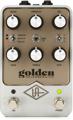
Universal Audio UAFX Golden Reverberator Pedal
The gold standard for reverb emulation
Spring reverb, plate reverb, hall reverb: Why not have all of them on a single pedal? The Universal Audio UAFX Golden Reverberator pedal contains three digital emulations of the most exalted echoes in music history. From the drippy dynamism of Spring 65 to the Plate 140’s lush tails to a spot-on re-creation of one of the world’s first digital reverb units, the Golden Reverberator re-creates each effect in its full vintage glory and then expands upon them with stereo/dual mono operation, modulation, and more. And with so many potential sounds to dial in, you’ll need a place to save your favorites; the Golden Reverberator has built-in preset slots to recall your custom creations instantly. You also get expanded editing possibilities via the UAFX Control app, making the UAFX Golden Reverberator one of the best guitar pedals on the Sweetwater site for the adventurous echo explorer.
Catalinbread Soft Focus Shoegaze Reverb Pedal with Chorus, Modulation, and Octave-up
Catalinbread captures the sound of an era
Can you say “shoegaze”? The Catalinbread Soft Focus shoegaze reverb pedal with chorus, modulation, and octave-up captures the shimmering sway of a classic rack-unit reverb patch frequently used by pioneering shoegaze artists in the early ’90s and beyond. It’s essentially a top-quality plate reverb split into three paths: a multi-voiced chorus modulator, octave-up reverb, and the original plate sound. Mixing these three results in billowing clouds of spacey echo that would surely make Slowdive and My Bloody Valentine proud — especially when you crank the Soft Focus into its upper reaches for beautiful, pad-like dreamscapes. Finally, the Soft Focus is much more than a simple re-creation; it rectifies nearly every issue that plagued the original unit, boasting enhanced controls, a significantly less-colored output, and a drastically improved noise floor for squeaky-clean operation.
JHS 3 Series Octave Reverb Pedal
Quality JHS shimmering reverb on a budget
Octave reverb for less than $100? Josh Scott and company are at it again with the JHS 3 Series Octave Reverb pedal, a no-nonsense take on the classic Brian Eno/Daniel Lanois shimmer effect. Don’t be fooled by this pedal’s utilitarian exterior — the 3 Series Octave Reverb was purposefully designed with Spartan aesthetics and a simple 3-knob control scheme to keep the price to a minimum while still providing made-in-the-USA JHS quality. Plus, while the exterior appears tame, plugging in the 3 Series Octave Reverb unlocks ambient clouds and swelling octave overtones, offering both +1 octave-up and -1 octave-down via the toggle switch. If you’re looking for a wallet-friendly way to transform your 6-string into an ambient reverb machine, then the JHS 3 Series Octave Reverb, along with the rest of the JHS 3 Series pedals, is one of the best guitar pedals available today.
Source Audio Ventris Dual Reverb Pedal
14 stackable reverb engines to explore
The Source Audio Ventris Dual Reverb pedal is a veritable workstation of stereo echo, packing 14 stackable stereo reverb engines into a single box. The Ventris is primed to cover all your reverb needs, from surfy spring sounds to subtle room ambience to a celestial shimmer. What’s more, the Ventris’s dual-reverb design allows you to stack two ‘verbs simultaneously to explore expressive ambient echoes and sculpt ghostly sonic soundscapes. And while the Ventris is an incredible studio tool, the knob-per-function layout, 3-parameter expression control input, and adjustable spillover make it a breeze to navigate onstage. Flexible stereo routing options, free Neuro Editor software, and switchable bypass modes complete the package, all adding up to a powerhouse of a reverb pedal that’s deserving of a spot on any echo-obsessed guitarist’s pedalboard.
Tone & Dynamic Effects
Origin Effects Cali76 Compact Deluxe Compressor Pedal
Studio-grade compression in a stompbox
Boasting studio-quality compression in a pint-sized box, the Origin Effects Cali76 Compact Deluxe compressor pedal is perfect for the seriously committed compression aficionado. This pedal’s design is inspired by one of music history’s most iconic FET-style compressor units. It utilizes Class A ultra-low-noise circuitry and parallel compression control to take that studio sound straight onto your pedalboard. From squashed country leads to rich and sustaining solos, the Cali76 perfectly captures the natural warmth, musicality, and transparent feel of the compressor unit to which it pays sonic tribute. Plus, while the Cali76’s ratio, attack, release, and level controls are par for the compression course, a distinctive dry knob allows you to blend your uncompressed tone into the signal for an incredibly dynamic sound. Add in the flexible 9-volt/18-volt operation, heavy-duty metal enclosure, and 3-color jewel lamp for gain reduction, and the Cali76 is truly a marvel of a compressor pedal that puts the power of the studio at your feet.
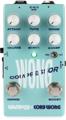
Wampler Cory Wong Compressor and Boost Pedal
Capture the tone of a modern funk master
In the world of guitars, there are a few genre-and-effect combos you can’t escape. Metal and distortion; blues and overdrive; shoegaze and . . . everything. What about funk? If you ask modern 6-string funk master Cory Wong, then the answer is twofold: compression and boost. The Wampler Cory Wong Compressor and boost pedal combines both effects into a single box to impart a dynamic edge to your rapid-fire triads and chicken-scratch muted-string rhythms. The compressor section is based on Wampler’s highly renowned Ego Compressor, supercharged with an independent footswitchable boost section at Wong’s request. You also get an XLR output with ground lift for effortless live or studio recording direct. The result is a performance-minded compressor and boost pedal that’s as idiosyncratic as it is usable, and you’ll rarely be tempted to turn off this pedal with its side-mounted always-on compressor button.
Empress ParaEq MKII Deluxe Equalizer and Boost Pedal
Studio-grade equalization in a stompbox disguise
The Empress ParaEQ MKII Deluxe equalizer and boost pedal is an all-analog, studio-quality sound-sculpting unit cleverly disguised as a compact effects pedal! Jokes aside, this EQ pedal delivers an intense tone-shaping experience that you won’t find on a typical EQ pedal. 3-band equalization, fully sweepable Q, shelving filters, 12dB/oct highpass/lowpass filters — the Empress ParaEQ MKII Deluxe spares no expense when it comes to tone-shaping power. To up the ante even more, Empress packed in a 30dB switchable boost section to crank your signal, making it a breeze to drive long signal chains or slam the front of your tube amplifier. If you are looking for an EQ pedal with unparalleled control, uncompromising fidelity, and studio-level functionality, then look no further than the Empress ParaEQ MKII Deluxe equalizer and boost pedal.
ISP Technologies Decimator II Noise Reduction Pedal
Decimate unwanted noise in your signal
Few pedals offer more utility than a rock-solid noise gate like the ISP Technologies Decimator II noise reduction pedal. Whether you’re cranking the gain to brutally high levels or simply plugging into noisy power, the Decimator II decimates all unwanted noise, leaving your guitar’s signal pure, strong, and hum-free. It’s remarkably simple — a single threshold knob to dial in the level of your gate from -70dB all the way to +10dB. However, the Decimator II’s most impressive feature is found in what it doesn’t do — ISP’s Linearized Time Vector Processing drastically improves the transparency and smoothness of your release response while simultaneously eliminating release ripple for an incredibly natural note decay. In short, the ISP Decimator II slices out unwanted noise without coloring or adding an unnatural feel to your dry signal.
Multi-effects
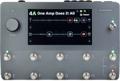
Neural DSP Quad Cortex Quad-Core Digital Effects Modeler/Profiling Floorboard
An all-encompassing modeler to replace your rig
As an absolute powerhouse of modeling might, the Neural DSP Quad Cortex quad-core digital effects modeler/profiling floorboard replaces about everything in your signal chain besides the guitar! This do-it-all wonder boasts 50 top-tier amp models, 1,000 different cabinet emulations, and 70 stompbox effects to give you the power of a well-stocked studio in a grab-and-go format. A large, 7-inch, full-color touchscreen offers an exceptionally intuitive workflow free of menu diving so you can spec out your dream rig. Plus, there are 11 rotary footswitches for hands-free operation. There’s also full MIDI functionality and audio-over-USB, so you can utilize the Quad Cortex as a studio-grade audio interface. And believe us when we tell you that these features comprise only a fraction of this pedal’s power — the Quad Cortex represents a paradigm shift in the stompbox sphere, and it’s one of the best pedals out there for the forward-thinking guitarist.
Line 6 Helix Guitar Multi-effects Floor Processor
Line 6’s most cutting-edge creation yet
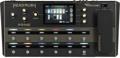
The Line 6 Helix multi-effects floor processor goes far beyond its multi-effects categorization — truthfully, there’s very little that this unit can’t do! Boasting enhanced tones courtesy of the Line 6 HX modeling engine, the Helix has more than 300 amps, cabs, mics, and effects models that are more accurate and true-to-life than ever before. The handy 6.2-inch LCD and 12 touch-sensitive footswitches make for an intuitive workflow. The Helix also functions as a full-featured 8-in/8-out audio interface, with extensive I/O and even a mic-level XLR input. Finally, a trio of expression pedal outs, an integrated looper, and heavy-duty build quality make the Helix an excellent choice for the gigging or recording guitarist looking to ditch the baggage of a traditional amp and pedalboard setup. Line 6 has long served as the vanguard of guitar modeling technology, and the Helix proves that Line 6 is at the top of their game.
Headrush Prime Guitar Multi-effect/Amp Modeler/Vocal Processor Unit
One-stop-shop effects library at your feet
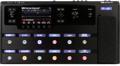
Calling the Headrush Prime guitar multi-effects/amp modeler/vocal processor unit a “pedal” is a huge understatement. Given its built-in expression control, looper, and microphone emulation system, Sweetwater guitarists refer to this legendary unit as a multi-effects playground. Plug your guitar straight into the Headrush Prime to access a bevy of digitally modeled amps, cabinets, and effects, and enjoy endless tonal experimentation. The Headrush Prime also serves as a portable audio interface, vocal processor, and audio layering engine for on-the-go creation. The Headrush Prime’s intuitive interface and 12 footswitches make it an excellent match for beginning guitar enthusiasts and seasoned studio professionals. If you want to give your rig the royal treatment, then the Headrush Prime is a one-way ticket to success.
Eventide H90 Harmonizer Multi-effects Pedal
Comprehensively covers almost every effect in the book
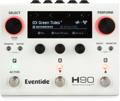
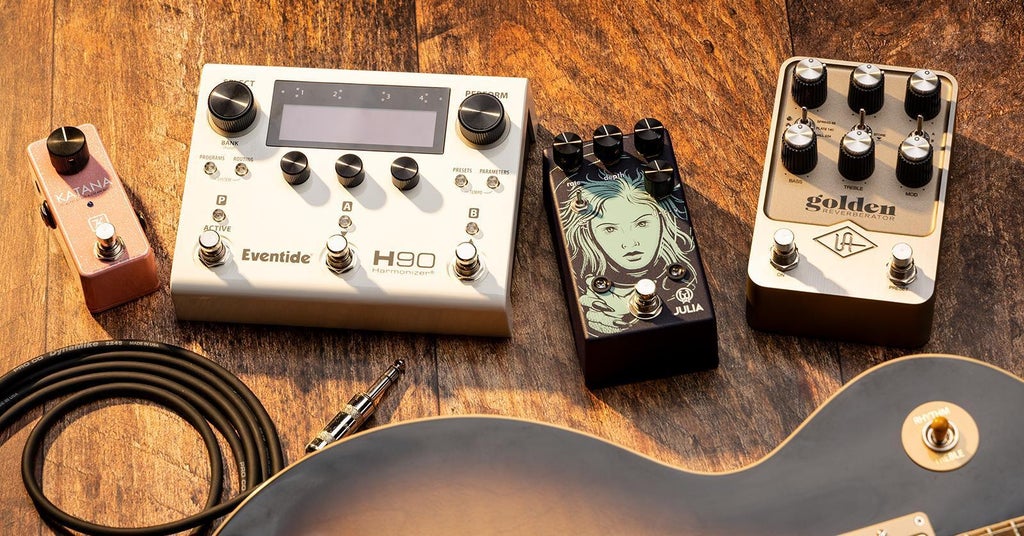
One of the most powerful multi-effects units available on the Sweetwater site is the Eventide H90 Harmonizer multi-effects pedal. It packs the ARM-based architecture of Eventide’s flagship H9000 rack unit into a pedalboard-friendly box. Considering the H90’s 62 effects algorithms, beautifully crafted presets, and compelling H90 control software, it might be easier to list what the H90 doesn’t do — the H90 truly is the pedal for the guitarist who wants to operate the majority of their effects setup from a single pedal. And while the utilitarian control scheme of the smaller H9 certainly has its fair share of fans at Sweetwater, we can’t help but appreciate the H90’s plethora of performance-ready controls and sweeping array of I/O options. If you’re after the pinnacle of effects pedal versatility, performance, and sound, then it’s tough to top the H90.
Guitar Pedal Buying Advice
Like picking an all-time best ice cream flavor or a favorite color to paint your living room, choosing the right guitar pedal is completely subjective, and no one can tell you what you’re going to love. However, there’s a lot to know about different kinds of guitar effects and what they can do for you. So, before you start buying pedals at random, you’ll want to get a solid overview of the basics.
This Sweetwater buying guide takes a pedalboard-style approach to your signal path, providing important insights into the wide world of guitar effects. Since there’s so much to consider when purchasing guitar pedals, don’t hesitate to call your Sweetwater Sales Engineer at (800) 222-4700 if you have any questions.
- What Is the Best Signal Flow?
- Gain Stage
- Frequency Effects
- Modulation Effects
- Time Effects
- Other Effects Pedals
- Advanced Pedal Concepts
What Is the Best Signal Flow?
Before we dive into guitar pedals, we should talk briefly about signal path because that will determine how your pedals interact with each other. By and large, the path from your guitar to your amplifier is a straight line, and anything you stick into that path will affect everything down the line. That makes the order of your effects almost as important as the kind of effects that you put on your pedalboard. While there’s no “right” way to arrange your pedals, the most common arrangement looks like this: guitar to gain stage to frequency to modulation to time to amp.
If you’re new to pedals, then you may be wondering what kind of pedals are in the gain stage, the frequency stage, and so forth. So, without further ado, let’s take a look at each section and the kinds of effects that belong there.
Gain Stage
The first part of your signal chain is where you’ll typically stick any effects that are based on gain staging. These can range from pedals as mild as clean gain boosts to insane fuzz effects. This topic is so deep that we even have an entire Boost, Overdrive, Distortion, and Fuzz Pedal Buying Guide devoted to gain-staging effects.
The important thing to keep in mind is that these pedals shape the foundation for the rest of your tone. You can construct harmonically complex tones with gain-based effects alone, but if you’re at the beginning of an extended signal chain, then you may get better results by keeping it simple. There are many kinds of gain-staging pedals: clean boost, preamp, overdrive, distortion, compression, and volume control.
Clean Boost Pedal
The name suggests it all. These pedals increase (boost) your signal without adding color to your tone. Think of it as the first stage of a preamp section of a recording console. In that stage, all you are doing is amplifying a weak signal to a more suitable level for mixing and listening. For guitar use, a boost pedal can amplify your signal, push the front end of another pedal to create new sounds, or push the front end of an amp to overdrive it.
Preamp Pedal
We talked about how a clean boost pedal is the first stage of a preamp section of a recording console. Well, a preamp pedal is the next stage of that. Here, not only can you boost the signal, but you can also adjust the EQ to how you like it — all in one pedal. This small (yet huge) EQ function is why these two pedals deserve their own section instead of getting clumped together. Preamp pedals are great for tone shaping before hitting the gain stage’s overdrive and distortion sections.
Overdrive Pedal
Overdrive pedals simulate the breakup you get when you push an amplifier to the point where it starts to distort, emulating the progressive compression and distortion intensity based on incoming volume. However, many overdrive pedals (like the classic Ibanez TS808 Original Tube Screamer) are often used as dirty boosts, driving your amplifier’s preamp while also adding a bit of color and texture.
There are two gain stages in a typical overdrive: the input volume (how hard you hit the effect) and the output volume (this drives the rest of your signal path). It’s also common to see at least a simple tone control for backing off high frequencies, though bass, treble, and other tone-shaping controls aren’t rare.
Distortion Pedal
If your tone was a batch of chili, then the various types of distortion pedals would be the peppers. They come in a wide range of styles — each with its own flavor and heat range. But they all serve the purpose of spicing up the mix. While some rare tube models exist, typical distortion pedals use diodes and some form of transistor to push incoming signal to the clipping point. The transistor has a lot to do with the character of the distortion, with variants such as silicon-, germanium-, and FET-based models, each imparting a particular set of nuances. Taken to an extreme, where the distortion loses virtually all its dynamics, you get fuzz effects.
Typical controls on distortion pedals include: an incoming volume adjustment, drive (gain boost), and a tone knob that modifies the frequency balance. Distortion pedals are also regularly combined with other effects, such as compression and overdrive.
Compression Pedal
As a type of signal processor, guitar compressors aren’t all that different from the compressors you’ll find in the studio. They turn down the volume of signal that’s louder than a certain threshold, decreasing the dynamic range. If the compressor is set to kick in quickly and boost the output, effectively making the quietest sound close to the same volume as the loudest ones, then you get a sustain effect that’s great for solos. On the other hand, if the compressor is set to kick in after a short delay, allowing unaffected transients to pass without gain reduction, then the punchier effect you get is ideal for chicken pickin’ and other more articulated playing styles.
Compression pedals vary in complexity from simple one-knob compressors with fixed settings to sophisticated studio-style compressors with attack, release, threshold, ratio, and volume controls. The most common configurations you’ll find consist of two or three knobs, including a gain adjustment and additional controls, that frequently combine two other functions — such as ratio and threshold — into one knob.
Volume Control
These large rocker pedals are more of a utility than an effect, essentially placing a volume control at your feet. Though you can stick one anywhere in your signal path, volume control pedals usually live somewhere toward the end of the gain-stage section. They’re perfect for creating smooth swells that add ambience to your music or subtle fade-outs, but their variable levels make them less effective than gain-boost pedals when you want to give your amplifier an extra push.age section. They’re perfect for creating smooth swells that add ambience to your music or subtle fade-outs, but their variable levels make them less effective than gain-boost pedals when you want to give your amplifier an extra push.
Frequency Effects
Frequency effects cover anything in the filtering domain, including equalizers, wah-wah effects, pitch shifters, and similar effects. This stage follows gain staging because gain-based effects tend to add a lot of harmonic complexity to your sound, which either negates filtering or produces unflattering results.
EQ Pedal
Nothing does the trick like an EQ pedal when it comes to making precise frequency adjustments, sculpting harmonics, or correcting problems in tone. It’s possible to use one of these at the end of your signal chain to correct for frequency imbalances caused by modulation, delay, reverb, or other effects, but most guitarists seem to get the most out of their EQ pedals by sticking them right after the gain-staging section. That way, you can fix any tone problems before they throw off other effects and create more serious frequency imbalances that are much harder to correct.
Most guitar equalizer pedals are graphic EQs with between five and 10 frequency bands. These are easy to dial in on the fly just in case, for example, you need to make quick adjustments to suit a particular venue. Other formats range from simple amp-style tone controls to full studio-style parametric layouts — both of which are great for punching in creative tone shifts and fixing frequency imbalances.
Envelope Pedal & Wah Pedal
A whole class of effects pedals is based on sweeping a resonant peaking filter across the frequency spectrum to create a vocal-style articulation. The oldest of these types of pedals is the wah-wah, which lets you sweep the filter manually by rocking your foot. As a rhythmical element, it’s a mainstay of funk and disco, but the continuously variable expression of the wah-wah is a fundamental sound of classic-rock and blues-rock solos as well. While the controls are generally simple, as they are dominated by a single rocker pedal and a few adjustments at most, wah-wahs differ considerably based on their circuitry and their control mechanism (potentiometer vs. optical sensor).
The autowah pedal (also called an envelope filter) was developed soon after the original wah-wah pedal. By triggering a resonant peaking filter off incoming transients (usually, the pick hitting the string), the autowah was originally intended to produce the same choppy rhythm sound you got from a wah-wah pedal. However, the faster automatic frequency sweep response that these pedals provided opened up a new range of effects. Add to that a broad range of controls, including filter styles, dynamics response, envelope shape, and others, and no two envelope filters sound or behave the same.
Pitch-shifter Pedal & Harmony Pedal
Pitch shifters and harmony pedals come in many styles, from the classic momentary octave-up pedal or octave-down bass-emulation models to polyphonic harmony pedals that let you dial in full chords. Each of these pedals is its own unique beast, with controls depending entirely upon its function. If you enjoy creating unique sounds and thinking outside the box with your tone, then you can have a lot of fun with pitch shifters and harmony processors.
Although effects manufacturers have made great strides in pitch-shifting technology, there are two things you should still know and consider about pitch shifters and harmony pedals specifically. Firstly, while the effects can be creative and cool, none of these pedal sounds are particularly realistic, and the more you alter the pitch, the less realistic they sound. Secondly, the lower the pitch you play, the harder it is for a pitch shifter to track the note, and you may end up with significant lag or glitches. If you have to choose between playing low and adding harmonies above or playing high and adding harmonies below, then the latter is almost always the better option.
Modulation Effects
While modulation pedals affect combinations of gain staging, frequency, and time, they tend to live in a special place on your pedalboard — somewhere between frequency effects and more pronounced, time-based effects. The term “modulation” really just means that the effect is based on changing something over time. In the case of modulation pedals, the change is regulated by a low-frequency oscillator (LFO), and the part of your signal the LFO affects is the biggest defining characteristic in this pedal class.
Tremolo Pedal & Vibrato Pedal
Both tremolo and vibrato effects are based on a simple LFO that modulates one tonal element and nothing more. Tremolo pedals modulate volume (a classic rockabilly and surf effect), whereas vibrato pedals modulate pitch in a way that’s similar to a Leslie rotary speaker. In either case, basic controls include depth (the extent of the change in volume or pitch) and rate (the speed of the effect).
Most of these pedals will also allow you to shape the LFO, with tremolo pedals regularly offering a range from smooth pulses to a hard square wave that adds a percussive click to your sound. Those vibrato pedals that try to emulate Leslie speakers more closely will usually include controls for changing the effect rate (often limited to two settings) and adding ramp-up time between changing speeds.
Chorus Pedal & Flanger Pedal
Chorus and flanger effects are so similar that they’re not only frequently confused, but they’re also often covered by the same pedal. This makes sense because flanging emulates an old studio trick involving desynchronizing two tape reels, and chorus is the result of an early attempt to emulate flanging that produced slightly different results. The biggest difference between the effects themselves is that flanging produces a distinct rise-and-fall sound, whereas chorus pronounces a more spacious shimmer with noticeable delay.
Chorus effects involve modulating a delayed signal just like a flanger; however, there’s considerably more delay and no (or very little) feedback. They tend to have broader depth and rate controls. Additional controls include pre-delay (to offset the delayed signal further) and a tone knob (to cut down the brightness). The result? You can produce considerably more pronounced effects and noticeably more delay with a chorus than with a flanger.
Flangers produce a movable comb filter (a series of frequency dips and peaks) by doubling the incoming signal, delaying the doubled signal slightly (no more than a few milliseconds), modulating the delay so the filtering shifts a bit, and feeding a small amount of the delayed signal back into the effect. Typical flanger controls include the modulation rate and depth, as well as the amount of feedback.
Phaser Pedal
Phasers use an interesting phase-cancellation method to create a number of frequency notches and peaks at evenly spaced intervals across the spectrum. An LFO modulates the cutoff frequencies of the phase-shifted signal, causing a gradual sweep that’s similar to flanging but still a bit subtler. It’s a favorite effect for adding color to rhythm guitar. While classic phasers typically have just a single rate control, some modern phasers include a depth control, which lets you increase the amount of resonance in the filtering to produce a much more noticeable effect.
Time Effects
From subtle ambience to infinitely deep, spacious textures, time-based effects are found on pedalboards throughout all of modern music. They range from distinctly artificial to astonishingly realistic. Like distortion effects, time-based effects pedals are all a matter of taste, and the perfect delay or reverb pedal for a surf guitar may have little in common with the one you’d want for a metal lead.
Delay Pedal
At its simplest, delay is an effect based on taking the original incoming signal and repeating it some time (or multiple times) later. The basic controls of any delay pedal include the delay time, the number of times the delay is repeated (feedback), and the balance between the incoming and delayed signals. More importantly, delay effects are common in any kind of modern music, from the short slapback delay used in surf and rockabilly to the long delays favored by blues-rock lead guitarists. Many guitarists don’t consider a pedalboard complete without delay.
Delay types are generally based on the type of circuitry or digital algorithm used to create the effect. Early analog delay pedals used loops of tape or a series of bucket brigade chips, both of which produce distinct harmonics and decay characteristics as the delay repeats trail off. Later, digital delays developed distinct sounds of their own, with Adaptive Delta Modulation and PCM delay types providing unique characteristics that guitarists still love. Today, delay pedals often feature multiple delay styles and delay lines (taps) that let you create an impressive range of effects.
Reverb
The goal of any reverb — regardless of whether you’re using the effect on vocals in the studio or a keyboard onstage — is to create a sense of space around the sound. Some of these effects are purely synthetic (and impressively musical), others emulate classic analog-reverb types (such as springs and plates), and others emulate the sound of large rooms and real spaces. Comparing one reverb to another is next to impossible since reverb is all a matter of personal taste.
Depending on the onboard options, reverb pedals can have anywhere from a single level of control to a plethora of digital settings that allow you to craft your ideal reverb tone. The common controls you’ll find include decay (how quickly the reverb effect fades out) and either a level or a wet/dry balance to adjust how much reverb you hear. Tone controls to tame high end are also fairly common.
Other Effects Pedals
There are many additional types of guitar pedals that fall outside this typical pedalboard arrangement, including amp emulators, instrument modelers, loopers, multi-effects pedals, and more.
Amp-emulation Pedal
Lying somewhere between distortion and overdrive, amp-emulation pedals model the specific characteristics of particular styles of guitar amplifiers. Amplifier-emulation pedals are a lot like amplifiers in that there are many of them, and they each offer a different range of tones, from subtle warmth to insane distortion and drive. These are extremely cool, particularly if you use a neutral, solid-state amplifier or want to record direct without an amplifier. Depending on whether you want to use it as a type of distortion or to simulate an amplifier, you may stick your amp-emulation pedal toward the front or the back of your pedalboard.
Instrument-emulation Pedal
Want to switch to an acoustic guitar in the middle of a song? How about turning your guitar into an organ? There are some seriously interesting instrument-modeling pedals out there that can totally transform your sound. What’s more, these pedals seem to be getting more popular every year, so there’s always something new to explore.
Looper Pedal
Over the past decade, looper pedals have become increasingly popular. The idea is pretty simple: you start recording when you step on the footswitch, and when you step on it again, what you just played loops back indefinitely. Some loopers are much more complex than this — with multiple parts, sync capabilities, and other cool features — but even a basic looper can be an amazing songwriting and practice tool. What’s more, there are many excellent ways to use loopers onstage, particularly to create background rhythms and continuous effects.
Loop-switcher Pedal
Not to be confused with loopers, loop switchers are a major part of advanced pedalboard construction. These devices let you set up independent effects loops that you can switch on and off and arrange in various configurations. One of the bonuses of using a loop switcher is that you can leave all your pedals in the signal path and then engage them all with a single press of a footswitch. This lets you pull off massive tone changes in the middle of a song, including switching amplifiers right along with your effects. If you look at the pedalboards of the top guitarists out there, then there’s a good chance you’ll find a powerful loop switcher in there.
Multi-effects Pedal
Take all of these other pedal types and toss them into one oversized pedal, and you get a typical modern multi-effects pedal. Some of these pedals are extremely cool, with physical modeling that not only covers all of the bases but also allows you to dig in deep and tweak your effects as though they were individual pedals. If you play in a cover band or on a worship team, then multi-effects pedals can save you a lot of money and a lot of trouble. They don’t offer quite the same freedom and possible sound quality as traditional pedals, but having your whole pedalboard in a single unit that can be as small as a single pedal is mighty convenient.
Advanced Pedal Concepts
A few additional concepts will help you make informed decisions about the pedals you buy. These are deep subjects, so these quick overviews don’t cover everything, but they’re a good place to start.
Stereo vs. Mono Pedals
Some pedals — particularly time-based types — can run the effect in mono or stereo. Running pedals in stereo allows you to take full advantage of the depth and dimension of spacial effects, such as room reverbs and ping-pong delays. The downside is that stereo doesn’t do you much good unless you’re either recording or running two amplifiers. What’s more, stereo effects can come with some unpleasant phase-related issues that can cause your tone to get lost in the mix. It’s a bit of a gamble, but when stereo effects work, they’re absolutely amazing.
True Bypass vs. Buffered Bypass
This is the topic of endless debates between tweaky guitar players. The simple answer is that neither true bypass nor buffered bypass are inherently better than the other. Ostensibly, true bypass completely cuts the circuitry of the pedal out of the signal path when it’s not in use, keeping your signal path free from any additional coloration caused by the pedal’s circuitry. However, there’s still a considerable amount of wiring in guitar pedals, and several true-bypass pedals in a row will add the equivalent of several feet of extra guitar cable.
Buffered-bypass pedals may affect your tone, but their small amount of amplification improves signal retention and fights the high-end attenuation caused by an extended cable run. If you’re running a few pedals over a small distance, then true bypass may be better for you. But if you have a packed pedalboard, then buffered bypass may provide you with better tone all the time.
Batteries vs. AC
There’s a persistent myth that all AC power supplies are noisy and can ruin your sound. While there’s no getting around the fact that bad power can affect your pedals (and batteries will get around that issue), bad power will be an even bigger problem for your guitar amplifier than your pedalboard. Some pedalboard power supplies are great at fighting power-related noise, but the best thing you can do for your guitar gear is to get a decent power conditioner and run your amp and your pedals through it. That way, you get clean sound and don’t need to worry about juggling 9-volt batteries when your pedals die in the middle of a show.
Grab Your New Guitar Pedal Today!
Choosing a guitar pedal is hard, but it doesn’t have to be! This guide provides you with an excellent jumping-off point for selecting the right guitar pedal. If you’d like personalized
recommendations, then please call your Sweetwater Sales Engineer at (800) 222-4700.