
Clarinet Quickstart Guide
TIP: In all things regarding your new clarinet, ask your private teacher or school band director. As they teach you how to play the instrument, they will be able to answer your questions and give you advice about care and maintenance.
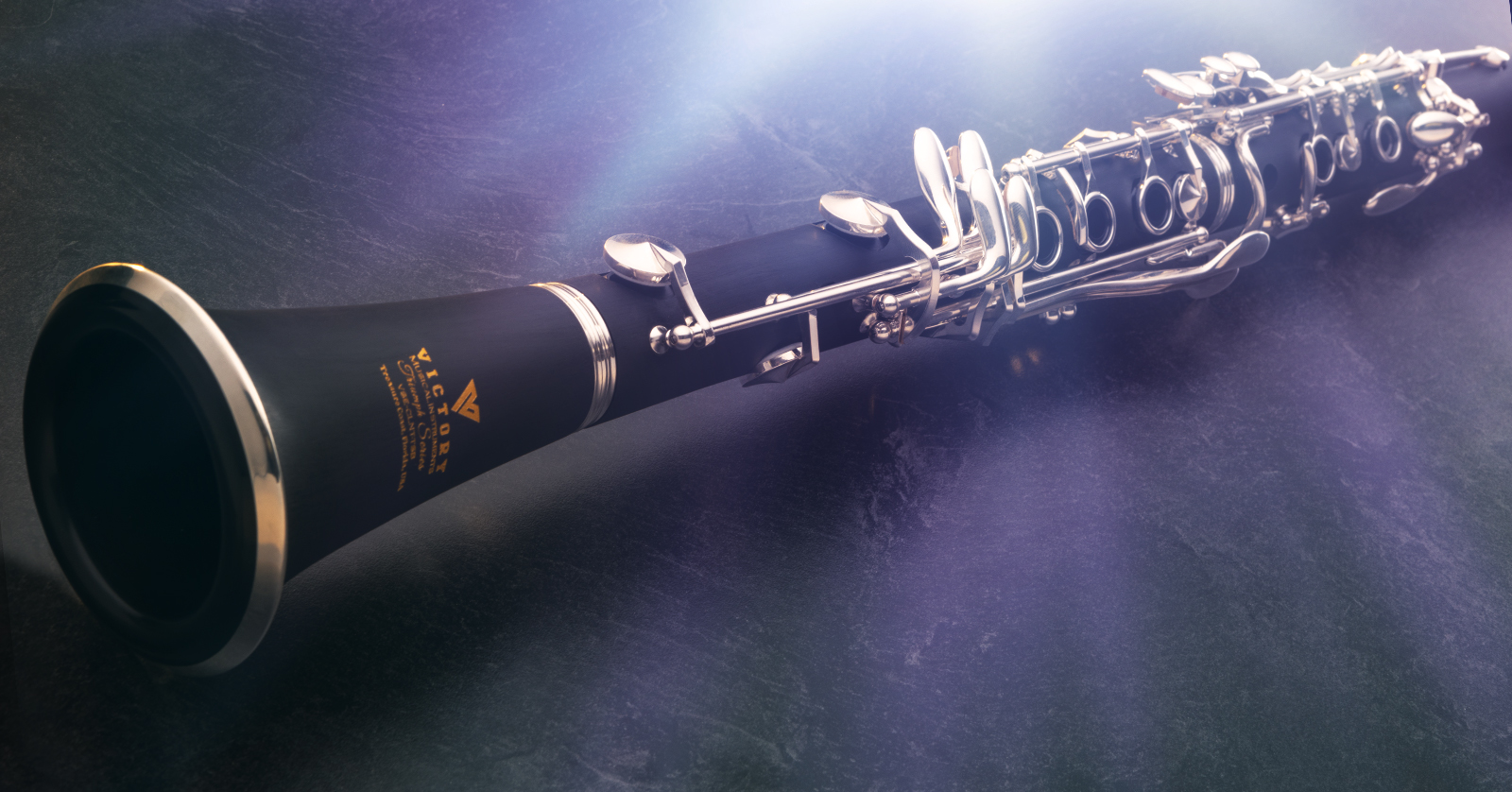
Congratulations on your new B♭ clarinet from Sweetwater. The clarinet is one of the most versatile instruments, and is at home in many styles of music, whether it’s jazz, classical, or folk music across many cultures.
- Parts of a Clarinet
- Getting Ready to Play Your Clarinet
- How to Assemble a Clarinet
- Proper Playing Technique for Clarinet
- How to Tune Your Clarinet
- Clean your Clarinet When You Are Done
- Clarinet Care and Maintenance
Parts of a Clarinet
The clarinet is a reed instrument in the woodwind family. You produce sound by blowing air along the reed, controlling the vibration of a column of air.
Traditionally, the parts of a clarinet’s body are made of a dense, hard wood called grenadilla, or African blackwood. Beginner-level instruments are often made of plastic or a synthetic resin, while some advanced instruments are made with an engineered blend of grenadilla wood particles and polycarbonate.
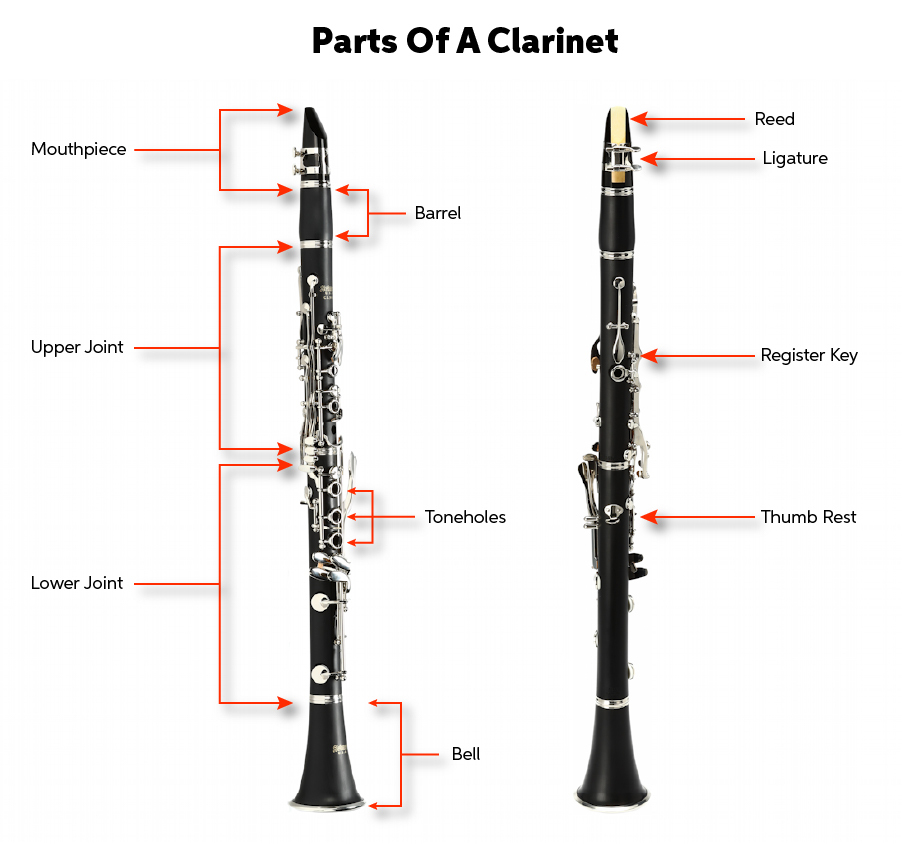
Mouthpiece, reed, and ligature
The mouthpiece is where your sound begins. It is made of hard rubber or plastic. It holds the reed, secured by a ligature.
The reed is a carved and shaped piece of cane. Cane reeds need to be moistened and carefully maintained. They wear out with use and need to be replaced frequently. Optionally, there are synthetic reeds, which are longer-lasting, but most musicians and teachers prefer cane reeds.
TIP: Ask your teacher about what kind of replacement reeds you will need. You should carry extra reeds in your case. A good rule of thumb is to always have three reeds with you.
Intermediate and professional clarinetists often customize their clarinet with a different mouthpiece to produce different kinds of tones and ease playability.
A mouthpiece will come with a ligature to hold the reed in place. Ligatures can be made of metal, cloth or leather.
Barrel
The barrel connects the mouthpiece with the rest of the clarinet and contributes to the instrument’s tone. The clarinet is tuned by adjusting the barrel’s position very slightly. Professional musicians often customize their clarinets with a replacement barrel that helps create the kind of tone they want.
Upper joint
The longest part of the clarinet’s column of air is divided into two sections that come apart.
The upper joint holds the tone holes and keys that you play with your left hand to produce different notes. The keys of the upper joint are connected to the lower joint using the bridge key mechanism.
On the back of the upper joint is the register key, which enables playing notes in the upper register.
Lower joint
The lower joint also contains keys and tone holes, which you play with your right-hand fingers. On the back is the thumb rest, where — you guessed it — you put your right-hand thumb to hold the instrument.
Keys and tone holes
The keys and the tone holes are connected to levers that you manipulate to enable you to close the holes in different combinations. This changes the vibrating frequency of the column of air, enabling you to play different notes.
Bell
The bell is the flared piece at the end of the air column. It amplifies the sound.
Getting Ready to Play Your Clarinet
IMPORTANT: Clarinets are sensitive to changes in heat and humidity and can crack if not warmed properly. If you just received a new clarinet, bring it inside and wait a full day to permit your clarinet to acclimate to the temperature and humidity in your house. Then you can take it out. We will discuss this further in Sweetwater’s Clarinet Care and Maintenance Guide.
Clarinet Care and Maintenance Guide
How to Assemble a Clarinet
TIP: It would be best if you have your teacher show you how to assemble your clarinet for the first time.
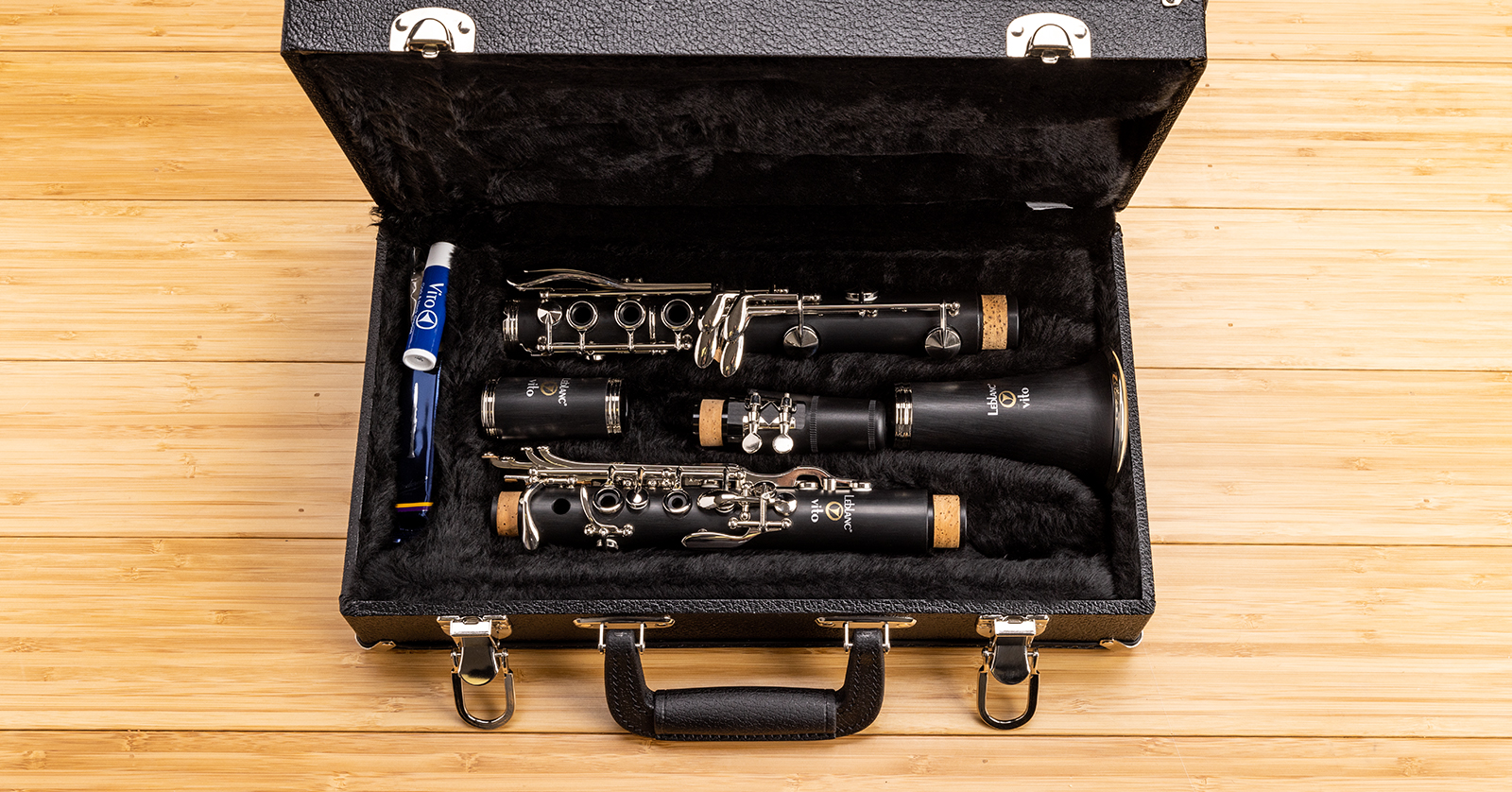
Put your clarinet case on a table. Make sure it’s right side up, with the manufacturer’s logo on the lid. Open the latches and lift the lid.
Moisten your reed
Take a reed and put the tip into a glass with two to three inches of water. Let it soak for no more than three minutes. Alternately, you can place the tip of the reed in your mouth and let your saliva moisten it. Be sure not to let your teeth contact the reed, and don’t suck on it.
Grease the corks
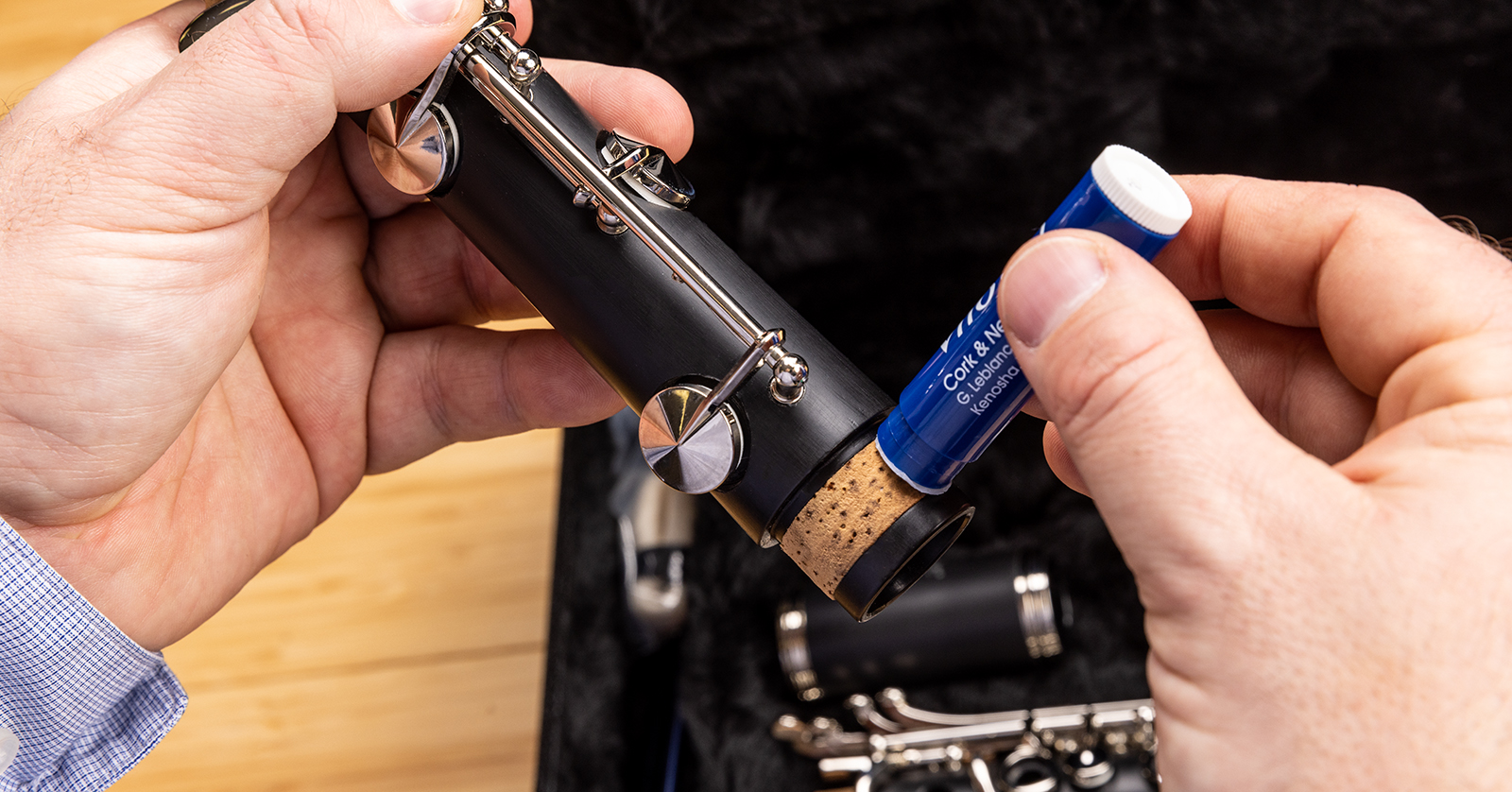
Each section of the clarinet is fitted into the next by means of a short, protruding tenon which is wrapped in cork.
Your clarinet comes with a starter stick or tub of cork grease. Apply a small amount of grease to the cork and use your finger to spread it all the way around. Do this for each piece of cork on each section before pushing the sections together. If your clarinet is brand-new, you will need to apply grease the first few times you reassemble the clarinet. After that you only need to apply grease if the joints are sticking and not coming together easily. The proper amount of grease not only creates a tight seal at each joint, but also preserves the cork and reduces the need for repairs.
Attach the bell
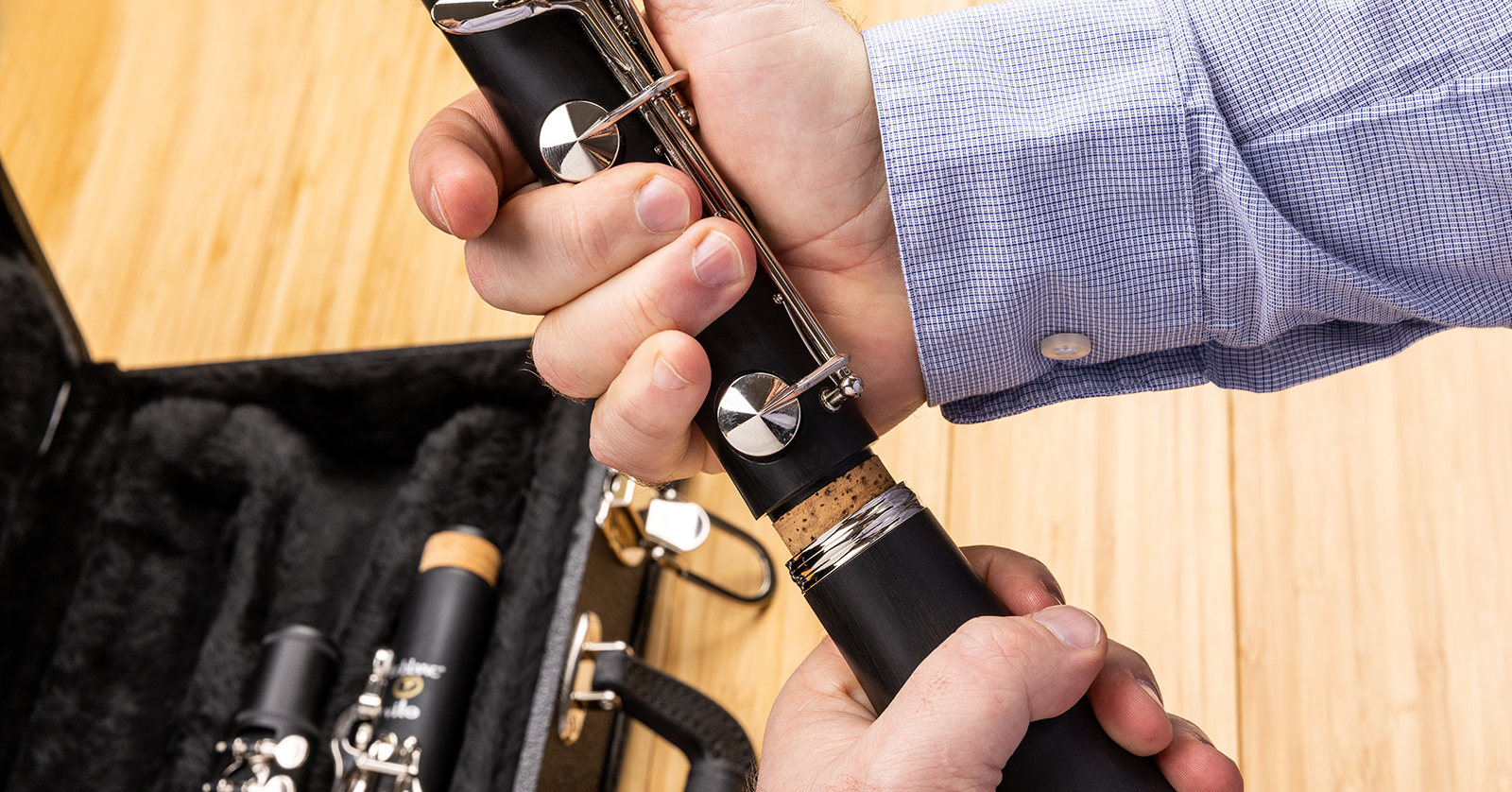
Fit the bell onto the lower joint with a slight twist.
Assemble the upper and lower joints
TIP: Ask your teacher to show you how to connect the upper joint and the lower joint and align the bridge key mechanism correctly.
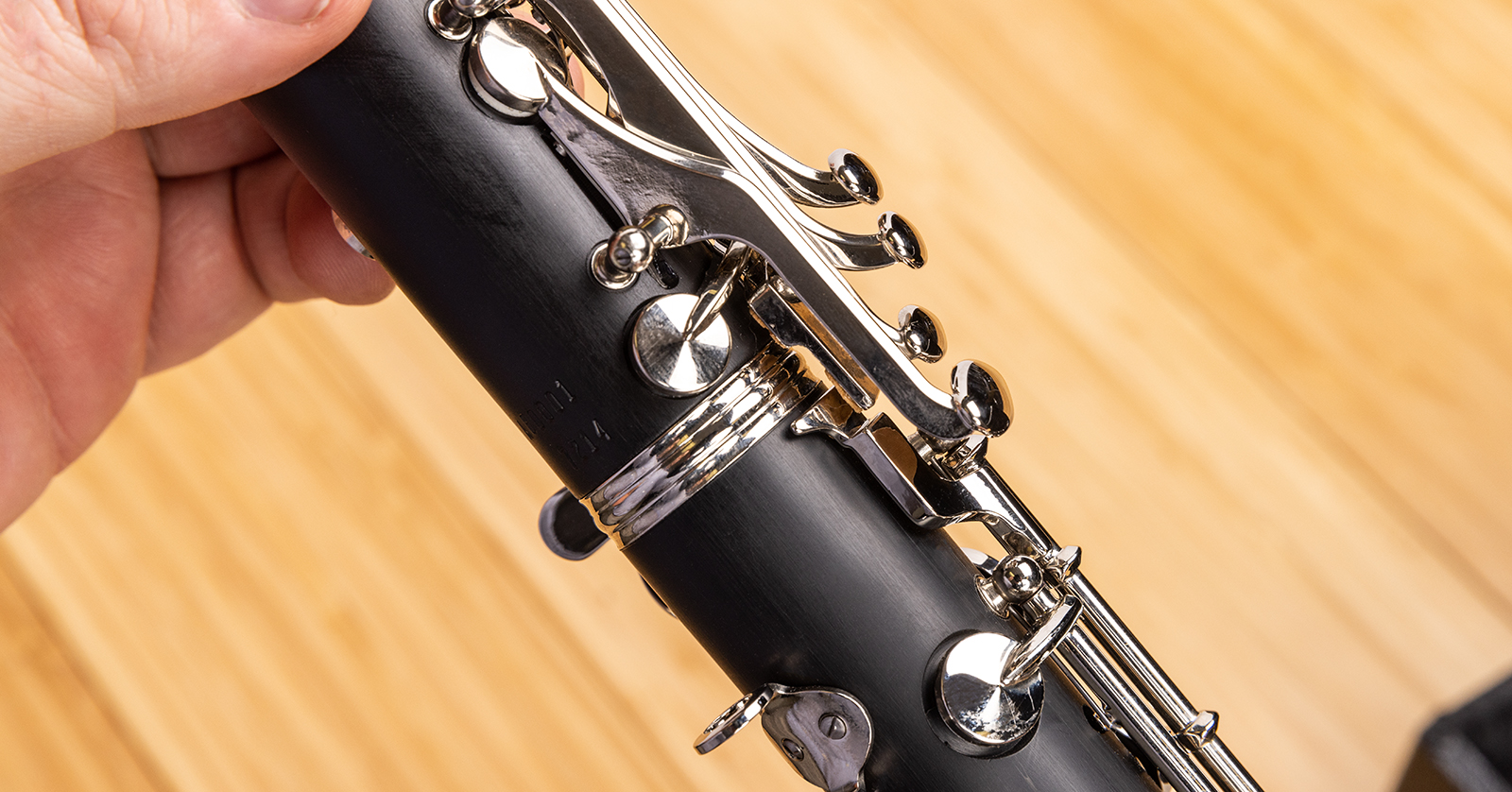
Take the upper joint in your left hand and hold down the ring key, which lifts up the bridge key, identified in this photograph.
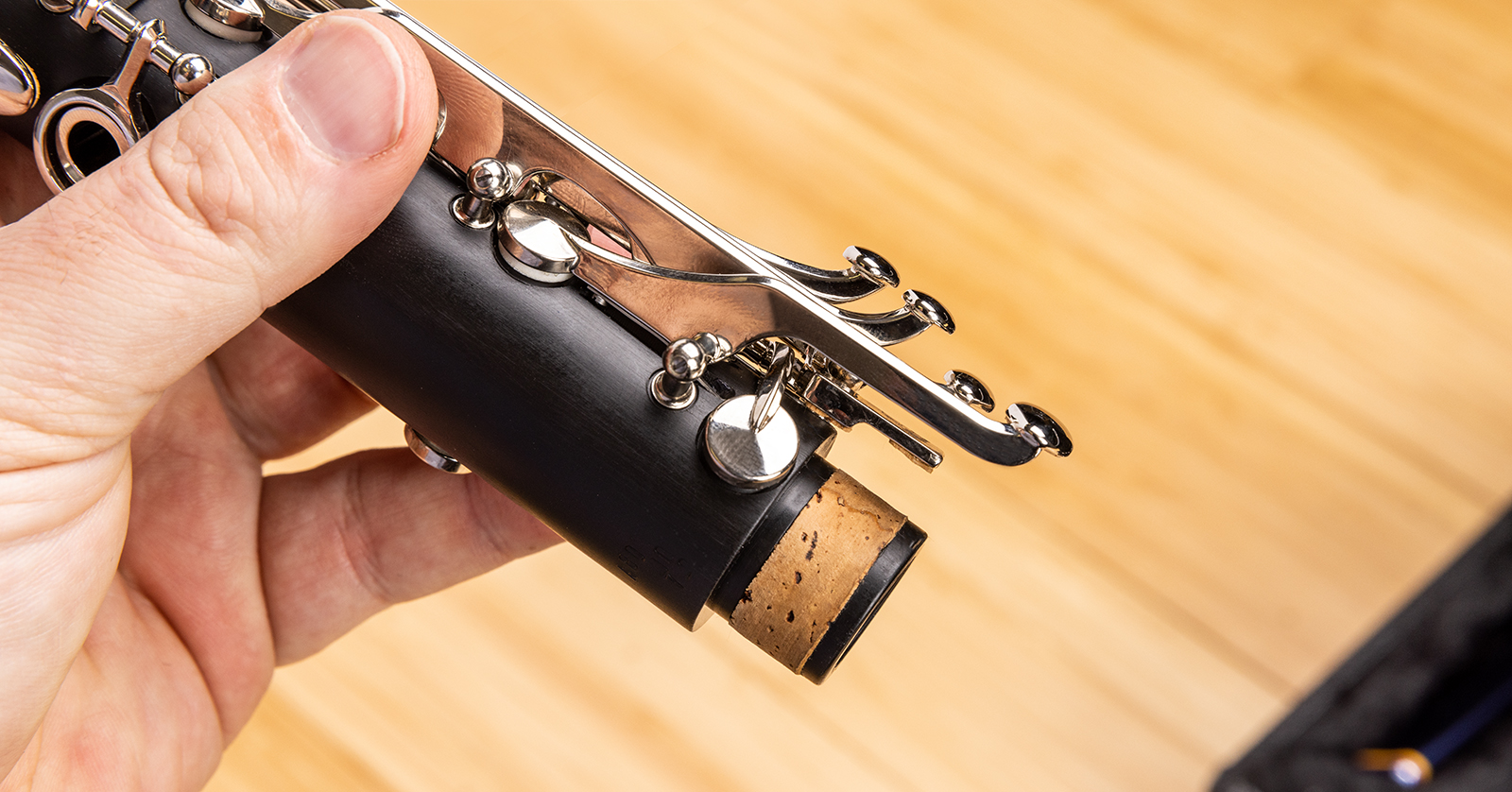
Take the lower joint in your right hand, holding it by the bottom. Place your fingers on the wood rather than the metal to avoid damaging the keywork.
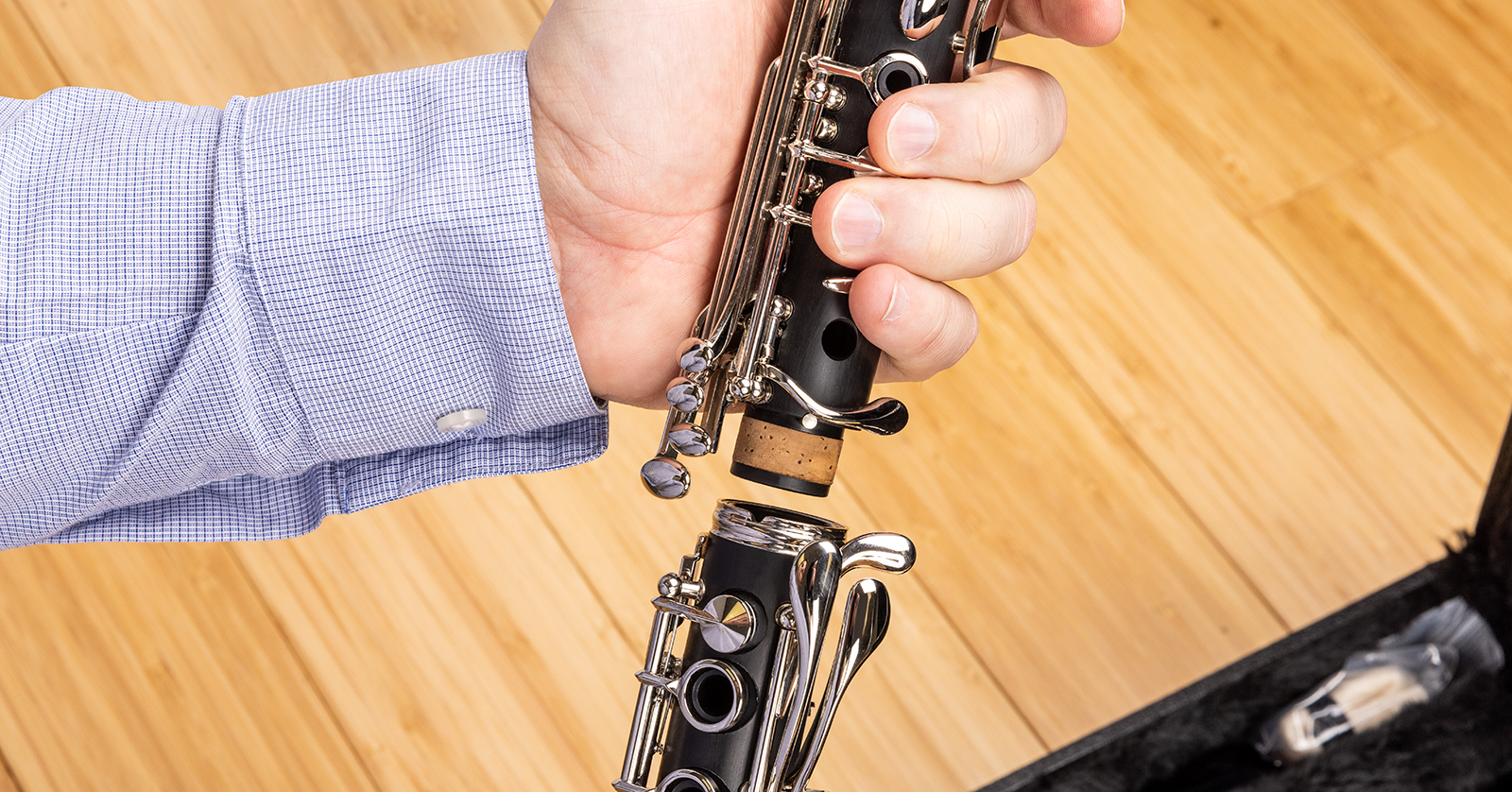
Align the two parts of the bridge key mechanism. Push the two joints together with a slight twisting motion. The bridge key on the upper joint must align with its corresponding piece of the mechanism on the lower joint in order for the lower pads to seal properly.
Attach the mouthpiece to the barrel
Take out the mouthpiece. Remove its cover, or guard, and remove the ligature.
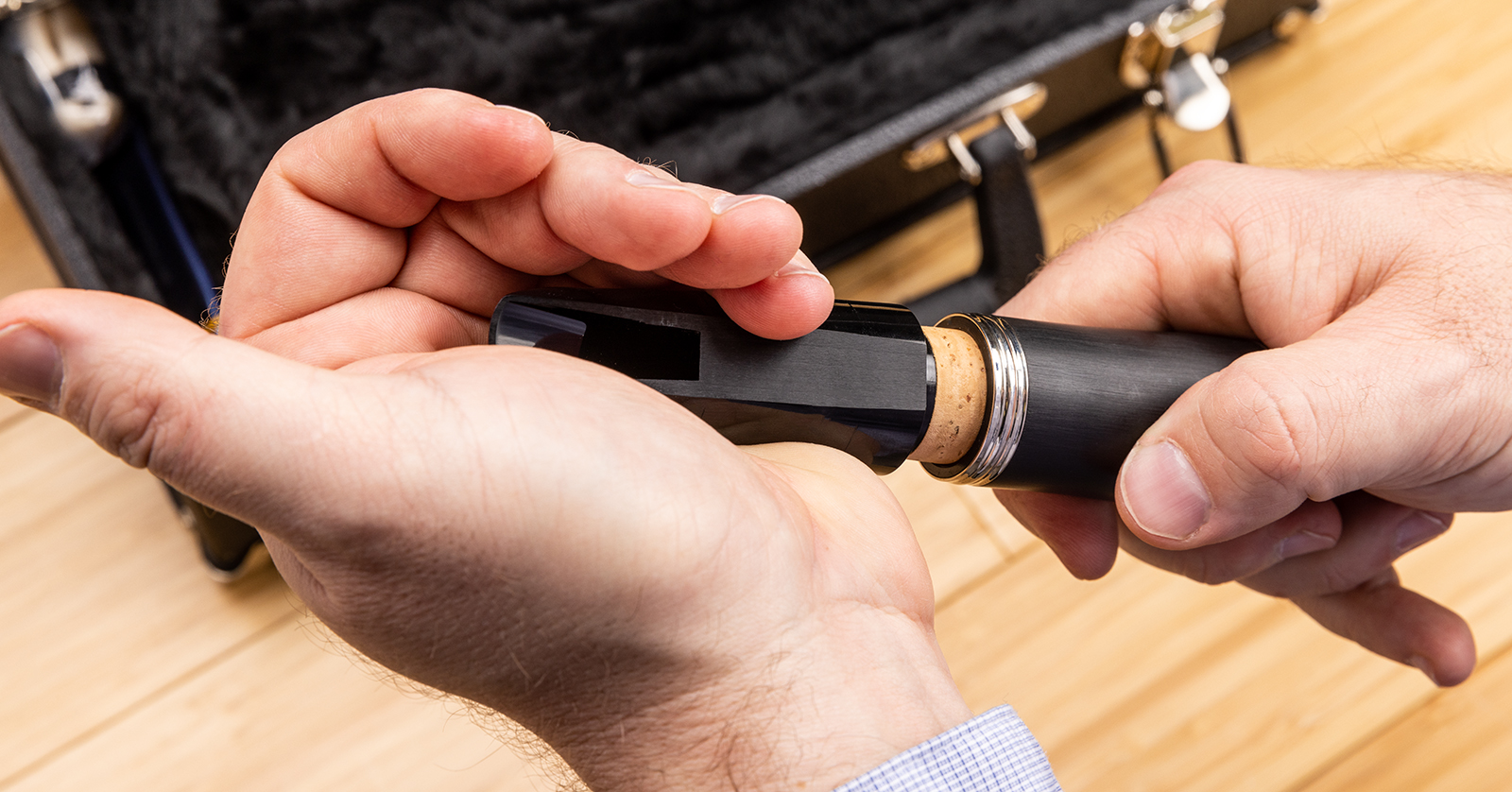
Fit the cork of the mouthpiece onto the narrow, top end of the barrel with a slight twist.
Mount the reed onto the mouthpiece
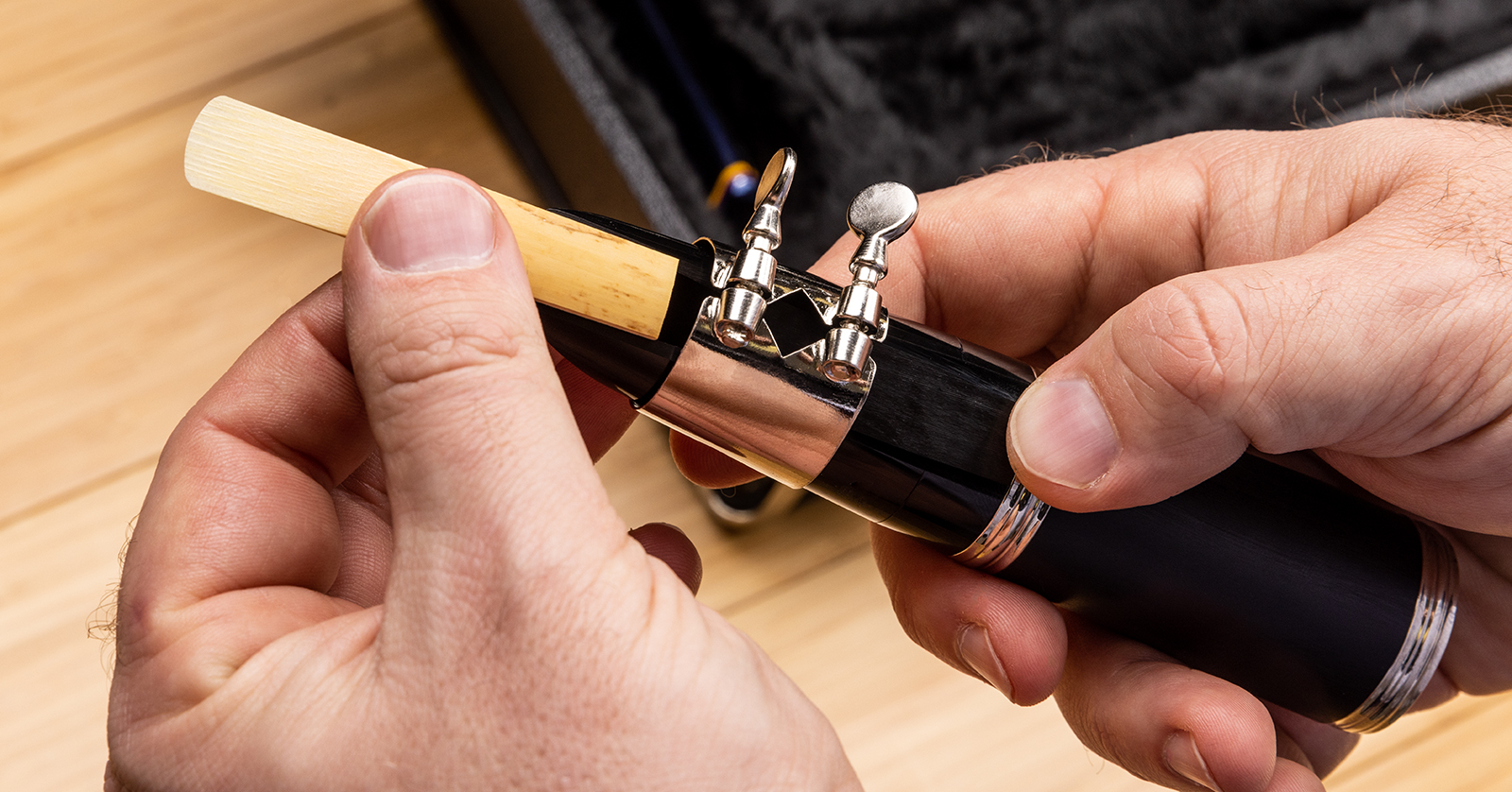
Holding the barrel and the mouthpiece together, fit the loosened ligature around the mouthpiece. The head of the ligature screw should face to the right as you look at the reed. Take the reed by the thicker end, the heel. Feed the heel through the ligature with the flat end against the mouthpiece. Line up the tip of the reed with the tip of the mouthpiece. Don’t touch the tip of the reed.
Now tighten the screws on the ligature to hold the reed firmly in place.
Attach the mouthpiece and barrel to the clarinet
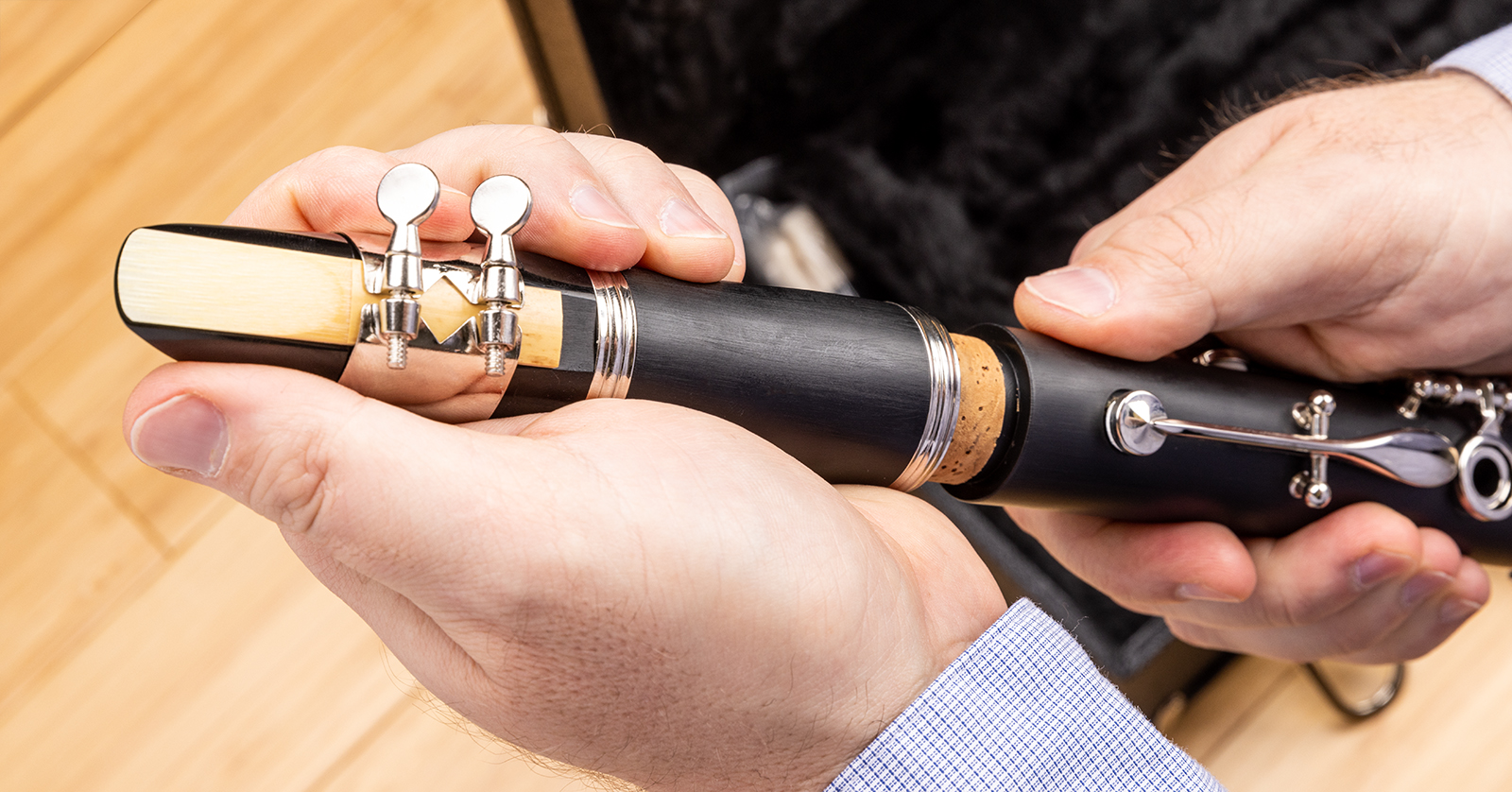
Pick up the assembled clarinet with the thumb rest facing you. Attach the barrel to the upper joint with a twist so that the reed is on the back of the clarinet, lined up with the register key and the thumb rest.
Proper Playing Technique for Clarinet
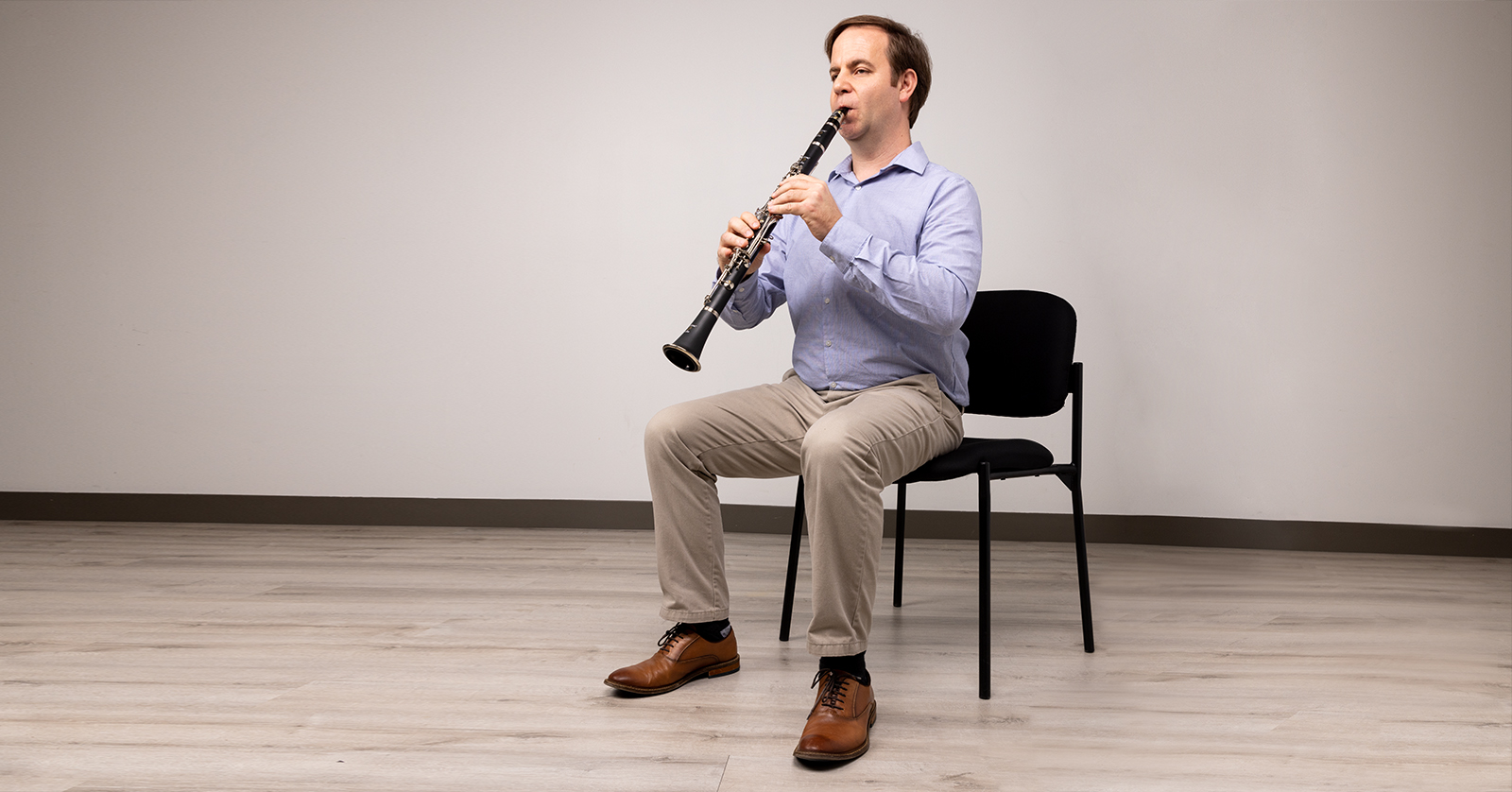
Sit up straight in a chair, or you can stand. Keep your head erect and your shoulders relaxed. Hold the clarinet by putting your right thumb on the thumb rest on the back of the lower joint. Your clarinet is held downwards at a 45° angle to your body, not pointing outward.
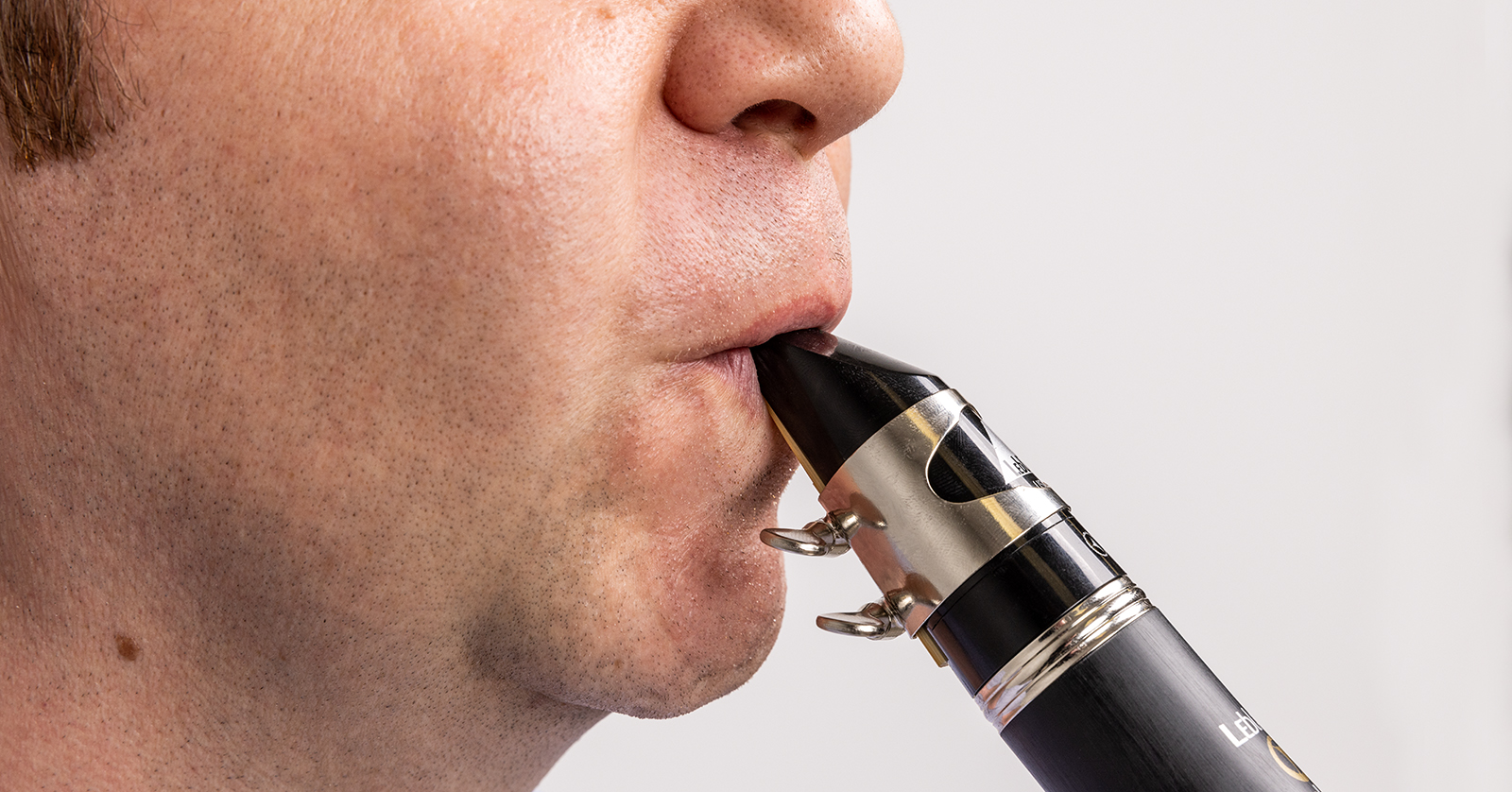
It’s all about the embouchure, which means the way you hold your mouth against the mouthpiece when you blow into it. Basically, you curl your lower lip back over your teeth. Place about 1/4 of an inch of the mouthpiece in your mouth so that the reed rests on your lower lip. Firmly place your teeth against the top of the mouthpiece. Wrap your lips around the mouthpiece, making a tight seal. It isn’t necessary to bite down on the top of the mouthpiece; rather, form a “Q” shape with your lips.
Use your left thumb to close the tone hole just below the register key. Blow some air into the clarinet and make a tone. If the sound is too high and shrill, put a bit less of the mouthpiece in your mouth. Make sure the air stream you blow is fast and cold. Your teacher will spend a lot of time working with you on learning to control your breath together with the placement of the mouthpiece and your embouchure.
How to Tune Your Clarinet
Whether your clarinet notes are in tune depends not only on how you tune the instrument but also on how you control your embouchure. This will take practice. You tune your clarinet by making small adjustments in the position of the barrel.
The B♭ clarinet is a transposing instrument. When your teacher and your method book show you the note “C” on the clarinet, that note is referred to as “B♭” in concert pitch, which is what the piano and the rest of the orchestra use. So, when you play the note “C” in clarinet notation, an electronic tuner will display the note “B♭.”
Get an electronic tuner for your clarinet
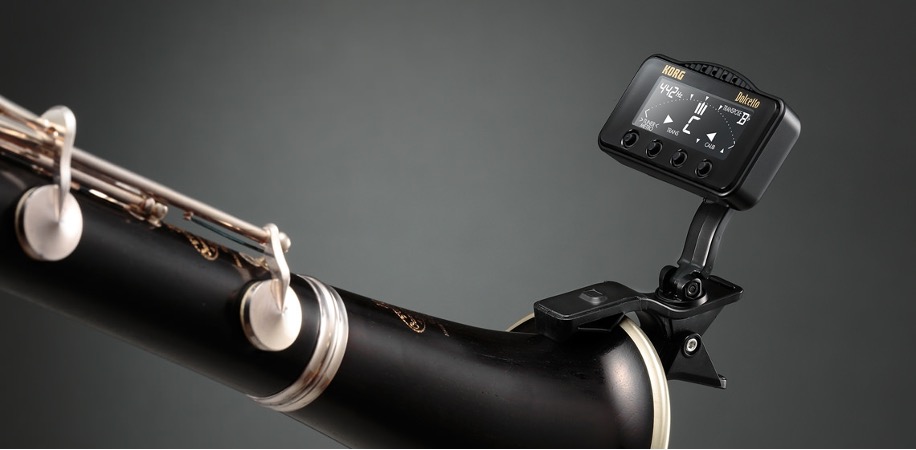
An electronic tuner senses the pitch of a note and displays whether the pitch is sharp, flat, or in tune.
There are a number of tuner apps for your phone that use the phone’s microphone. However, these only work well in a quiet room where your clarinet is the only sound.
A better choice is an electronic tuner device. There are two basic types:
- An electronic tuner that clips onto the bell of your clarinet, which senses the vibrations of the clarinet directly and ignores other sounds in the room.
- A desktop tuner with a microphone that you can sit on your music stand. Many of these also come with a clip-on microphone that you can attach to your clarinet.
Basic tuning for clarinet
You can blow any note on your clarinet and tune it, but the standard note in band programs is “G” on the clarinet, or concert “F.” On the clarinet, this note requires no fingers to be placed over the tone holes.
Position your tuner where you can see the display on the screen. When you play the note, the display will indicate if the pitch is slightly low (flat) or slightly high (sharp).
If the note is sharp, gently twist the barrel and move it out a tiny bit, farther away from the upper joint. By making the clarinet slightly longer, the pitch will go lower. Play the note again and look at the tuner’s display.
Clean your Clarinet When You Are Done
It is not a good idea to keep the clarinet assembled after you are done playing it. You need to disassemble all the parts, swab them out to remove all moisture, and pack the parts away.
Remove the barrel from the upper joint.
Loosen the ligature and carefully remove the reed from the mouthpiece without touching the end of the reed. Store the reed in its case.
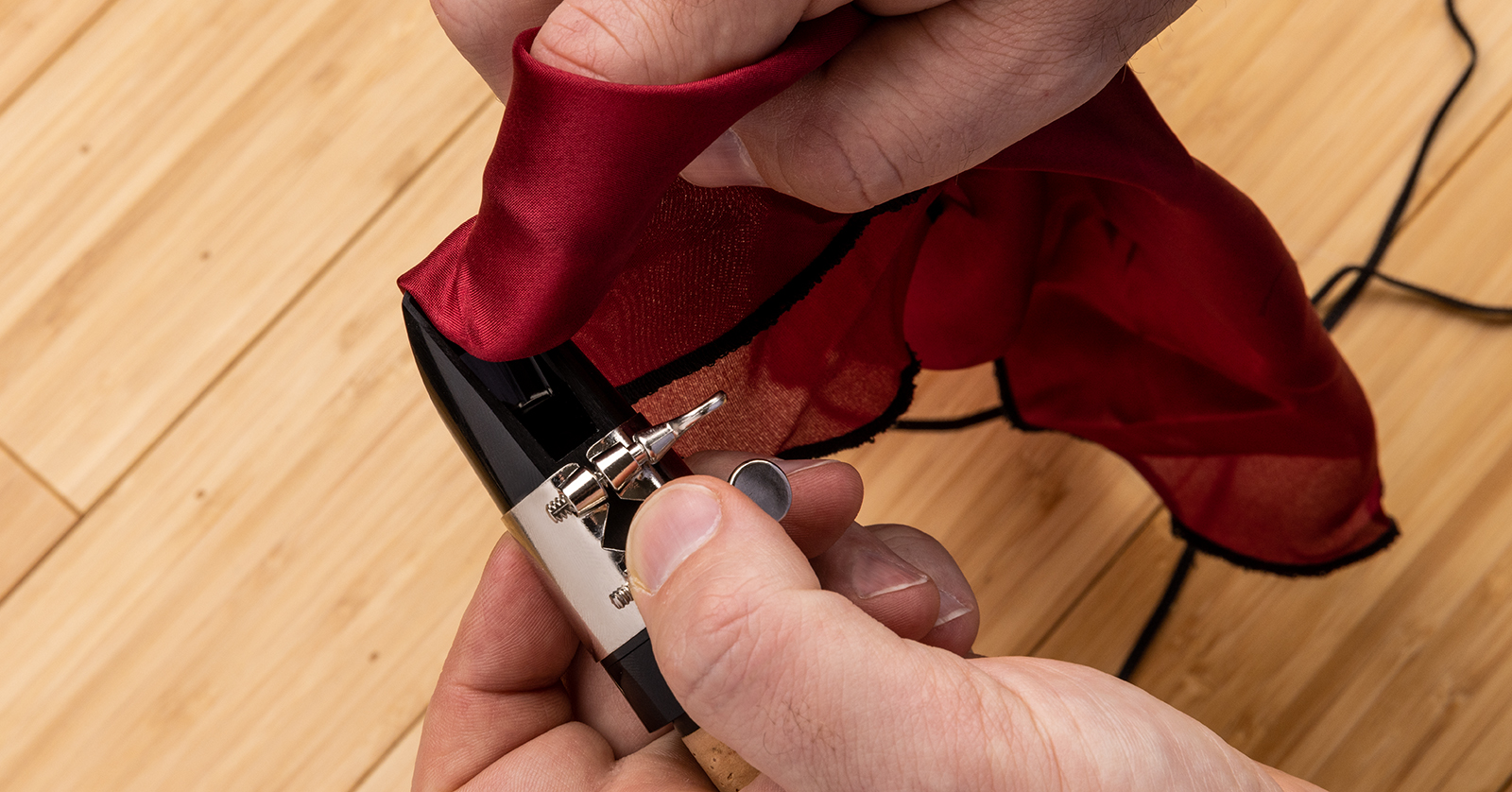
Your clarinet will come with a special cleaning swab attached to a weighted string. Wrap the cloth around your finger and swab out the mouthpiece.
Replace the loose ligature around the mouthpiece, place the protective cap back on the mouthpiece, and store it in the case.

Now flip the clarinet over and drop the weighted string on the cleaning swab through the bell. Check to make sure the cloth is not bunched up, then draw the cloth through the clarinet.
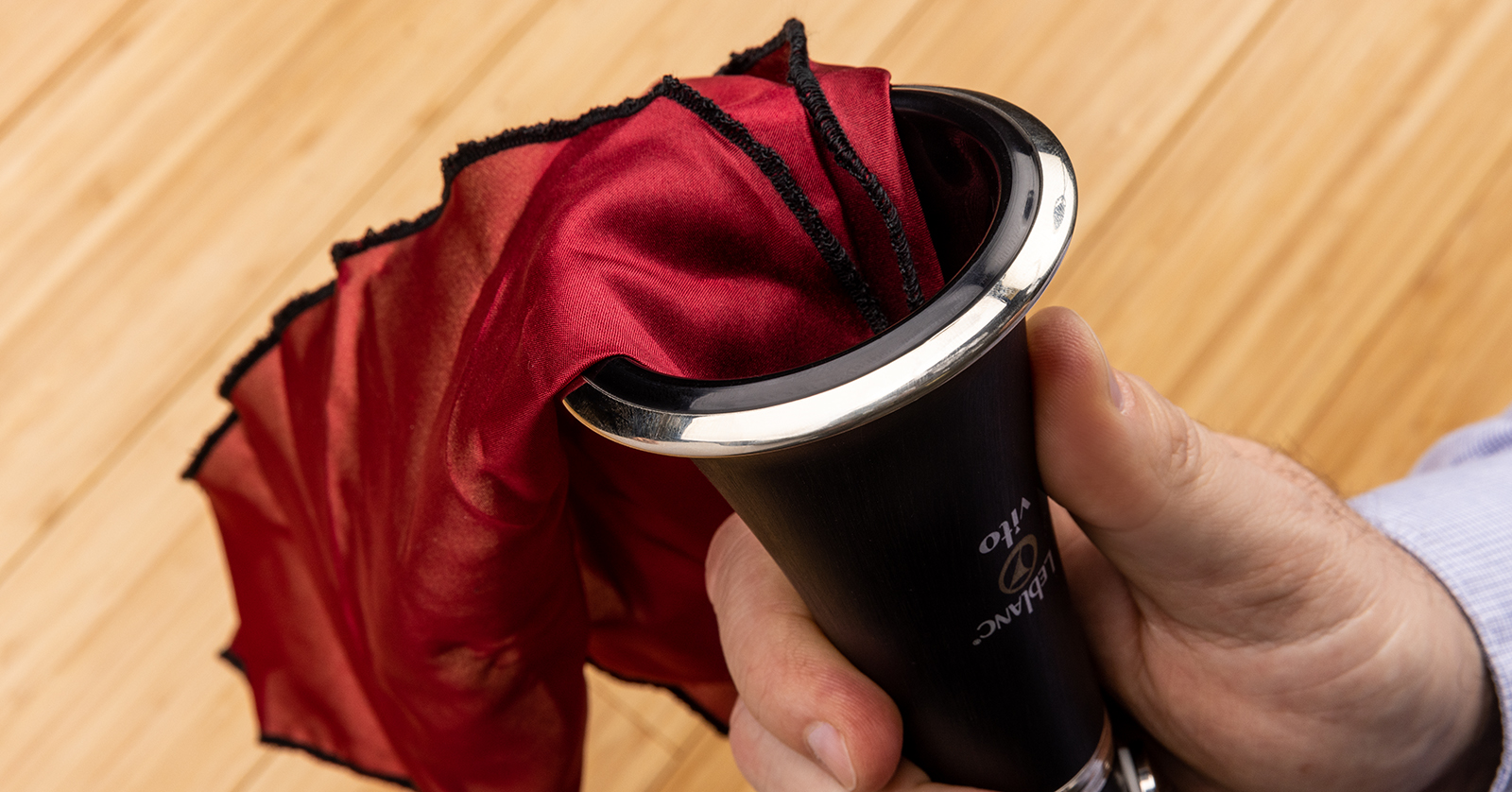
Now completely disassemble the clarinet. Separate the bell and the lower and upper joints, put the parts back in the case, and close it.
Clarinet Care and Maintenance
We still need to teach you a few more things about cleaning and caring for your clarinet. Be sure to click on the link below and read our Clarinet Care and Maintenance Guide. There are steps you need to take to prevent damage and costly repairs. We at Sweetwater trust you will enjoy playing your clarinet for years to come.
When you need help, Sweetwater has the answers!
Our knowledge base contains over 28,000 expertly written tech articles that will give you answers and help you get the most out of your gear. Our pro musicians and gear experts update content daily to keep you informed and on your way. Best of all, it’s totally FREE, and it’s just another reason that you get more at Sweetwater.com.