
Mallet Percussion Quickstart Guide
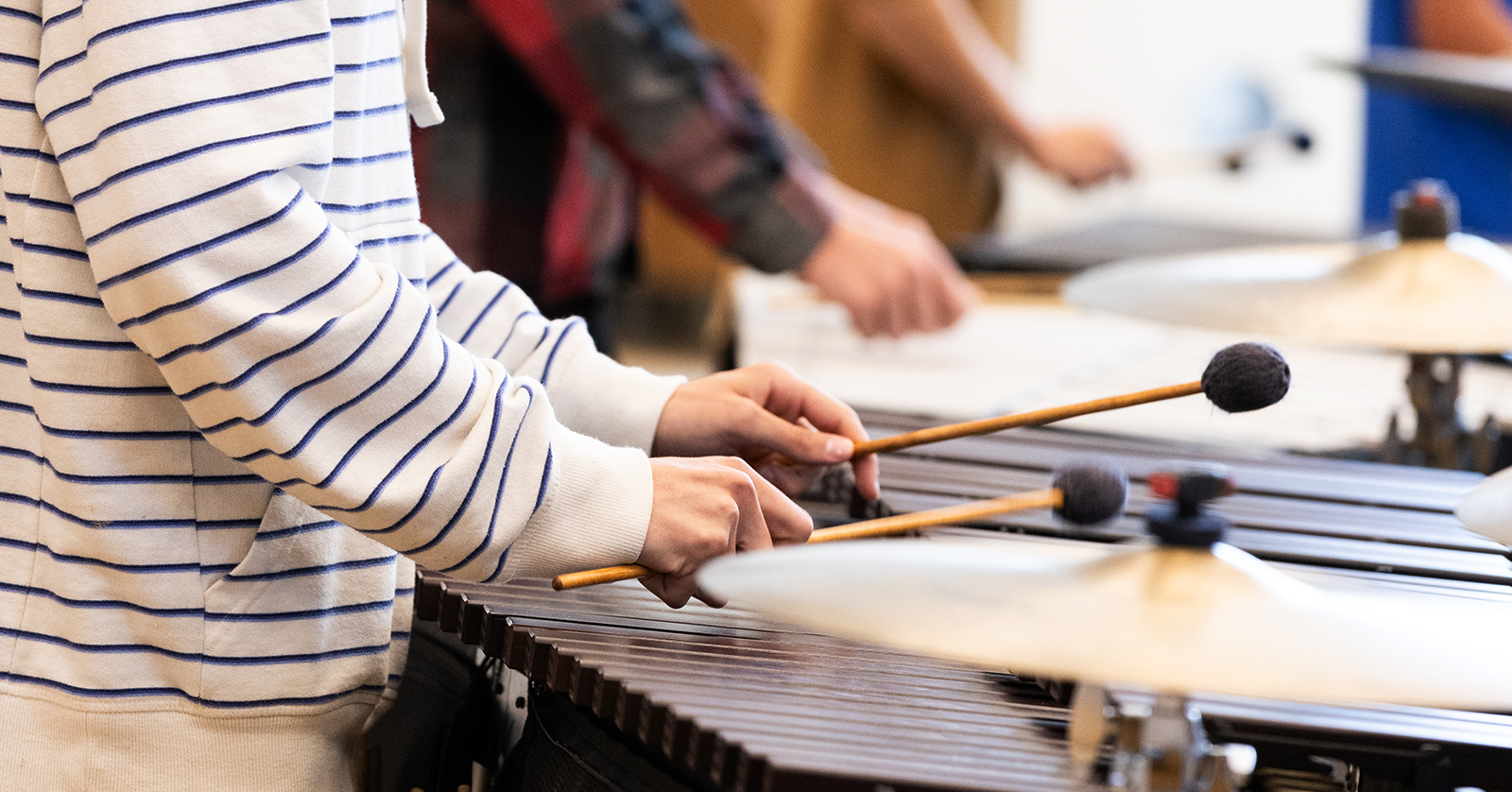
In this guide, you will learn the fundamentals of your mallet percussion instrument. Follow the sections below to get started.
IMPORTANT! For all things related to your mallet instrument, please ask your band director or private teacher, as they can provide specific guidance and create custom lesson plans for you.
Parts of a Mallet Instrument
There are five primary types of mallet instruments: chimes, xylophone, marimba, glockenspiel, and vibraphone. While each instrument has distinct features, they all have one thing in common: tone bars, which produce the notes. The tone bar area will often be referred to as the keyboard since it’s laid out like a piano.
- Vibraphones, xylophones, and marimbas have additional hardware. This includes a damper pedal, rails, and resonators (sometimes called resonator tubes or pipes).
- Resonators are tuned specifically for each bar and help project the sound.
- Vibraphones also have fans that give them their signature vibrato sound. The fans are attached to a driver, which is attached to a controller. This allows you to adjust the speed of the fan rotation.
- Like a piano, the natural tone bars are closest to you. The accidental (also known as chromatic) tone bars are further away.
- While all mallet instruments have the same keybed layout, the range and tuning differ.
Tone bed material
Tone bed (keyboard) material will differ depending on the mallet instrument. The material used plays a significant role in the overall tone of your instrument.
- Marimbas and xylophones traditionally have rosewood tone beds, which provide a warm sound. Synthetic materials are also used, but they are less common.
- Vibraphone tone bars are often made of aluminum alloy, and glockenspiel and bell tone bars are usually some type of steel. These materials give the instruments their bright percussive sounds.
- Mallet material matters! Not only can it affect tone, but using incorrect materials can result in damage. For example, metal mallets on a marimba or xylophone can dent or crack the wooden tone bars.
- Ask your band director or private teacher for specific guidance on mallet material for the instrument you will be playing.
Mallet Instrument Assembly
Assembly is dependent on the mallet instrument you own, so refer to your instrument’s assembly manual for specific instructions. Here are several tips to get you up and running.
- Assembly can be labor-intensive, especially for larger mallet instruments such as the marimba. The larger instruments can also be quite heavy, so we recommend getting a second set of helping hands to make setup easier and less physically demanding.
- Some tone bars, particularly on bells and glockenspiels, can be individually removed. They often have note names stamped on them, making it easier to identify and assemble.
- Keep everything organized and laid out in a way that makes the setup process faster and helps you keep track of everything.
- Some mallet instruments use “X-style” stands. If this is the case, then make sure it’s wide enough to support the entire instrument.
- Always assemble your mallet instrument on a smooth, flat surface. If the instrument has casters, then make sure they’re in the locked position and assemble it on a rug or carpet if possible.
- Set the mallet instrument to an appropriate height. If set too high or low, then it may be difficult to play.
Keyboard Percussion 2: Setup & Playing Position
Getting Ready to Play
Now that you know the ins and outs of your mallet instrument and you have everything assembled, you’re ready to start playing.
Grip style
Gripping a pair of mallets is different than standard drumsticks because they are heavier due to the mallet head material. You must compensate by choking up on the stick just a bit further.
- Pinch the stick with your thumb and forefinger then loosely wrap your other three fingers around it. Don’t squeeze too tight, though, as this can cause unnecessary tension and affect your playing.
- Play with full strokes and strike the center of the tone bar, as this is where you’ll get the best sound.
- Stand up straight in a comfortable playing position. Remember to have your elbows out but not too far.
Keyboard Percussion 3: Grip and Basic Strokes / Vic Firth Percussion 101
Related Articles
When you need help, Sweetwater has the answers!
Our knowledge base contains over 28,000 expertly written tech articles that will give you answers and help you get the most out of your gear. Our pro musicians and gear experts update content daily to keep you informed and on your way. Best of all, it’s totally FREE, and it’s just another reason that you get more at Sweetwater.com.