Your audience may come for your content, but having clean and clear vocals will convince them to stay. Content creators frequently call our Sweetwater Sales Engineers, asking whether to buy an XLR or a USB microphone. Like most things in the music and recording industry, there isn’t a single best microphone or type of microphone for content creation. Instead, this article contains our suggestions for livestreamers, podcasters, TikTokers, YouTubers, and more. Read on to discover our suggestions!
- USB vs. XLR Microphones: A Question of Connections
- A USB Mic Can Simplify Your Setup
- Use an XLR Mic for Pro-level Sound
- Podcasting
- Make It Easy with a USB Mic
- XLR Mics Offer Amazing Sound
- Mics for Making Content with Smartphones or Tablets
USB vs. XLR Microphones: A Question of Connections
In the all-analog world of decades past, microphones with XLR connectors were the only game in town. XLR microphones use an analog connector that transmits the microphone’s signal to an external microphone preamp or audio interface, where it is amplified to the appropriate level. Before hitting your computer, the analog signal goes through an analog-to-digital converter.
USB microphones are relative newcomers to the microphone game. These microphones have an amplifier and digital conversion onboard, allowing your audio to be passed directly into a computer or smart device. USB mics do not require any outboard gear for operation. Just plug a USB mic into an available USB port, and you’re ready to go.
Livestreaming
If you’re going to go live, then using a microphone is an easy way to get great vocal sound. Both USB and XLR microphones sound good. The question is how you want to get that sound into your computer.
A USB Mic Can Simplify Your Setup
USB microphones have one major advantage over XLR mics: they plug straight into your computer with no other gear necessary. And because most USB mics have a small footprint, they can help save space on your desktop. USB streaming microphones run the gamut regarding price points and features, with the high-end models offering onboard DSP and variable polar patterns. If you’re not overly familiar with audio gear or just need a convenient plug-and-play solution, then a USB microphone will do wonders.
Use an XLR Mic for Pro-level Sound
Streamers who are familiar with recording and audio technology or don’t mind extra pieces of gear on their desks should consider investing in an XLR microphone. In fact, most top streamers opt for analog XLR microphones and choose dynamic microphones. Dynamic mic capsules flatter most people and reject background noise from your keyboard or air conditioner. Remember that an XLR microphone cannot plug directly into your computer. You’ll need an audio interface or mixer to make it happen.
Podcasting
When it comes to podcasting, both XLR and USB microphones can do the job. Like livestreaming, your choice of an XLR or a USB microphone depends largely upon your personal preference.
XLR: The Gold Standard in Podcast Production
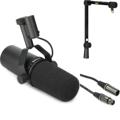
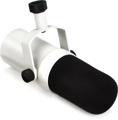
If you’ve ever listened to a podcast, then you probably were listening to the Shure SM7B cardioid dynamic vocal microphone. XLR microphones like the SM7B are sometimes known as “broadcasting mics.” They dominate the podcasting space. Most of those microphones are dynamic microphones that produce a rich sound that flatters almost every voice. Condenser microphones, such as the Audio-Technica AT2020 cardioid medium-diaphragm condenser microphone, are good for podcasting, too!
If you do opt for an XLR microphone for podcasting, then you’ll need an audio interface. For a list of Sweetwater’s top recommendations for audio interfaces, check out the article below. Since you need more gear to use a standard XLR microphone, they’re best suited for creators who primarily make content at home or in a studio.
USB Mics Designed for Podcasts
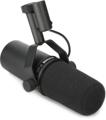
While XLR mics are usually the tool of choice for podcasters, there are plenty of purpose-built USB podcast microphones. Take the Shure MV7 USB podcast microphone, for example. It’s inspired by the SM7B and shares many of the same sonic and visual characteristics, plus onboard DSP (digital signal processing). Most USB microphones are compatible with most computers and smartphones, which allows you to record at home, on location, or in a hotel room when you’re on the road. Podcasters who need a compact and hassle-free way to record content are perfect candidates for a USB microphone.
Vlogs, YouTube, TikTok & Other Visual Content
Both XLR and USB microphones are suitable for creating visual content. Your choice of microphone largely depends on your personal preference.
Make It Easy with a USB Mic
You don’t need a complicated setup to make compelling content! USB microphones are cost-effective and simple to operate, which is ideal for beginners. And since they operate over USB, it’s totally possible to use a class-compliant USB microphone with your smartphone or tablet when you’re on the road! That way, you’ll never miss an opportunity to record something special. Whether you’re new to recording or looking for an easy way to capture your vocals, a USB mic is a great way to go.
XLR Mics Offer Amazing Sound
Are you comfortable with audio equipment? If so, then an XLR microphone is for you. Whether you’re recording ASMR content, reaction videos, or tutorials, this type of microphone offers an excellent sound that faithfully captures your vocals. If you need high-definition sound, then Sweetwater recommends going with a condenser microphone. A dynamic microphone, by contrast, will provide a warm, ear-pleasing sound.
Mics for Making Content with Smartphones or Tablets
If your content creation setup revolves around a smartphone or smart device, then you’re the perfect candidate for a USB microphone! Despite the major advancements in mobile technology, most audio nerds agree that their microphones aren’t ideal for making content. Luckily, brands like RODE, Shure, Zoom, and Saramonic offer products designed for recording audio with your mobile device.
With a Good Mic, You Can’t Go Wrong
The final headline of this article says it all. There aren’t many microphones that can be considered “wrong” for content creators. It’s important to remember that the microphone you use isn’t going to be the reason you make it as a content creator. Your community comes to you for your content — great sound is just a bonus. But if you’re not sure what sort of microphone you need, then Sweetwater is here to help. Call (800) 222-4700, and we’ll connect you to your personal Sweetwater Sales Engineer. They’ll listen to your content creation goals and happily recommend the perfect microphone to make it all happen.