Want to have some fun? Get a handful of recording enthusiasts and put them in a room. Then ask them which is better: plug-ins or hardware. The anarchy that follows is guaranteed to be entertaining. After all, a massive diversity of opinions is what you get when you ask a group of passionate individuals a loaded question, even more so when knowledgeable people stand on both sides of the issue. So what’s the right answer? Read on.
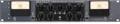
Analog hardware has a magical warmth that’s difficult to achieve with digital processing. Digital can get you frighteningly close to the real thing, but at the end of the day, it’s still an emulation. There are no transistors, photocells, capacitors, or transformers inside of a plug-in. Run your mix through a couple of hardware Pultec EQM-1S3 equalizers and a Manley Variable Mu compressor, and you’ll get the idea. It’s instant sonic euphoria, even if you leave all the controls at zero. On top of that, engineers love the visceral feeling of pushing real buttons and turning real knobs.

We can sing the praises of analog gear all day — it’s undeniably awesome. So it’s better, right? Not necessarily. Truth be told, digital processors can accomplish feats that engineers never dreamed possible a couple of decades ago. Melodyne offers polyphonic pitch correction, Slate Digital’s VMS faithfully mimics a massive array of high-end microphones, and Waves Nx creates a virtual listening room with perfect acoustics. Want to stack iZotope RX up against vintage noise reduction hardware and see who comes out on top? That’s a rhetorical question, no need to answer. The power of the latest plug-ins, their ability to perform functions that we couldn’t even imagine 10 or 20 years ago, is undeniable. Beyond that, plug-ins fit into your laptop, allow dozens of instantiations, and are instantly recallable.

So then plug-ins are better, right? Not so fast. Let’s talk about obsolescence — the bane of every software user’s existence. Update your computer’s operating system, and your plug-ins may stop working. Then you have to buy upgrades, or worse yet, the manufacturer leaves you in a lurch by halting development altogether. Remember DX and RTAS plug-ins? They used to be hot stuff. Lots of folks spent thousands of dollars on them, then ended up stuck in an old DAW on an ancient computer. In a software-driven studio, you might have to dump your old plugs and move on (spending more money) if you want to keep up with the times. Analog hardware, on the other hand, doesn’t lose its compatibility. If you plug an XLR cable into your Shelford Channel, it does the same thing today that it will do 20 years from now.
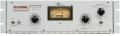
But before you buy an entire rack full of future-proof LA-2As, listen up. Analog gear may avoid compatibility issues, but it still needs maintenance. And the more time that passes, the more challenging it will be to maintain your prized analog gear. Electronic components and moving parts wear out; that’s a fact. And when your gear’s transistors blow, resistors fry, and capacitors dry out (and they inevitably will), the components may no longer be available. That means you need to replace them with their “modern equivalents,” which may or may not sound the same as the vintage parts. And nothing’s worse than a wonky transformer messing with your gear’s mojo.
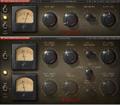
When it comes to cost, plug-ins win, hands down. What would you rather do: spend $20k+ on a vintage Fairchild, or spend $50 on Waves PuigChild plug-ins, which will get you in the same sonic ballpark? Alternately you could spend $50 on a hardware compressor that will NOT get you in the same sonic ballpark, but that’s a bad idea (unless you’re going for a lo-fi vibe, in which case have at it). In fact, for under $5K you can grab a Universal Audio UAD-2 Satellite with their Ultimate Bundle, putting more than 80 of the best hardware emulations on the planet at your disposal. Buying that much “real world” analog hardware, at a cost of tens or hundreds of thousands of dollars, is simply not an option.

Here’s the question that really gets folks riled up: do modeled plug-ins sound the same as their hardware counterparts? That’s difficult to say. Here’s the real question: which specific piece of hardware is the plug-in modeling, and during which time period? After all, your hardware 1176 doesn’t sound the same as Chris Lord-Alge’s, and his doesn’t sound the same as the one in the studio down the street. Different revisions have different sounds, and sometimes different units within the same revision have different sounds. And modern reproductions sound different than their classic counterparts. On top of that, analog components age, which causes them to sound different over time.

So which absolutely sounds better? Well, that’s subjective. You’ll find ardent devotees in both camps. There’s something to be said for keeping everything “in the box.” If nothing else, you avoid the audio degradation caused by all that extra AD/DA conversion. But quality analog gear through top-shelf converters? That rapturous sound is tough to beat. “That’s nice,” you may be thinking — “so which sounds better?” The truth is one doesn’t sound better than the other, and a quick look into any top-tier engineer’s studio demonstrates that pros use both. They use what works for them, so we recommend that you use what works for you.
So what DOES work best for you? If you need help deciding, give your Sales Engineer a call at (800) 222-4700. They’ll be happy to walk you through your options.