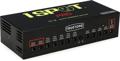
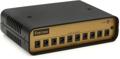
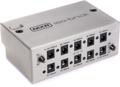
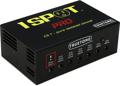
Your pedalboard power supply has just as much impact on the sound and performance of your stomps as your gold-sputtered OFC custom cabling and NOS paper-in-oil capacitors. And yet, this is one purchase which we guitar, bass, and keyboard players are quick to write off. “I’ve got a 1 Spot,” you might say. “And look — it’s got 26 plugs. I’m good to go.”
But not so fast! There are several ways in which this mighty all-in-one, as incredible as it is, can leave you high and dry in a performance setting.
Considerations
- Amperage — Are your high-draw digital pedals starved for current? You might need a power supply with a greater output.
- Isolation — Do you find yourself playing in clubs with noisy power? Are you mixing vintage and modern pedals on your board? In these cases, an isolated power supply can really make a difference.
- Voltage requirements — Are you powering something like an EHX Deluxe Memory Man or an Xotic Super Sweet? You’ll want to be sure your power supply has the required outlets and adapters to support nonstandard voltages.
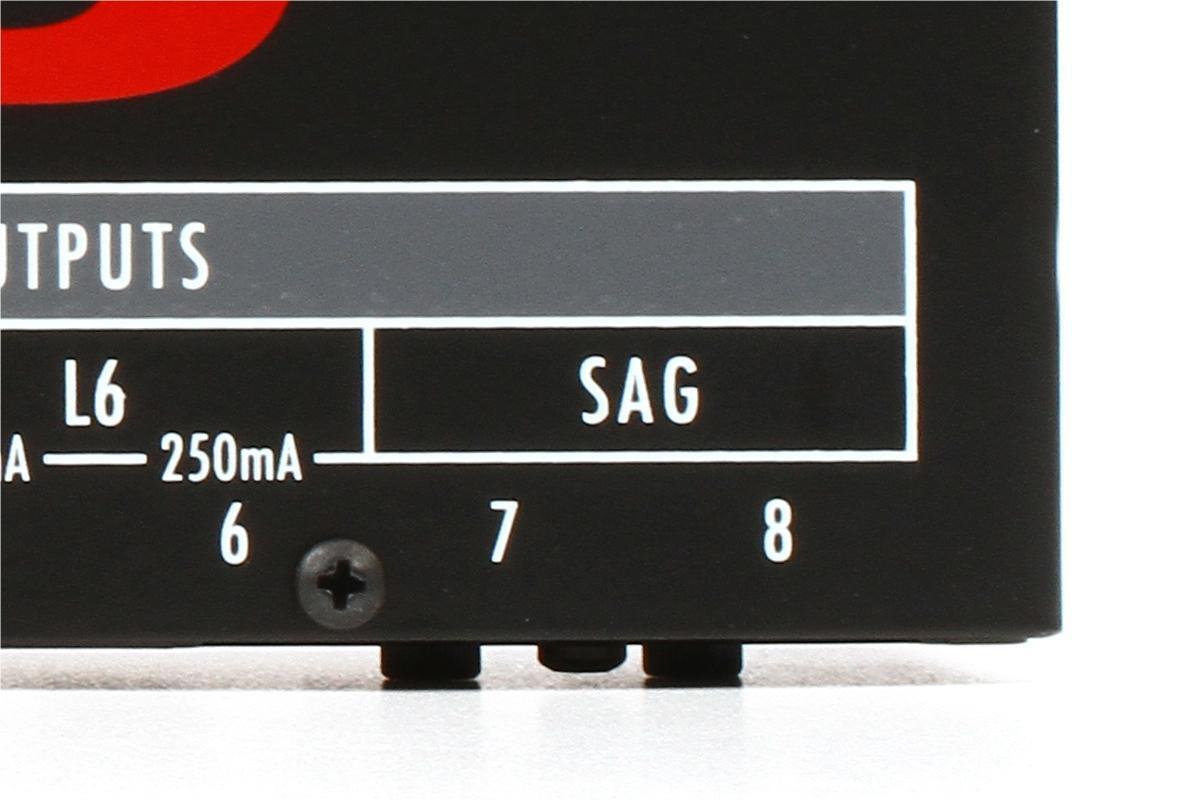
- “Sag” — Love the sound of a dying fuzz pedal as it chews through the last legs of a struggling 9V battery? You’ll want to invest in a power supply with variable voltage.
- Worldwide switching — Is your power supply ready for your breakthrough Japanese tour? How about that quick stop on Easter Island? Worldwide switching will have you ready for whatever voltage your venue supplies: 100V–240V.
- Size — Is it your fly rig or studio board you’re outfitting? You’ll want a supply that’s small enough to mount securely onto or under your board.
- Wireless operation — Acoustic players: are your amps and guitars all battery powered? You may want a USB or 9V power supply for true portable operation.
- Budget — Is a new power supply really the most effective use of funds at this stage in your musical career? Take a long, hard look at your rig and make sure better stomps or a steelier pedalboard wouldn’t serve you better for now.
Amperage
Amperage, measured in milliamps (mA) and amps (A) in pedal power supplies, refers to the available current running from the wall to your pedals. In real-world terms, it’s the measure of how many pedals you can power and how capably. The total amperage needed for a pedalboard is the sum of the current draw of all its pedals. Where to find this, you ask? Amperage is sometimes printed near the power jack or on the bottom of the pedal. If not, you can most likely find these specs on the manufacturer’s page or at Stinkfoot.se’s Power List. Alternatively, a milliamp meter can tell you all you need to know.


For example, let’s say on your board you’ve got a Boss SD-1 overdrive (6mA), a Seymour Duncan Vise Grip compressor (21mA), a JHS Unicorn V2 Analog Uni-Vibe (100mA), and a Strymon TimeLine digital delay (300mA). Your power supply needs to be able to supply at least 427mA of shared current. That’s the bare minimum. Allowing for variance in voltage and the possibility for pedal growth down the road, you might even want to double that.
Another important consideration for isolated power supplies is how much current you can get from each outlet. You may have a 2000mA supply, but if each outlet can only deliver 200mA per pedal, your modern digital effects might suffer. That’s something you need to be aware of.
Isolation
It’s a messy world out there for guitar and bass pedals. You’ve got unshielded and ungrounded power outlets, inconsistent voltage from venue to venue, unpredictable spikes and dropouts, and, of course, your own fleet of pedals introducing noise of their own. An isolated pedal power supply can really clean up your signal from the effects of shoddy wall power and noisy stomp arrays.
Not all isolated power supplies are created equally for every application. Here are the two main types you’ll find at Sweetwater:
- Analog Linear Regulation Supplies — This type of power supply has been the standard for years. Their large, toroidal (donut-shaped) transformers provide a completely isolated outlet to each stomp on your board. This means no crosstalk and no coloration imparted between your vintage stomps and your modern overdrives. Linear regulation power supplies tend to be the best at rejecting hum introduced by noisy outlets. Their weaknesses are their larger sizes and the occasional susceptibility to proximity-induced noise, such as that caused by placing a wah pedal directly over the power supply’s chassis.


- Digital Switching Regulation Supplies — This newer technology has allowed power supplies to become smaller, lighter, cooler, and more powerful than ever before in history. Digital switching supplies run a high-frequency oscillator into discrete miniature transformers to push out isolated power to each outlet. This means you tend to get more outlets carrying more current for a given size. Switching supplies are theoretically not as great at rejecting noise from wall outlets as toroidal transformer supplies; but they are much more impervious to proximity-induced noise. This, combined with their smaller form factors, makes them perfect for mounting underneath pedalboards, in situations where inductor-based wahs and digital pedals may have to live directly on top of the supply. The increase in current also suits them quite nicely to modern digital reverbs, delays, and modeling stomps.


Voltage Requirements

Voltage requirements for each of your effects are a big reason why it’s best to map out your pedalboard ahead of time before you take the plunge on a new power supply. Most standard pedals have a 9V center-negative power input. And, in this way, virtually any specialized power supply will have you covered. But you may encounter pedals from time to time that require 12V, 18V, or even 24V power. Be sure to do your homework ahead of time.
Fortunately, adapters are available for most power supplies that’ll let you bridge two outlets into one for double the voltage (12V to 24V, 9V to 18V). Trying to feed a pedal from a nonfactorial outlet (9V into 12V, 12V into 18V) is where you run the risk of underpowering or burning up your stomps. Exercise caution.
“Sag”
Guitarists have known this for years: there’s just something about a dying battery that makes certain fuzz boxes and overdrives come alive. The good news is that some power supplies, such as the MXR Iso-Brick and the Voodoo Lab Pedal Power MONDO, allow you to dial down the voltage to mimic that browned-out, sputtery goodness. It’s a best-of-both-worlds solution.

Worldwide Switching
No one can predict where their music will take them. But, if you have an inkling that you might be taking your instruments and stomps to destinations unknown, you’ll want to be sure your power supply is equipped for international use. Fortunately, many pedal power supplies today (Eventide PowerMAX, Strymon Ojai R30, 1 SPOT PRO CS7, Voodoo Lab Pedal Power Digital) feature universal switching for worldwide operation. Many of these will switch automatically, so they offer truly fuss-free operation in any performance setting you’re likely to encounter — which frees you up to focus on doing what you love.
Size
The make and size of your board will have a big impact on the power supply you reach for. The Eventide PowerMAX, for example, is sized to mount flush under a Pedaltrain pedalboard — so if you own one of these, it’s a no-brainer. And if it’s a travel board you’re building, you probably don’t want a 15-outlet Walrus Audio Phoenix hogging all your pedal real estate. Whatever option you go for, make sure you’ve got enough space on top or underneath to fit all your stomps and your power supply along with all requisite cables.
Wireless Operation
Wall power is the enemy, right? If that’s the case, why not just cut out the middleman with Pedaltrain’s Volto and Mission Engineering’s 529i USB-rechargeable battery power supplies? By eliminating a wall connection, you’re not only improving portability, but potentially reducing noise-inducing AC interference, as well. Charge these up the night before or in your car on the way to the gig, and you’ve got hours of clean-burning, portable pedal fuel right at your feet.
Another option we recommend to our customers is the Vertex Effects Battery Power Supply. Inside, you’ll find four traditional 9V batteries with individual outlets to feed your fussy wahs and dirt boxes without having to rip apart your pedalboard every time you want to swap batteries. Smart deactivation puts batteries to sleep once you remove the input lead. It’s the perfect solution for tone purists and choosy vintage pedals.

Budget
When it comes to price versus performance, a dedicated pedal power supply is probably not the silver bullet that many forum users make it out to be. Will it clean up your signal path? Will it make gigging easier? Almost certainly. Will it transform your budget stomp setup into a jaw-dropping tone machine? Probably not. Just make sure you follow the appropriate upgrade “order of operations” for your instrument before you throw real money at a dedicated power supply.
If budget is any concern, we can’t recommend the humble Truetone 1 SPOT Slim 9V DC adapter highly enough. This slim-profile wall wart delivers a robust 1700mA max current to power endless pedals via its optional 5-way and 8-way multi-plugs. Guitarists, bassists, and keyboardists at Sweetwater have used these for years. And, for the price, they offer tremendous value to any player on a budget.

“My Creation — Is It Real?”
The best thing about building your own pedalboard is you get to call the shots! Stomps, cables, power, and accessories — it’s your creation. Got big plans for your next custom build? Sweetwater is here to help. Reach out to your Sales Engineer at (800) 222-4700, and we can make your dreams a reality.