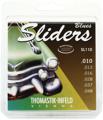
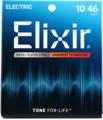
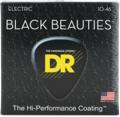
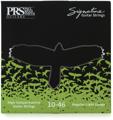
As guitarists, we’re always looking for gear that sounds better and has a better feel, which will ultimately inspire us and make us play better. Strings are the first thing a guitarist’s hands touch, and they create the sound of the instrument; a pretty important role to say the least. Following that logic, what differences do different strings really make in this equation? Feel tends to be the first consideration for guitarists, but sound certainly factors heavily. More importantly, can you actually hear the difference? To answer this question, Lynn Fuston, Shawn Dealey, and I took 21 different sets of electric guitar strings into Sweetwater Studio A and swapped them out on the same Les Paul Standard ’60s so we could listen in a controlled listening experiment. Plus, we recorded the results so we could share the sound samples with you.
Decisions…
Narrowing down the choices to just 21 different sets of strings was quite a job in itself. (A category search of electric guitar strings on Sweetwater.com reveals over 400 products!) With the options of string gauges, brands, and materials being pretty extensive, we decided to create smaller categories that limited the comparison to a single variable. We ended up with five subcategories: Gauges, Materials, Brands, Coated, and Others.
What to Listen For
Many of the differences are subtle but noticeable. I recommend using the best listening environment you have available, preferably studio monitors or high-quality headphones in a quiet room. You may not be able to fully appreciate the differences on your laptop or mobile-device speakers.
Listen to the attack; is the high end rounded or pronounced? Is the low end woolly or tight? Some strings bring out a lower octave. Listen to the shape of the midrange and where the sonic peaks and valleys are. Some strings seem to be louder (though all the recording settings and mic placements were identical for every sample you will hear) and have more midrange content overall. Listen to the balance between the strings, especially in the sustain. Is one note standing out more than the others?
Let’s Listen!

Gauges
The Gauges subcategory compares five different standard-gauge D’Addario sets:
Materials
There are lots of different formulations when it comes to string construction. For our listening, we compared the two most common string materials: pure nickel and nickel-plated steel. We wanted to stick to a single brand and a single gauge, so we used DR Strings PHR-10 and DR MT-10, both .010–.046 gauge.
Brands
For the Brands comparison, we used nickel-plated steel as the constant since it is the most widely used material. Here, we compare seven different brands of all the same gauge: .010–.046.
Coated
For the Coated strings comparison, we used three different brands of strings that all feature their own unique protective coating. All three sets were the same gauge: .010–.046.
Others
As we debated which strings to try, we realized that not everything fits neatly into a category, and there are lots of other string options out there. We tried six different sets, gauged .010–.046 (except the Thomastick-Infelds and D’Addario Chromes which are .010-.048), each with their own unique qualities.
Musical Example and Sound Choice

For any shootout or comparison, the musical example is there to serve the purpose. In this case, I wanted to cover the range of the instrument, low to high, and to show chords and single notes as well as long and short notes. These were all things that I thought would best demonstrate the differences one can hear among strings. Playing the same musical example for every set of strings makes it easier to directly compare all 21 sets to each other. So, the goal was to play each example as much like the previous one as possible, including dynamics and articulations. That meant I had to work out exactly what I was going to play so I could concentrate on execution. I wanted to make the musical example as stylistically agnostic as possible, given all of the other parameters, and to make it something we could all stand to listen to for a whole day! I’m glad Lynn and Shawn were engineering, producing, and listening to make sure everything was consistent.
We had a test day prior to the day of recording where we tried quite a few different musical examples, guitars, guitar sounds, and amp settings. We found quickly that the Les Paul bridge pickup was the most revealing overall. We were pleasantly surprised that the Soldano SLO amp, set slightly pushed on the Crunch channel, gave us the most information about the differences in strings. We originally considered doing multiple performances with different amp settings but found that this one example really showcased the differences quite well.

You can download the Pro Tools session and listen to all the mics on individual tracks.
Feel
The way strings feel in your hands is totally subjective; one person’s “perfection” is another’s “never in a million years.” That being said, I found quite a few string options in this list that felt good to me. As a longtime GHS Boomer user and endorser, I must say that, when they were put on the guitar, I recognized them without even being told. They are as familiar as a favorite pair of shoes. I was also surprised at how easily I picked them out of the listening roundup. However, this was one of the reasons we decided to do this shootout: guitarists tend to find the strings they like and stick with them. A very practical approach, but it goes against the tone-chasing ethos that influences every other gear decision. We try different guitars; amps; cables; pedals; power supplies; and some voodoo, hocus-pocus stuff without changing something as simple — and relatively inexpensive — as strings. If you find some strings in this article that you like the sound of, then give them a try to see what you think of the feel. You may find a new favorite.
Guitar and Rig Specifics
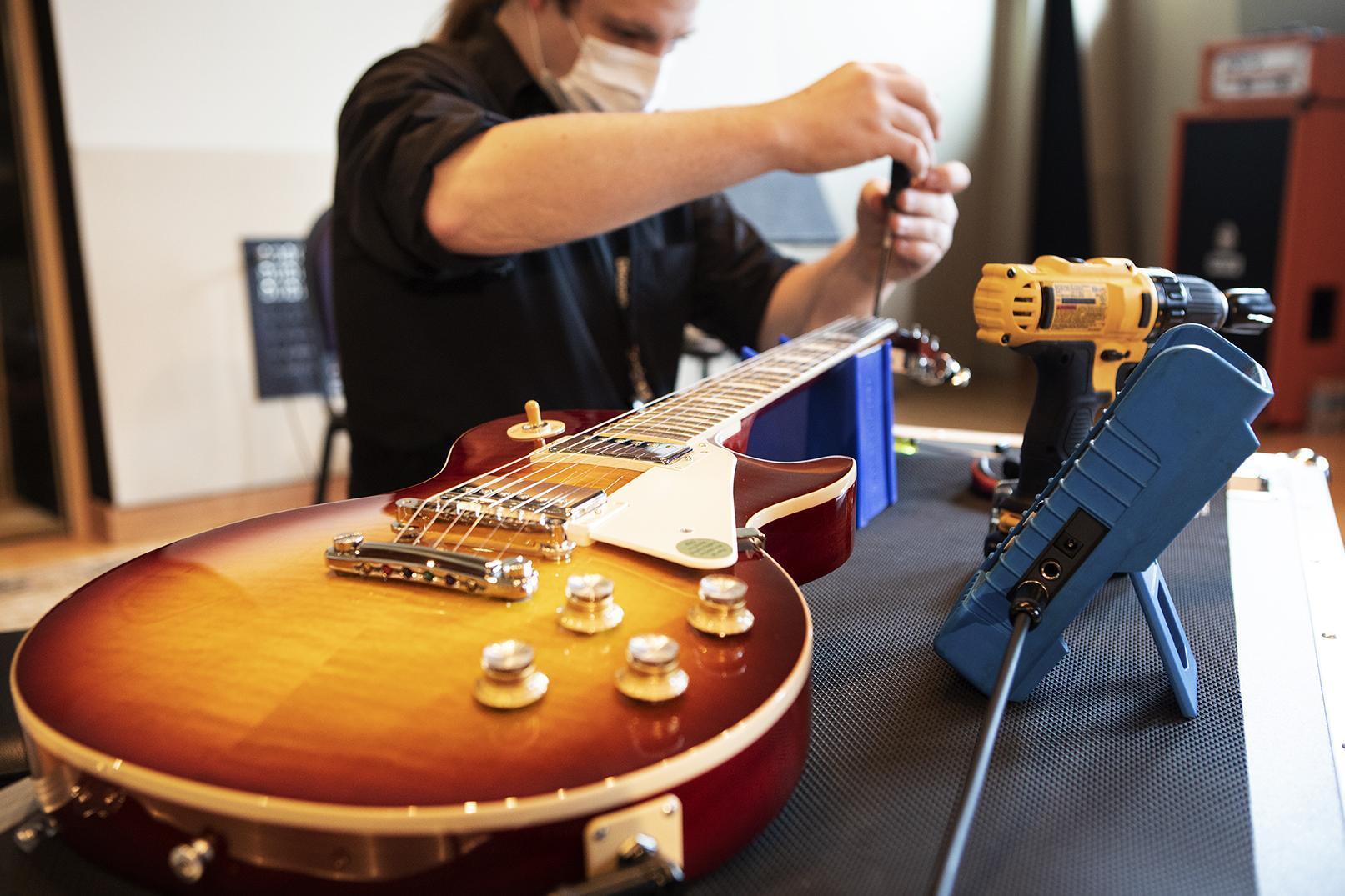
The fairest way to make comparisons is to restrict the changes to a single variable, so the goal was to keep everything but the strings consistent for the whole recording session. The guitar was a Gibson Les Paul Standard ’60s played on the bridge pickup. The amp was a Soldano SLO-100 paired with a Marshall 1960AX 4×12 Cabinet with Greenbacks. I used a BOSS TU-3 tuner for tuning and muting between string changes. A Radial JDI direct box was used to record the guitar output directly to Pro Tools. The buffer in the BOSS tuner helped correct the impedance load on the pickups since we split the signal to the JDI. For playing, I decided to use a very common guitar pick, the Dunlop 418PO73 Tortex Standard .73mm Yellow.
126 Strings
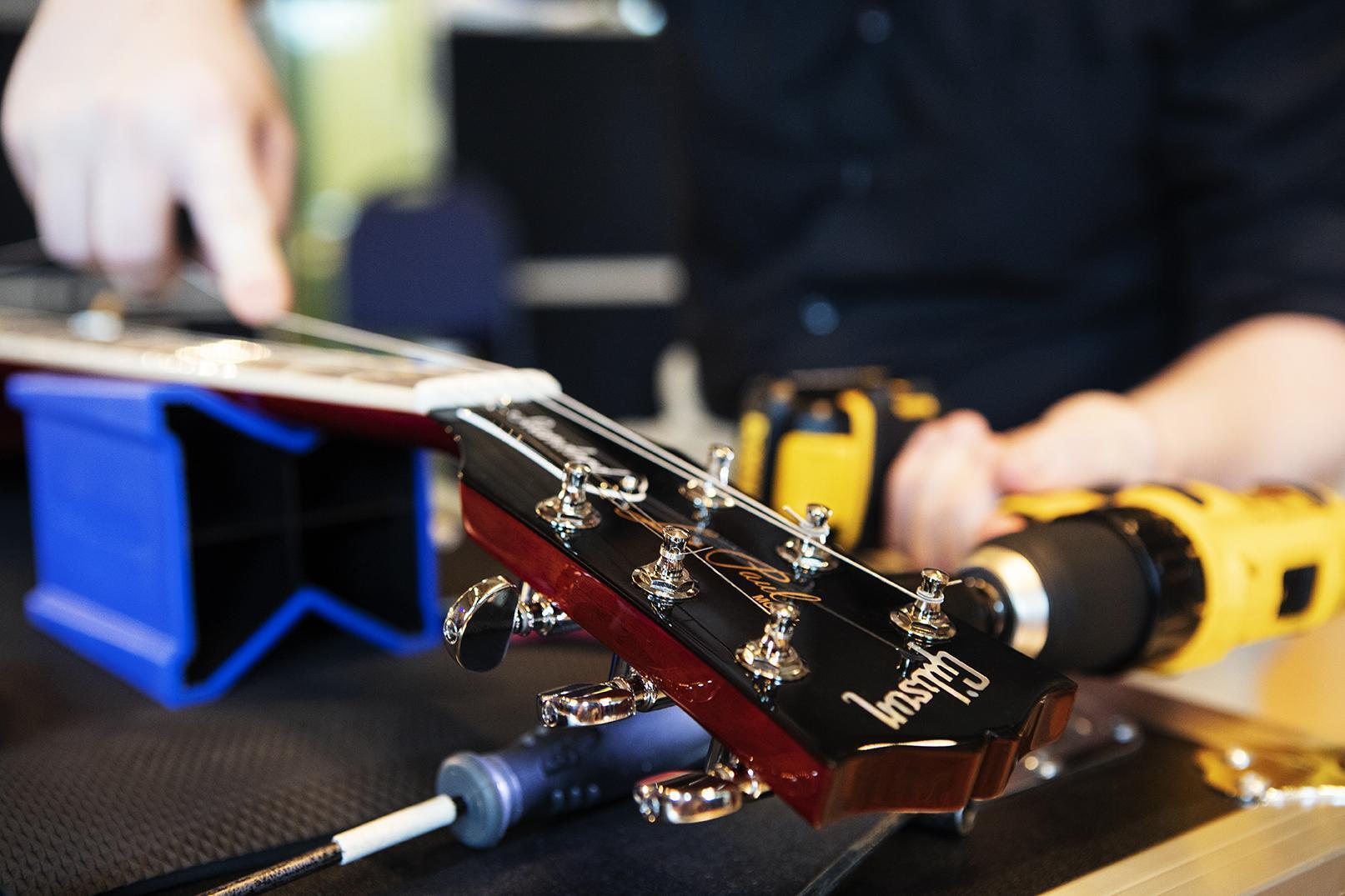
Having 20 string changes and recording all in a single sitting, we had to have a guitar tech on hand who had “only one job.” Fortunately, we were able to enlist the talents of Craig Vinyard, the Sweetwater Music Store Service Specialist. He helped keep the day moving smoothly not only by changing, stretching, and tuning strings but also by handling any minor setup changes on the guitar (such as intonation and truss rod), especially noticeable in the string-gauge comparison.
Recording Details
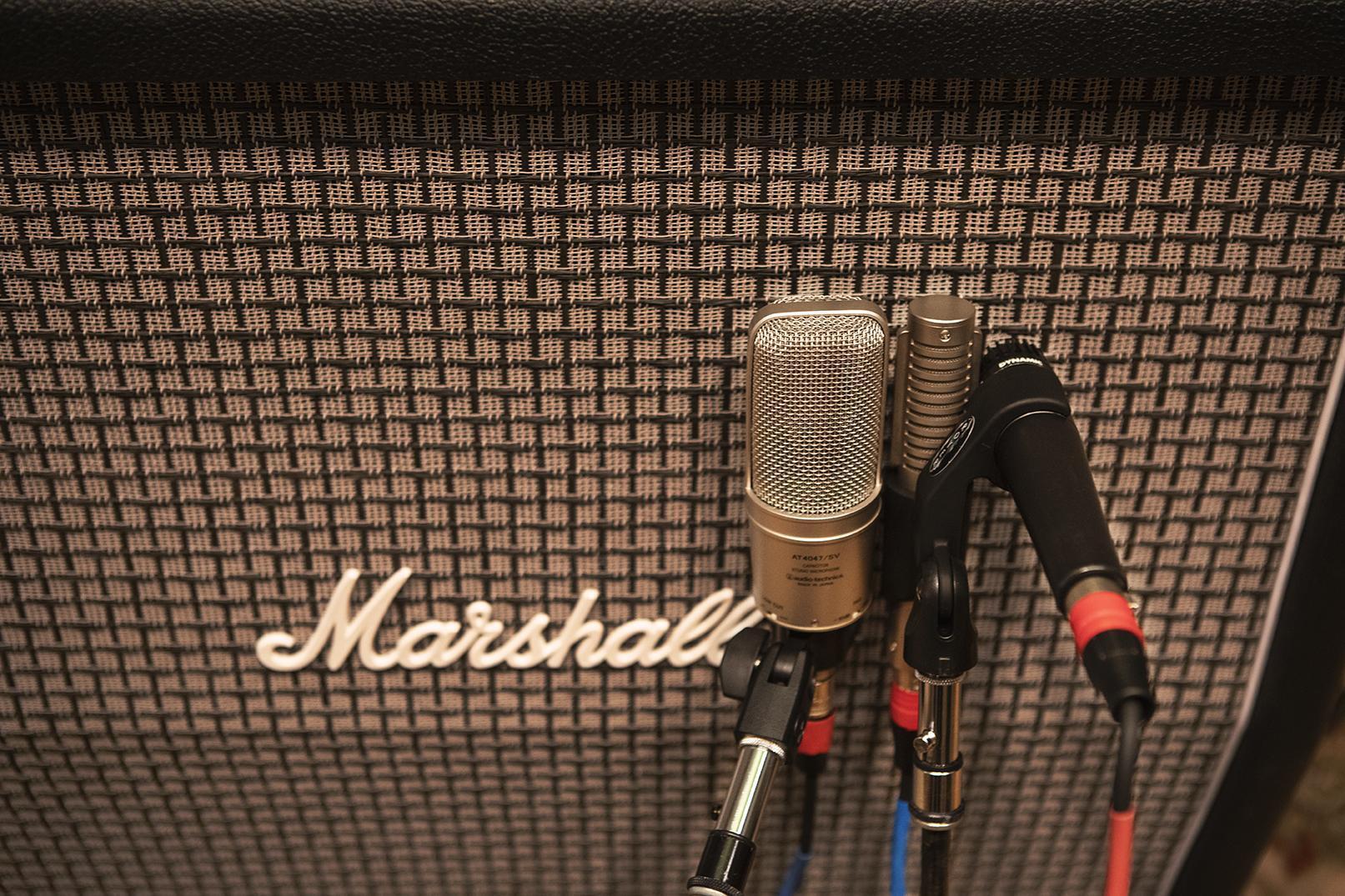
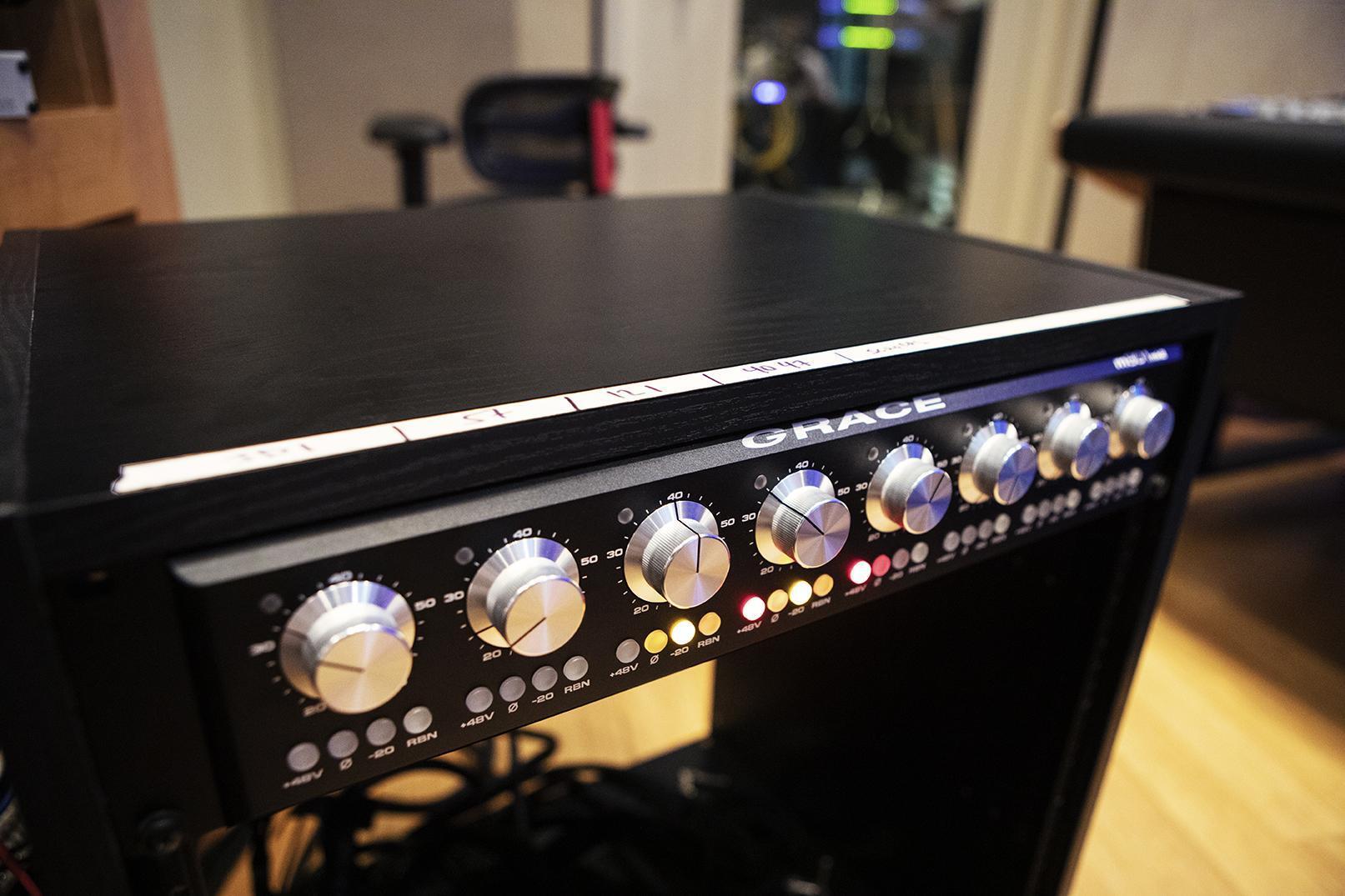
For these recordings, Shawn Dealey put three mics on the cabinet: an Audio-Technica AT4047/SV along with a Royer R-121 and a Shure SM57 mounted together in the ingenious Royer AxeMount SM-21. All three mics (plus the output of the JDI direct box) were routed to the excellent-sounding Grace Design m801mk2 8-channel mic preamp. Then, they were recorded to Pro Tools through an Avid MTRX HD audio interface.
If you want to hear the sound of each mic on the cabinet or to compare sections of each recording, we made it easy by putting all the files into a Pro Tools session that you can download by clicking the button below. We even set up a Schoeps CMC 6, with the MK 4 head on it, in front of the guitar so you can hear what the strings sounded like on the guitar while sitting in the studio.
Download the Pro Tools session here

Wrap-Up
I hope this was as informative to you as it was to us. I think the question of “Do electric guitar strings make a difference?” has been answered with an emphatic “Yes!” I encourage you to branch out, try something new, and get inspired. As always, the goal is to make better music.
Sweetwater sells literally hundreds of guitar string options — not only electric but acoustic guitar strings, too. (Hint: Keep an eye out for a future comparison of those!) If you have any further questions about these or any other strings, please contact your Sweetwater Sales Engineer at (800) 222-4700.
Thank you to the following Sweetwater Studios staff for their assistance in setting up these tests: Shawn Dealey, Rachel Leonard, Dave Martin, and interns Jason Peets and Rachel Hachem. Thanks also to Thom Grant, Matt Duncan, and Darren Monroe for their input and assistance in picking strings and designing the test. And extra special thanks to Olivia Torres for an excellent job shooting and editing the accompanying video, linked below.