The snare drum. It could rightly be called the heartbeat of pop music. The snare drum propels a song with a strong backbeat and adds immeasurable energy to a groove. So, with it playing such a significant role, how do you make sure the snare drum sounds its best in order to give a recording the drive that it needs? That’s a simple question without a simple answer.
There are lots of options and decisions to make when it comes to recording snare — among them are mic selection, mic placement, preamp choice, processing (EQ and compression), reverb, and other tricks. The two biggest factors in the snare sound are the most significant: the player and the snare drum itself. The player is probably the single biggest factor. I’ve heard drums that sounded terrible when I hit them turn to gold when a world-class player sat down to play. And the snare drum itself? There are so many different styles, brands, sizes, materials, and constructions that a whole book could be written about just those, not to mention sticks, heads, tuning, etc. Those two choices, while extremely significant, are typically out of the engineer’s control. So, we’ll pick up on recording the snare drum as it is presented after those decisions have been made.
There are many different kinds of snare drum sounds, from big and fat to thin and ringing and everything in between. The song, the tempo, and the instrumentation should help determine the choice of the snare drum and tuning. There are recording techniques you can use to help capture the perfect sound to complement the song, whether you’re going for a huge ambient room sound like Bonham’s on Led Zeppelin’s “When the Levee Breaks,” a dry and deep upfront sound similar to AC/DC’s “Back in Black,” a highly effected and layered snare sound much like Peter Gabriel’s “Sledgehammer,” a plate reverb echoey sound such as on the Rolling Stones’ “Honky Tonk Women,” or that tight, ratty sound as heard on Rod Stewart’s “Maggie May.” In this series, we’ll explore all those. (If you don’t know these classic recordings that have great snare sounds, then you can find them on YouTube.)
- Considerations When Selecting a Mic
- Choosing a Snare Mic
- Mics for Achieving a Great Snare Sound
- Take a Listen
- Even More Mics
Considerations When Selecting a Mic
There are many technical factors that go into deciding which mic to pick. Here’s a list of a few of those.
Headroom
This is the first and foremost factor since a snare is loud even when you don’t have your ear right up to the drumhead. Headroom is a measure of the mic’s ability to capture the high sound pressure level (SPL) of a snare drum without distorting or clipping.
Microphone Size
The size of the mic is always a consideration for drums — especially for snare because you’ll be sandwiching it in between the toms and hi-hat to get it in the right position. Big mics with big shockmounts need not apply.
Microphone Type
A dynamic mic will usually pick up less ambience and leakage than sensitive condenser mics. Ribbon mics are challenging on snare drums because of the proximity of other drums and their rear lobe, though a carefully positioned Royer R-121 can give you lots of beef, either in conjunction with another mic or by itself.
Directional Pattern
Many engineers prefer to use directional mics like cardioids and hypercardioids to avoid leakage from toms, hats, and cymbals. Others prefer the more natural sound of an omni, especially if the off-axis sound is flattering and not abhorrently colored.
Choosing a Snare Mic
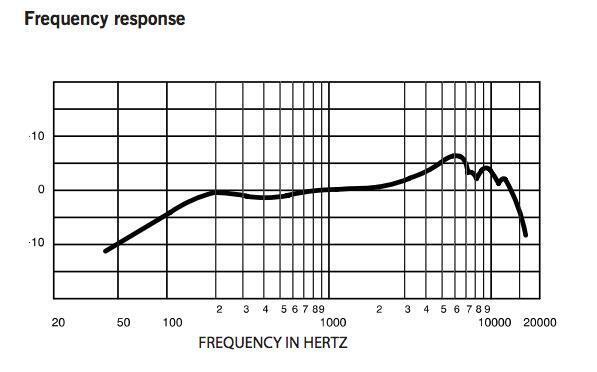
There are almost as many snare mic preferences as there are engineers and snare drums. One very prevalent school of thought for recording snare drums goes like this: “One SM57 over the snare. Done.” The Shure SM57 is pretty much the de facto standard for snare in live and recording applications. While there are lots of new contenders, there’s something nice about the low-end punch that a 57 delivers, courtesy of the proximity effect from its tight cardioid pattern that helps reject the hi-hat. (Proximity effect is a boosting of the low frequencies as you get closer [in closer proximity] to a cardioid or figure-8 mic.) I personally like the low-mid thwack that an SM57 offers, but I usually have to add top end to the sound because of its natural high-frequency roll-off. (See frequency response chart below.) And its designed roll-off on the bottom (below 200Hz to minimize handling noise) means you may need to EQ in some real low end to compensate for it being down 10dB at 50Hz.
Mics for Achieving a Great Snare Sound
Other great mics include what I affectionately call the “Spitfire,” the Telefunken M80. It has a top end that will make a snare drum crack and slice right through a big rock track.
For a thick, embracing bottom end, I’ve never heard a mic that offers more low-end thump than the Beyerdynamic M 201 TG. Some engineers love the low end so much that they use it with a condenser mic taped to it to augment the top end. Sweetwater currently carries the mic that replaced the M 201 TG, the Beyerdynamic M 201.
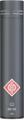
For a more accurate snare representation, there’s the Neumann KM 184. It has far more bottom end than you might expect, especially when you get it in close to the snare head. And it offers the fine detail of a condenser mic.
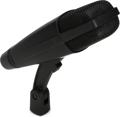
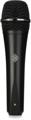
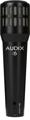
Two other perennial favorites that you frequently will see on snare are the Audix i5, with its very distinctive sound, and the Sennheiser MD 421-II, which has seen steady use on drum recordings for decades. A new contender is the sE Electronics V7, which offers the oomph of a 57 but with a more natural sound.
Take a Listen
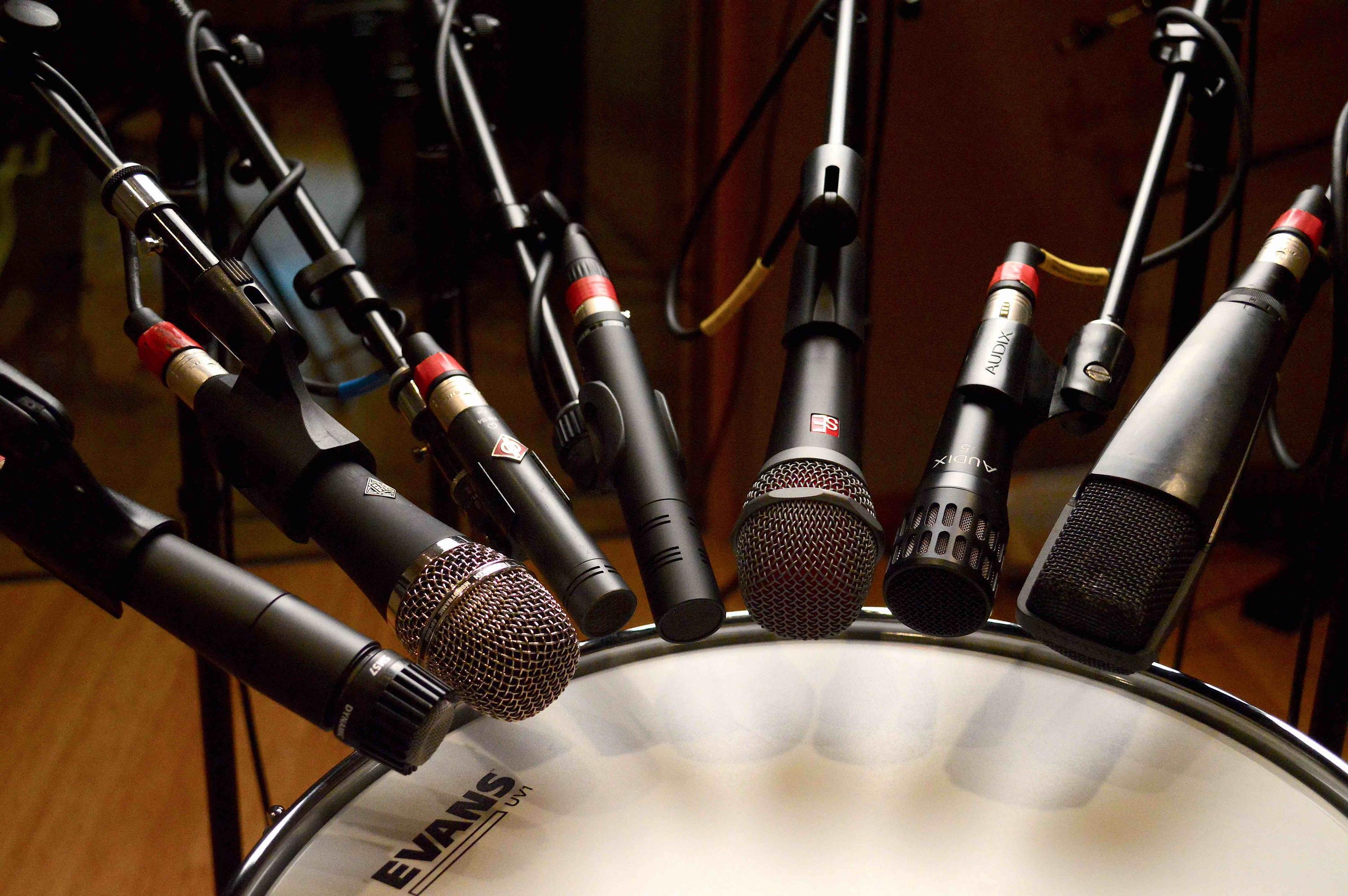
To hear what these sound like next to each other, I took a group of snare mics into the studio — a few of them were standards, and some others I was curious to hear. Here are those samples (as 320K MP3s) so you can hear them for yourself. For this auditioning session, I set up a Ludwig Supraphonic LM400 5-inch x 14-inch snare drum in Sweetwater Studios‘ Studio B and recorded Nick D’Virgilio playing the snare drum with all these mics routed through a Millennia Media HV-3R (the comparable sibling to the Millennia HV-3D/8) with no signal processing at all. These first seven mics (1–7) were all recorded in a single pass — they are all the same performance.
Snare Hits
Snare Rolls
Snare with Brushes
Even More Mics
Here are a few more mics that I personally wanted to audition:
These were all recorded simultaneously in a second pass.
Snare Hits
Snare Rolls
Snare with Brushes
Did You Find a Mic You Love?
I hope you found these tips helpful for choosing microphones for snare. If you found a snare mic that you hadn’t heard before and you love, then that’s even better. If you have specific questions about any of these or other mics, then give us a call. Your Sweetwater Sales Engineer is always happy to help you find the gear you need. You can call us at (800) 222-4700.