Are you ready to expand your studio with the addition of a networked-audio interface?
There are lots of options available, many of which are compatible with different networks. Let’s take a look at Dante and AVB, the two major network protocols, and we’ll show you how to choose the gear that’s appropriate for your application.
When you’re shopping for a networked-audio interface, two terms pop up time and time again: Dante and AVB. These are the two most popular audio networks, and it’s important to realize before you make a purchase that they are not compatible with each other. Let’s start with the basics.
Buying Networked Audio at Sweetwater is Better!
With an incredible selection of the best networked audio gear at any price point, FREE expert guidance from your Dante-certified Sales Engineer, and valuable extras like our 2-year Total Confidence Coverage Warranty, Sweetwater gives music makers more than any other retailer. For friendly, expert guidance, call a Sales Engineer now at (800) 222-4700!
Dante
Developed by Audinate, Dante audio networking has become extremely popular and is used by hundreds of audio manufacturers. Dante networks can route up to 512 channels of audio inputs and outputs at resolutions ranging from 24-bit/48kHz up to 32-bit/192kHz when used with standard Gigabit Ethernet hardware (channel count may be reduced at higher sample rates and bit depths). A Dante network using cable lengths of 100 meters between switches and up to 10 switch “hops” will have a latency of 1 millisecond (a hop is a trip through a network switch).
Latency can be adjusted from 150 microseconds to 5 milliseconds on a per-device basis, but be aware that ultra-low settings can affect network performance.
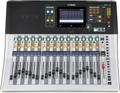
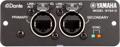
Any Dante-enabled device can communicate with another Dante-enabled device that has the same audio capabilities, which means you don’t have to worry if your audio interface and mic preamps are made by different manufacturers. Many products, such as the Focusrite RedNet A16R MkII 16-channel Dante audio interface have built-in Dante compatibility, while others such as the Yamaha TF3 48-channel digital mixer can be loaded with a Dante expansion card (Yamaha NY64-D Dante digital interface card) when you’re ready.

Dante automatically chooses the device with the best clock as the master, and, when powering down, network information is stored within each device.
AVB
AVB or Audio Video Bridging is a set of networking protocols developed by the IEEE (Institute of Electrical and Electronics Engineers) that allows routing of audio, video, and control data using Gigabit or 100BASE-T Ethernet hardware with AVB-compatible switches. AVB organizes audio into “streams,” each of which carries a certain number of channels. When routing AVB over Gigabit Ethernet, for example, you can have 12 streams containing 32 channels, yielding a channel count of 384. Sample rates ranging from 48kHz to 192kHz are supported, and higher sample rates mean lower channel counts. Each stream also transmits clock information to each device from the network’s master clock.
Latency on an AVB network maxes out at 2 milliseconds when routing an audio stream from one device to another across as many as seven “hops” on a 100BASE-T network; latency on an AVB network can be made as low as 250 microseconds with Gigabit switches.
Pros and Cons
There’s a lot of similarities between AVB and Dante, such as no degradation of audio quality, cable lengths up to 100 meters between switches, and automatic discovery of devices attached to the network. Neither protocol requires a dedicated network infrastructure — they can operate with other equipment such as PCs sending and receiving email on the same network. There are, however, some important differences that can impact your decision on which would be preferable for your application.
At this time, Dante has been adopted by hundreds of major manufacturers, including Focusrite, Neve, Apogee, Yamaha, Lynx, and Burl. AVB has not been adopted by as many manufacturers as Dante; but major supporters include PreSonus, MOTU, Crown, RME, Biamp, Pivitec, Waves, Apple, and Harman. At least one manufacturer — Avid — produces products for both networks, but read the specs carefully to see which devices work with which networks. For example, the Avid MTRX Studio is Dante compatible, but the Avid Pro Tools | Carbon interface is AVB compatible.

Dante is licensed, meaning that manufacturers pay a fee to use the technology. AVB is an open standard (manufacturers are not required to pay a fee to use it), and that can make the cost of AVB-compatible hardware lower than that of Dante-compatible hardware.
One of the most important differences between Dante and AVB is that of redundancy for critical applications: many Dante-enabled devices have a secondary port that enables you to set up identical primary and secondary networks. In the event of a network failure, the system automatically switches to the secondary network, making Dante a better choice for mission-critical applications.
Comparing the channel count available between Dante and AVB merits some clarification because the numbers mentioned earlier apply to a single Ethernet port, and multiple ports can exist on both types of networks. Ultimately, Dante has the edge here, but the reality is that both protocols can be used to create networks with upward of 1,000 channels.
| Feature | Dante | AVB |
|---|---|---|
| Channel Count (one port, 48 kHz) | 512 in, 512 out | 384 total |
| Latency (max.) | 1ms | 2ms |
| Sample Rates | 48kHz–192kHz | 48kHz–192kHz |
| Easy Setup? | Sometimes | Yes |
| Plays Well with Others? | Focusrite, Neve, Apogee, Yamaha, Lynx, Burl, and others | PreSonus, MOTU, Crown, RME, Waves, Biamp, Apple, Harman, Pivitec |
| Multiple Simultaneous Sample Rates | Yes | Yes |
| Cost | $$ | $$$ |
Configuration
Setup for a Dante network is complex, and Audinate offers a certification program for those who aspire to master it. (NOTE: Sweetwater’s Sales Engineers are Dante Level 2 Certified, so if you have Dante questions, then you can get answers to any Dante questions.) The simplest Dante network requires two Dante-enabled audio devices, a network switch, and a computer with an Ethernet port running Dante Controller software to configure the network (the computer is not required for operation, and you can disconnect the computer once you have configured the system). Dante Controller runs on macOS or Windows and is available free of charge.
AVB networks require less networking experience to set up and can be created without a computer. An AVB network is controlled using AVDECC (the IEEE standard 1722.1-2013 for Audio, Video, Discovery, Enumeration, Connection management, and Control), and many AVB-compatible devices have AVDECC built in. For example, the PreSonus StudioLive 32S digital mixer has an onboard AVDECC that enables routing between devices from the mixer’s touchscreen.

AVDECC is natively supported by macOS 10.10 or later (drivers are available for Linux and Windows), enabling AVB-compatible devices to connect directly to a Mac without need for a network switch. This means you can record and play audio over AVB on any Mac that supports it. In order to record directly into a computer on a Dante network, you’ll need Dante Virtual Soundcard (DVS), which turns your computer into a Dante-compatible sound card (2×2 up to 64×64) and is available as an inexpensive download.
Which Switch?
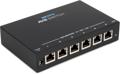
Although Dante and AVB use common Ethernet hardware, the switches used for an AVB network must be AVB certified, whereas Dante can run over any Ethernet-compatible network switch. An AVB-certified switch, such as the MOTU AVB Switch, prioritizes audio and video data over other types of data (internet connection, for example) using traffic queuing for time-sensitive streams. That guarantees reserved bandwidth for transmission of audio or video and prevents standard network traffic from interrupting delivery of audio and video data. As a result, AVB-certified switches tend to be more expensive than those that are not certified.

Conclusion
AVB and Dante are both powerful network systems. If you’ve got the budget to build or expand your studio with high-end gear from a wide variety of manufacturers, then Dante is probably the way to go. If your budget is more modest and you have brand loyalty to PreSonus or MOTU, then AVB is probably the right move.
If you need help choosing a networked-audio interface, then call one of our Sweetwater Sales Engineers at (800) 222-4700. They can provide knowledgeable answers to your networking questions and make sure you get exactly the gear you need in a timely fashion.
Here are other articles and videos that will help you understand audio networking:
- Audio Networking Explained
- Guide to Understanding Networked Audio
- Focusrite RedNet Digital Audio Networking System Overview
- What Is Dante? – Why There’s a Dante Network in Your Future
- What Is AVB?
- Networked Audio for Modern, Electronic-Based Music Producers
Steve La Cerra is a freelance engineer, drummer, author, and educator based in New York. He is currently the front-of-house engineer and tour manager for Blue Öyster Cult and has worked with artists including Wess Meets West, Joe Jackson and Robert Fripp. Steve also teaches Music Production at Mercy College in Dobbs Ferry, NY and has written many articles on pro audio technology.