Crowd mics bring life to recorded or broadcast sound for live music. They’re great tools for incorporating a congregation’s participation, whether you’re inspiring your musicians while they’re using in-ear monitors or helping your online viewers feel the natural vitality of in-person attendance. Elevate your service recordings with authentic ambience for a more engaging experience.
Common Crowd Mic Types
Here are some microphone types that are commonly used in auditorium spaces to pick up audience reaction and participation. Even if you run your front-of-house (FOH) sound in mono, a stereo mic (or pair of mics) is often added to streaming mixes or to add audience presence to in-ear monitors (IEMs).
Condenser Mics – Nearby Vocals
Use condenser mics to capture sound in front of the crowd. Condenser mics are highly sensitive to a wide frequency range, making them ideal for capturing nearby vocal nuance. If the condenser mic has a cardioid polar pattern, it will reject sound from the sides and rear of the mic, though they capture a larger zone than shotgun mics. They require phantom power. Condenser mics are great for capturing nuanced detail, such as the congregation singing during a breakdown.
Shotgun Mics – Distant Vocals
Use shotgun microphones to capture sound in the middle of the crowd if voices in the front of the crowd don’t overwhelm the signal. Shotgun mics are highly directional mics. They cancel out sounds coming from the sides of the microphone by using an interference tube on the front of the mic that makes them long and thin. Longer interference tubes (thus a longer mic) offer even more directional pickup. Because they significantly reject sounds coming from the side, users can effectively single out sources targeted by the mic. Low self-noise is critical. Their hyper-directionality makes placement very important — positioning them farther from the target may capture a wider range of smooth sound. They are typically condenser mics and require phantom power or a battery. They’re ideal for focusing on a specific zone and minimizing stage and PA bleed.
Ceiling & Wall Mics – Ambience
Use ceiling and wall mics to emphasize ambient sound and natural reverb when stands are impractical or not aesthetically pleasing. These specialized, low-profile, small-diaphragm condensers are designed to be less noticeable. They pick up a blend of room sound, FOH spill, and vocal detail. These are typically referred to as boundary mics since they are mounted to a physical boundary such as a wall or a window. You may hear them referred to as “PZMs,” which stands for pressure zone microphone.
Dynamic Mics – Crowd Applause
Use dynamic mics to capture less detailed sounds such as clapping. Dynamic mics are durable, so they’re a good choice when dealing with high sound pressure levels or in situations where they may be bumped or knocked over. Because they’re less sensitive to detail, they may provide a smoother overall sound; however, they require more gain, which may increase noise. Dynamic mics are helpful as sound-booth mics to capture room ambience for streaming and post-production.
Placement Tips
Condenser Mics
Place condensers along the left and right edges of the platform at audience head level, pointed out toward the congregation. Position them to the sides of the FOH speakers for maximum rejection.
Shotgun Mics
Place shotguns on the left and right sides of the platform at an elevated level, pointed toward the middle of the congregation. Position them to the sides of the FOH speakers for maximum rejection. Avoid positioning them in front of the FOH speakers, as many shotguns are sensitive to sound from the rear. Because increased distance from the mic reduces the impact of individual voices, some audio engineers will point shotgun mics toward the opposite side of the congregation to increase the distance-to-source ratio and expand the target coverage area, but this also decreases the sound you will pick up since the mic is farther away from the desired sound. If you try this approach, check for comb filtering. For typical auditorium use, many users prefer the convenience of phantom-powered units over battery-powered options.
Ceiling Mics
Aim ceiling mics at the areas of the congregation where most people are seated. Position the mics for maximum rejection of FOH speakers and HVAC system noise. Note that while shotgun mics may work well at this distance, they require exact positioning, which may be impractical without a catwalk or a lift.
Sound Booth Mics
This is a mic or mics that are set up at the mix position. Set sound booth mics at ear height and point them toward the main FOH speakers. If possible, time align recordings to avoid phase issues. Use a lowpass filter to minimize timing issues with the hi-hat and cymbals. Remember that sound booth mics will also pick up voices talking at the sound console, which may be louder than the sound of the congregation!
Pro Tip:
Microphone manufacturers use different terms to describe a microphone’s polar pattern.
- Cardioid: This polar pattern is designed to pick up sound from the front and reject sound from the sides and back. It has a wider pickup pattern than the other mics listed here.
- Hypercardioid: More directional than a supercardioid, a hypercardioid has a narrower pickup angle, which allows it to cover farther distances, and provides less rear rejection.
- Supercardioid: Slightly less directional than a hypercardioid, a supercardioid has a wider pickup angle and better rear rejection.
- Lobar: This shotgun microphone polar pattern is also referred to as a supercardioid/lobar or hypercardioid/lobar. The slotted tube offers even more directionality and rear rejection than its supercardioid/hypercardioid counterparts.
- Line + Gradient: This term refers to the slotted tube method used to extend the directionality of a supercardioid or hypercardioid pattern. The design creates small delays in sound that effectively cancel off-axis sound to reject unwanted noise. This term itself does not refer to a specific pattern, though most shotgun mics have a supercardioid/lobar pattern.
Mixing Best Practices
The golden rule: Do not incorporate room mics in the FOH mix! Most live audio engineers agree that less is often more when it comes to ambient sound, so it’s best to avoid overprocessing. Of course, everything else is done to taste.
EQ
While EQ settings will vary from room to room, consider these starting places. Reduce low-frequency rumble and mud with a highpass filter set around 200Hz–300Hz. Notch around 250Hz–500Hz for clarity. Some audio engineers boost around 9kHz–10kHz for added sparkle, though other audio engineers notch or shelf to eliminate clapping and applause peaks. Note that you can reduce the impact of comb-filtering issues by notching down the most noticeable frequencies.
Compression, Gates & Limiters
Compress lightly to smooth peaks without introducing pumping. Do not gate if you’re using your room mics as a primary source of ambience or reverb. If you are adding significant amounts of gain, then consider adding a limiter to protect from distortion caused by unexpected peaks.
In the Livestream Mix
Set the room mic gain and pan the mics hard left and right from the audience perspective. Once the regular mix is stable and the FOH is at performance level, then blend subtly into the overall mix to add width to your streaming mix — a little goes a long way.
Use a group to conveniently control the crowd-mic mix preferably on a single fader, especially if you ride the room mic mix to emphasize congregational singing and clapping, and to reduce the level during the sermon.
For even greater crowd nuance, use multiple room mic pairs. For example, use multiple condenser pairs about head height across the front of the platform to capture voices closer to the platform, an elevated pair of shotgun mics to capture the center mass of the congregation, and a condenser pair at the rear of the auditorium to capture overall ambience. Mix to taste.
Pro Tip:
If you have a wide stage or a larger room and are considering using multiple pairs of condensers across the front of the stage, keep in mind the 3:1 rule to avoid comb filtering. The mics should be spaced at least three times the distance between each mic and the mic’s targeted sound source. For example, if your mics are 10 feet from the crowd, then a 30-foot gap between each mic will keep your sound pristine.
Gear Highlights
You don’t have to start by buying mics. You can experiment with whatever spare microphones you have on hand. Alternatively, sell any gear you no longer need on Gear Exchange — take your payout in the form of a Sweetwater Gift Card, and they’ll waive the seller fees so you can apply every penny toward your new gear. If you need something new, then these mics provide a great place to start.
Condenser Mics
These highly rated small-diaphragm condensers have a fast, flat response and a wide dynamic range for capturing all the nuances of your congregation. Their cardioid polar pattern provides excellent off-axis rejection. These mics also work great as instrument mics, overheads, or vocal mics.
The rugged Shure SM81 pair features a 3-position highpass filter and switchable -10dB pad for a max SPL of 146dB and a great signal-to-noise ratio of 78dB for 16dBA self-noise.
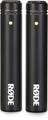
The RODE M5 pair has 1/2-inch capsules featuring a maximum 140dB SPL and 19dB self-noise.
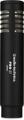
The Audio-Technica PRO 37 features a max 141dB SPL and handles the inconsistent phantom-power output of power-challenged sound consoles.
Shotgun Mics
These highly rated shotgun mics offer low self-noise and plenty of headroom.
The Sennheiser MKH 416 has a 9.8-inch tube with a hypercardioid pattern for low and medium frequencies and a lobar pattern for frequencies above 2kHz. It has a self-noise of 13dBA — the lowest of any mic listed here. Its immunity to high humidity makes it appropriate for outdoor use.
The Audio-Technica AT8035 has a 14.5-inch tube for increased lobar polar pattern directionality and uses either battery or phantom power.
The Sennheiser MKE 600 features a 10-inch tube with a supercardioid polar pattern. It uses either battery or phantom power for portable versatility and camera-mount options.
Enhancing Your Path Forward
Without crowd mics, your online and IEM listening experiences can easily feel sterile and lifeless. But with these great tools and helpful techniques, your listeners can hear what makes attending your church so special.
While any of the items listed here can help deliver a sense of being in the room as part of your church family, your approach will be impacted by your specific blend of service elements, room acoustics, auditorium shape, congregation size, and current FOH setup. Reach out to one of our knowledgeable Sweetwater Sales Engineers at (800) 222-4700 for personalized recommendations. They’ll answer your questions so you can breathe life into your online service experience.