

When it comes to holding down the groove in a song, bass players don’t usually place sustain at the top of their sonic priorities. But sometimes that ballad comes along, or maybe a song that calls for ambient textures with long sustained notes. What do you do when your bass notes don’t sustain as long as you want them to? You check out this guide from your friends at Sweetwater, of course.
Tweak the height of your pickups
When it comes to altering core characteristics of an electric instrument’s sound, I’m a big believer in starting at the pickups. The distance between your strings and your pickups doesn’t just affect their tonality; it also plays a big role in how much sustain you’ll have. With your pickups too close to the strings, their magnetic effect will actually dampen the strings’ ability to vibrate. As you lower the pickups (easy to do with a common screwdriver), the magnetic effect weakens, and your strings will sustain longer.
As you lower the pickups, you’ll also be slightly reducing their output. It really pays to critically listen as you adjust your pickups, finding the best balance of output and sustain for your style. I typically start with whatever pickup I use the most (assuming a multi-pickup bass) and dial that in until I’m happy. Then adjust the other pickup to match the output of the first (adjusted) pickup as close as you can (while still finding your preferred sweet spot for sustain). You’re listening for minute changes, but once you have an ear for how pickup height affects your tone, you’ll probably want to fine-tune the pickup height on all your instruments.
Replace your strings
You may find that your pickups don’t deliver the sustain you’re looking for at any height. If you’re using old strings, putting on new strings will help matters somewhat, but it’s not economically practical to try out dozens of types of strings in the search for more sustain. However, there’s one more thing you can do with your bass before moving down the signal chain.
Tighten your hardware

Your strings make physical contact with your bass at only a few points — the tuning machines, the nut, the bridge, and the tailpiece. If any of these components are loose, they’ll reduce overall resonance, dampening the vibration of the strings. Use a handy tool like the MusicNomad Octopus Tech Tool to make sure your tuning machines are tightened securely against the headstock (check both the screws in the back of the headstock and the nut that stabilizes the post on the front of it). Make sure your bridge hardware is tight and not rattling — if your saddles buzz or vibrate, they’re reducing sustain. The nut is pretty much a set-and-forget component, but if you have a plastic nut on your bass, you could consider upgrading to a bone nut or a premium synthetic-material saddle like the Graph Tech TUSQ XL to enhance sustain. If this seems like basic setup advice, it is — a bass that is set up well will sound better and sustain longer.
Add sustain with a compressor pedal
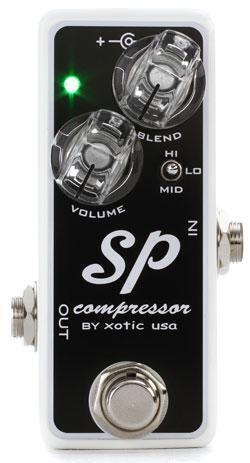
Compressor pedals give you control over your instrument’s dynamic range. By applying compression to your bass tone, you can effectively add sustain. A simple compressor pedal like the Xotic SP offers studio-quality compression with a minimum of setup — just two knobs and a toggle switch give you all the control you need to dial in the right amount of compression to enhance your sustain. Or you could go for a sustain-focused pedal like the Pigtronix Philosopher Micro Bass Compressor/Sustain Pedal. It’s essentially a compressor as well, but having a specific knob labeled Sustain can remove some confusion when it comes to dialing it in.
If you’re not already experienced with using compression, it can be quite the rabbit hole to dive into. Check out How to Get the Most from Your Compressor Pedal by Sweetwater’s Don Carr to learn more.
Creative sustain techniques for performance
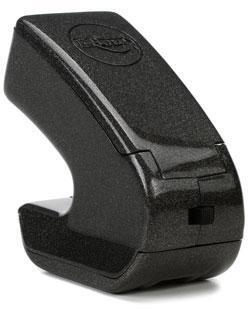
The techniques we’ve discussed thus far will definitely help add sustain to your bass, without changing its core tone. But what if you don’t want it to sound like a typical bass guitar? What if you want the kind of droning sustain you’d get from a bowed cello? That’s where a handheld sustainer device, like the Ebow Plus or the TC Electronic Aeon, adds flexibility. Hold one of these devices over a string, and it will excite the string until you move it away from the string. It’s a distinctive sound and better suited to more sonically adventurous styles of music. If you don’t want to alter your playing style, check out the Electro-Harmonix Freeze pedal. Click it on, and it will create a micro-loop of whatever note you are holding, sustaining until you turn the effect off. It’s great for creating drone notes you can then continue playing over.
There’s more than one way to enhance sustain
All this really comes down to why you actually want to enhance the sustain of your bass guitar. If you simply feel like your notes fade out too quickly no matter how you play, address your pickups and your instrument first. If your instrument is in prime shape and you simply want more fatness and sustain, add a simple compressor pedal. And if you’re seeking something more creative and adventurous, check out a sustainer pedal or handheld device and explore those possibilities. And if you’re even more perplexed than when you started reading this article, just give your Sales Engineer a call at (800) 222-4700 — we’re always happy to help!