Building a home sound system is a rite of passage for listeners of every musical style, an ode to the art that inspires us and shapes who we are. Of course, every home audio setup is different, and understanding what you need to sound your best isn’t always a question of cost. It will always be an important factor, to be sure, but please don’t misunderstand: your ideal listening experience isn’t automatically improved or defined by how much money gets thrown at it. No matter your budget, space, audio needs, or level of technical know-how, a first-time hi-fi sound system is much easier to build than you might think, and we’re going to outline common considerations to arm you with the knowledge you need to find the right gear for your sound. Whether you’re gaming on the big screen, jamming to vinyl records, or seeking total immersion with your favorite movies and TV shows, we’re here to help you build the home sound system you need.
Editor’s Note: This article is intended to outline needs and considerations for building a home sound system. For a convenient collection of definitions, we recommend reading our recent explainer, “Anatomy of a Home Sound System.”
Vinyl, Turntables, and Focused Listening
In 2022, vinyl record sales surpassed CD sales for the first time since 1987, cementing the reality that vinyl’s resurgence isn’t just a trend. The medium’s comeback has created a new generation of listeners while reinvigorating seasoned collectors’ desires to expand their catalogs. Turntables of multiple styles abound, from vintage-inspired two-speed models to cutting-edge machines that boast compatibility with Bluetooth, Wi-Fi, Apple AirPlay, and more. Moreover, record players with built-in USB ports let you record your prized sounds straight to your computer, all the while preserving that distinctive analog warmth.
Fortunately, these versatile features are common to turntables at almost every price point. For newer listeners looking to explore the vinyl space, a record player that supports multiple playback media can be more easily integrated into a home sound system. You’ll have one source for all your audio engagement, eliminating the need for complex arrangements with multichannel receivers — the turntable does all the heavy lifting. Beyond this, differences in motor systems, cartridge compatibility, and integrated technologies play a major role in establishing what additional gear is needed to build your sound system, such as speakers, receivers, or preamplifiers.
You can find our full offering of home audio turntables here; companies such as JBL, Audio-Technica, Sony, and Denon provide exceptional options for multimode playback that are robust, reliable, and ready to provide high-quality sound as you grow your collection.
Receivers: Vinyl Listening
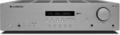
Combing through your collection, finding the right record for the moment, removing it from its sleeve before setting it into place and dropping the needle — this ritual can be as important to the experience as the music itself. If that speaks to you, then the placement of the turntable and speakers within your space, as well as how you’d sit or move throughout the space, may indicate a dedicated setup for your turntable. With vinyl records limited to stereo output, an accompanying receiver won’t need more than two channels and possible room for a subwoofer.
What to Consider: Powered Sound, Arrangement, and Décor
A common misconception about speakers is that loudness, power, physical size, and audio quality all correlate as the numbers attached to each increase. In the past, there was a sound logic to this, as physical limitations constrained how much a speaker could do to preserve and reproduce audio at a given level of fidelity. Today, advancing technologies have made it possible to easily conjure high-quality sound with speakers of nearly any size — passive or powered — and we carry a wide variety of options to suit virtually any arrangement. So, what’s the difference between passive and powered speakers, and why does it matter?
Powered or Passive? Speakers and Subwoofers
Passive speakers and subwoofers, which need to be driven by an external amplifier, don’t require a dedicated power supply while powered versions do need a power supply to accommodate an integrated amplifier. Powered speakers are often associated with a higher level of baseline quality, thanks to the onboard amp and speaker components being ideally matched through research and development. This can be true, but factors that influence quality extend far beyond this distinction and include the source of the audio and the acoustics of the room, among others.
Though they can be heavier than your average passive speaker, powered speakers offer a degree of versatility that passive speakers cannot. Everything needed to play audio is built into the cabinet, making them a powerful option for portable sound.
Subwoofers round out the spectrum of your listening experiences, providing a dedicated avenue for low end that can be independently adjusted. Including a sub in your setup isn’t “required,” per se, but it offers more than window-rattling bass. Primarily, a subwoofer routes the lower frequencies to itself, removing them from the audio being sent to your speakers. This helps clarify your sound, preventing the speakers from being muddied by heavy lows while ensuring those bassy sonics will be articulated just as they were intended to be heard.
What about passive speakers? Since they don’t require a dedicated power supply and the cable management that comes with it, passive speakers offer spatial freedom and give you more options for arranging your sound system. Also, as they don’t have a built-in amp, passive speakers are available in a wider variety of physical sizes, which accommodates placement choices that would be cumbersome or impossible with powered speakers.
A further boon to passive speakers is their capacity for customizing and tailoring your setup. For the DIY-minded, swapping actual speaker components is far easier with passive speakers, but something as simple as your choice of amp or receiver can boost audio quality without ever needing to modify the speakers.
Dialing in Décor: A Case for Space
This may be all about sound, but your speakers are a part of your environment, and likely one in which you, your family, friends, and guests will spend significant time. We don’t advise choosing speakers on looks alone, but you can control aspects of how your speakers interact with the presentation of your space.
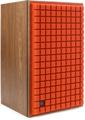
Speakers and subwoofers designed for home listening are given greater attention to their visual aesthetics.
Dedicated stands are another avenue for visual customization with the added benefit of adjusting where the sound travels, allowing you to optimize your space to get the fullest listening experience. A Sweetwater Sales Engineer can help you determine which combination of stands and speakers is best for your sound system.
Home Entertainment: A/V Receivers, Gaming, and Multimedia Setups
Smart TVs and video-game consoles are more prevalent than ever, and the accessibility of built-in streaming means that dedicated devices for specific visual formats aren’t a requirement to enjoy your favorite movies, TV shows, or web content. For any multimedia setup, you’ll need an A/V receiver.
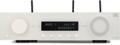
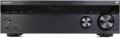
What differentiates these from stereo receivers is the number of channels and the ability to process video signals. Freeing up space that would’ve been occupied by VCRs or DVD players means that any combination of media is fair game to be enjoyed alongside your favorite records, CDs, and more. Home theater A/V receivers today often include built-in wireless connectivity options, as well, including Bluetooth, Wi-Fi, Chromecast, and Apple AirPlay. Some let you control the receiver with a smartphone app or command your system with your voice via hands-free virtual assistants such as Siri or Alexa. With this expanded bandwidth, your system is free to accommodate more than just turntables and video games.
Game Consoles and Multi-use Spaces
The ninth generation of video-game consoles heralded an era of unbridled audiovisual fidelity, immersion, and detail, expanding accessibility options to meet the specific needs of countless players. Sony’s PlayStation 5 and Microsoft’s Xbox Series X/S consoles allow for customizable playback, including optimization for headphones, stereo arrangements, and multi-speaker setups, with further preferences available for higher or lower dynamic ranges. You’re also given ample flexibility in your audio sources, meaning that you could enjoy the soothing sounds of George Michael’s saxophone-laden ballad, “Careless Whisper,” while being mercilessly annihilated in FromSoftware’s Elden Ring.
Multi-source Playback and Management
Out of practicality, most smart TVs don’t have a reason to accommodate simultaneous use of two or more sources of audiovisual information. Even if the technology exists, bouncing between simultaneously active applications would be a cumbersome affair, and it’s likely that separate forms of control and management of your audio would be more comfortable. Mileage will vary among A/V receivers, but many let you divide incoming and outgoing audiovisual information for discrete control of each lane.
Maybe you want the breathtaking visuals of the BBC’s Planet Earth series to be scored by your Apple Music Spatial Audio playlist of searing electro-house heat that’s streaming from your phone; or perhaps the alluring vinyl crackle of Boz Scaggs’s “Lowdown” is a better fit for this year’s Wimbledon matches playing in the background while guests are over. Regardless of the specific audio source, knowing what you want to see or hear, and the control you want over those options, will streamline your search.
Ready to Sound Out?
There are countless combinatorial possibilities for what a receiver can accomplish. Some have native support for Bluetooth and Wi-Fi connectivity, and several go further by supporting direct compatibility with Apple AirPlay, Google Cast, Spotify Connect, or Tidal. Support for file types ranging from MP3s and WAVs up to audiophile-grade DSD files is a distinct consideration for the audiovisual support of surround- or immersive-sound setups. Additionally, the flexibility of wired and wireless connectivity options can encompass a broad variety of storage and format configurations.
Remember, the receiver influences not only how your setup can accommodate your current collection of digital and physical media but also how it can grow with you. This is anything but exhaustive, so if this article’s gotten the gears turning and the interest yearning, then reach out to one of Sweetwater’s Sales Engineers at (800) 222-4700 — they’re eager to help you set up the best home sound system for your needs!