How many pickups do you need? Is three too many? Is two just enough? What about one? There’s no universal right or wrong number. The best pickup is one that gets used, whether that’s a go-to humbucker for daily practice or a neck single-coil that only gets used for recording once in a blue moon. There’s no simple answer, but asking how many pickups you need raises some fundamental questions about electronics, tone, wiring, and more. These questions are often overlooked in the chase for great tone, but Sweetwater’s gear gonzos are here to tackle the topic in full. Join us and check out some classic and not-so-classic pickup configurations along the way.
One Pickup: Fun, Focused & Simple
One-pickup guitars are hardly the norm but are far from unprecedented or being overlooked. Dig back to the ’40s and ’50s, and you’ll find many classic models that rock nothing but a single pickup!
But why choose one when you can have double or triple the pickups? The answer often comes down to a preference for simplicity. Why have more if you love one pickup and rarely waver from it? Some find extra options distracting at best and a recipe for onstage mishaps at worst. Sticking with one can sharpen focus and reduce everything from setup time to long-term maintenance costs. More importantly, having just one pickup removes all temptation to tweak your tone beyond a few simple parameters.
One-pickup models typically offer basic volume and tone controls; however, manufacturers sometimes add extra bells and whistles for more options. I own a short-scale PRS model with a single P-90 in the bridge, and it doesn’t even have a tone knob! This is my go-to guitar when I want my playing to feel fun and energizing. Whenever my tone tweaking distracts from other musical goals, I grab my one-pickup guitar, let it ground me, and renew my focus. One-pickup guitars cover a wide array of sounds and are featured prominently in many genres, including jazz, punk, metal, country, reggae, and pop. Let’s look at some common types of one-pickup guitars.
Classic Lone Rangers: Esquires & Juniors
Fender and Gibson offered pared-down, one-pickup versions of what would later become flagship guitars known to all. The beloved Telecaster began its life under a different name: the Esquire. The Esquire lacked the chrome-covered neck pickup. A lone single-coil in the bridge more than covered the country-tinged genres of mid-century California and was ideal for easing Fender’s first electric players into this new paradigm of solidbody electrics.
Perhaps more of an enduring favorite is Gibson’s one-pickup titan: the Les Paul Junior. This short-scale firecracker began its life as a student model. Compared to the standard Les Paul, the Les Paul Junior was lighter and stripped down without the standard’s luxury binding and carved top geared toward 1950s jazz guitarists who had expectations of luxury. But the Les Paul Junior eventually outgrew Gibson’s original marketing once heavy-hitting pros began prizing its simplicity (and reduced weight). The LP Junior sometimes gets pigeonholed as a “punk guitar” — but not without reason. Green Day’s Billie Joe Armstrong favors the LP Junior for rhythm work, while the Clash’s Mick Jones showed off the massive P-90 lead tones that this “junior” axe was and still is capable of. Other famous uses by artists like Bob Marley and Keith Urban prove that the Les Paul Junior is hardly a limited, one-trick pony.
Metal . . . Minimalism?
Regarding riffs and stage presence, metal players are hardly known for restraint, yet shredders of many stripes put one-pickup guitars to extensive use. These bridge-pickup guitars typically feature one active humbucker, often with extra-hot ceramic magnets primed for gain. Although these are “bridge” pickups, the placement is sometimes scooted toward the neck for a more even frequency response. Such axes are favored by players of classic metal, modern metal, hard-core, and other heavy subgenres. Today, you can find an incredible spread of body shapes in this style, spanning single cuts to “V” shapes, with hardtails and Floyd Roses. The line of ESP LTD Black Metal guitars is a favorite among players and has many options for body shapes outfitted with a single Seymour Duncan Blackened Black Winter bridge humbucker pickup. This fierce pickup has enough output to scorch the front end of any amp — no pedals required.
Necked Jazz
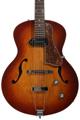
Guitars with only bridge pickups are today’s most common one-pickup guitar types. But flip the coin, and you can easily find guitars with only a neck pickup. These models follow the “jazz box” formula that combines a hollowbody or semi-hollowbody with silky, short-scale necks. Common tone descriptions include “rich,” “warm,” “meaty,” and “round” — the total opposite of bridge-only models! Simply put, guitars with only neck pickups pack less treble response, making for a cleaner initial note attack and a sensitive response to player dynamics. Plus, they’re best suited for highlighting the complexity and nuance of sophisticated chord voicings common to jazz.
Two Pickups: Is More Merrier?
Broadly speaking, two pickups increase the possible tones on any guitar — it’s just simple math. That said, the step from one pickup to two opens the floodgates on practically endless possible pickup combinations: humbucker and single-coil, single-coil humbucker, dual humbucker, dual single-coil, and so forth. We’ll start by considering why a guitar with at least two pickups is a must-have for studio work. Next, we’ll explore wiring variations and push-pull switches often found on two-pickup guitars.
Studio Insurance: Prep for Success with Two or More Pickups
We’ve all been there: a particular pickup selection sounds “right” during practice. You’re playing through a dialed-in amp that you’ve adjusted to the room’s acoustics, and everything’s great! But take these settings to record, add your DAW and microphone, and those carefully refined settings suddenly sound sour and mismatched.
Recording is all about translating your signal through gear you don’t often use in live settings. No matter how fine-tuned you sound in a live setting, recording is a completely different beast. Even the most experienced players have to adapt in studio settings. With more than one pickup handy, you can radically alter your guitar’s tone right at the source where tone matters most and have tracks that sit better in a mix, fulfilling their intended purposes faithfully.
Taking an attitude of gung-ho indifference and calling the results “lo-fi” is certainly an option when pressed for time or compensating for the gear you lack. Still, even acclaimed lo-fi artists take tone seriously. If lo-fi is what you’re after, then knowing your pickups and having options is still the best way to get satisfying results.
Context Is Key with Two or More Pickups
Combining two pickups is like a choir leader pairing singers for a duet. Both singers add character, color, timbre, and range to the overall blend, generating fundamentally distinct possibilities that neither voice could achieve alone. The same is true of guitars with two pickups. Since this is, by and large, the most common number of pickups found on production guitars, and the resulting spread of diverse tones is far beyond the scope of our numbers-based inquiry, let’s skip talking about famous models and instead focus on noteworthy variables to consider when playing, modding, or shopping for your next two-pickup guitar.
Even guitars with nearly identical pickups can yield radically different tones. Consider a standard Telecaster outfitted with single-coil pickups. Both pickups are single-coils and almost identical except for the pickup winds within them. But beyond pickup winds, the bridge pickup sits at an angle. Does the angled position contribute to that signature Telecaster twang that’s stood the test of time? Absolutely!
In contrast, the Telecaster neck pickup features a horizontal orientation for a more even response. Also at play is the neck pickup’s chrome cover, which many argue alters output and tone. If you’re not sold on the Tele’s neck-pickup sound, then you can remove the chrome cover for increased output with a rawer tone.
As you can see, pickup considerations are not solely about electronics. Players should view a pickup(s) as part(s) of a specific guitar and the guitar itself as a complex sum of tonewoods, hardware, strings, and electronics.
To Mix or to Match?
Many classic two-pickup guitars have identical pickups. Take Fender’s Jazzmaster or Gibson’s Les Paul, for example. Both feature two pickups that look the same on the surface, and both pickups are channeled through a de facto tonewood (alder for Jazzmasters and mahogany for Les Pauls). But tell anyone that both pickups on a Les Paul sound the same, and you’re bound to stir controversy — neck pickups feature fewer coil winds than their bridge counterparts. We won’t stop you from putting a neck pickup in the bridge position, but be aware that the winding difference is not based on an arbitrary player preference that became the norm; the difference accounts for the complex, scientific differences in how strings vibrate and behave at different points on the scale. Thus, opting for the commonly chosen matched pair of neck and bridge pickups doesn’t come at the cost of versatility. Many of these matched pickup pairs are bona fide classics — and for a good reason.
On the other hand, mixing various pickup options can significantly boost any guitar’s range. The Reverend Double Agent Series and the new Reverend Rick Vito Soul Agent electronic guitar variant are shining examples. They both feature a PAF-style humbucker in the bridge and Alnico V P-90s in the neck for a resulting spread of single-coil and humbucker tones that earned the original model its reputation as a “Double Agent,” pivoting with the flip of a switch!
Wiring: Parallel vs. Series
Multiple pickup signals don’t just magically combine, so understanding the possible paths a signal can take when using more than one pickup is useful. Builders can wire multiple pickups in series or parallel. Parallel is the clear modern favorite, and nearly every electric guitar that Sweetwater sells is wired in parallel. When wired in parallel, each pickup gets its own dedicated path to the output. These paths and signals never cross or combine prior to reaching the output — hence, “parallel” wiring. Parallel wiring does the best job of preserving an individual pickup’s original character, which is especially useful on models — like Gibson’s SG and Les Paul — that allow independent volume and tone adjustments for each pickup.
Occasionally, guitars are wired in series or equipped with a switchable series mode. The Fender Johnny Marr Jaguar features a series switch, for instance. The series mode gives this Jaguar’s single-coil pickups the extra oomph in the middle position that’s downright monstrous compared to the typical Fender tone. But how does it work?
In contrast to parallel wiring’s multiple independent paths, series wiring feeds all pickups through a singular signal path and combines them before anything reaches the output jack. Series wiring yields a super signal of sorts. The sound is often described as “beefy” and known for enhanced output, thick bass, and midrange presence. Such a tone sounds like something more players would favor, but wiring in series comes at the cost of longer wiring runs, which many argue causes treble loss due to increased electrical resistance. Anyone who’s ever played a Danelectro electric guitar may recognize this phenomenon. The lipstick pickups on vintage and some modern Danelectros are wired in series. Such guitars have huge high-output tone in the middle positions that comes at the cost of treble, which is drastically more present when using the bridge or neck pickup alone. Check out the Danelectro ’59 Triple Divine electric guitar for maximum series options, which is the brand’s latest reissue featuring series wiring. Paired with a 5-way selector, the Triple Divine offers beefy series tone in three out of five positions.
Series wiring is hardly a novelty despite its infrequent use. Optional series/parallel switching caught the eyes and ears of none other than Leo Fender himself. He included the option on his late-in-life masterpiece bass, the G&L L-2000. Devoted students of Fender’s unfinished schematics who were working for the G&L CLF Research Series also added a series option to their incredibly versatile Doheny V12 electric guitars.
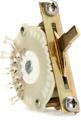
Want to explore series wiring without dropping a guitar in your cart? Telecaster series mods are a longtime favorite with Fender fans. Our friends at 920D Custom offer a great, easy-to-install Original USA Spec 4-way Blade Selector Switch by CRL for Telecasters. The switch adds an extra series wiring option to the middle position that’s packed with a hot punch for a fiery twist on Telecaster twang.
Push-pull: Coil-splits & Extra Voicings
Most two-pickup guitars offer at least three pickup positions — bridge, neck, and combined. Many guitars will squeeze four or five voices out of three switch positions once you factor in push-pull options. You can see how the possibilities quickly spiral exponentially compared to one-pickup options!
Most players are familiar with the classic push-pull function for humbucker coil-splitting. Coil-split is common to most humbucker-equipped guitars — whether it’s a PRS, Gibson, Kramer, Charvel, or something else. We can debate the merits and authenticity of coil-split “single-coil” tones another time, but even those critical of coil-split tones would be wise to stay open to the plethora of alternative push-pull features available on modern guitars. There’s some really impressive and interesting stuff!
The Reverend Double Agent is a signature axe built by the manufacturer in collaboration with guitarist Rick Vito, who, in turn, has worked with Jackson Browne, Bob Seger, and Fleetwood Mac. Vito’s Soul Agent sports just two pickups but boasts eight unique voices onboard thanks to push-pull gadgetry. The Soul Agent’s dual push-pull knobs offer funky phase switching and a “twang” mode that yields tighter EQ and more articulation.
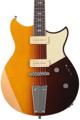
Similarly, the Yamaha Revstar Series has a push-pull Dry Switch that gives traditional coil-splits fierce competition. Yamaha says this Dry Switch offers “the versatility of a coil split, but with tone that’s miles ahead.” A bold claim, indeed. However, as a recent adopter of a Revstar myself, the Dry Switch delivers. I’ve used it for everything from boosting the clarity and presence of a clean neck pickup to giving gain-soaked leads a more articulate, mix-cutting tone in the bridge and middle positions. The Dry Switch comes stock on both P-90 and humbucker Revstar guitars. It’s a passive circuit; basically, it’s a low-cut filter that carves off murky lows and leaves you with, according to Yamaha, “the punch and clarity of a single-coil pickup” without splitting any coils or leeching decibels off your signal.
Three Pickups: The Charm?
Do players truly need three pickups? The average player who’s not an on-call session guitarist or pro-gigging artist can get by just fine with two pickups or even one! But that’s no reason to shy away from three. Some of the tone options that three pickups offer are hard to achieve any other way! Practically, all the variables explored in our two-pickup section apply equally to any combination of multiple pickups. Accordingly, our look at three or more pickups is brief but builds on themes covered thus far.
No Middle Pickup, No Middle Position
For simplicity’s sake, we’ll use the familiar Stratocaster as our exploration vehicle. More than iconic looks, the Strat’s versatile pickups, 5-way selector, and comfortable playability are what make it the most famous guitar ever built. But despite having three pickups, it’s impossible to use all three on a Strat at once, barring significant mods. So, if you can’t stack them all together, then what’s the advantage of having three pickups at all? The Strat’s combined pickup settings in positions two and four are critical to what the Strat offers that others don’t, and it’s the middle pickup that powers both these positions (as well as the versatility of three-pickup guitars beside Strats).
Without three pickups, the “middle” position of the pickup selector is just a figure of speech. For instance, the Telecaster’s “middle” position has no relationship to the guitar scale’s middle region (barring the installation of a Nashville-style middle pickup). The neck and bridge positions, however, literally correspond with their namesake points on the scale. One could easily argue a guitar has no “middle” position without a middle pickup. Still, there’s nothing wrong with calling this the center position for convenience’s sake.
What makes the Strat’s middle-pickup blends so unique? The middle pickup sits at a point on the scale where strings vibrate uniquely. It captures a strange amplitude gray zone between the string’s tighter, more restricted vibrations near the bridge and their more open behavior toward the neck. This gray zone is hardly exclusive to Strats, though the clarity of single-coil pickups is most players’ preferred choice for middle-position tones. This preference is part of what earns HSS configurations their extremely versatile reputation and what initially gave birth to the Superstrat style that’s been favored by hard rockers, metalheads, and progressive shredders since the ’70s.
Past the Strat: Offbeat & Classic Configurations Await!
You can find tons of interesting three-pickup guitars on Sweetwater.com. We have everything from triple P-90s to triple humbuckers with a smattering of HSS, HSH, and SSS options. The PRS Modern Eagle V Series is an innovative HSH powerhouse with 17 possible pickup configurations onboard. Plus, Danelectro’s recently introduced reissue of a ’59 double-cut model comes complete with three pickups and 5-way switching that takes lipstick tone to versatile extremes. In 2022, Guild introduced the incredible Surfliner, a punchy retro-inspired HSS that’s gentle on the wallet but big on tone. Instead of a pickup selector, the Sunset Orange Guild Surfliner solidbody electric guitar, for example, has toggles for each pickup — as does the rest of the series. It covers the range of a 5-way selector but adds the unique ability to use the neck single-coil and bridge humbucker simultaneously.
Purchase Pickups Perfect for You!
We hope we’ve piqued your interest in pickups and equipped you with new knowledge for inspired tone excursions. Our Sweetwater Sales Engineers are always keen to talk pickups ’til the sun sets (even for our West Coast friends). So, give them a call at (800) 222-4700!