What Is a DI Box?
Born out of necessity in studios such as Motown and United Sound Systems to accommodate the electric instruments emerging in the 1960s, direct boxes (also known as DIs, which stands for “Direct Inject”) began as a way to resolve a basic impedance mismatch between guitar pickups and sensitive studio electronics. The very first DI boxes were simply matching transformers with input and output connectors mounted into a metal box.
What Makes a Good Direct Box?
Although many modern DIs are more sophisticated and offer more features than the originals, the primary function of DI boxes is to take an unbalanced, high-impedance signal and convert it to a balanced, low-impedance signal. This allows you to run instruments (typically guitar and bass) directly into the microphone input of a console or your interface. High-end direct boxes can offer lots of options, including built-in gain circuits, switchable polarity, highpass filtering, vacuum tubes, and more.
Passive DIs
Like the original models, such as Ed Wolfrum’s Wolfbox, modern passive DI boxes typically use a form of transformer to convert a high-impedance signal to a low-impedance signal. This style of transformer features separate windings in the input and output stages, which eliminate grounding issues. The result is that the signal is both impedance matched for a standard mic pre and free from ground hum originating at the input stage. Passive DIs are ideal for instruments with strong outputs. Their low cost and durability make them the most popular kind of direct box.
Active DIs
The biggest difference between a passive DI and an active DI is that the active DI requires power and includes an amplifier stage. This type of DI was originally designed to provide extra gain to boost the weak output of passive, single-coil pickups, but the extra gain is great for driving long cable runs, and many modern active DIs offer higher headroom than their passive counterparts. The active circuits require power, which can come via batteries or dedicated power supplies or be derived from 48V phantom power, depending on the DI. Active DIs typically cost a bit more too because of the number of components required. Active DIs may or may not include transformers in the signal path.
Features to Look for in a DI
Direct boxes have come a long way since the ’60s, and both passive and active models feature a wide range of extra functions and options that can make them extremely versatile. Here are some of the extra features you’ll commonly find on modern DIs.
Multiple Channels
While single-channel DIs are still the most common type on the market, there are multichannel versions. There are even rackmount DI units for large stage rigs that regularly feature eight or more DI channels. Direct boxes with two channels are ideal for keyboards and other electronic instruments; whereas, special DI boxes for computers and media players can make connecting laptops and mobile devices to your PA totally painless.
Thru/Bypass
A “Thru” (short for throughput) or bypass splits the original incoming instrument-level signal to a separate 1/4″ output. This allows the unprocessed signal to be sent to an amplifier onstage as well as to the PA via the balanced XLR output. This is particularly useful for bass, which allows the bass player to use an amplifier for onstage monitoring, thereby dramatically decreasing stage volume. Bypasses can be fully passive or — in some active DIs — buffered to allow for longer cable runs or effects pedal chains.
Ground Lift
Although direct boxes can do wonders to reduce or eliminate the external noise that plagues unbalanced instrument-level signals, even balanced audio equipment can be susceptible to hum and buzz caused by ground loops. A switchable ground lift lets you disconnect Pin 1 on the XLR jack of the DI box, preventing a ground loop and eliminating this noise.
Pad
Some DI boxes feature a switchable attenuator called a pad to prevent excessive gain from overloading the circuitry. This circuit decreases incoming signal by a fixed amount (-15dB and -20dB pads are common) to accommodate the high output of active pickups and line-level equipment such as keyboards and other electronic instruments.
Polarity Reverse
Sometimes labeled as a “phase” switch, a polarity reverse flips the polarity of the output signal. This function can be useful in several ways. In addition to correcting for incorrectly wired XLR cables, a polarity reverse switch can switch the absolute polarity of the direct signal to match a microphone on the same source. Polarity reverse can also help prevent feedback, especially when used with an acoustic guitar onstage, and it’s a handy feature to have in case the mixer doesn’t offer a polarity reverse.
Instrument Preamps
Preamps for Acoustic Guitars
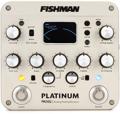
Though they are used for the same function (to put an instrument output into a mixing console), instrument preamps are elaborate tools for enhancing the signal coming from an acoustic guitar’s direct output. A preamp designed for use with acoustic guitars will include features tailored to enhance their distinct tonal properties and tame feedback. Having a DI with a tuner, EQ, or compression onboard can be a lifesaver.
Preamps for Bass Guitars
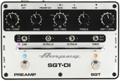
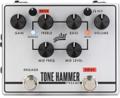
While a DI may be all you need, preamps designed for bass guitar offer exceptional tonal control, and may include EQ, drive circuits, compression, and a host of other sonic options. Then you take the sonically enhanced output and send it directly to the front-of-house mixer.
Sweetwater Is Your Source for the Perfect DI
Whether you need a simple passive DI, a fancy, enhanced active DI, or even a preamp to get your instrument output into the mixing console, Sweetwater has lots of options at a multitude of price points. Not sure which DI is right for you? Call your Sweetwater Sales Engineer at (800) 222-4700, and they can help you find the best DI that will meet or exceed your needs.