Do you make elaborate sounding records that take the sounds of your drum kit to many different places? Do you want to play those songs live and have them sound the same as your records? Do you want your drums to sound bigger while playing live? Do you want to add crazy sounds on top of your acoustic drum sounds?
If you want to do any of those things, then you need drum triggers. Drum trigger technology has come a long way since they were first introduced in the mid-eighties by companies like Ddrum. Back then you needed racks full of sound modules, and the triggers were not very responsive. Today’s drum trigger technology is amazing, very easy to use, and comes in multiple size and form options.
1. Drum Triggers
Drum triggers come in two basic forms: a Piezo pickup attached to the head or shell of the drum, or a trigger in its own housing that is then attached to the rim of a drum. The rim-mounted triggers are more sensitive, sturdy, and able to do things such as dual-zone triggering.
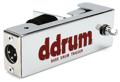
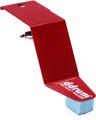
Roland and Ddrum make a number of great trigger options. Ddrum, being the originator of the drum trigger, has many fantastic options. The Chrome Elite series triggers are consistent and easy to attach to any drum. The Ddrum Red Shot Trigger is a great lower-cost option as well. Roland’s RT series of triggers have a clean and stealthy look with the great benefit of being super easy to use.
2. Pads
 Hybrid drum kits are very popular these days because they have the benefit of having both acoustic and electronic drums in the same setup. Placing pads around your kit is an easy way to add percussion sounds or to trigger loops. Yamaha makes it convenient with their DTXHP580 Hybrid Add-on Pack. You get a drum module, drum triggers, drum pads, and clamps to attach it all. It’s a very cool all-in-one solution.
You can purchase individual pads from every manufacturer that require their own clamps and mounts, but you can also get trigger pads that can sit directly on top of your acoustic drums like the Aquarian Drumheads onHEAD PED portable electronic drumhead – a very nice-feeling pad that can be placed on any flat surface. Another option is to replace the acoustic drum head with a pad like Pearl’s Tru-Trac Electronic Drumheads, which come in 10″ all the way up to 16″ sizes and use a typical 1/4″ jack to connect to your drum module, which brings us to the next part of adding triggers to your drum kit.
3. Drum Modules
 If you are already the owner of an electronic kit, especially one that has 1/4″ trigger inputs, then you are way ahead of the game. Those inputs don’t have to just trigger the electronic pads that come with the kit, they can create sounds with triggers from your acoustic kit! Plus you can purchase almost any drum module on its own. You don’t have to buy it with a full kit if you don’t need one.
There are many options for drum modules, and here are a few to consider:
- The Roland TD30 module is a beast with 14 trigger inputs and 8 direct output options. It also has tons of sounds and editing features.
- Another great option is the Yamaha DTX502 trigger module. It comes with over 1,200 sounds, eight trigger inputs, and stereo outputs.
- The Alesis SampleRack percussion controller and sample player is a very affordable unit that comes with 8 trigger inputs, over 200 internal sounds, and an SD card slot so you can add your own custom samples.
- The Nord Drum 2 drum synthesizer is a unique module because it gives you the option of playing with synthetic, sample-free percussion. Think of it as using a synthesizer for your drum sounds. You can dig deep into a whole world of synth percussion sounds. On top of all that, the Nord Drum 2 works as a trigger-to-MIDI converter. You can use it with the pads you already have and trigger other sound modules or virtual instruments from your computer.
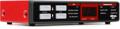
- If you do not need sounds in the module and just want to trigger your virtual instruments, then the Ddrum DDTi is a great option. It does not come with any sounds, but it has 10 trigger inputs along with USB and regular MIDI output. You can connect your triggers to just about anything! It really opens up a lot of sound options for drummers.
4. Multipads
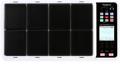
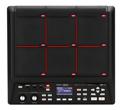
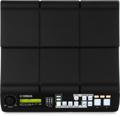
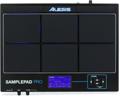
 Yet another way to integrate drum triggers into your setup is to get a multipad like the Alesis SamplePad Pro. The SamplePad Pro has 8 dual-zone pads on it, inputs for kick and hi-hat pads, two other trigger inputs, 200 internal sounds, and an SD card slot for adding your own samples. Other great options to check out are the Roland SPD-SX Sampling Percussion Pad that adds onboard sampling to the picture, Roland’s Octapad with over 540 sounds and four trigger inputs, and the Yamaha DTX-MULTI 12, which comes with 12 Pads, over 1200 sounds, 5 Trigger Inputs, and a lot more.
There are many ways to integrate drum triggers into your acoustic setup, and it really opens up limitless options for creativity. You can start small with just a couple of pieces so you don’t feel overwhelmed, but once you get the hang of it all, it becomes so much fun that a couple of pieces just won’t do.