

How much difference does a snare head make? You may be surprised.
Some may think it’s all about their feel, how they react, or even how durable they are. But have you ever put a dozen snare heads on the same snare drum, tuned them all the same, and then listened to see how different they sound? Well, neither had we! And we ended up with 16 heads!
A lot of drummers find a favorite snare head and favorite brand and stick with it. “If it ain’t broke . . .” Right? But we wanted to stretch out, explore, and consider lots of different options, so we grabbed four heads each from Remo, Evans, Aquarian, and Attack and gave them a listen. Sweetwater’s Nick D’Virgilio was eager to hear how they sounded, so he offered to play the drums for us in Sweetwater Studios’ Studio A. But before we started down this road, there were a few decisions we needed to make: What snare drum, tuning, and heads would we use?
What Snare Drum?
At Sweetwater, we sell a few snare drums — at the moment, there are 730 on offer. And we have a few snare drums at Sweetwater Studios, too. Here’s the studio’s collection:

What snare drum should we use for this project? We decided on one of the most recorded snare drums in history: the all-time classic Ludwig Black Beauty. You simply can’t go wrong with this Ludwig snare.
What Tuning?
This turned into a real trial-and-error exercise. Why? We tried tuning the snare heads by ear to match the pitch. That was challenging and frustrating. Alternately, we could tune them all to the same tension, but would that be fair? We tried a few options and ultimately decided that tuning them all to uniform tension showcased the greatest difference between the heads. And what a difference there was.
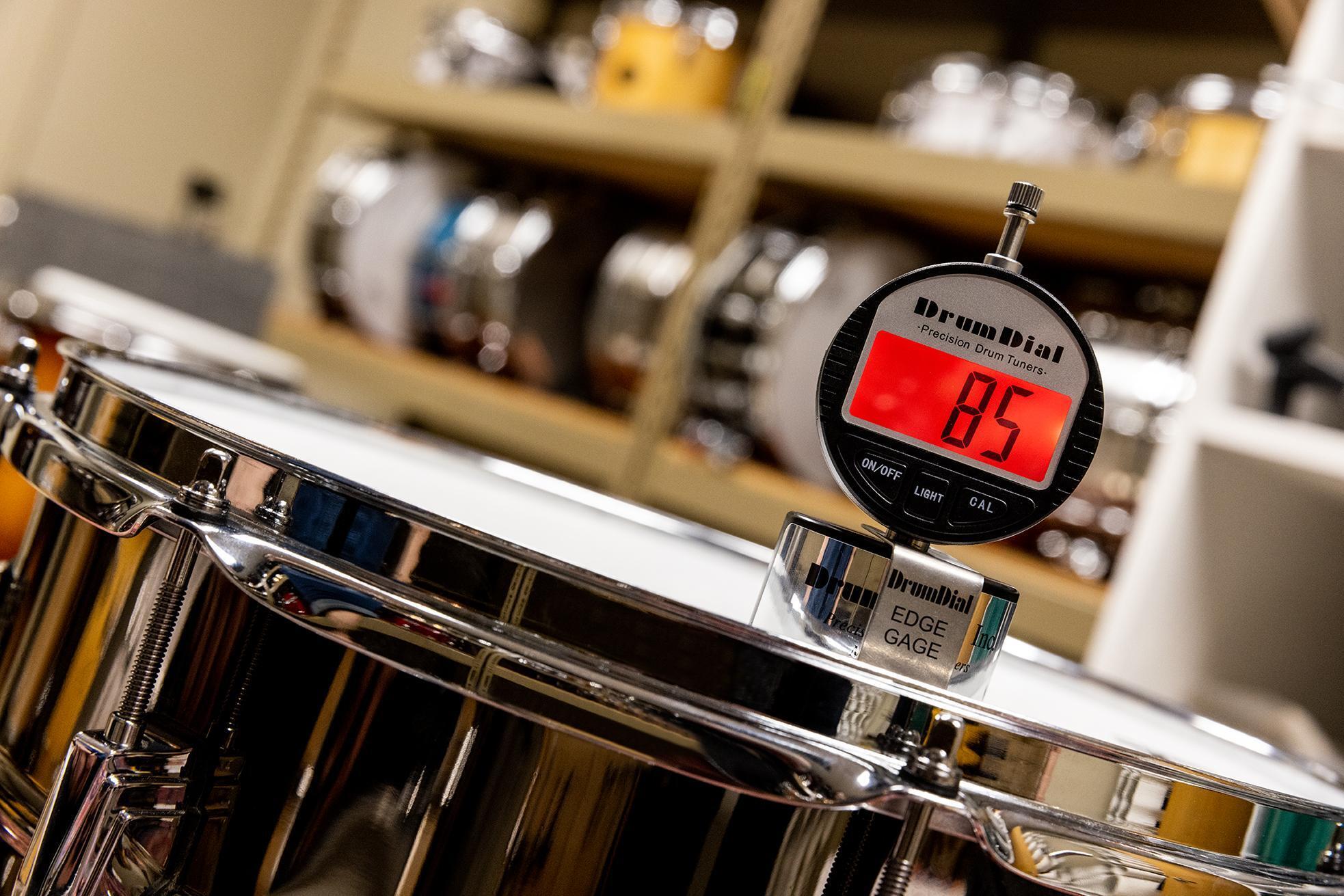
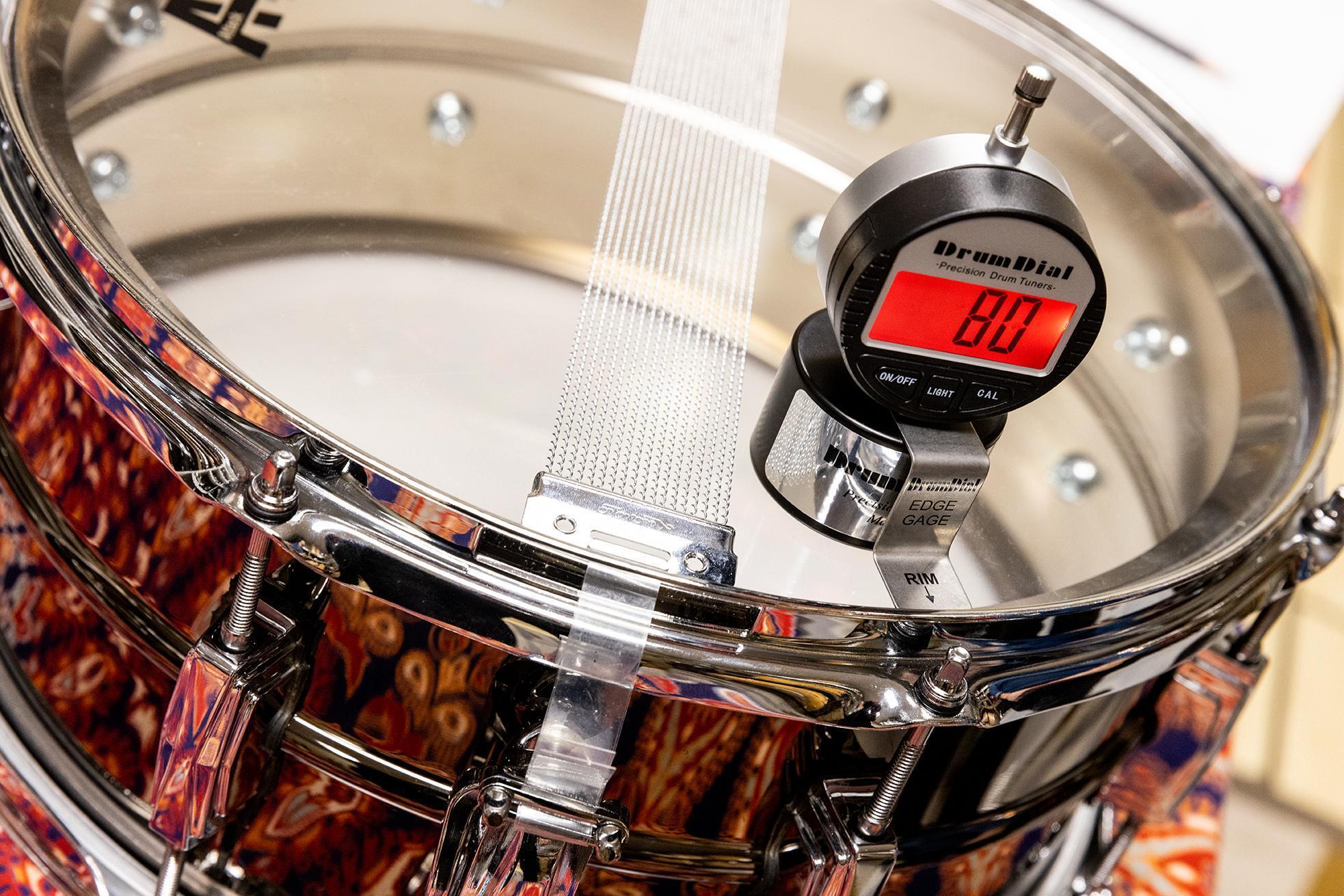
We decided on a uniform tension of 85 for the batter head (which was set using the DrumDial precision drum tuner) and 80 for the resonant head.
What Snare Heads?
After careful consideration of the current 445 snare drumheads (yes, it’s true) that Sweetwater carries, these are the snare heads we chose to audition:
Remo
- Ambassador Coated Drumhead
- Emperor Coated Drumhead
- Controlled Sound Coated Drumhead
- Remo Emperor X Coated Drumhead
- Resonant head: Ambassador Hazy Snare-side Drumhead
Evans
- G1 Coated Drumhead
- Power Center Reverse Dot Drumhead
- G2 Coated Drumhead
- EC Reverse Dot Snare Drumhead
- Resonant head: Snare Side Clear Drumhead
Aquarian
- Texture Coated Drumhead
- Texture Coated Reverse Dot Batter Head
- Super-2 Texture Coated Drumhead
- Hi-Velocity Series Drumhead
- Resonant head: Classic Clear Snare Side Drumhead
Attack
- Snare Drumhead Pack
- DHA2-14C Proflex2 Coated Drumhead
- Baron Top Dot Batter Head
- DH14C Tone Ridge 2 Coated Drumhead
- Resonant head: comes in the above Snare Drumhead Pack

We’ll dive into the details of the recording in a second, but you’re eager to hear them, right?
Let’s Listen
In the first audio clip for each head, you’ll hear Nick playing a groove on the whole kit. In the second audio clip, you’ll hear individual hits and rolls so that you can hear the differences.
Grooves
Hits/Rolls

Player’s Perspective
What a fun and super interesting comparison this was to do. I’ve been playing drums for a long time, and I honestly didn’t think I would hear some of the sounds I heard. Just like guitar players have favorite strings or string players have their favorite bow, we drummers tend to go with what we know and have used repeatedly. This experiment proved what I have said many times in the past: drumheads (along with the drums, of course) can help mold your sound. The heads can make your drums easier or harder to play. In my mind, how they feel is just as important as how they sound.
If you haven’t tried different head options, I encourage you to do it. They can turn around that old vintage kit you’ve had sitting in your garage, and they can make that custom kit you saved up for sing like a bird, purr like a kitten, roar like thunder, and everywhere in between.
— Nick D’Virgilio
What Mics?
Nick sat down in front of the Vintage Black Oyster Ludwig Legacy Mahogany pro beat shell pack with the Ludwig Black Beauty snare drum. Shure 545SD cardioid dynamic instrument microphones were used on the top and bottom of the snare. We placed a Shure Beta 91A condenser boundary microphone on the kick. Drum overheads were recorded via a Schoeps Colette Series stereo set MK4 modular small-diaphragm condenser microphone pair with cardioid capsules, and two Neumann M 149 tube dual-diaphragm condenser microphones were used as room mics. All the mics went through the Rupert Neve Designs Shelford 5052 microphone preamp/EQs on our 32-channel Rupert Neve Designs 5088 analog mixing console with automation directly into Avid Pro Tools through Avid MTRX converters.
What One Did You Prefer?
Did you learn anything from listening? Tension, single- or double-ply, ply thickness, tuning — so many variables. It was an eye-opening experience for us because the snare head made so much difference, even with everything else staying the same. If you’re just beginning to experiment with heads or if you’re ready to venture out from the snare head you’ve been using for years, call your Sweetwater Sales Engineer at 800-222-4700, and they’ll gladly help you find the right snare head for you.
Credits

Drumming: Nick D’Virgilio
Head swaps and tuning: Ryan Moreno
Engineering and mixing: Jason Peets
Photography: Matt Owen