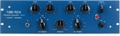
Have you ever had the chance to use a real Pultec EQP-1A tube equalizer? If you’ve ever had that experience, then it’s likely something you never forgot. I remember my first time getting to work with a Pultec. It was life-changing.
First, let me define what I consider a “magic bullet.” It’s something that makes things better. It’s a piece of gear that sparks an “Aha!” moment and makes everything you do immediately better. You feel like you’ve discovered a magic key that unlocks great sound. That’s what I felt when I first used a real Pultec EQ.
An Amazing Discovery
It was the late ’80s, and I had been engineering jingles and records for over a decade, working mostly in small demo studios and professional rooms. I typically worked with good gear but not great gear. For historical perspective, this was before reproductions, clones, and plug-ins became commonplace. I was aware of the Pultec name but had no idea what it did, how it sounded, or even how to use one. Then I worked in a studio that had a Pultec. So, I decided to try it.
On its face, it seemed extremely limited — a two-band EQ. But then I started turning the knobs, and I was shocked. Most equalizers become brittle or harsh when you boost the high end to extremes, such as +12 or +15dB. That didn’t happen with the Pultec. I could add all the highs I wanted, and it just seemed to say, “You sure you don’t want more?” And if the mids came too far forward, then I just bumped up the frequency, say from 5kHz to 8 or 10kHz, and problem solved.
I was similarly delighted on the low end. Many equalizers get tubby or woofy when you add lots of bottom. With the Pultec, I dialed up 5dB at 60, then 8dB, then 10dB. “Is that all you want? There’s more where that came from,” it shrugged. I kept pushing up the low end, and it kept getting warmer and fuller but not overwhelming or obnoxious. How is that possible? I’d never heard anything like that before.
During those sessions, I used it on kick, snare, bass, guitar, and vocals. On kick drum, I could get all the low-end thump I could ever want with the impact hitting me in the chest. For snare, I got all the crack, snare-wire definition, and strike that I could ask for. For guitar, I got sparkle without squeaky, annoying high end. And on vocals, it was the Holy Grail. What it lacked in absolute flexibility (no variable Q, no sweepable frequencies) it more than made up for by giving me exactly what I wanted where I wanted it. The vocal sound was sublime. All the air and all the presence without any of the harshness I sometimes encountered. This was amazing.
At the end of that session, I knew one thing: I had to have one of these. That was before I checked the prices and discovered how hard it was to find these vintage units. The phrase “rare as hen’s teeth” comes to mind. I determined then and there that I’d save up and find a pair to buy. That quest took me nearly 10 years before I found some being sold by a radio station that had been installed new in the ’60s and were still in the same rack. It was so worth the wait. After that, I used them on every session I did for the next two decades. Everything sounds better through a Pultec — no exaggeration. No matter how ideal you think a sound is, running it through a Pultec will make it immediately better. It’s magic.

Pultec in Practice
If you’ve never examined the frequency curves of a Pultec equalizer, then you may not realize how broad the frequency bands are. That’s part of what creates its unique sound. As you can see on the page from the Pultec manual below, a broad peak boost at 3KC (kilocycles per second, or 3kHz) affects frequencies all the way down to 150Hz! And the 100CPS (cycles per second, or 100Hz) attenuation reaches all the way up to 5kHz.

Where Does the Magic Come From?
The real magic of the Pultec, in my experience, is in the transformers and the tube gain stages. The original version had three transformers (input, interstage, and output) that are always in the circuit, even when the EQ is not set to ON. Just passing through the transformers (no EQ) and the tube makeup gain contributes such a euphonic enhancement that I once mastered a well-mixed album by simply running through the Pultecs with the units set to bypass. The glue they contributed was like running through a tape machine and was the perfect finish to that great-sounding album.
Pultecs Today
If you’ve never experienced a Pultec or the Pultec-style sound, then I would strongly encourage you to do so. At Sweetwater, you can buy new Pultec equalizers that have been painstakingly re-created by Steve Jackson, and they sound just like the vintage units but come at a much lower price. From the original EQP-1A and EQP-1A3 to the new EQM-1S mastering equalizer and even the EQP-500X, which fits in a 500 Series rack, they are all true to the original Pultec sound.
Shop all Pulse Techniques Pultec equalizers.
Variations on the Pultec Theme
Since these vintage pieces are so desirable and rare, there are other companies that are making clones that offer Pultec-style curves, such as the Tube-Tech PE 1C and the Warm Audio EQP-WA.
You can even find the Pultec-style EQ in software plug-ins, such as the Apogee FX Rack Pultec EQP-1A, the Waves PuigTec EQ, or the Avid BF Pultec Bundle.
How Do They Sound?
In case you’ve never experienced the Pultec sound and want to hear what it can contribute to your recordings, we took audio tracks and ran them through Pultec EQP-1A equalizers — both the tube and solid-state versions — and several hardware tribute units, as well. We recorded the results at identical settings and posted them in the article linked below for you to hear.
Next, we took the same audio and ran it through plug-in versions at the same settings to see what differences we could detect. It was a fascinating exercise that allows you to hear the differences for yourself.
You can listen to all the sound samples and read more about Pultec history here:
Are You Ready to Step Up to a Pultec?
If you want to hear what an authentic Pultec can do for your tracks and experience how great your tracks can sound, then call your Sweetwater Sales Engineer at (800) 222-4700 to get your own. If your experience is like mine all those years ago, then you may find that you never want to record or mix without them again.