For many church sound engineers, mixing a standard band arrangement — guitars, bass, drums, keyboards, and vocals — is second nature. There’s a plan in place, and the gear is good to go.
Things can get a little complicated when Christmas and Easter roll around. These celebrations are arguably the worship world’s equivalent to the Super Bowl and World Series. So, it’s no wonder that we tend to pull out all the stops. Whether adding extra vocalists or a choir, band and orchestra instruments, a harp, percussion, world instruments, or any other component that’s outside the norm, the church’s microphone locker may need some reinforcement to accommodate.
Usually, this means finding a mic to handle the job without busting the budget. Other considerations include versatility, tonal balance, feedback control, and proper mic placement. This guide will help you navigate these challenges and achieve a pristine mix.
- Understanding the Challenges
- Choosing the Right Mic for the Job
- Pro Miking Techniques
- Partner with a Professional Friend Who Cares
Understanding the Challenges
Thankfully, a little bit of information can unravel the mystery of miking these non-normal elements. The concepts will be familiar, such as those you already use to capture guitars and vocals. The keys to creating a great auditory experience are to select the right mic for the job, place the mic appropriately, and blend the signal with everything else. Plus, if you’re able to expand your mic locker with something versatile for the future, then that’s a bonus.
Renting vs. Buying Mics
Buying an expensive microphone for a one-time event can take a big bite out of your budget. If you are located near a music equipment rental company, then you may consider renting a high-end specialty mic. Because rental fees are charged from when a mic leaves the rental facility until the mic is returned to the facility, this option is usually not cost-effective, especially if shipping and multiple rehearsals are involved. When calculating the rental duration, include rehearsal and transport time. Be prepared to leave a sizable deposit on a credit card, which will be credited back to you when you return the mic undamaged. Purchasing a more affordable yet adequate alternative may get the job done and expand your miking capabilities down the road.
Consider the Bigger Picture
If you’re watching your budget carefully, then consider not purchasing a specialty mic for each unique instrument you’re adding. For example, if you’re hosting a guest marimbist for your Good Friday service and adding a trombone on Easter Sunday, then purchasing two specialty mics may be optimal; alternatively, you may get more mileage by finding one mic that adequately handles both sources and paves the way for the future.
Important considerations:
- What do you want to hear?
- What do you not want to hear?
- How will the source be positioned in the mix?
- Where is the mic positioned?
- How do you get the signal from the mic?
- What else can the mic do?
As you pick a mic, think about what your mic locker currently lacks, including tonal diversity. For example, if you need to mic a saxophone and a trumpet and your current stock of SM57s is already in use, then consider expanding your tonal palette with a mic that features a different tonal signature instead of buying two more SM57s. It’s a great opportunity to increase your mic locker’s versatility as your program grows.
Also, consider what the mic is competing against. For example, you may be able to capture a handbell ensemble with a single dynamic mic when no one else is playing, but accompanying the full band may require multiple close-miked condensers for articulate sound without feedback or instrument bleed.
Pro Tip: Double-check the mic channel in your streaming mix to ensure an articulate, distortion-free sound. Acoustic instruments may be fully audible in the room mix yet disappear in the online mix. For example, timpani may overwhelm a small room and not need reinforcement, but if it’s not miked, then people listening online won’t experience it. More people may eventually listen to the stream than the number of people who attend live in the room. Besides, no one wants to explain to grandma why she and her friends watching remotely couldn’t hear little Luka’s flute on his big day playing with the band.
Choosing the Right Mic for the Job
Primarily, mics for live sound are dynamic or condenser mics. Other mic types include ribbon mics and inductor mics, such as piezo pickups. Certain microphones offer switchable pickup patterns for increased versatility.
Please note that Sweetwater carries thousands of quality microphones from a plethora of manufacturers. There’s a perfect mic for just about every special need you may encounter. Call your Sweetwater Sales Engineer at (800) 222-4700 to identify best-fit mic solutions. In the meantime, start with these highly rated suggestions.
Dynamic Microphones
Dynamic microphones are less sensitive to high frequencies, and some have an upper-mid boost. Often, they’re more durable, which is helpful for less-experienced musicians who may drop the mic or create handling and cable noise. It’s also useful for situations in which the mic may get hit by a drumstick. Dynamic mics typically handle higher sound pressure levels (SPL) without damage. Some feature a cardioid polar pattern that’s good for rear sound rejection and close-miking. Because they’re not usually as sparkly or full-range as their condenser counterparts, they better handle feedback-prone situations. They’re a strong choice for background vocals or instruments that need to be present and full but not forward in the mix.
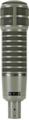
The Sennheiser MD 421-II handles high SPL and offers a five-position bass roll-off switch, making it practical for vocals, percussion, amps, and brass. The Beyerdynamic M 201’s small profile and tonal clarity make it great for tight spaces, plus its tight hypercardioid polar pattern helps reject unwanted instrument bleed. For vocals, the durable and distinct sE Electronics V7 provides a great, cost-effective handheld vocal mic option with a supercardioid pattern that’s helpful for noise rejection. Step up your podcast game or mic some brass or strings for Easter with the Electro-Voice RE20. It captures a warm, full spectrum without excessive brightness or proximity effect, making it great for vocals, horns, drums, and acoustic bass.
Condenser Microphones
Condenser microphones require phantom power, usually available with a switch on your console, and capture articulate sound with plenty of high end. Consider them for instruments or vocals that require a pristine sound, full dynamic range, or forward positioning in the mix. Their detailed sound image makes them a go-to for miking subjects with complex tonal character.
Condensers are categorized by their capsule size and sometimes by their shape. After reading this section, you’ll understand why a small-diaphragm mic is great for the snap of a snare drum and a large-diaphragm mic may be used to capture the drum’s resonant boom.
Small-diaphragm models tend to be bright and clear. Their small diaphragm size — usually half an inch or less in diameter — enables them to recover more quickly from sound waves for a faster, more accurate transient response. They have a natural sound and are less colored than most dynamic mics but may require some EQ to warm the low end and smooth any upper-frequency harshness. Reach for a small-diaphragm condenser when you want to feature a subject’s bright or snappy attack or place it forward in the mix, such as a string instrument, acoustic guitar, cymbal, fiddle, drum overheads, or a set of chimes.
Because their profile is often small and/or narrow, they’re sometimes called “pencil” or “low-profile” mics. Their smaller body shape makes them good for getting up close in hard-to-reach spaces such as a drum kit. (Just don’t hit them with a drumstick!)
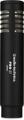
The Neumann KM 184 consistently garners praise in customer reviews for acoustic guitars and is also used on everything from string instruments to brass and choirs. The Sennheiser e 914 features a bass roll-off, high and brilliant detail, and two pads for handling up to 157dBSPL. Shure’s KSM137 gets high ratings for its versatility and clarity, including a bass roll-off, dual pads, and low crossover distortion. Reach for the PRO 37 from Audio-Technica to capture anything you want to be bright, articulate, and forward in the mix.
Check out these small-diaphragm condensers worthy of consideration for their supercardioid polar pattern. Eliminate side noise with the Sennheiser e 614. It can double as a room mic or work wonders capturing a choral or orchestral ensemble. The distinctly transparent Earthworks SR117 is great at addressing feedback and hand noise for that “just like in the room but louder” sound on vocals or instruments.
Large-diaphragm condensers feature capsules that are usually one inch or greater in diameter. Their larger capsules capture more of a source’s low-mid and low frequencies for a warm, lush, larger-than-life sound. They often have lower self-noise. They handle situations demanding higher sound pressure levels, such as miking brass or drums. Reach for a large-diaphragm mic for vocals, woodwinds, or other sweet-sounding sources that need to be forward in the mix.
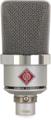
Place the transformerless Neumann TLM 102 about two to three feet away from the subject to capture a deliciously sweet, full, smooth profile. The Audio-Technica AT4033A has a sizable 0.45-inch diaphragm in a large-diaphragm body shape for the best of the small- and large-diaphragm worlds. Try it on vocals, brass, and strings.
Ribbon Microphones
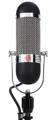
The extremely thin diaphragms of ribbon microphones make them more fragile — and as figure-8 mics, they can be more susceptible to instrument bleed and feedback. That’s why you’re much more likely to see an exquisite Royer R-121 in the studio than on a live platform. However, the bidirectional AEA R84 passive ribbon mic has proven to be surprisingly versatile onstage, handling better than 165dBSPL at higher frequencies. Use it on piano, vocals, strings, brass, and even kick drum.
Piezo Transducers
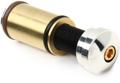
Piezo transducers are different from the others listed here because they pick up vibrations through direct contact with the source rather than through the air. They’re installed in instruments including guitars, orchestral string instruments, and even flutes. They tend to be quite sensitive to a source’s percussive and high frequencies, so they may need EQ to sound natural and full. A piezo is great for feeding into electronic effects and amplifiers. For example, my primary workhorse guitar, a custom Godin LGXsa, has humbuckers and a transducer pickup. I route each pickup type to its own rig, one for acoustic guitar with effects and acoustic IRs, and the other for electric. This allows me to access an extremely versatile palette of electric and realistic acoustic guitar sounds without swapping instruments while playing live. Similarly, the Tomasi MicroCork flute pickup inserts directly into a flute’s headjoint and captures all the tone, feedback-free, directly into a sound system with zero ambient noise.
Room Microphones
Typically, when miking a room to enhance streaming or IEM mixes, sound engineers reach for a pair of condenser mics. Here are several to consider that can also be handy in your production studio or for miking extraordinary instruments such as woodwinds, acoustic stringed instruments, or anything bright, clean, and precise that you want to stand out in the mix.
The small-diaphragm Shure SM81 small-diaphragm condenser matched pair offers excellent off-axis rejection and a -10dB pad that doesn’t alter the mic’s flat frequency response. The RODE M5 small-diaphragm condenser matched pair features a larger half-inch capsule to capture enough warm tone that you can roll off to the sweet spot. The Audio-Technica PRO 37 (sold individually) can double as drum overheads and a vocal ensemble mic.
For miking a sparse congregation in which attendees tend to sit in clusters, use highly directional shotgun mics aimed from the platform toward the most populated sections of the congregation. These mics can also be used for film production and podcasting. The hypercardioid polar pattern of the highly rated Sennheiser MKH 416 makes it versatile enough for outdoor use. The popular Audio-Technica AT8035 operates on your choice of phantom power or battery power.
Choral & Instrumental Ensemble Microphones
For miking a group of singers or instrumentalists — or a combination of both — consider these options.
If you prefer a miniature profile, then check out these. The Acacia Audio LIZ-Choir includes a Hercules “H” base stand and a 50-inch carbon fiber boom. Its hypercardioid polar pattern helps fight feedback while capturing the clarity of your subject, and the interchangeable omnidirectional and cardioid capsules open it up for a variety of uses. The super-clean DPA 4097 gooseneck mic combines a supercardioid capsule, three integrated shockmounts, and wireless capabilities. If you have a stand ready to go, then get the Audix MicroBoom MB5050 boom mic system with its mini cardioid condenser.
If you already have a boom stand and only need the mics, then use a pair of either of these highly rated models. The Sennheiser e 614 small-diaphragm condenser with a supercardioid pattern offers good side rejection and a tighter pattern. The small-diaphragm RODE NT5 (sold as a matched pair or individually) has a wider cardioid pattern with greater rear rejection.
Instrument Condenser with Scalable Clip System
One approach to increasing your mic locker’s versatility is to purchase one high-quality instrument microphone and then add low-cost, instrument-specific clips as needed. The low distortion and increased dynamic range of the DPA 4099 CORE small-diaphragm supercardioid condenser provide a clear, studio-quality sound in virtually any live environment.
Clips are available in the following configurations:
Violin, Viola, Mandolin, Banjo Mounting Clip
Universal Woodwind Clip (Flute, Oboe, Clarinet, Bassoon, Recorder)
Violin, Viola, Cello, and Double Bass Clips (5-pack)
Instrument Clamp Mount (Saxophones & Brass)
Pro Miking Techniques
Consider the Wind
For subjects that move a lot of air, such as a drum or a horn, go with a mic designed to handle high SPLs. While dynamic mics are popular for this, condenser mics and even some ribbon mics are superior for these applications.
Miking Orchestras & Choirs
Miking groups of acoustic instruments or singers is a common choice when controlling instrument bleed is not a significant challenge. Here are a few helpful rules of thumb.
- Use the 3:1 rule: Keep mics three times as far apart as they are from the nearest musician/singer to avoid phase issues.
- Height matters: Position mics 2–3 feet above the group and angle them slightly downward toward the highest sound source.
- Distant miking: Place mics at a distance that captures the full group without excessive room noise.
Learn more about getting a great choral sound in these articles:
How to Make a Small Choir Sound Big
How to Mic a Choir – With Sound Samples!
Pro Tip: When miking a softer-singing choir or a less seasoned ensemble such as a children’s choir (you never know if they’ll sing, stand and stare, or cry!), some engineers pre-record the group during a rehearsal (assuming you’re using a click) and add it to the multitrack playback. During the service, incorporate some of that pre-recorded track into the mix and use it to augment the live sound. Don’t include this in the choir’s monitor signal. It’s a feedback-safe way to support your live musicians with their own authentic sound.
Miking Individual Orchestral Instruments
Strings:
- For violin and viola, use a small-diaphragm condenser placed 1–2 feet above the instrument, pointing toward the bridge.
- Cello and bass benefit from a large-diaphragm mic positioned closer to the F-hole for warmth.
Brass & Woodwinds:
- Trumpets and trombones require dynamic mics placed 2–3 feet away to avoid harshness. If stage volume will allow, ribbon mics excel on these brass instruments.
- Saxophones and clarinets perform well with condenser mics positioned slightly off axis to prevent excessive air noise.
Related articles:
Best Mics for Baritone Saxophone – with Sound Samples
Percussion:
- For timpani, overhead condensers work best.
- Use close-miking for auxiliary percussion such as bongos and shakers.
Related article:
Picking Up the Room: Don’t Forget the Livestream
Having mics on the congregation for singing or audience participation (like responsive readings) can help remote listeners (Facebook or YouTube) feel more involved in the worship presentation. To achieve this, place a pair of small-diaphragm condensers with a cardioid pattern on each side of the stage pointed toward the congregation. Try to keep them behind the PA loudspeakers in order to get the audience sound and not just the sound coming from the speakers. These can double as a room feed into musicians’ IEM mixes. Pan these hard left and right (from audience perspective) and don’t feed them into the FOH.
To clean up the mix:
- Highpass to remove frequencies below 200Hz to 300Hz and lowpass about 10kHz to remove upper-frequency chirp and sibilance.
- Add only enough gain to accentuate the mix, rather than drive it. Create the mix before adding the room mics then adjust as needed.
- Time-align the livestream to adjust for delay if you’re positioning mics in the back of the auditorium — delay everything to match the timing of the furthest mic.
Mixing Strategies
Blend different sections to maintain clarity. Mastering these techniques will make you a more versatile sound engineer — and your worship team will thank you for it!
EQ:
- Roll off low-end frequencies (below 80Hz) to avoid rumble.
- Use a slight boost around 2kHz–5kHz for clarity in vocals and strings.
- For brass, a slight dip around 1kHz can tame harshness.
- Use a gentle cut around 300Hz–500Hz for choirs to reduce muddiness.
Reverb & Effects:
- Apply subtle reverb to give depth to choirs and orchestras.
- Avoid excessive effects that can muddy the mix in a live setting.
- Use a short plate reverb for percussion to add presence without overwhelming the mix.
Managing Feedback:
- Use cardioid, supercardioid, and hypercardioid mics to minimize bleed.
- Cut problem frequencies with a parametric EQ (typically 250Hz–500Hz for muddiness, 2kHz–4kHz for harshness).
- Proper speaker placement and mic positioning will greatly reduce feedback potential.
Partner with a Professional Friend Who Cares
Expanding from a basic worship-band mix to a full orchestra, choir, or other instruments is a challenge, but with the right techniques, you can create a rich, balanced sound. Start with proper mic selection, follow strategic placement guidelines, and refine your mix with careful EQ and reverb adjustments. The result? A clear, immersive worship experience that elevates the entire congregation’s engagement.
Your Sweetwater Sales Engineer can help you pick the right mic for the job and develop a growth plan. Call (800) 222-4700 today for personalized recommendations.