

The electric guitar has been as influential to modern music as the pianoforte and violoncello before it. And while some harbingers of guitar’s end have been holding the nail above the coffin for decades, the instrument endures today as a hallmark of rock and blues music and virtually all forms of modern progressive metal.
Have you ever stopped to marvel at how your favorite electric guitars work? By all rights, the pickups and tailpieces we love are in need of some serious 21st-century overhauling. Yet, for all their shortcomings, these classic designs continue to dominate in popularity across all player groups. Sweetwater looks at the mechanics and electronics of the electric guitar and why, despite the industry’s attempts, this is one instrument that isn’t going away anytime soon.
Mechanics of the Modern Electric Guitar
Ask most players what an electric guitar is, and they’ll screw up their faces at you — “It’s a guitar with pickups?” — as if the guitar itself were some concrete, Platonic form and not a tiny miracle of modern craftsmanship and engineering. So, before we move on to the electronics, let’s look at how the guitar itself is constructed and how tones are generated.
Body

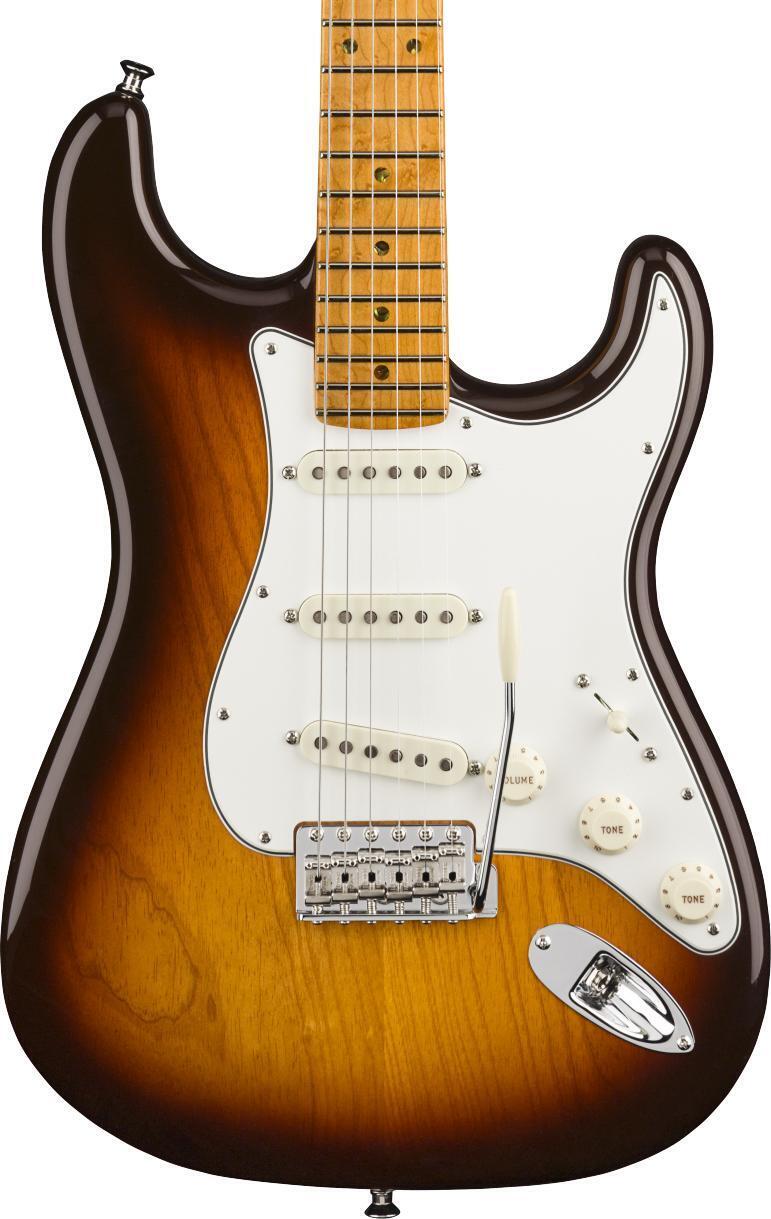
The body of an electric guitar — which may be solid, semi-hollow, or fully hollow — serves as an anchor point for the string bridge and the electronics. Most bodies are designed to allow the player to strum, hold, and interact with the instrument comfortably from a seated or standing position. Unlike acoustic guitars, electric guitars typically don’t have soundholes since amplification occurs primarily through electronic means.
Neck, frets, and fingerboard
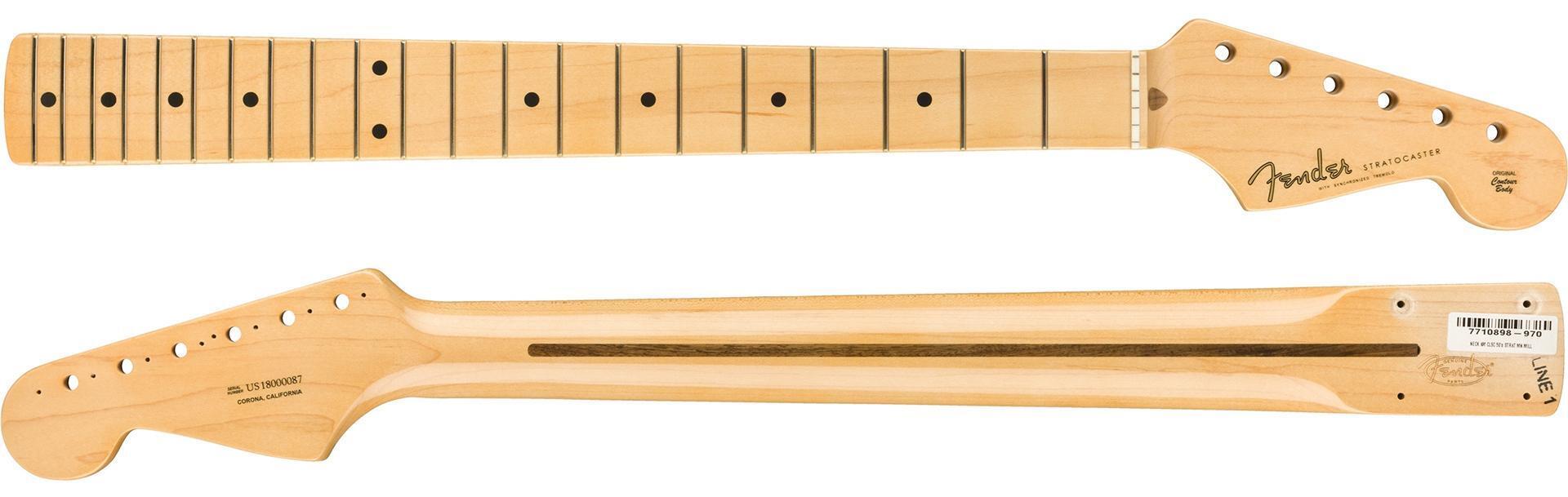
A guitar’s neck supports its strings and supplies an anchor point for the string nut and the tuning machines. It’s also responsible for giving a guitar its scale length, as determined by the distance between the nut and twelfth-fret position (multiplied by two). The neck commonly joins the guitar body by way of a series of screws, glue, or what’s known as a neck-through construction, whereby the neck and body are effectively one piece of wood. The playing surface of the forward-facing side of the neck is known as the fingerboard/fretboard. Metal frets are carefully positioned up and down the fingerboard to assign note values.
Strings
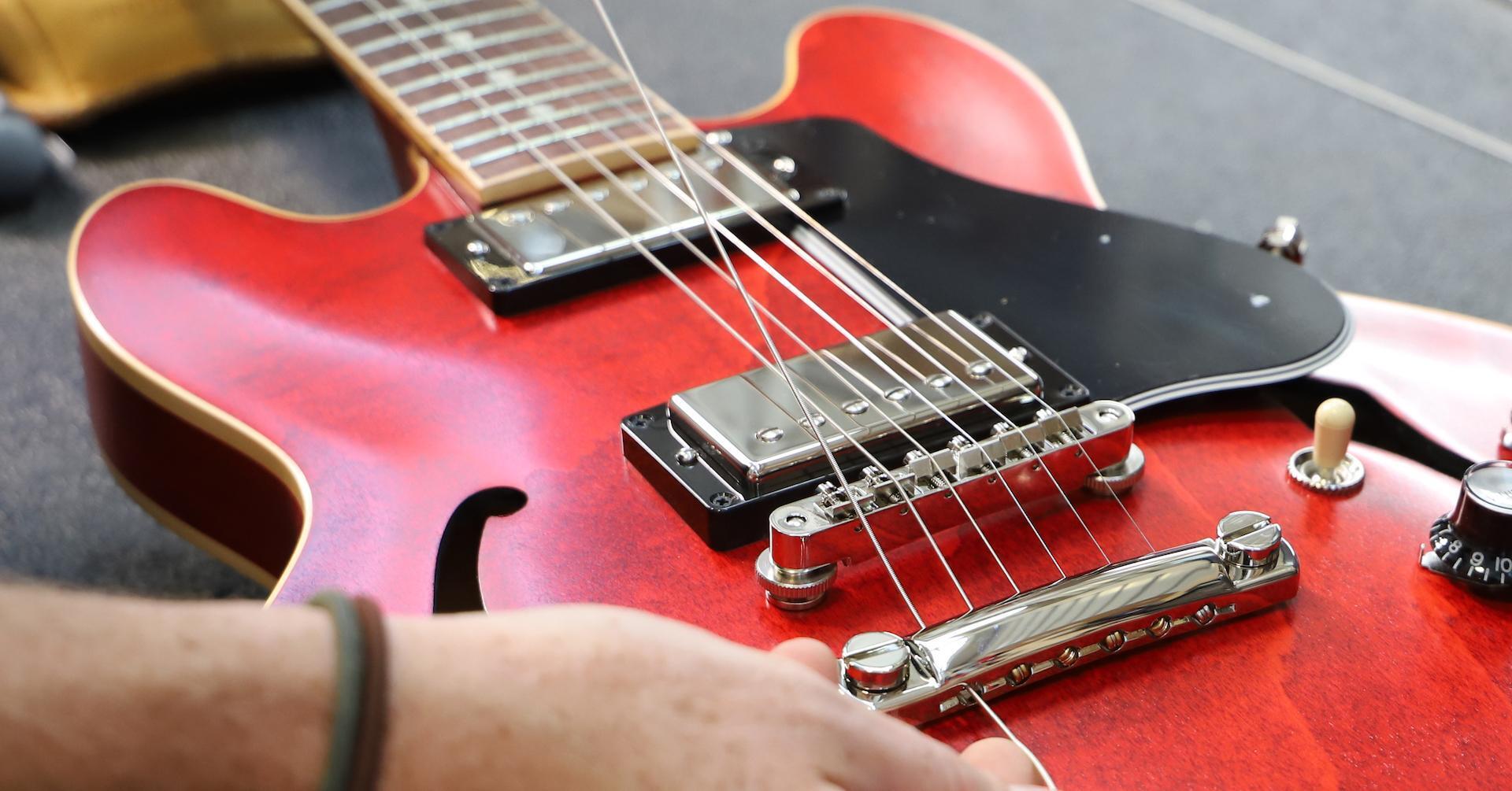
Strings are the tone generators of the electric guitar. These are held taut and tensioned to pitch by the hind-end bridge, the front-end nut, and the tuning machines. By design, an electric guitar’s strings are made from nickel, steel, or a combination of other ferromagnetic materials.
Bridge and Nut
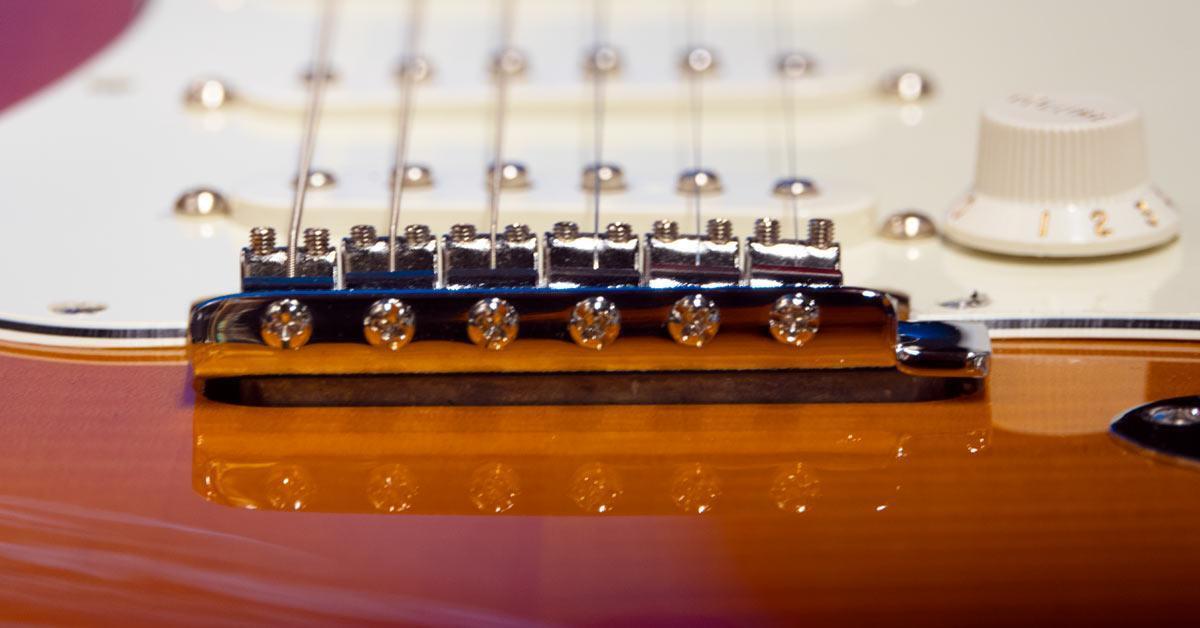
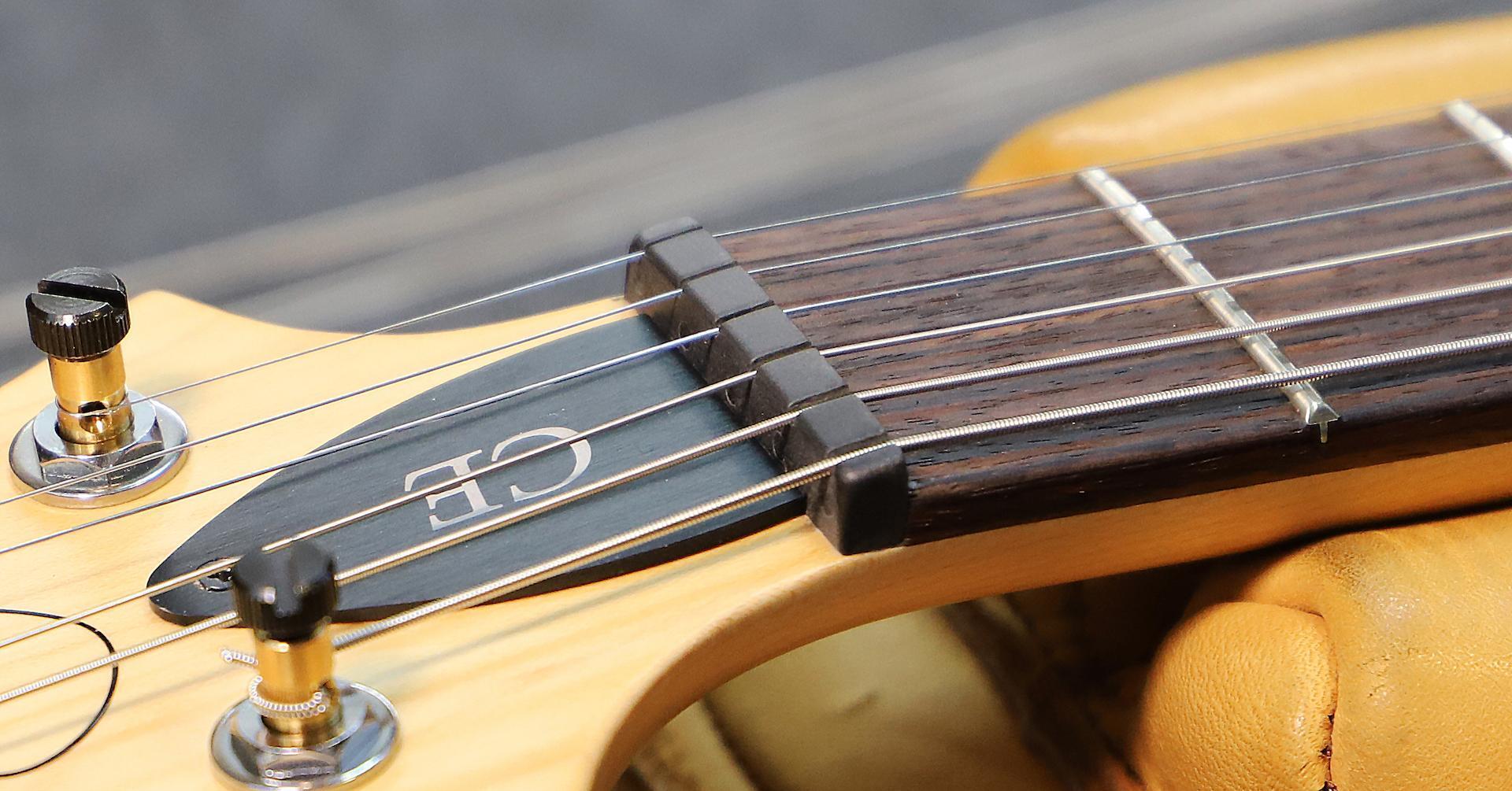
In traditional electric guitars, the body-mounted bridge is where strings are loaded into the instrument and fed up to the neck-mounted nut and tuners. The bridge may be movable, such as in a vibrato tailpiece, or stationary, commonly known as a hardtail. The nut is carefully filed to seat the strings; the nut may be open or locking with clamping teeth to keep the strings from detuning.
Tuning Machines
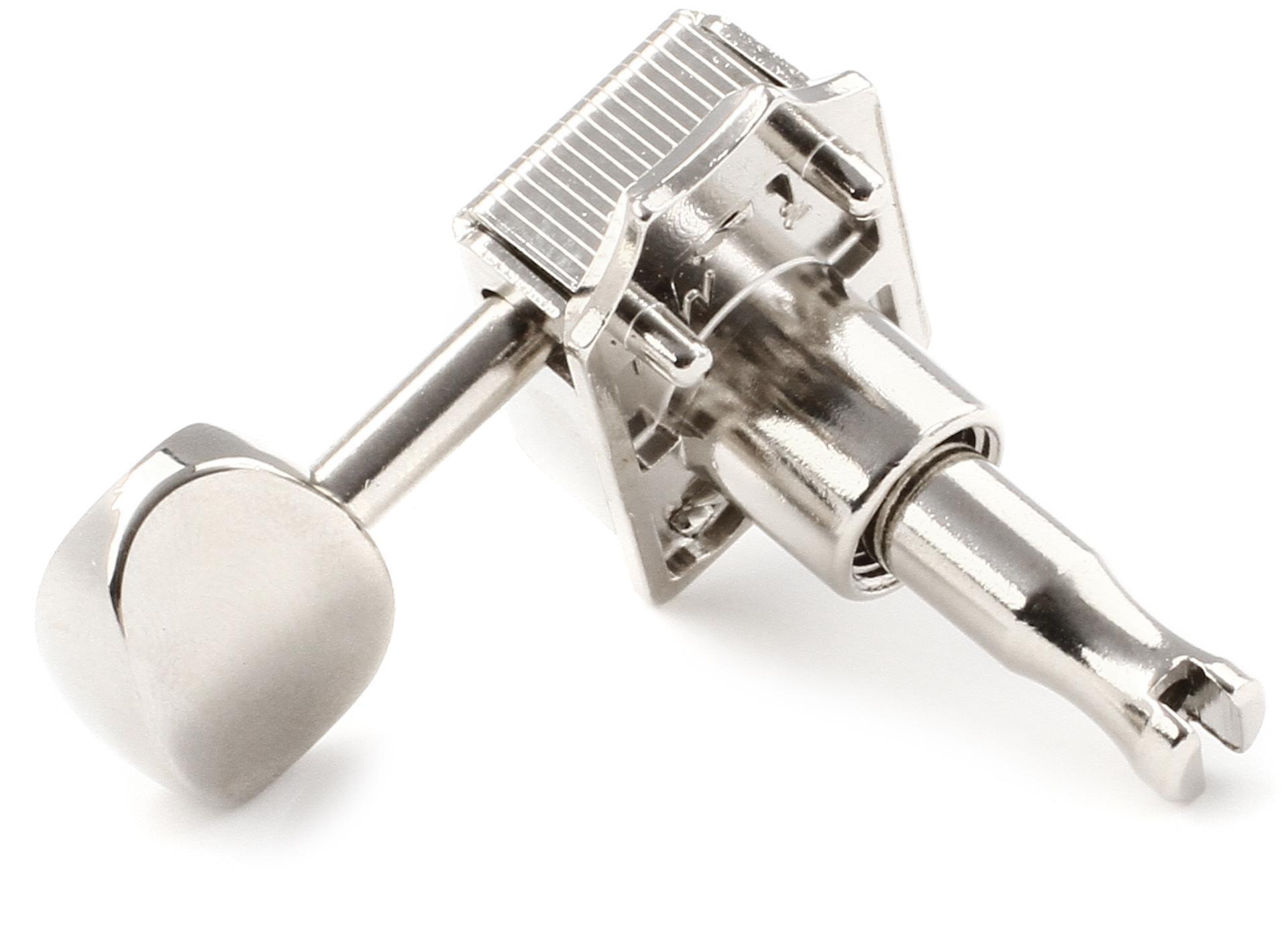
Modern electric-guitar tuning machines, or tuners, wind strings around posts using mechanical gears. More windings increase the pitch; fewer windings drop the pitch. Tuners come in a wide variety of tolerances and styles, including locking and self-clipping designs.
With the mechanics of the electric guitar out of the way, let’s move on to the electronics.
Pickups: The Heart of the Electric Guitar

An electric guitar’s pickups operate on Faraday’s principle of electromagnetic induction. Simply stated, the vibrational energy of the ferrous strings is converted to electrical energy by magnets in the pickups. This energy exits the guitar in the form of a low-current signal, which is then amplified by an external preamplifier and/or power amplifier. It’s thanks to pickup pioneers like Seth Lover, Leo Fender, Seymour Duncan, and TV Jones that the electric guitar has become synonymous with the sparkly-clean punch and hard-edge crunch that have come to epitomize rock and blues music. Of course, a guitar’s pickups are just one variable in the sonic equation. Our beloved single-coils, humbuckers, and P-90s wouldn’t have the same appeal without some other key developments — namely, pots, switches, stompboxes, and amplifiers.
Point of Control: Potentiometers and Pickup Switches
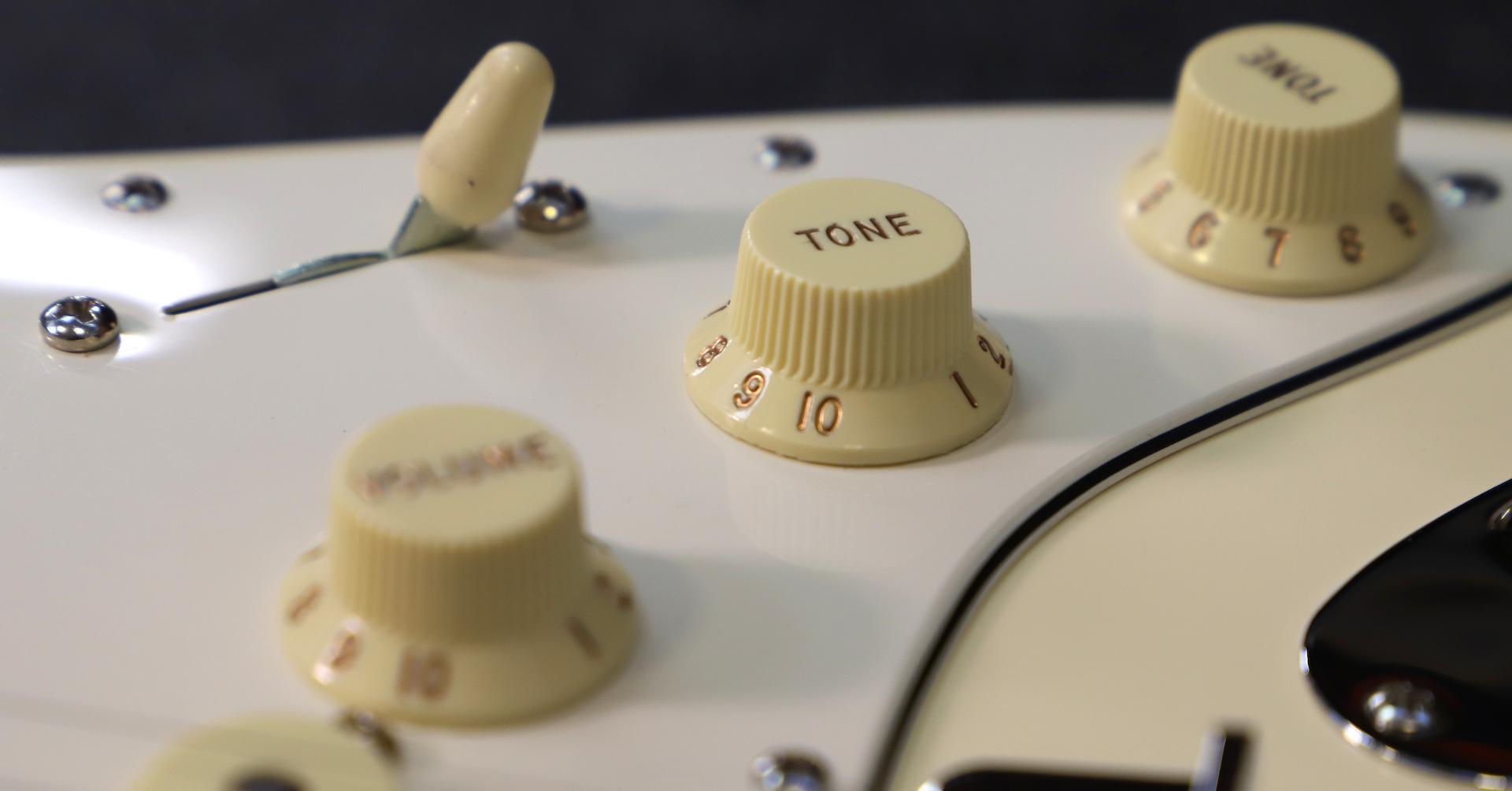
Prior to mass production, pickups of the 1930s and ’40s were either player engineered or custom installed. If a guitarist wanted to amplify their acoustic instrument, then they could have a pickup installed on/into their soundhole and have a cable routed out to a loudspeaker. But, thanks to instrumental figures like Leo Fender and Les Paul, guitars of the 1950s onward began sporting preloaded pickups and, importantly, potentiometers — also known as pots. Pots are passive resistors wired between the pickup/s, the electrical ground, and the output. These gave electric guitarists the ability to control the tonality and output of their guitar directly from the instrument. This helped usher in a new era of creative distortion and more diverse sonic exploration for the electric guitarist; a player could leave their amp at soloing levels and roll back their volume to reach ensemble-friendly output then dial up their volume to achieve higher outputs and classic tube-kissed saturation. The possibilities were magnified with the advent of pickup selector switches and multi-pickup guitars, which gave rise to even greater heights of player expression.
Making Noise: Amplification and Pedals
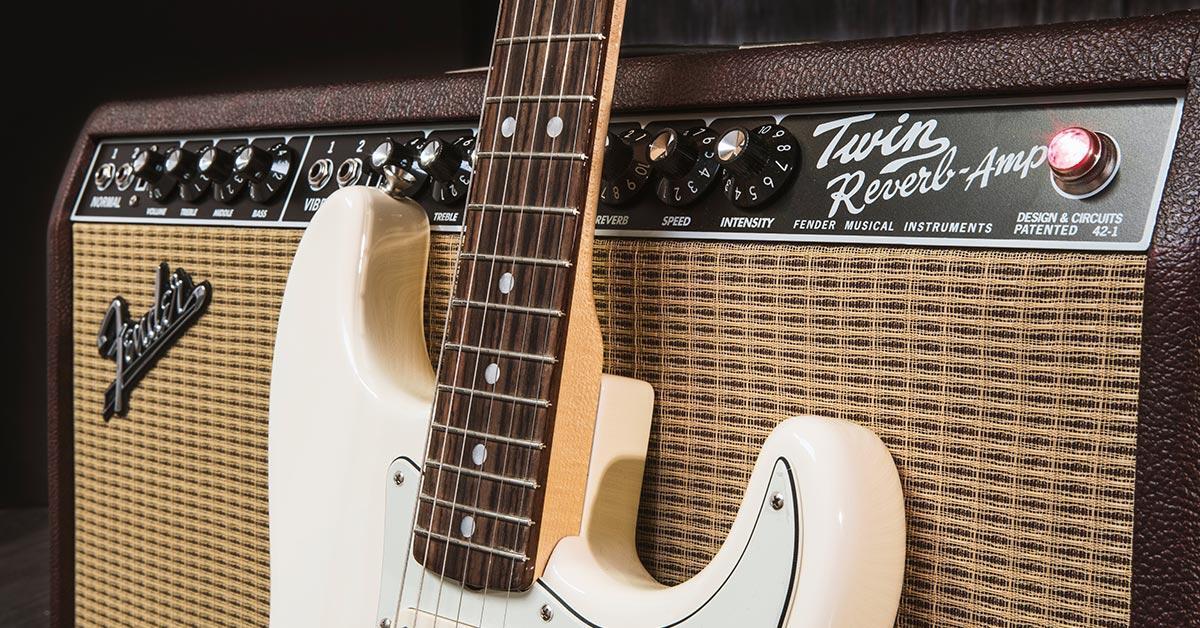
So far, we’ve only touched on how electric guitars generate tones and sounds internally. But the real enduring magic of these instruments lies in how they produce tones externally, through the aid of guitar amplifiers and stompboxes. Clipping diodes. Bucket-brigade ICs. Tube saturation. Germanium resistors. These circuits and components have as much to do with the guitar’s popularity as the pickups themselves. It’s safe to say that many of us wouldn’t be players today if not for Jimi Hendrix and his overblown Marshalls or the Edge and his bit-starved Korg digital delays.
What’s remarkable about the staying power of our favorite amps is how imperfect their designs are. The tube output section of a Blackface Deluxe has atrociously high distortion specs compared to today’s clean-burning Class D amplifiers. And those timeless blue and green speakers sport laughable frequency responses compared to modern hi-fi drivers. But, for whatever reason, the vocal-like response and aggression-fueled bark of these amplifiers — along with the icons who played them — helped to cement the electric guitar’s place in the annals of music history.
Conclusion
We hope you’ve enjoyed this brief look at the inner (and outer) workings of the electric guitar. While it’s true that you don’t have to be a guitar expert to rock one, the better you grasp the history and mechanics of the electric guitar, the more appreciation you’ll have for all it can do. Love electric guitars as much as we do? Let your Sales Engineer know what you’re looking for today at (800) 222-4700.