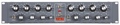
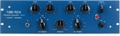
Equalizers. We use them all the time, but other than twisting knobs (or adjusting sliders), we don’t generally think about what they are — or how they came about. An equalizer (EQ) allows for manipulation of the frequency response of a signal by cutting or boosting specific frequencies. A number of different types of EQs have been developed over the years; quite often one type of EQ might be more suited to a given task than another.
FILTERS

All equalizers are, at their simplest, filters. The simplest version of a filter is passive. That is, the filter can’t boost a signal, but can only attenuate it. Passive filters are generally one of four types: highpass, lowpass, bandpass, and notch. Highpass filters remove frequencies below a specified cutoff point, allowing the frequencies above that to pass through unchanged. Lowpass filters do the opposite; they remove frequencies above the specified cutoff point, and allow everything below that cutoff to pass through. A bandpass filter removes the frequencies above and below a given frequency range while leaving the rest unchanged, while a notch filter does the opposite; it removes frequencies in a given range (usually quite narrow) while leaving everything above and below the notch unchanged. Active filters, which can boost a given frequency as well as cut it come in two basic varieties: shelving and bell. Shelving filters are the active version of highpass and lowpass filters; a high-shelving EQ can raise or lower all of the frequencies above a certain point, while a low-shelving EQ boosts or cuts the frequencies below a given point. And while bandpass filters typically have high and low cutoff frequencies, bell filters boost or cut frequencies around a given center point of the bell curve.
SLOPE AND ATTENUATION
With both active and passive filters, the amount of attenuation at the cutoff point(s) is measured in dB-per-octave increments, with 6dB per octave being a pretty mild slope and 24dB per octave being a quite aggressive slope. If you were to send a full-range signal (pink noise, for example) into a highpass filter set at a cutoff point of 400Hz with a 6dB-per-octave slope, the result is that at 200Hz, the signal would be 6dB quieter than at 400, and at 100 Hz, it would be 12dB quieter than at 400Hz (or 6dB quieter than the 200Hz level). With a 24dB-per-octave slope, the signal at 100Hz would be 48dB quieter than the signal at 400Hz.

TRANSFORMERS AND TUBES
The above is a theoretical discussion of single-band equalizers, but many EQs are multiband; for example, a 4-band EQ is four filters that are available to process a signal simultaneously. Many of today’s popular plug-ins are emulations of vintage analog designs; in the original versions, many of the variables — slope, frequency, and the width of the bell — were fixed in the design and not variable. Those fixed variables, along with other properties of the circuits, are responsible for the signature sounds of classic units such as Pultec’s EQP-1A, API’s 550 EQ, and even Rupert Neve’s 1073 EQ. Circuit design is an exercise in the art of compromise. It’s been said that all analog EQ designs are at least in part attempts by the designer to overcome the effects of the real world on what should have been a clean and transparent circuit. One of those “real-world” issues that impacts the hardware versions of the above EQs is the transformer used in the hardware circuit. Transformers — even the best — have an impact on the signal passing through them, especially when the signals exceed the design parameters of the circuit. And while it seems a bit counter-intuitive to overdrive something like an EQ, transformer overload and/or tube/circuit distortion has become a signature part of these units, so their software emulations need to be designed with that end in mind.
Since the designers of vintage consoles (and stand-alone EQs such as the Pultec) made specific design choices, like center points for the EQ bands, the shelving curve, and even the amount of boost or cut they felt were the most appropriate for their designs, it’s easy to see why the emulations of these EQs each have their own sound. But all were essentially “tone controls”; that is, they were made for general shaping of sounds, not for precise surgical-type audio sculpting. There are other tools that are better suited for that application.

PARAMETRIC EQ
Engineers often feel the need for more control over equalization. An engineer named George Massenburg wrote a paper that discussed the possibility of building an equalizer circuit that was completely variable — and more importantly, he actually designed and built such a circuit. In his 1972 AES paper, Massenburg used the phrase “parametric equalizer” to describe this circuit, which offered control over frequency and amplitude, and coherent control of “Q” or “shape” (often referred to as “bandwidth”). Each band of a parametric EQ has three controls; one selects the center frequency of the band to be affected, one controls the amplitude of that frequency band, or how much that band will be boosted or cut, and the third controls the bandwidth, or how wide of a range around the center frequency will be affected by that particular band. Bandwidth is measured in Q; the higher the Q, the narrower the bandwidth. This allows very specific application of a band to solve a particular problem, making parametric EQs excellent for “surgical” EQing to remove or attenuate problem frequencies as well as for broader, more general tone shaping.

GRAPHIC EQ
Most styles of equalizers — at least in the analog world — are simply implementations of the filters discussed above; for example, a simple EQ with bass and treble controls is usually a pair of shelving EQs, one high shelving and one low shelving. Many consoles were built with three-band EQs that simply added a midrange bell filter to the high and low shelving filters. A “graphic EQ” is comprised of a number of bell filters with center frequencies that divide the audio spectrum into even frequency bands that can be adjusted in amplitude. They’re referred to as “graphic” equalizers because, as the front-panel sliders are adjusted, their positions give an approximate display of the resulting frequency response. Quite a number of plug-ins emulate a switchable frequency, variable amplitude circuit like those in vintage Neve and Trident EQs. Others are modeled on the “quasi-parametric” sweepable-frequency, fixed-Q design that became popular as a lower-cost alternative to the full parametric.
CHOOSE THE RIGHT EQ
How should you choose which EQ to use on a given track? It comes down to personal preference, of course, but if you need to do any sort of “surgical” sculpting then a parametric is the right tool for the job. If you’re looking for the vintage sound of a Neve or API console, then that decision is pretty easy; look for an EQ that emulates that sound. If you’re looking for broad shaping, a “graphic” EQ might serve your needs, or a “quasi-parametric EQ that offers high and low shelving combined with a frequency-sweepable midrange band (or two). Many engineers looking for vintage response reach immediately for a Pultec-style EQ for kick drum, bass guitar, and even vocals.

The best advice is to really get to know your EQs. What are they good at? In what applications do they fall short? Are they transparent or do they have a “color”? How many bands does each provide, and what types of filters? When you know the capabilities and colors of your EQs, it’s much easier to make an educated decision as to which one to use in a given situation.
As with pretty much everything in the recording and mixing process, experimentation is fun — and instructive. The more you try, the more you learn, and the easier it is to get the sounds you want.