

Plenty of drummers will agonize over their snare heads, snare beds, and snare mechanisms yet completely overlook the unsung hero of a great snare sound: the snare wires themselves. This crucial and oft-neglected piece of gear can dramatically change the way a snare drum handles and speaks.
This is a real shame, because swapping snare wires is super low impact. It’s nowhere near as costly or invasive as, say, installing a new guitar pickup. And yet the difference it makes can be just as dramatic.
So if you find yourself wanting for a snare sound makeover — if your picc has gotten sick, or if your Luddy is sounding thuddy — consider swapping snares before you reach for another option. Here are some factors to consider before making your next snare wire purchase.
Number of Strands
More = fatter. Less = faster.
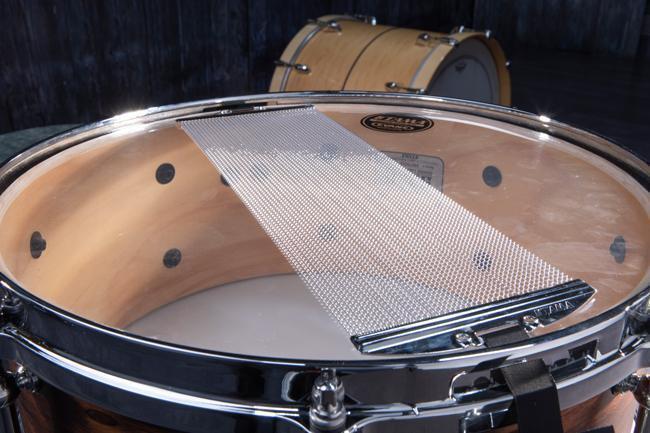
Common snare wires range in number from 16 and 20 strands to more contemporary 30– and 42-strand options. Fewer wires generally yields a tighter, faster, snappier response. More wires is believed to create a fatter attack and greater resonance — more “fuzz” or “jangle” — but often at the cost of speed. Use this to your advantage in determining the best snares for your shell type. If you play a deep steel snare and are looking for greater articulation, fewer wires could be the right option for you.
Split Row vs. Single Row
Single’s the standard, but split is lit
Most snares are comprised of a single bundle of wires, with all strands meeting on the same plane on the head. But PureSound’s Equalizer snares are split in the center to reduce head coupling and sympathetic vibrations. The result is often a drier and crisper sound with reduced vibrations. These make a great option for concert snares and studio shells. If you’re looking for speed, definitely check out the Equalizer series from PureSound.
Strand Materials
Light and bright, or rich and dark?
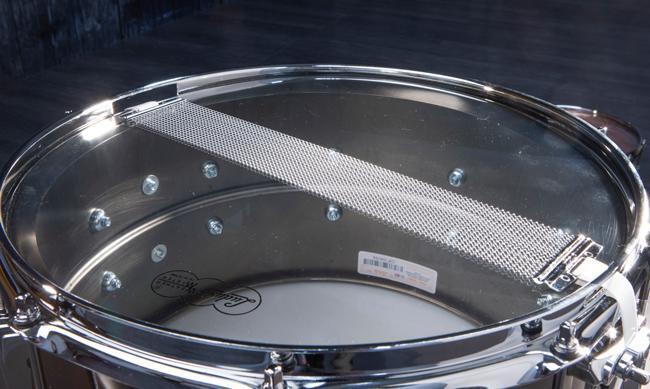
As with snare shells, a snare wire’s construction can lead to big differences in tone. Just think about the differences that exist between steel snare drums and your favorite brass-shelled models. Here are some common materials used in snare wires today:
- Steel — Steel is the major player in snare wires. It’s generally marked by a neutral, broadband response and moderate attack. Examples: PureSound Blasters, PDP Steels
- Carbon steel — The more carbon added to a set of snare wires, the brighter the tone, and more often than not, the greater the life. Carbon both decreases weight and reduces oxidation for a great-sounding, long-lasting set of snares. Examples: TAMA Super Sensitive Hi-Carbons, Fat Cat Snappy Snares
- Brass — Brass wires tend to be darker, more sensitive, and more resonant than steel wires. This is useful to keep in mind when attempting to manipulate the tone and length of either an excessively dry or excessively lively drum. Examples: PureSound Custom Pro Brass, Gibraltar Brass
- Bronze — Bronze is not only a proven cymbal and shell metal but also a proven guitar string material. On its own or mixed with phosphor, bronze lends a warmth and clarity to snare wires all its own. Examples: Sabian Blend Phosphor Bronze
- Nylon — Though it’s not as common today, some vintage snares may come with nylon-strand snare wires — a derivative of cat gut. The differences between nylon and steel snare wires are akin to those observed between nylon-string classical acoustics and steel-string folk acoustics. Nylon creates a smooth, even tone and boasts incredible life — which is why you’ll find these on vintage Ludwigs and Yamahas today.
Snare Plating and Winding
Coatings and coiling can impact life and tone
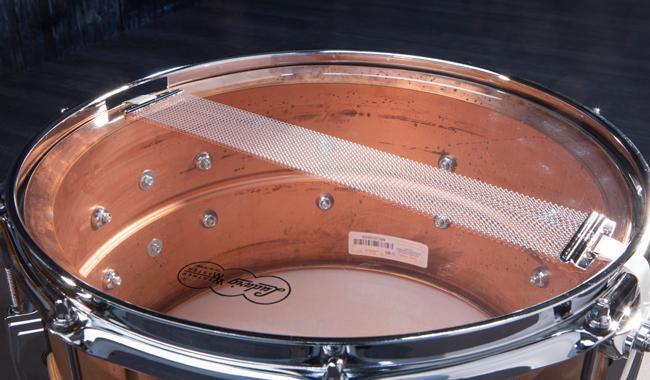
The coating, or plating, used to treat snare wires plays a big role in the tone and response. This varies widely by brand and model. Uncoated snare wires tend to produce the most neutral tone, yet may be more susceptible to corrosion and wear. Additional coatings can either cause the snares to sound brighter (chrome) or darker (fabric) but do tend to create longer life.
Another factor to consider is how tightly each wire is wound. Tighter windings (more coils per inch) generally create a splattier, wetter sound. Flatter windings (fewer coils per inch) tend to result in a dryer, more orchestral response.
End Plates
Pitched or flat, steel or copper?
Knowing your snare beds is important to picking snare wires with end plates that’ll complement your drum. Shallower snare beds (vintage Ludwigs) like to see flatter plates. Deep snare beds tend to prefer pitched plates.
As with strand formulation, the build quality of your snare’s end plates may also play a factor in response. More sensitive metals, such as bronze and copper, may yield greater resonance than steel, which typically produces a drier, crisper tone.
Cords vs. Straps
Don’t neglect your snare fasteners
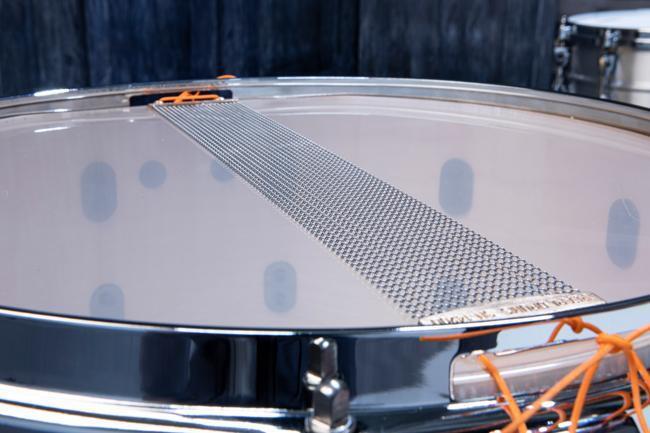
Some players hold that the method used in attaching snare wires to the throw off and butt plate can impact response. Some claim that synthetic straps are more susceptible to sympathetic ring than fabric snare cord. Our resident drummers can’t speak to this, but it could be something to consider if you have a snare that is already excessively ring-y.
Of course, for many drummers, convenience holds just as much weight as tone. The quick-release cotter pins included with every set of PureSound snare wires allow you to change heads and even swap out snare wires without losing your tension settings. Pretty cool.
Odds ‘n’ Ends
DW Self-centering Snare Wires — If you own a PDP or DW snare drum with both a MAG throw off and 3P butt plate, this snare system from DW is about to rock your world. Not only does it prevent the buzzing that often accompanies twisted and crooked snare wires, but it also allows wires to be swapped in and out at will.
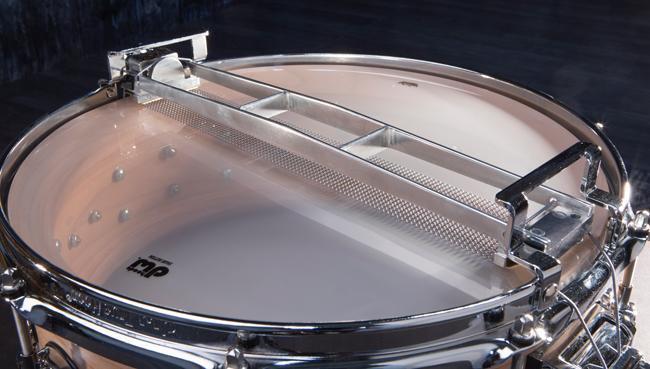
Rogers Dyna-sonic Snare Rails — Decades ago, Rogers came up with a way to give its Dyna-sonic snare drums greater sensitivity without choking the bottom head. The solution was the Dyna-sonic snare rail system — an adjustable metal holster with internal snares that boasts independently adjustable snare tension and height. This system is faithful down to the letter in today’s Dyna-sonic snare drums. If you’ve been burned by traditional systems, be sure to give these soulful snares a look.

Take a Listen
Can you hear the difference between the sounds of these snare wires? We wondered the same ourselves. So we took them all into the studio with a Ludwig Supraphonic LM402 6.5″ x 14″ Snare Drum and recorded the sound of the stock drum. Then we recorded it again after swapping out the snares. Nothing else changed. We used a Shure SM57 over the snare and a Telefunken M80-SH under the drum, both going through a Millennia Media HV-3R mic preamp into Focusrite Rednet interfaces recording into Pro Tools at 24-bit/96kHz. These clips are 320K MP3s.
The sound clips below were recorded with Nick D’Virgilio playing the same part on the same drum in Sweetwater’s Studio B. Nick is a seasoned professional and capable of very consistent playing time after time. The snare shell and head tensions remained constant between passes. The only variable you’re hearing is the different snare wires themselves.
For each set of snare wires, you’ll hear (in order):
- Four loud hits
- Four soft hits
- Two buzz rolls
- Two open-stroke rolls
Engineering was handled by Dave Martin, assisted by Krystal Davis. These sound clips are loudness-matched for the fairest comparison. No compression or EQ has been added. Be sure to listen on a good pair of headphones or studio monitors. Note the differences that exist between each set of wires: clarity, sensitivity, darkness, brightness, and note separation.

Ludwig Supraphonic LM402 Snare Drum — 6.5″ x 14″
TAMA 14″ Hi-Carbon Steel Regular Snare Wires — 42-strand
TAMA 14″ Starclassic Carbon Steel Snare Wires — 20-strand
Puresound Super 30 Snare Wires 14″
Puresound Custom Pro Brass Snare Wires — 14″ 20-strand
Puresound Custom Series Snare Wire — 14″ 20-strand
Gibraltar Snare Wires — 14″ 20-strand
Our Vote? Try Them All!
Seriously — snare wires are a simple and relatively affordable option for any player who’s looking for a snare sound makeover. Want to know what we play? Contact your Sweetwater Sales Engineer at (800) 222-4700.