It can be daunting figuring out exactly what dj equipment to buy in order to build a solid DJ rig. Whether you’re buying for yourself or for somebody else, you want to do it right, and we hope to illuminate some key concepts that take the uncertainty out of the process.
Different types of DJs
DJ means a lot of things to a lot of people. Calvin Harris, Casey Kasem, DJ Qbert, and the guy playing “Celebrate” for the fifth time at the company holiday party are all technically DJs. In order to figure out what constitutes a DJ rig, let’s explore the different categories of DJ and then dive into the necessary kit for each category.
2.1 — Mobile DJ/ Wedding DJ defined
3.1 — Scratch DJ/Turntablist defined
4.1 — Cartridges, needles, and headshells: a crash course
5.1 — For the DJ who has everything
1.1 — Club DJ defined
Tiesto. Avicii. Calvin Harris. Diplo. Deadmau5. Richie Hawtin. These are some of the world’s top-tier club DJs, and though there are huge differences between them, they share some things in common. Club DJs play dance music, generally electronic dance music. Club DJs are usually known for a specific style or genre. Club DJs are often producers. Club DJs rarely do bar mitzvahs, but will be found playing bars in Ibiza.
Top-tier club DJs can often travel with nothing but a USB thumb drive containing their music and metadata and will arrive at a club that’s fully outfitted with decks, mixers, lights, and PA. Mid-tier club DJs may travel with their own setup, but often that’s just a case with decks, mixers, DJ controller, and laptop, and they rely on the venue for the PA system and lighting. Entry-level DJs may need to have their own rig, including PA, lighting, and the rest, but that’s less common in the club DJ world than it is in the mobile/event/wedding DJ world.
Club DJs play for the love of the music (and potentially with rock star dreams), and they are the rock stars of the electronic dance music world. The standard setup for a club DJ is, as it ever has been, two turntables (or more precisely, media players, that can play from CDs or thumb drives), and a DJ mixer.
1.2 — Club DJ equipment
A: The industry standard

OK, the standard is usually in black, but isn’t this rig beautiful?
Sitting onstage at most high-end clubs and specified on the tech riders of most DJ festivals and tours, you’ll find the Pioneer CDJ-2000NXS2 and its delightful mixer counterpart, the DJM-900NXS2. Why? The CDJ stands up to the rigors of touring, is hyper-responsive, has a layout familiar to most DJs, and can interface with the DJM-900NXS2 mixer (and a second CDJ-2000NXS2) with no audio cables necessary — just add a few short network cables and you’re good to go. For the aspiring DJ, it may be the most fun you can have with two decks and a mixer. For the professional club DJ, it’s a dependable choice, a known quantity.
With incredible effects, gorgeous and functional visual feedback, and compatibility with Pioneer’s rekordbox set management software, a DJ can always count on Pioneer’s flagship gear.
Not to be outdone, Denon DJ is challenging Pioneer’s dominance with the SC5000 Prime media player and the X1800 Prime mixer. The Denon offering goes toe to toe with Pioneer’s feature set at a lower price, even including a touchscreen interface. Denon’s decks can even import rekordbox sets directly, so DJs who have committed to the Pioneer format can go either way. For those not limited by a hyper-specific tech rider, the Denon DJ Prime equipment can be a more affordable (though still very high-end) alternative to Pioneer, with some very cool additional features — big features like onboard track analysis (no computer needed!) and dual-layer operation (have a 4-deck setup with two decks!).
Both the Pioneer DJM-900NXS and the Denon X1800 Prime can interface directly with industry-standard Serato DJ software and can control Native Instrument’s Traktor as well.
B: Club DJ alternative: the controllerist
This is a less popular DJ setup these days since clubs are banning laptops in the DJ booth, but it is a fantastic option for DJs who don’t want to shell out thousands for their practice rig or who want to push the technological envelope and — for one reason or another — aren’t limited by the DJ equipment provided by club owners or promoters.
The Pioneer DJ DDJ-RX is a great DJ controller for the club (or bedroom) DJ who wants to follow the industry-standard workflow without investing thousands. Unlike standalone turntables or media players, this option requires that the DJ has a laptop and DJ controller plugged in at all times in order to play music. A great value, the DDJ-RX looks like CDJs and even feels like CDJs, and it has a built-in audio interface so it can be plugged directly into a PA system.
For the controllerist who wants to push the envelope of performance, the Traktor Kontrol S8 is a DJ controller worth considering. Using Native Instruments’ forward-thinking Traktor Pro software, the S8 allows for unprecedented flexibility. It allows for up to four channels of hardware and software mixing at a time and also includes “Remix Decks,” allowing you to not just mix songs, but mix elements of songs, or “stems.” Imagine not just crossfading between two tracks, but having independent control of the drums, bass, synth, and vocals. Native Instruments stems and remix decks bring that control and flexibility to the DJ.
C: For the aspiring club DJ
For the DJ who will be playing Madison Square Basement rather than Madison Square Garden, or for the DJ who wants a low-investment second rig, Pioneer’s XDJ-1000MK2 and DJM-450 are great alternatives. For the DJ who wants to get into the amazing Traktor software platform for minimal investment, Native Instruments has a slew of DJ controllers like Traktor Kontrol Z1. Finally, for the DJ who doesn’t have (or want) a laptop and would rather not spend a fortune, the Numark Mixdeck Express is a full-on DJ setup that can play media straight from a USB flash drive.
2.1 — Mobile DJ/ wedding DJ defined
For brevity’s sake, we’ll refer to this type of DJ as a “mobile” DJ for the rest of the article. This is the person who brings the whole show and delivers a great experience to the client, often including music, announcements, and special requests. The mobile DJ is found at weddings, corporate events, sporting events, and more, and generally will be responsible for providing music, microphones, a PA, and vibe.
Unlike the club DJ, who can show up at the venue with a thumb drive, the mobile DJ often has to show up at a venue with a packed trailer (or at least a hatchback).
When all is said and done, the mobile DJ has one primary mission, and that is to make the client happy. This is a business, and the customer is the focus.
2.2 — Mobile DJ/ wedding DJ equipment
The mobile DJ will have to consider each of these categories:
- Media player — this could be a computer with an audio interface, an iPod, or a full-on club DJ-style rig with turntables and a mixer, or whatever the DJ wants to use. A popular choice is the Reloop line of controllers — for their great build quality, compatibility with Serato software, and their compatibility with Algoriddim’s djay, the only DJ software that can actually stream music directly from Spotify. Hello, unlimited song library! Just make sure you bring a Wi-Fi hotspot to the gig.
- Storage and internet connectivity — a massive song library is a must. A mobile DJ doesn’t get to say, “Sorry, I can’t play the ‘Electric Boogie.’ I only spin techno.” That’s a total nonstarter! Mobile DJs need large, reliable hard drives, such as these Glyph options packed to the gills with songs, and backup thumb drives, and, as mentioned earlier, they could benefit from a portable internet hotspot so they can download or stream songs as requests flow in. A wedding DJ who says, “Sorry, I don’t have that song” is a wedding DJ who won’t get booked for a second gig!
- PA — the mobile DJ has to bring the PA in almost all cases. A standard rig of DJ equipment would include two “tops on sticks,” or 15″ powered speakers mounted above powered subwoofers using a sub pole. This gives the DJ a lot of full-range sound with a small footprint, a quick setup, and a lightweight rig. Popular choices include the QSC KW and K line of speakers, JBL’s SRX and PRX line, and for the DJ on a budget, Behringer’s powered speaker line. For the mobile DJ who wants the maximum performance-to-weight ratio, consider the Bose F1 system which also boasts a unique adjustable coverage pattern allowing a DJ to instantly reconfigure his or her PA in order to suit the room.
- Lighting — the mobile DJ has to bring the vibe! Here in the twenty-first century, it’s not just about lighting the dance floor, either. Many clients expect a special ambience in the entire space, so DJs who want an edge on the competition come with battery-powered uplighting from Chauvet or ADJ in addition to intense intelligent lighting for those who come to dance. Also a smart lighting control solution is key.
- Cases — what may have been a profitable wedding season can take a sour turn if an accident in transport destroys your gear. Professional event DJs have to consider how to keep their DJ equipment safe, even during transport and storage.
- Cables — while this may sound obvious, it can’t be overemphasized. Cables are key, and when a DJ is doing events on nights and weekends, there’s no way to pick up emergency cables at the store if you find that you don’t have what you need on hand. Like a great live sound engineer, a mobile DJ should carry an “emergency kit” with adapters, cables, power supplies, and backups of anything he or she might need at the gig.
3.1 — Scratch DJ/Turntablist defined

The scratch DJ – more commonly known as a turntablist – is an icon of hip-hop culture. To see the current state of the scratch DJ, look up the DMC World DJ Championships, and see what people can do. It’s pretty amazing.
A scratch DJ demands a lot from his or her turntable setup. This is not about playing weddings or about choosing the coolest tracks to play at the club; this is about dexterity, creativity, and doing amazing things with two or more turntables. It’s about pushing the turntable and mixer to their limits.
3.2 — Scratch DJ gear
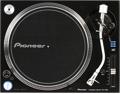
- Turntables — a turntablist needs the best. It has to be direct drive (not belt drive). The (now discontinued) Technics SL-1200 MK2 was the standard for many years but is no longer produced. Pioneer picked up the torch and created the PLX-1000, which cops the layout, power, and feel of the Technics decks magnificently.
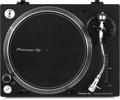
For those on a budget, Pioneer also makes the PLX- 500, which is a direct-drive turntable as well but lacks the sheer power of the PLX-1000’s motor and may feel sluggish to a scratch DJ. It’s a great place to start, though.
For those who want to bring a computer into their turntable setup, which is a lot less weight than crates of vinyl, the de facto industry standard is Serato’s DJ software.
Serato DJ will work with Serato-compliant DJ controllers, but if you want to incorporate real turntables or CD decks into the setup, then you will need this, which comes with Serato’s DJ software and an interface and cable set and control vinyls and CDs that allow the DJ to control the software with more traditional turntables and CD decks/media players. And yes, a DJ will need at least two turntables to scratch.
A game-changer for the Serato DJ is the Rane Twelve turntable controller. It looks like vinyl. It feels like vinyl. For all intents and purposes, it is vinyl. However, it’s vinyl from the future. Instead of using a cartridge to read a timecode record, the Twelve uses a motion-tracking device to accurately monitor the position of the record and convert that instantly into timecode data that can control Serato DJ software. Said more simply, this feels like an amazing analog turntable but it won’t skip, you won’t ever have to replace a cartridge, and you don’t need an additional interface in order to make this talk to your favorite software.
- Mixer — a turntablist needs a solid mixer. The most important component is the crossfader, which is the piece on the mixer that allows the DJ to change the relative volume between the two turntables. It has to be responsive and stand up to abuse, because a turntablist is going to abuse it.
Pioneer’s DJM line is a perennial favorite. They’re built like tanks, have fantastic feel, and are very easy to use out of the box. In addition, the DJM-S9 and DJM-S3 will not only work with turntables and CD decks, but will also interface directly with Serato’s DJ software, allowing you to control all key aspects (cue points, effects, and more) directly from the mixer. Slipmats reduce friction between the record and the turntable’s platter, allowing a turntablist (or any DJ using vinyl) to move the record without moving the entire platter, allowing for precision and dexterity, and making these absolute must-haves!
4.1 — Cartridges, needles, and headshells: a crash course
If you’re using real vinyl and turntables, you need to know about these three items.
- Needle/stylus and Cartridge: The needle (or stylus) is the piece that comes into direct contact with the record. It’s replaceable and will wear out with use. You should always keep replacement styli on hand so that if your sound quality begins to degrade, you can freshen up your setup with a new needle without delay. Make sure to buy styli that are built for your specific cartridge. Speaking of cartridges, the Shure M44-7 cartridge was an industry standard for decades but was discontinued in 2018. Never fear! Sweetwater carries Ortofon, the world’s leader in DJ cartridges and styli. We love Ortofon’s quality and we also love the simplicity of choosing the right DJ equipment. Just look at the names. Are you using these to scratch? Then buy the one called Scratch. If you’re using these with a DVS (digital vinyl system) like Serato or Traktor or Rekordbox, then get the one called Digital. If you need to replace the stylus, just buy the Ortofon stylus with the matching name and color. Easy!
- Headshell: For cartridges that require a headshell, we get great results from the Pioneer PC-HS01, which interfaces with all the leading DJ turntables.
- How do I know whether I need to buy a headshell? Cartridges that require a headshell will lack the keyed, cylindrical connector that connects directly to the tonearm. Instead, they will have a set of contacts that clearly can’t plug into the cylindrical end of a tonearm. Fortunately, the wide selection of cartridges we carry from Ortofon and Reloop have integrated headshells and include one stylus (AKA needle) so you don’t have to buy anything extra.
5.1 — For the DJ who has everything
If you or a loved one happen to be a DJ, there are a lot of things that would make your life easier: coffin cases, dust covers, customized control vinyl, and the list goes on and on.
For further questions, please don’t hesitate to call one of our expert Sales Engineers at (800) 222-4700. We want to help you achieve your musical goals!