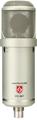
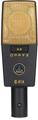
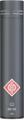
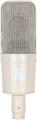
As opposed to simpler dynamic microphones, which are based on a moving coil (or other induction element) in a magnetic field, condenser microphones are based on variable capacitors, which makes sense when you know that “condenser” is an old-fashioned word for capacitor. In each condenser mic element, the diaphragm acts as one plate of a capacitor that’s either externally charged or, in the case of electret mics, permanently charged. When sonic vibrations make the diaphragm move, the plates vary in relative distance, and that variance results in capacitance changes.
Depending on the kind of condenser microphone, this change in capacitance is expressed slightly differently, but in all cases, the variable voltage leads to the output signal of the microphone. In any case, this signal is relatively weak when it leaves the element and requires some form of amplification circuit, which is powered by phantom power, an external power supply, or an internal battery.
The Pros of Condenser Microphones
If you need sensitivity and fast transient response, then condenser microphones have it to spare. Even the least sensitive condenser is going to be more sensitive than most dynamic microphones. Why? There are a few reasons, but the most important is that condenser diaphragms are extremely thin — often between three and six microns. By comparison, it takes a colossal amount of air to move the relatively thick diaphragms in dynamic microphones, resulting in a relatively sluggish transient response. Another reason is the active electronics, which boost the signal level right at the source, counteracting transmission loss across even shorter cable runs.
When it comes to capturing fine details, nothing beats a good condenser microphone. This is also a result of the thinness of the diaphragm, which contributes to these microphones’ sensitivity to high-frequency detail. In fact, unless it’s specifically engineered that way, you won’t find a condenser mic you could call dark. What you will find, however, is a great variety of different characters and behaviors among condenser mics.
Whereas dynamic microphones are frequently cardioid (with phase ports shaping how tight the polar pattern is), condenser microphones often employ two diaphragms to offer cardioid, figure-8, omnidirectional, and other polar pattern shapes — often all available on a single multi-pattern mic! Other tone-shaping options, such as EQ contours and highpass filters, let you further adjust the sound of many condenser microphones, such as the AKG C414 XLII that offers 3 highpass frequencies or the Lauten Audio Atlantis FC-387 that offers three different voicing options. Switchable pad circuits let you attenuate the signal before the internal amp to accommodate extremely loud sources.
Why Use a Condenser Microphone?
 Both onstage and in the studio, there are lots of great reasons to grab a condenser microphone from your locker. When sonic detail is absolutely critical, condensers are the natural go-to solution for most engineers. The same can be said for sonic clarity and low-noise characteristics. If you’re recording acoustic instruments, such as brass or wind instruments, in a controlled environment, then small-diaphragm condensers are a must; whereas tenor to soprano vocals often benefit from the warming character of large-diaphragm condenser mics.
Another great quality of condenser microphones is their ability to extract high-frequency content from inherently dark sound sources to reduce muddiness and bring out details. Think about it — why would anyone want to put a dark-sounding microphone on a naturally dark source? All you’d get is unusable bass.
There’s a reason condenser microphones are almost always found above drum kits. Fine cymbals are naturally dark and thunderous, and a set of mics that can bring out high-frequency details can prevent the upper mids from becoming harsh and abrasive. Likewise, a condenser placed just back and off-axis on a guitar amp will capture a bit of room ambience and bring out the brighter character of electric guitars.
Types of Condenser Microphones
 With the exception of esoteric mic designs such as the Audio-Technica AT5040 with its four rectangular capsules, full-sized condenser microphones typically fall into two camps: large diaphragm and small diaphragm. Large-diaphragm condensers exhibit some degree of diaphragm distortion, which adds warmth and character to your sound that’s extremely nice for vocals, cymbals, brass, and generally anything with pronounced upper-midrange presence.
Conversely, the smaller a condenser microphone’s diaphragm, the greater the potential for accuracy. Just look at the element on a measurement mic or most Earthworks models, and you’ll see a small diaphragm. But surgically clean measurement mics aren’t always the most flattering on some sound sources, which is why pencil condensers, such as Neumann’s KM series, are so popular. These balance the precision of a small-diaphragm diameter with enough sonic warmth to bring out the best in many sources, such as orchestral instruments, percussion, and more.
A more extreme form of small-diaphragm condenser is the line-gradient or shotgun microphone, such as the Sennheiser MKH 416 and the Audio-Technica AT8035. These mics use a massive array of phase ports to create an extremely tight polar pattern that rejects off-axis sound heroically. They’re a staple of film and television production, where microphones need to be effective yet invisible. Other solutions to this particular challenge are lavalier and headset mics, but we’ll get into those in another article.