Believe it or not, your guitar still thinks that it’s a tree. It’s true! Just like a tree, guitars will naturally acclimate to whatever environment they are exposed to, and if that environment is outside of the ideal range, it could spell disaster. Every year, Sweetwater’s Guitar Repair Shop repairs hundreds of cracked bridges, sinking tops, and shrinking fretboards. We’ve seen it all — and it can all be prevented. In this article, we’ll show you how useful a hygrometer and a humidification system can be for monitoring and maintaining the ideal humidity for your guitars.
Humidity and Temperature
The thin top, back, and sides of acoustic and semi-hollowbody guitars are the most susceptible to rapid humidity and temperature changes, but any guitar can be damaged if it’s kept outside of the safe zone for too long. To prevent damage, keep your guitar at a consistent 40%–50% humidity level. Whenever conditions are outside of this range, you risk damaging your guitar! But how do you know what the humidity is? I’m glad you asked.
The best way to monitor humidity is to use a hygrometer. A hygrometer is a device that measures the moisture in the air. Keeping one in your case and checking it periodically will tell you if your guitar is too wet or too dry.
It’s also vital to keep a humidification system in your case to regulate humidity. Simply put, if you’re not using a humidification system, the chances of harming your guitar are drastically increased. Humidity damage is by far the most common repair our Guitar Repair Shop sees during the winter months.
The heating system in your home is designed to circulate warm, dry air. Unfortunately, that is a perfect recipe for dehydrating guitars. Be sure that during the winter months you are using a humidification system to prevent damage to your guitar or any other instruments.
The Dangers of Improper Storage
We all love to show off our guitars and have them on display, but the safest place to store your guitar is really in the case. If you won’t be doing any strumming in the near future, a hardshell case will protect your guitar from rapid humidity changes.

A cracked guitar bridge like this is something that can be prevented with proper humidity control.
Humidity is much easier to control and maintain in a small space. As long as you monitor the interior of the case with a hygrometer, you’ll be able to keep a close eye on your guitar’s environment at all times.
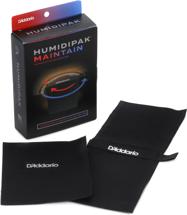
Most humidification systems can only add humidity, but the Planet Waves Two-way Humidification System can also absorb any unwanted moisture inside the case, allowing you to keep your guitars in the ideal 40%–50% range.
The danger of storing your guitar on a stand is that not only can it take an unwanted tumble, but you also risk exposure to dry air and direct heat from radiators, heating ventilation, and fireplaces.
Wall hangers are also dangerous because the back of the guitar will acclimate to the wall temperature and the top to the room temperature. In the winter months, these will rarely be consistent. This variance causes the instrument to expand and contract at different rates and will result in cracks, failed joints, and severe playability issues.
Signs and Symptoms of Dehydration
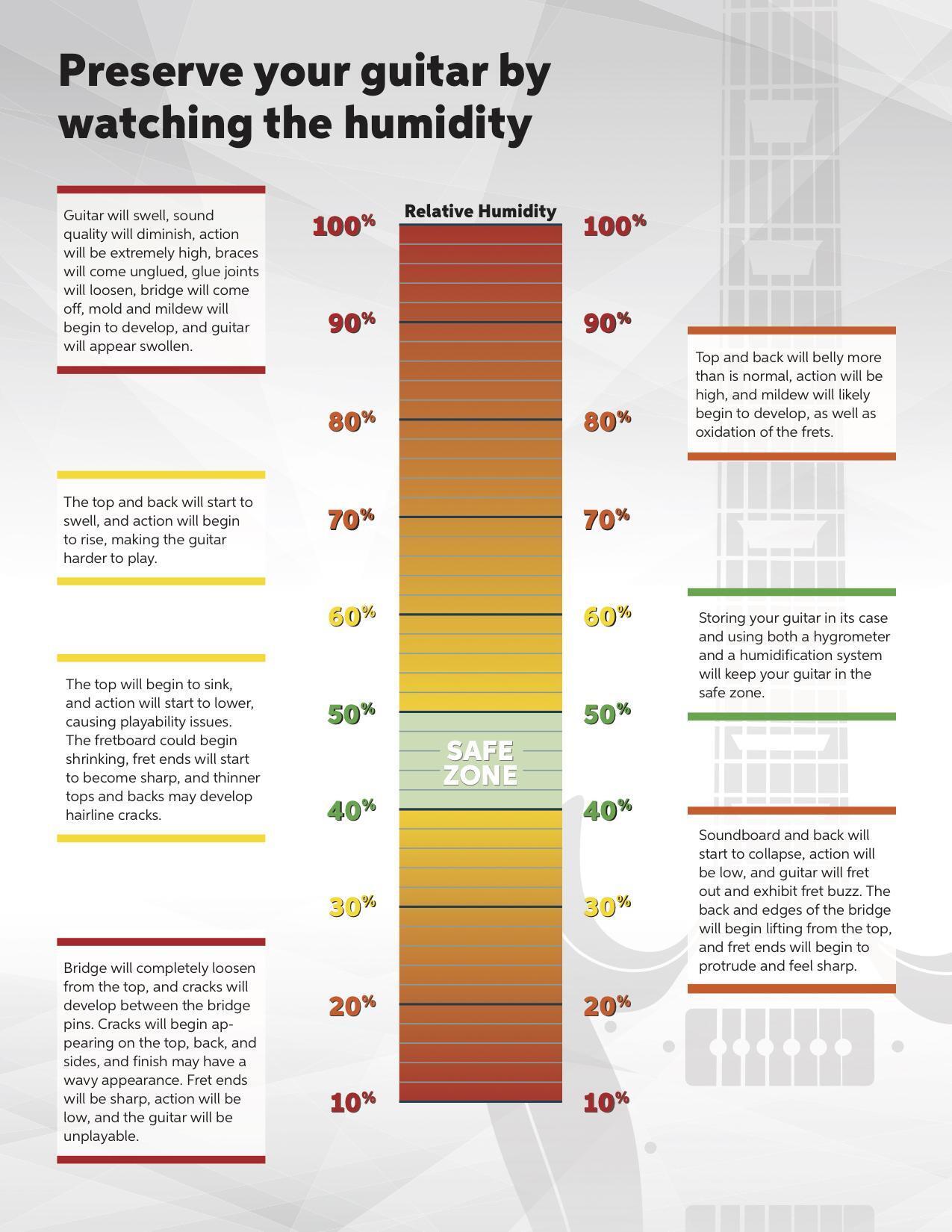
So how do you know if your guitar is too dry or too wet? Here’s a list to help you catch hydration problems before it’s too late:
Repair and Restoration
If you’re already noticing signs of humidity damage, such as small cracks or a sinking top, don’t worry. A repair by the experienced luthiers at Sweetwater’s Guitar Repair Shop will get the job done right — without any loss of tone or playability. If your guitar is showing any of the symptoms above, don’t wait! Contact us right away.