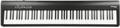
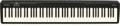
Ever since the V-Synth entered the market I was interested in it. I think the overall versatility was the initial element I had looked for in the keyboard, and I was definitely blown away once I had the opportunity to bring the V-Synth home to my MIDI studio.
I have been a composer in the electronic music scene for over 10 years now and have been overwhelmed by all the “cutting edge”,” super keyboards”, etc. that have been saturating the market for sometime now. I must say I have been re-inspired by this keyboard.
The first thing I noticed out of the box was the ease of use through the touch pad and routing buttons. For instance, I like to dissect a patch immediately after hearing it, and the V-Synth makes this an elementary task. Simply by touching one of the buttons in the signal path section of the keyboard you can turn on or off anything in the chain. The same goes with the effects section. You have access to 2 Oscillators, with 3 voice options per oscillator (Analog, PCM, External Input). The analog oscillators are what you would typically expect from a Roland synthesizer, square, saw, triangle, Juno, etc., with a very intuitive and programmable setup interface via the touch screen. If you really want to exploit the V-Synth you use the PCM Oscillators. These allow you to access the waveforms included in the V-Synth’s internal sample memory. This is where you can also place your own samples, which is where I started after reviewing most of the V-Synth’s 287 presets (Can you say massive library?). I have always been into sample-based technology, but was often dissatisfied with simply sampling a great sound and triggering it. The Roland V-Synth solves this problem. I sampled 4 guitar files into the V-Synth and immediately came up with some very interesting lush sounds by combining these samples with the V-Synth COSM filters and Effects. What started out as a distorted single note sample became a lush almost violin like analog patch, and I had full control over all the elements of the patch, including the speed, pitch, and formant of the samples. I quickly assigned the D-beam controller to adjust the frequency cutoff as well as the formant with a few taps of the touch screen and saved the patch. To really manipulate the patch from that point use the Time Trip pad, D-beam, and the bender joystick to really make the sound come alive. This is where the magic of the V-Synth is uncovered. Very easy to use, and almost open ended on the amount of options offered. Also, when reviewing the preset patches I noticed how organic and unique the sounds were. Most synthesizers have your standard setup when it comes to sounds, but this one really stands out in originality.
I really can only scratch the surface in this article due to the amazing amount of parameters this keyboard offers. If you are an artist/ performer like I am in the electronic music scene and need something easy to use in the studio and portable for live gigs, the Roland V-Synth is the most original synth on the market right now. And if you are looking to build your own sounds, this is the one for you! Check it out!