
What is the Difference Between Dynamic and Condenser Microphones?
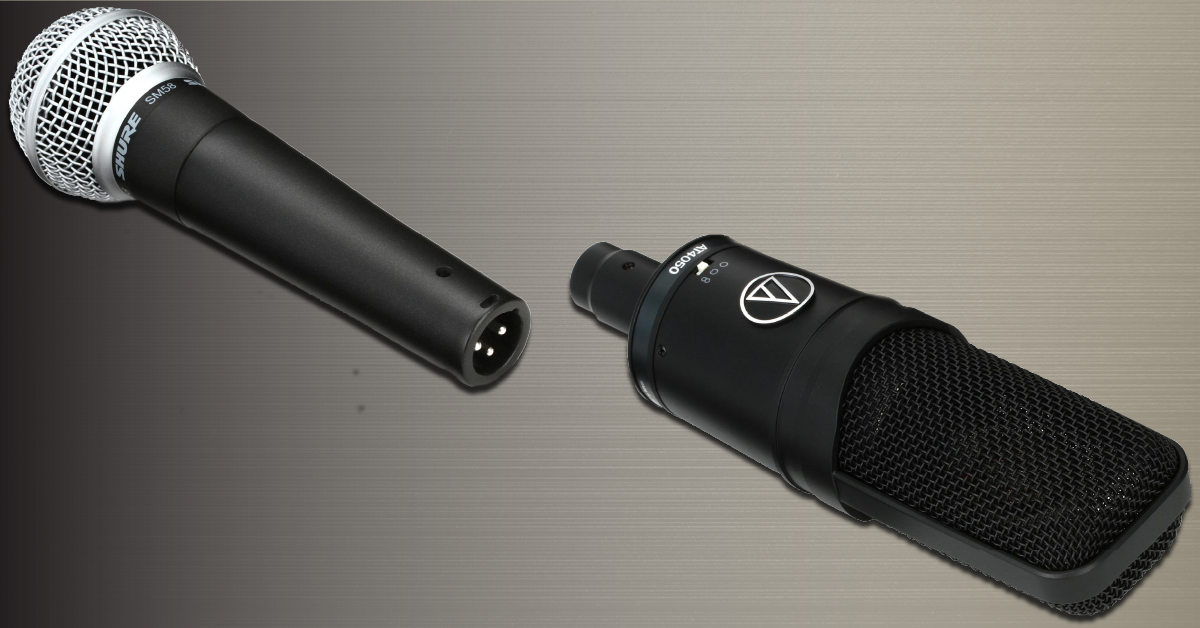
Condenser and Dynamic microphones have distinct differences, so in this article, we will explain the differences between dynamic and condenser microphones. We’ll also talk about common uses, best practices, and show you some examples of what each one sounds like in a real-world environment.
What is a diaphragm?
Before we talk about how dynamic microphones work and what they do, we should explain one of the most important parts of every microphone; the diaphragm. They’re essentially tiny speakers, consisting of a thin sheet usually made of plastic, a magnet, and a coil which is the electrical conductor. Acoustic energy causes the diaphragm to vibrate which in turn creates voltage.
Small diaphragm
Small diaphragm microphones (you might also hear the term “pencil” microphones) are great at picking up higher frequencies and are really good at keeping a consistent polar pattern due to the size and weight. That’s why you will generally see these as room microphones, on snare drums, pianos, or acoustic guitars.
Large diaphragm
Large diaphragm microphones have a larger, less consistent polar pattern and also have a higher sensitivity which provides a larger sound. These are the microphones you’ll usually see when someone is recording vocals, bass drums, or sometimes a live room to get a more vintage tone.
What are dynamic and condenser microphones?
All microphones operate the same; they convert sound waves into voltage which is then sent to a preamp. However, the way in which this energy is converted is quite different. Dynamic microphones use electromagnetism, and condensers use variable capacitance. I know this sounds really confusing, but don’t worry. We’ll explain it in simpler terms for you!
Dynamic microphones
Dynamic microphones turn sound waves into a voltage with the use of a magnet. They essentially work like speakers but in reverse. In a speaker, electricity vibrates the diaphragm, which creates the sound waves. Dynamic microphones on the other hand use sound waves that vibrate the diaphragm and create electricity. This electricity is then increased with the use of a transformer, and sent to the microphone’s output, creating sound.
Condenser microphones
Condenser microphones work on the principle of variable capacitance. In simple terms, they work as a battery. Sound waves vibrate the diaphragm with a magnetic plate that’s behind it. When this happens, it creates a boost of voltage which is sent through a phantom power supply (+48V) to increase it then sent to the output of your microphone. Without this phantom power supply, you’ll have little to no signal since the voltage won’t be boosted. Some condensers can also have a built-in high pass filter, built-in pads, and a switch to change the polar pattern.
Which microphone is best for me?
It’s great knowing how they work, but when should you use one microphone over the other? There are some general suggestions on what to use, but the honest answer is that it depends. Of course, mic placement, the type of room (or venue) you’re using them in, and what instruments you’re micing can certainly play a large role, but if you get creative, you can do a lot with very little once you get a feel of how they respond to your setup.
Using a dynamic microphone
Dynamic microphones can take a lot of signal without being damaged due to their low sensitivity and higher gain threshold, so you’ll see these used in many live situations. They’re also really good studio mics for things like drums, brass instruments, pretty much anything that’s really loud. Here are some examples of what they’re typically used for:
- Guitar amplifiers
- Loud vocals
- Snare drums and toms
- Keyboards
- Brass instruments
Using a condenser microphone
While microphones can be used interchangeably, condenser microphones are generally more sensitive to signal, so although you can’t blow out the capsule, you can get a lot of distortion if your signal is too hot. They can be used in live situations sometimes, but they’re more commonly used in studios where you can get a bigger, more natural tone.
Here are the most common applications for condensers:
- Vocals
- Bass drums
- Acoustic guitars
- Ambiance (Room)
- Piano
Know your polar patterns!
One key thing to think about when getting a microphone is what polar pattern it has because the way you place it can have an effect on the tone as well. Most dynamic microphones will usually have either a cardioid or super cardioid, whereas condensers can have pretty much any pattern, and some may even a switch that can change polar patterns!
When you need help, Sweetwater has the answers!
Our knowledge base contains over 28,000 expertly written tech articles that will give you answers and help you get the most out of your gear. Our pro musicians and gear experts update content daily to keep you informed and on your way. Best of all, it’s totally FREE, and it’s just another reason that you get more at Sweetwater.com.