
Tuba Quickstart Guide
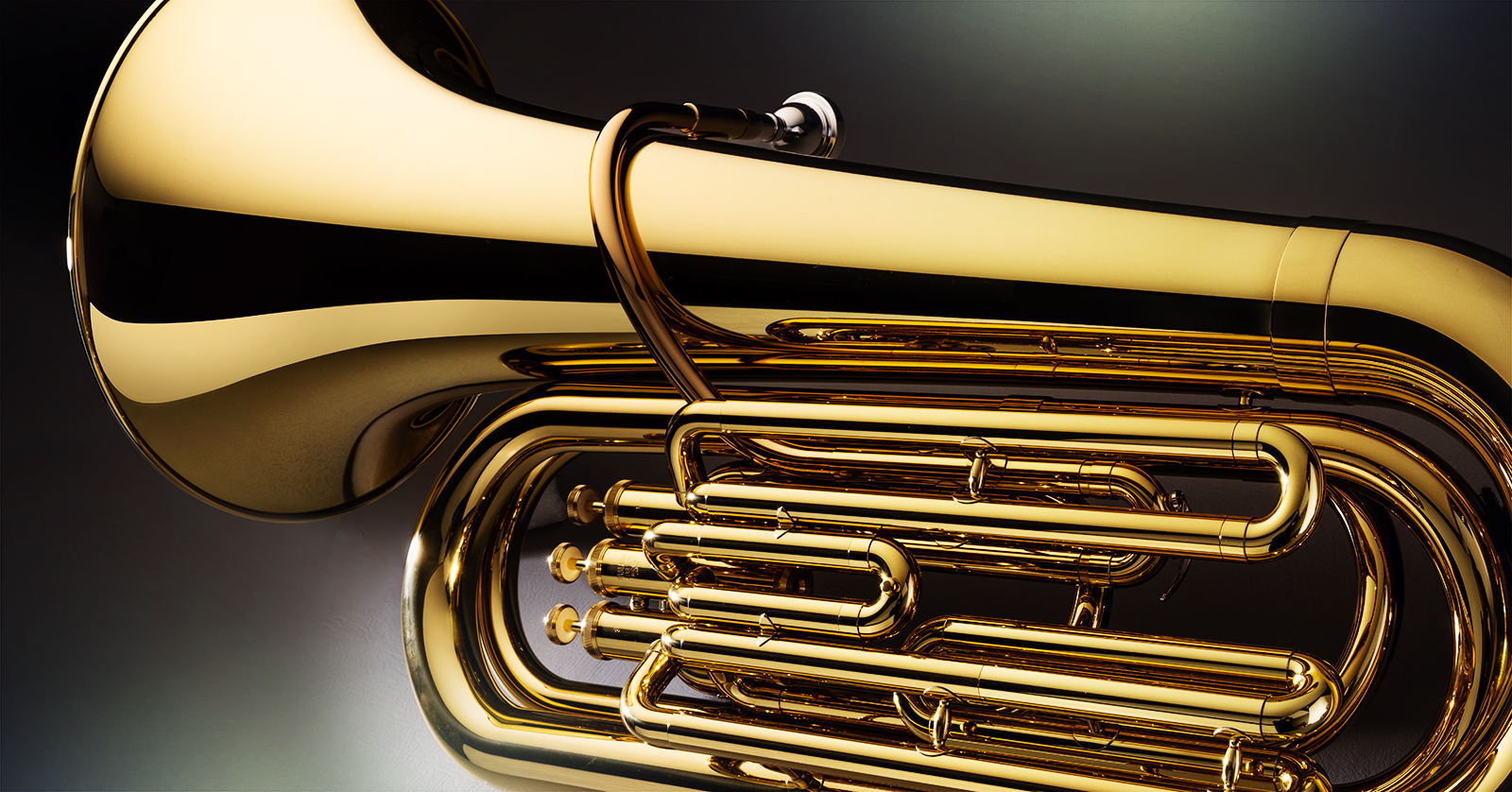
Congratulations on your new tuba from Sweetwater. The tuba’s bass notes form the foundation of your band’s sound. Let’s get started.
IMPORTANT: In all things regarding your new tuba, ask your band director or private teacher to show you how something is done before you try it at home. As they teach you how to play the instrument, they will be able to answer your questions.
Parts of a Tuba
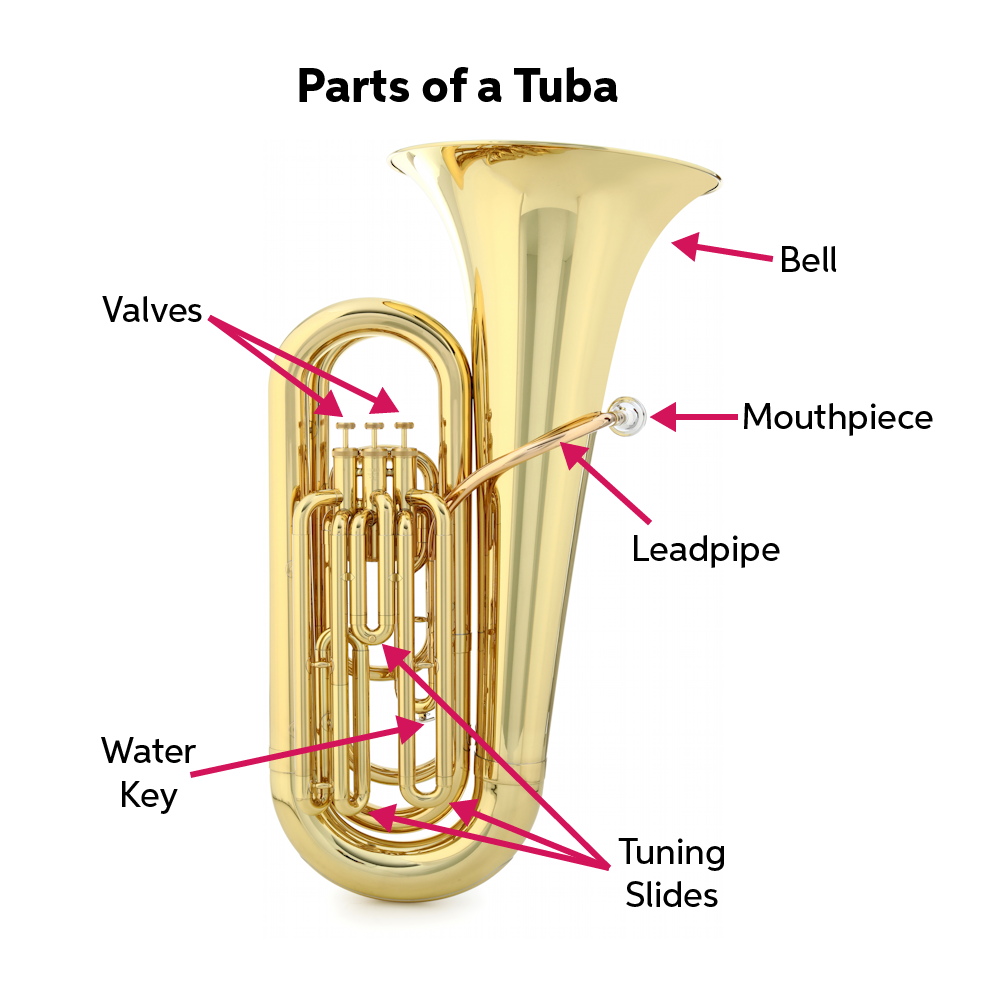
Parts of a 3/4-size tuba with a left-side leadpipe and top valves
Body or bore
The bore is the length of brass tubing through which the air flows when you play the tuba.
Mouthpiece
The mouthpiece sits in your case separately from the tuba. Once you have taken your tuba out of its case, gently attach the mouthpiece to the leadpipe with a small twist. Don’t force it, or it will get stuck.
Always brush your teeth before you play. If you cannot, rinse your mouth out with water. Otherwise, the residue from your food will get inside your instrument and gum it up. Don’t drink soda or sugary sports drinks before playing. Don’t chew gum or eat while you are playing.
When you are done playing, remove the mouthpiece from the leadpipe, clean it, and store it in the case. Don’t drop the mouthpiece. They are expensive and may not be repairable.
After playing, use a spray bottle of mouthpiece cleaner, or carefully dip your mouthpiece in warm water with a little dish soap, and wipe the mouthpiece down with a microfiber cloth.
Every week, use a brass mouthpiece brush with warm, soapy water to clear out any buildup that might block the airflow as you play.
If the mouthpiece is stuck, don’t try to use any kind of tool to remove it. Take it to your music teacher and ask for help.
Leadpipe
This is the first piece of tubing that the air moves through when you play. It connects to the main tuning slide. Don’t pick up or hold the instrument by the leadpipe; doing so may lead to bending.
Valves
Tubas have three valves. Press down the button on a valve, and it opens a path for the air to go through an extra piece of tubing that enables you to play different notes. Valves need to be oiled on a regular basis; we will discuss this in the Care and Maintenance Guide.
Tuning slides
With each valve comes a tuning slide, a U-shaped piece of brass that you slide out a little bit to tune the notes you play using that valve. To get your instrument in tune, you adjust all three slides. Tuning slides need to have grease applied every other week or so; we will discuss this in the Care and Maintenance Guide.
Water key
Open this key to release the water that condenses and builds up as you play. To protect your instrument from corrosion, remove all the water before you store it.
Getting Ready to Play Your Tuba
Take Your Tuba out of the Case
Put your instrument case on the floor, laying it down flat on its side. To make sure it’s not upside-down, position it so that the brand’s logo is on top. Open the latches and lift the lid. Inside you’ll see the tuba, and, off to one side, the mouthpiece.
Lift the tuba out with both hands. Place one hand on the wide part below the bell. With the other hand, you can grip the area around the valve mechanisms. Don’t handle the tuba by the delicate leadpipe.
Grab the mouthpiece out of the case. Carefully insert it into the leadpipe with a one-quarter turn to the right.
How to Hold the Tuba
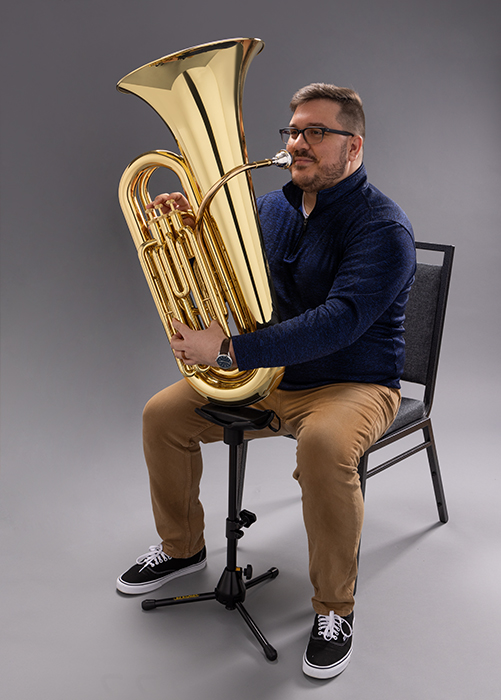
Holding the tuba, resting on an optional tuba performance stand
To hold the instrument, wrap your left arm around it. Grip the tubing on the front.
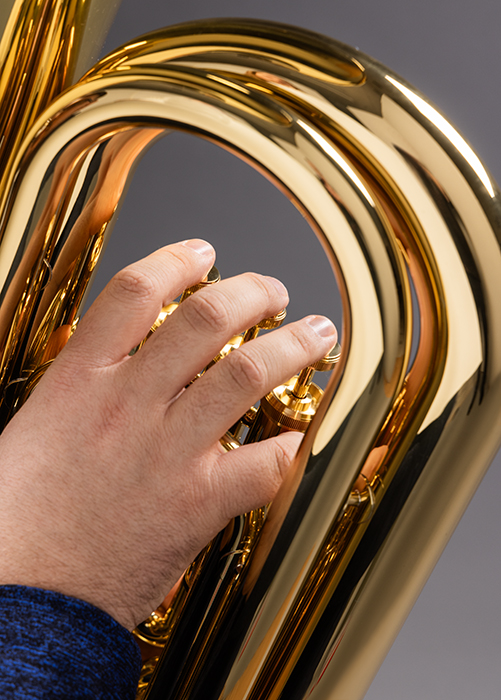
Right-hand position viewed from behind
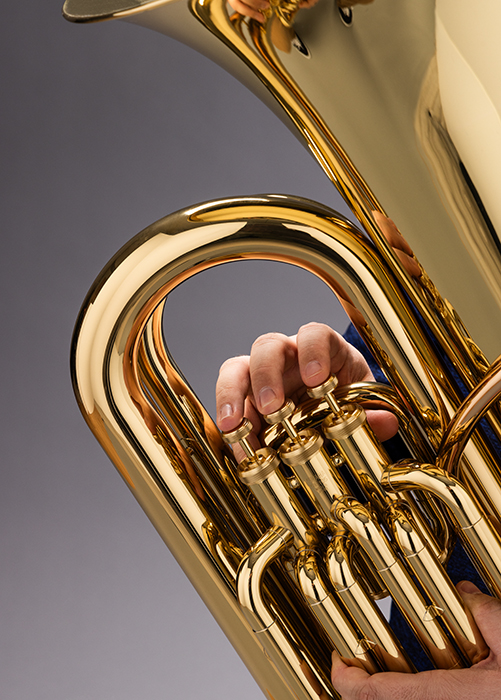
Right-hand position viewed from the front
From behind, place your first three fingers on the valve buttons. With your thumb, gently grip around the brass bar or the tubing.
Proper Playing Technique and Posture
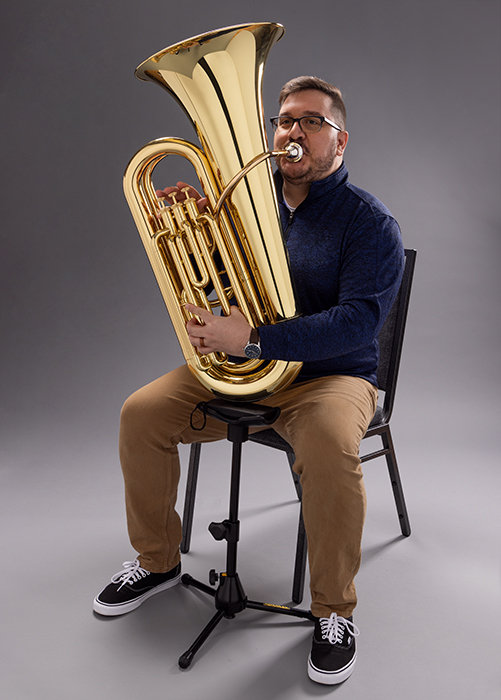
Playing the tuba
Embouchure
Your teacher will help you form the correct embouchure, which means the way you hold your mouth and your lips against the mouthpiece when you blow. At first, your teacher will show you how to blow into the mouthpiece without having it connected to the tuba. Later, you will attach the mouthpiece and play your first notes.
Breath Support
Playing the tuba requires breath support, which means learning how to control the way you use your abdominal muscles to blow air through an instrument. Your teacher will explain how to practice this.
Posture
To have good breath support, you need to sit correctly. When you practice, you need a sturdy chair of the right height so you can sit on the forward part of the chair with both feet flat on the floor. Your upper body and head need to be straight and tall, not leaning forward. Your shoulders should be slightly back and relaxed, not tensed up.
Adjust your left arm to hold the tuba at the right height so that the mouthpiece meets your mouth. If you have to crane your neck or bend down, it’s not the right position. Bring the tuba to you; you don’t go to it.
In the photos above, we show the tuba resting on a tuba performance stand, which your school may provide you to make it easier to hold the tuba in the right position.
How to Tune a Tuba
Your teacher will show you how to tune your tuba. The base note is B♭. Getting the instrument in tune requires adjusting the main tuning slide and the tuning slides for each of the three valves.
Get an Electronic Tuner
An electronic tuner senses the pitch of a note. It displays the name of the note and whether it is sharp, flat, or in tune.
While there are a number of tuner apps for your phone that use the phone’s microphone, a better choice is a chromatic tuner suitable for tuba that can sit on your music stand.
Tuba Care and Maintenance
Now that you know more about your new instrument, learn how to keep it playing smoothly. Read our Tuba Care and Maintenance Guide.
Related Content
United States Army Field Band: You Picked The Tuba? Here’s How To Play Tuba on DAY ONE!
When you need help, Sweetwater has the answers!
Our knowledge base contains over 28,000 expertly written tech articles that will give you answers and help you get the most out of your gear. Our pro musicians and gear experts update content daily to keep you informed and on your way. Best of all, it’s totally FREE, and it’s just another reason that you get more at Sweetwater.com.