
Saxophone Quickstart Guide

When you think saxophone, you’ll hear names like John Coltrane and Charlie Parker because they were all masters of their craft. However, to get where they were, they needed to learn the ropes of the saxophone and how it worked. So, in this guide, we will show you the parts of a saxophone, tell you how to play it correctly, and provide some tips and tricks along the way. Follow the sections below to get started!
Parts of a Saxophone
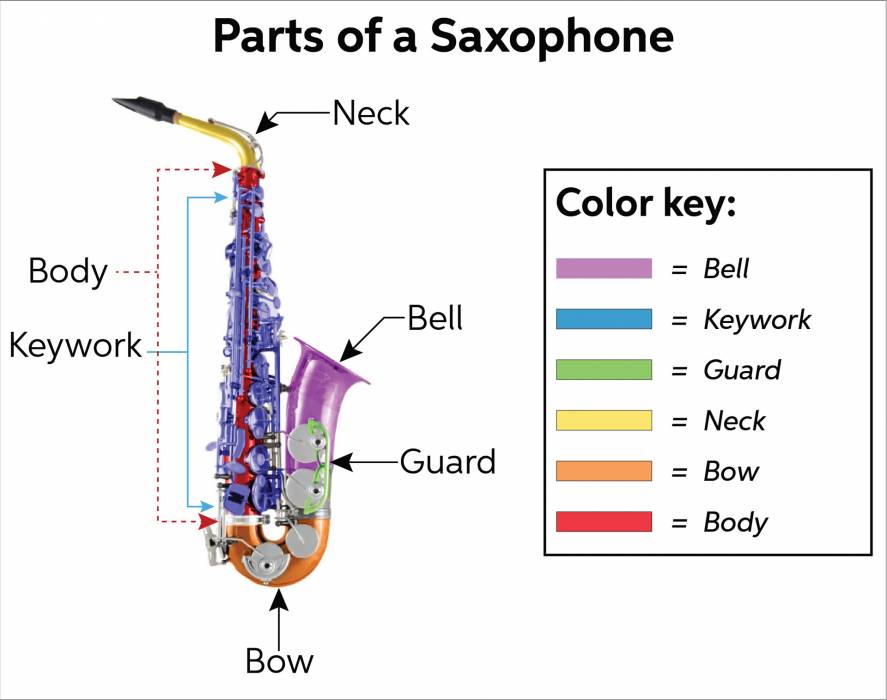
With all the parts you see, the saxophone may look like an intimidating instrument, but it’s very easy to identify them all! There are only six parts: mouthpiece, neck, body, bow, bell, and guard.
Mouthpiece
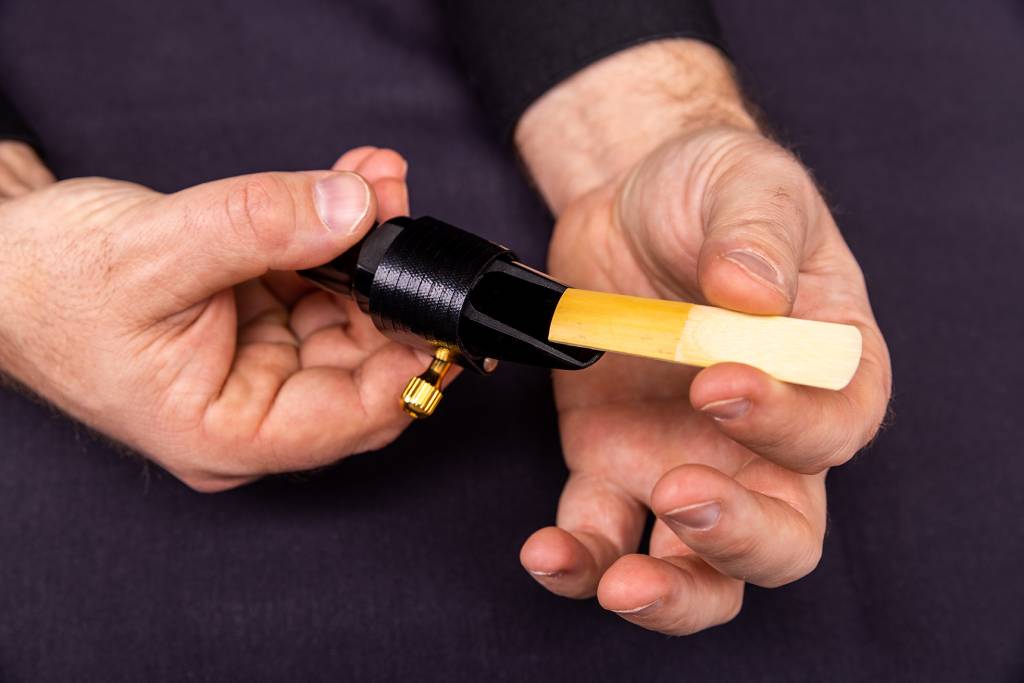
The mouthpiece holds the reed secured by a ligature, which you will need to produce sound. They come in different sizes and materials, all of which will affect the overall tone, so consider that if and when you ever plan to upgrade.
- Don’t eat immediately before playing, as crumbs may get stuck in the mouthpiece, leading to a choked sound.
- Tighten the mouthpiece ligature enough to where the reed doesn’t move. Don’t over-tighten it, though, as that can lead to reed damage!
- If the mouthpiece is sliding around or experiencing uncomfortable vibration, consider using mouthpiece pads!
- Condensation will build up within your mouthpiece over time, which, if not cleaned, can lead to long-term damage. So, before you put your sax away, use a woodwind mouthpiece brush.
- To extend the life of your mouthpiece, give your mouthpiece a deep clean once a week. Check out our Saxophone Care and Maintenance Guide to learn more!
Neck
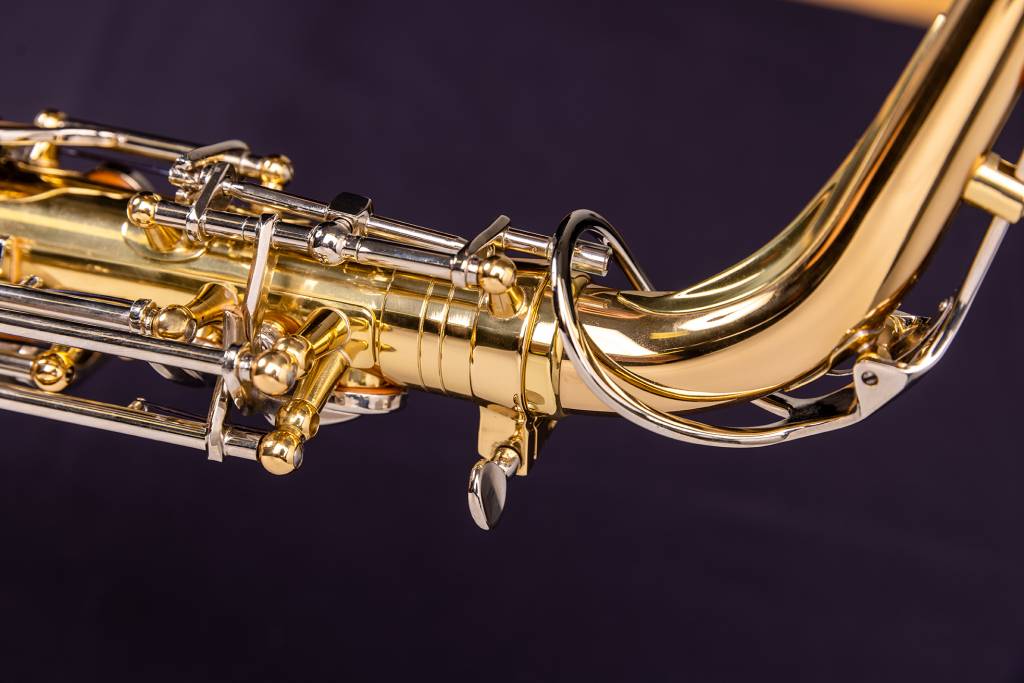
The neck is the first part of the saxophone that receives air that’s blown through the mouthpiece. While you may not think of it, it plays a critical role as different angles and sizes influence the overall tone and tuning as air moves through it differently.
- Make sure you install the neck correctly, or else it can bend, resulting in costly repairs!
- Grease the cork once every two weeks or so. If left untreated, the cork can begin to dry out and crumble.
Keys
The keys are attached to the body of the saxophone and are self-explanatory, as they assist you in changing the note you play. There are 23 (!) keys on a saxophone. Luckily for you, some of the keys you press down will open multiple keys, meaning you’re not constantly having to go up and down the sax. Hand placement is essential, but we’ll get into that later.
- The G# and C# keys are notorious for being sticky, so before you put your sax away, place some cleaning paper between the key and tone hole, press the key down, let go, and repeat this process twice.
- Speaking of sticky keys: make sure to keep a regular schedule when oiling your keys! For best results, we recommend oiling them once every two to three months during your quarterly cleaning. Check out our Saxophone Care and Maintenance Guide to learn more!
How to Assemble the Saxophone
IMPORTANT: Since you’re using your fingers to play the sax, it is complicated to hold it in place, so be sure to use a saxophone neck strap! This helps secure the saxophone to your body and eliminates the risk of you dropping the sax on the floor.
Now that you know a saxophone’s primary parts, let’s assemble it. The process is straightforward, too!
- Put your neck strap on, grab the saxophone’s bell, and attach it to the neck strap.
- Moisten your reed by placing it in your mouth or a cup of water for about a minute.
- Place your reed on the mouthpiece, then tighten it with the ligature to a point where it won’t move. Don’t over-tighten it, though, because you risk damaging the reed!
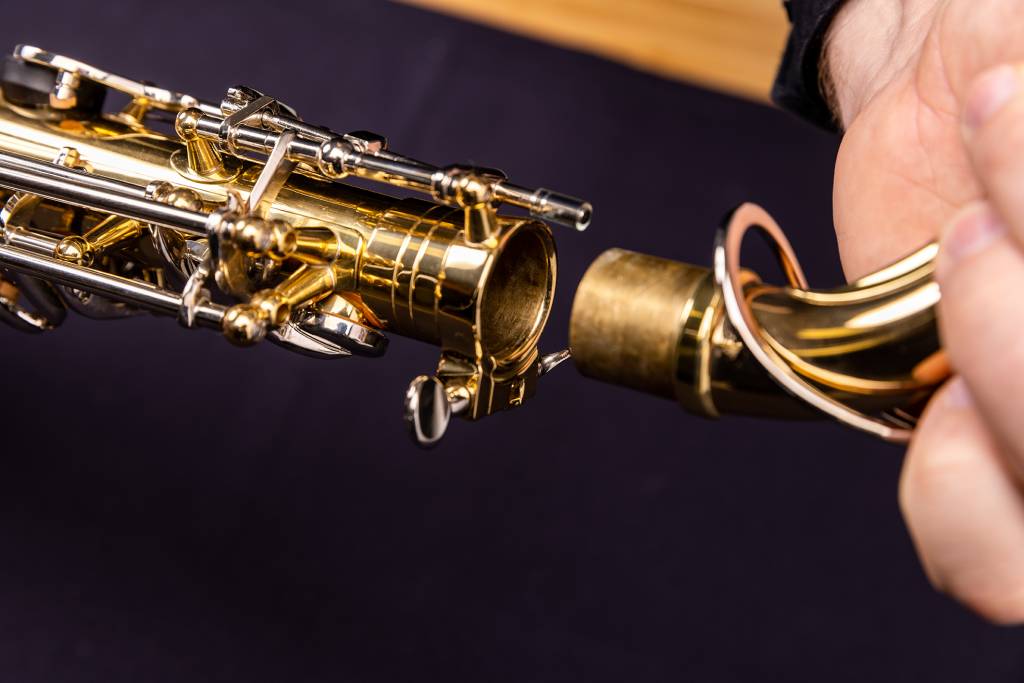
- Apply a small amount of cork grease on the neck’s cork, then attach the mouthpiece to the neck.
- Take your sax out of the case by the bell and secure it to your neck strap using the neck strap ring on the back of the body.
- Loosen the thumb screw on the top right side of the body just a little, grab the neck near the crook, then insert the neck into the body with a slight twisting motion.
- Make sure to grab the neck by the curved part and not the mouthpiece end. Doing so can result in a bent neck.
- Double-check to make sure everything is aligned correctly, then adjust the neck strap to a comfortable playing position.

How to Hold a Saxophone
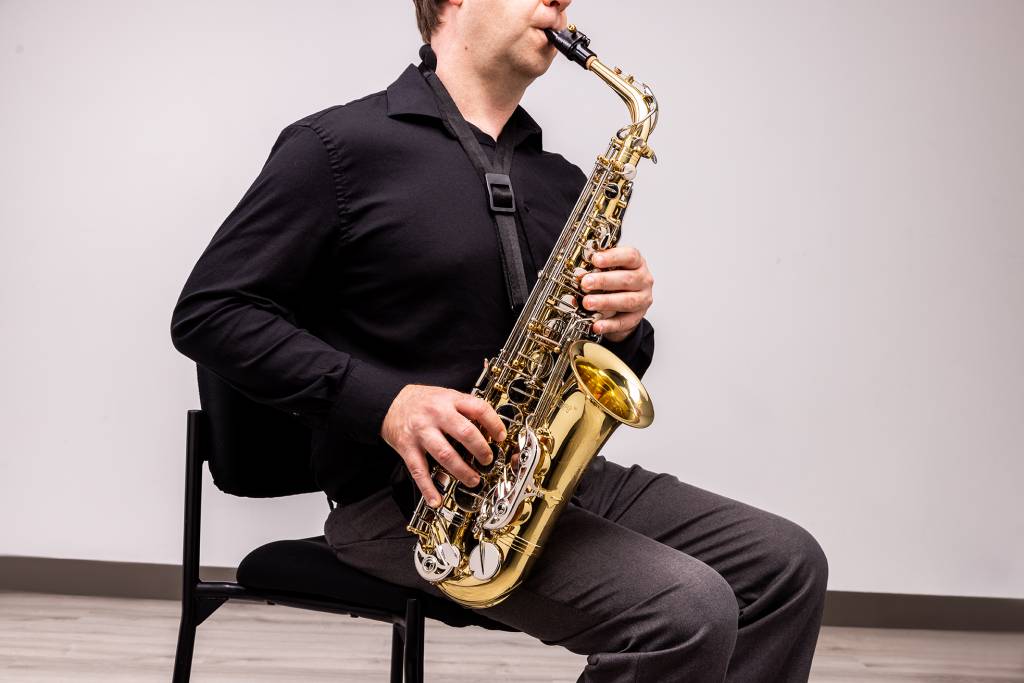
Holding a saxophone can come down to three Ps: posture, position, and placement. Once you check off all these boxes, you’ll be ready to play!
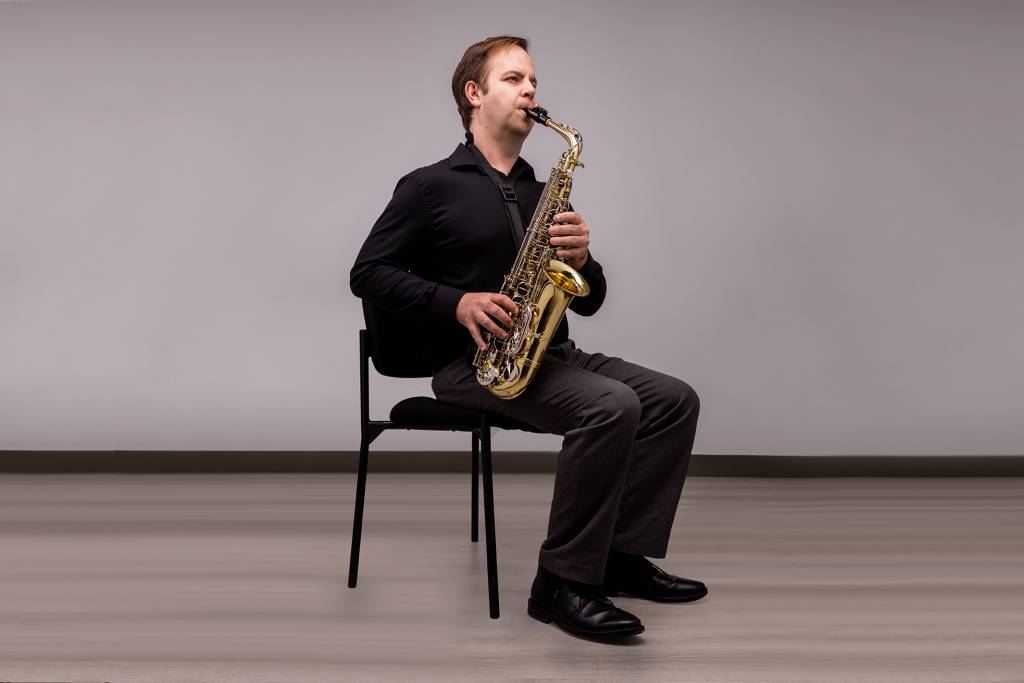
- Sit straight up and slightly off the center of your seat and have the sax hang on the right side of your leg. Sitting off-center will ensure you don’t get dents or scratches on the bottom of the body.
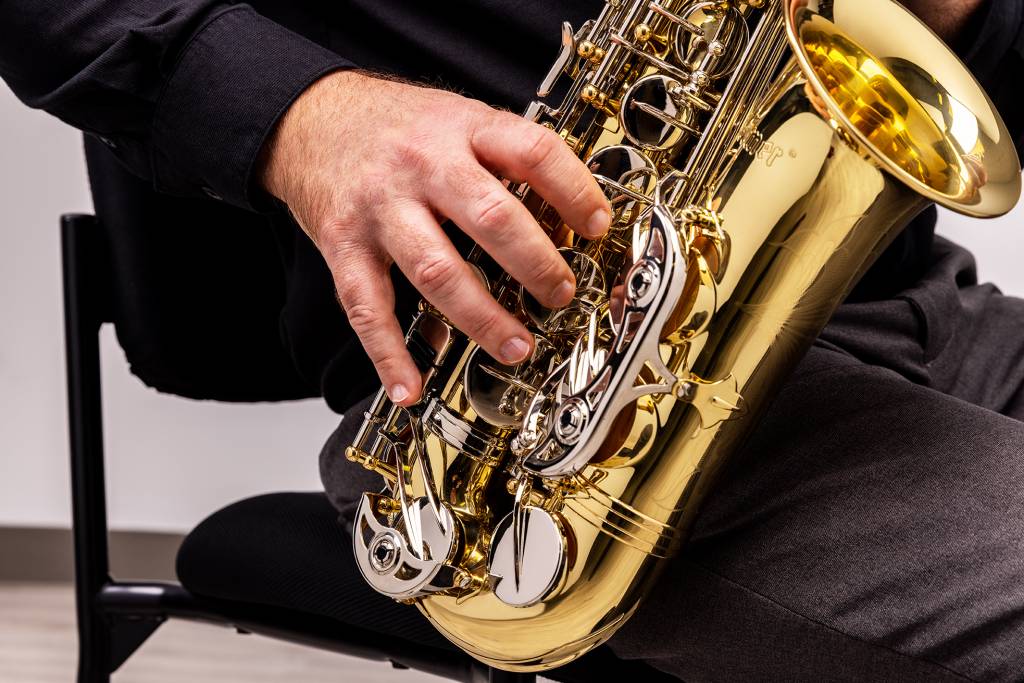
- Place your right thumb in the thumb rest and wrap your other fingers around to make a ‘C’ shape, placing your index, middle, and ring fingertips on the bottom three keys.
- Place your left thumb on the key on the back near the top of the body, wrap your fingers around it, making a ‘C’ shape, and place the index, middle, and ring fingertips on the top keys.
- There is a small key located between the first and second keys that is called the bis key. This is used only in specific situations, so skip this key when placing your fingertips on the saxophone.

Proper Playing Technique
After your saxophone is assembled and you’re holding it properly, it’s time to start playing! Poor playing technique can lead to bad habits, can restrict your movement, and can choke the tone, which you do not want to happen.
- Sit up straight and keep your neck and head upright to get the best airflow possible.
- Slouching can also lead to a constricted tone, making it challenging to play sustained notes longer.
- Always play with your fingertips — not your whole finger. You’ll get a better response and reduce the risk of accidentally pressing another key down. This is especially true with your left hand because of the bis key.
- Play relaxed! Just like slouching, if you tense up your tone changes, and you’ll have a hard time sustaining notes.
- Have the bottom of the sax hang over the right edge of your chair to prevent scratches and dents.
- If you’re tall enough, you may get away with placing it in between your legs, but no matter which way you sit, make sure that the bottom of the saxophone isn’t making contact with your chair!
- PRACTICE, PRACTICE, PRACTICE! Practicing every day is the most crucial thing every saxophonist should focus on.
- Practice your embouchure and mouthpiece placement and technique.
- Perform breathing exercises before and during your practice time.
- Learn your scales inside and out!
Related Articles
When you need help, Sweetwater has the answers!
Our knowledge base contains over 28,000 expertly written tech articles that will give you answers and help you get the most out of your gear. Our pro musicians and gear experts update content daily to keep you informed and on your way. Best of all, it’s totally FREE, and it’s just another reason that you get more at Sweetwater.com.