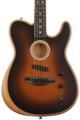
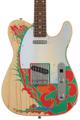
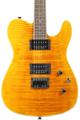
The Fender Telecaster, affectionately called the “Tele” by fans worldwide, is unquestionably one of the best-selling and most-replicated electric guitars of all time. One look at this elder statesman of the original Fender lineup is enough to send some players into drooling fits of ecstasy. That sculpted single-cut slab body. That skunk-striped bolted neck. Those defiantly mismatched pickups with their high-performance pole pieces. Leo Fender and George Fullerton’s groundbreaking design didn’t just change the game for guitar players of the 1950s onward; it flipped it on its head.
Factor in that the Telecaster has enjoyed a star-studded roster of high-profile users ranging from Keith Richards to Bruce Springsteen, not to mention an enduring legion of ravenous fans who come out in droves in support of the instrument on sites like The Gear Page and TDPRI, and it’s unlikely that this icon of the Fender Golden Age will ever fall out of fashion.
So, whether you’re a Tele player yourself or you’re still wondering what all the fuss is about, strap in as Sweetwater looks at some of the reasons why we, along with players around the globe, love the Fender Telecaster.
In a post-apocalyptic world, there will be cockroaches and Telecasters. And the Teles will be in tune.
Greg Koch
It Was the First Mass-produced Solidbody Electric Guitar

It’s fair to say that many of us wouldn’t be guitarists today if not for the player acclaim with which the Telecaster and its earliest prototypes, the Esquire and the Broadcaster, were met. Prior to 1948, “electric Spanish” guitars were still crafted in the way of the old masters — each instrument rigorously overseen from the earliest selection of woods to the final setup and tuning. Engineer Clarence “Leo” Fender saw the trends in proto-rock and western swing music emerging in the wake of World War II and sought to create an everyman’s electric guitar that was, above all, three things:
- Durable — Midcentury archtop and acoustic instruments often succumbed to travel and weather wear. This made them difficult to tune, even tougher to intonate, and highly susceptible to accidental breakage at the least convenient times. The Telecaster, with its solid slab body, replaceable bolt-on neck, and two-way adjustable bridge saddles, ushered in a new era of popularity for the electrified guitar.
- Affordable — Leo Fender’s engineering brain was ever bent toward practicality. By mass-producing a guitar that more players could afford to purchase and maintain, the Fender brand would be able to reach new audiences among professional, hobbyist, and student players alike.
- Amplifiable — Guitarists of the bebop age had difficulty rising above the blast of a full horn section or the din of a drum kit with their traditional acoustic-archtop instruments. To combat this, Fender mounted a magnetic pickup from one of his lap steel guitars to a guitar body built from a solid slab of pinewood. Paired with his TV-front Tweed amps, this allowed the guitar to be amplified from the stage without the note bleed and feedback issues common to earlier designs. Additionally, Fender gave each string its own magnetic pole piece for increased note separation. A screw-controlled pivot mechanism allowed players to balance the bass and treble sides of their instrument for a customized sound. Such principles eventually gave rise to the Telecaster we know and love.
These breakthroughs alone cement the 1951 Telecaster’s place in guitar history. But, for reasons that even Fender and Fullerton couldn’t have predicted, the Telecaster endures today in the hearts and hands of players from every corner of the market.
Debates about [which inventor] influenced whom, however fascinating, sometimes obscure an essential fact: It was Leo Fender who put the solidbody on the map.
Tom Wheeler, The Stratocaster Chronicles
It Covers Every Style of Music
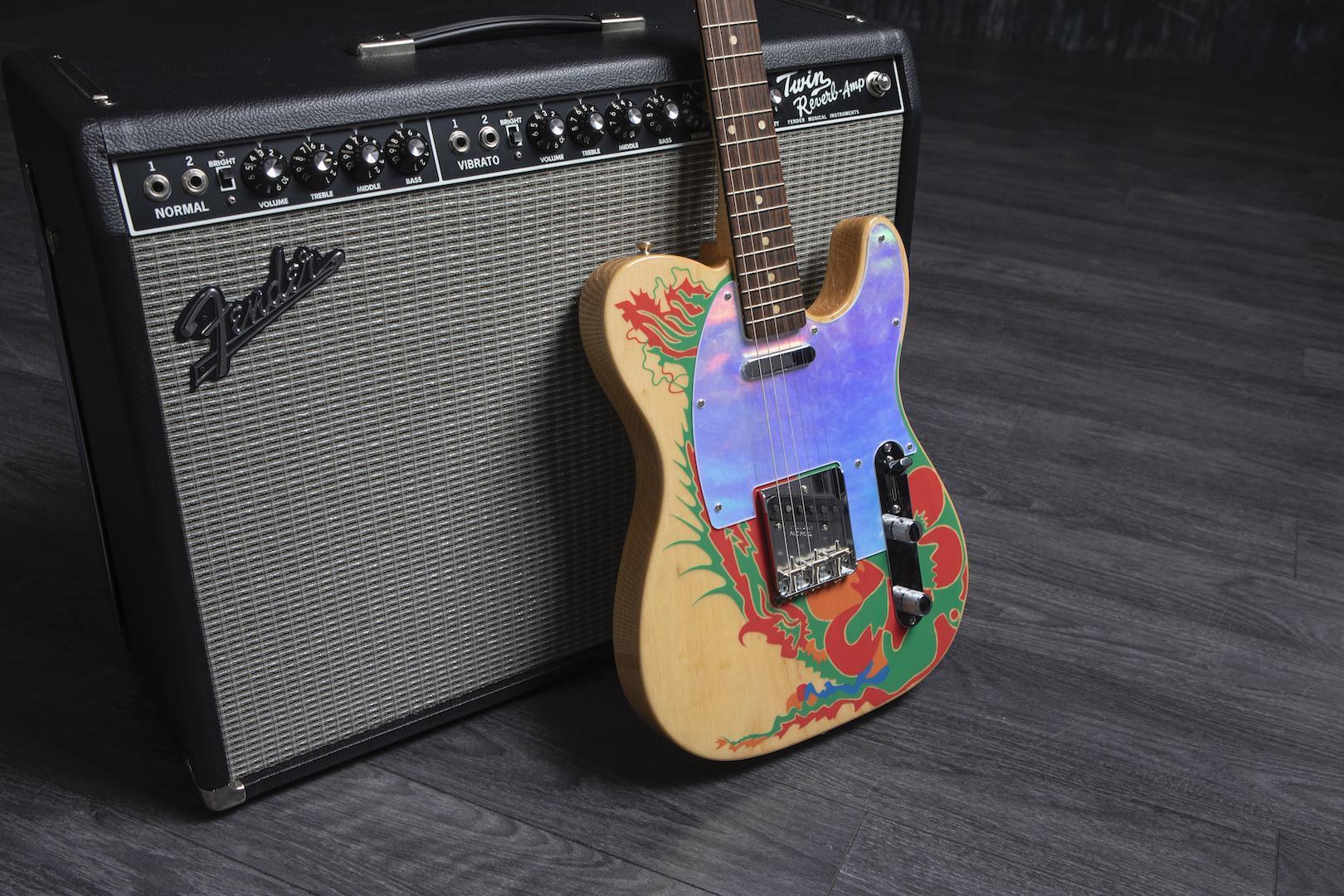
Brad Paisley to Jim Root. Joe Strummer to Greg Koch. Muddy Waters to Billy Gibbons. Andy Williams (ETID) to Jonny Greenwood. Diverse players of every genre imaginable have reveled in the sound and expression found within the humble Tele. From the indomitable sustain of a vintage “U” neck to the speed and maturity of a modern compound-radius fingerboard, from the spank of a classic nickel-covered single-coil neck pickup to the bloom and crunch of a high-output Wide Range humbucker, the Telecaster’s infinite incarnations have equipped these guitars for any and all players and styles.
My main interest was in the utility aspects of an item. Appearance came next. Perhaps you heard a while back where they designed a car that looked a certain way, but then you had to hoist it up just to get at the spark plugs when you needed to change them. See, there, someone along the way had let aesthetics get in the way of utility.
Leo Fender on function over form
It’s Customizable from Head to Toe
Leo Fender’s vision was a guitar that was not just affordable, but easy to ship and service, as well. The relative ease of swapping out parts has made the Telecaster a modder’s playground for the past 70 years. We’ve seen Teles come through our doors with hot-rodded pickups and switching, trem bridges and piezo saddles, hand-carved and aftermarket necks, and endless degrees of finishing and customization. The point being, if you’re a player who’s not afraid to get their hands dirty, the Telecaster is a perpetual fount of new ideas and fresh inspiration.
It Communicates Authority

It doesn’t matter what style of music it is. When you spot a guitarist onstage with a black-on-blonde Tele slung over their shoulder, you know they mean business. Maybe that’s because the Telecaster has a reputation for attracting players of technical renown. The tight attack and quick response these guitars are known for can hew the rough edges off a sloppy technique in short order. This puts them in high demand for the precision of modern music styles. Whether it’s a palm-muted Gojira breakdown or a snappy Chet Atkins palate cleanser, the Tele responds back with every ounce of emotion the player pours into a performance.
On most of the necks at the time, all of the ones that we ran into, the frets weren’t properly spaced for noting, and that had gone undetected in the acoustic style guitar because the diaphragm top gave you a tone that had these adjoining tones, so it wasn’t so specific and clean. You could be a little out of tune and not know it. But on our guitars, it was clean, and you had to play just the right pitch, or it wouldn’t sound good. So I devised a system… that allowed us to measure fret placement to one-thousandth of an inch… And that was a whole new ball game.
Leo Fender on his and co-designer George Fullerton’s 25.5″ scale-length neck and exacting fret placement
It’s Priced for Every Player
Leo’s vision of having a Fender in every household shines brighter than ever in today’s range of Telecasters. From Squier’s high-value Bullet Teles to Fender’s Custom Shop Nocaster reproductions, you can find a Telecaster at Sweetwater to fit the needs and budget of just about every player on the map — from the first time they pick up a guitar to the last time they lay it down.
Learn More
For more information on the Fender Telecaster, we highly recommend Five Watt World’s 21-minute Short History video and Guitar Player alum Tom Wheeler’s Stratocaster Chronicles coffee-table book. If you’re in the market for a Fender or Squier Tele — or any of their distant cousins, for that matter — be sure to reach out to your Sweetwater Sales Engineer at (800) 222-4700 .