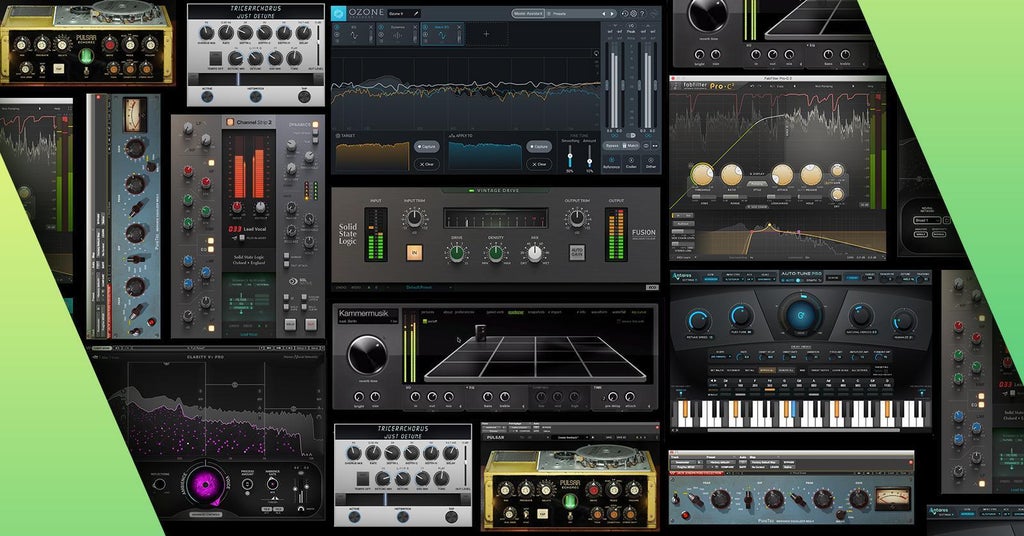
Plug-ins are often the most flexible and cost-effective way to transform a sterile performance into a show-stopping piece of sonic artwork. And, for most of us who don’t have the space or the cash it takes to accumulate expensive outboard gear, working in the box is the only way our recordings can reach radio readiness. Here at Sweetwater, we think that every studio can benefit from plug-ins, no matter if you’re recording your demos or serving elite clientele. You’ll need at least one plug-in of the 10 major types. Here are Sweetwater’s top picks in each category.
- Pitch Correction Plug-ins
- Noise Reduction Plug-ins
- Preamp & Channel Strip Plug-ins
- EQ Plug-ins
- Compressor Plug-ins
- Saturation Plug-ins
- Chorus & Exciter Plug-ins
- Delay Plug-ins
- Reverb Plug-ins
- Mastering Plug-ins
Pitch Correction Plug-ins
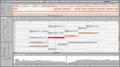
What if you capture a brilliant vocal performance, but the singer goes flat at a crucial point? You could retrack the vocal or attempt to punch them in, but you might lose some of the moment’s magic. However, with pitch-correction software, you can tune up the sour note, and no one will be the wiser! Of course, pitch-correction software can also be used for extreme T-Pain-style robotic vocals if that’s your desire. Even if you’re a purist when it comes to vocal performances, pitch-correction software is an invaluable tool in the studio. One of our favorite applications of pitch-correction software is to tune samples so you can build polyphonic instruments from nearly any sound source that will play in tune with the rest of your instruments.
Noise Reduction Plug-ins
Audio restoration specialists — the folks that clean up old recordings — aren’t the only people who rely on noise-reduction software. Producers and engineers at Sweetwater consider noise-reduction software a staple in any plug-in folder. The applications for noise-reduction software are numerous, especially in home and project studios that are subject to electrical hum and unwanted ambient noises. We use noise-reduction software to eliminate the sound of HVAC systems, to tamp down annoying amp hum, and to rein in noisy vintage instruments and hardware processors.
Preamp & Channel Strip Plug-ins
In addition to having large-format recording consoles, professional studios usually have racks and racks filled with hardware preamps and channel strips. Why? Because variety is the spice of life, especially when crafting compelling recordings. While you may be working with a single audio interface, you can mimic the pros by using preamp and channel strip plug-ins. Most preamp and channel strip plug-ins are based on tried-and-true studio classics, and each has its distinctive sonic character. We recommend mixing and matching preamp plug-ins when recording and mixing — a Neve on vocals, API for the drums, Trident on bass, and an SSL 4000 series on keys. You get the picture! Doing so will give your tracks diversity, making it easier for you to achieve separation in your mix!
EQ Plug-ins
An equalizer plug-in (shortened as EQ) easily corrects frequency imbalances and issues in a mix. Whether a graphic multiband EQ or an old-school fixed-frequency emulation, an EQ plug-in can help you bring an instrument to life or cut down on frequencies you don’t want. Beyond that, well-applied EQ places each element of your mix into its own box. Once there, it won’t overwhelm or interfere with other instruments, percussion elements, or vocal tracks. If you’re not familiar with the ins and outs of EQ, then that’s okay! We know how to EQ specific sources and offer a free EQ frequency cheat sheet of all the “magic” frequencies to help you get up to speed.
Compressor Plug-ins
At its most basic, a compressor plug-in reduces the dynamic range of an audio signal. By adding compression, you quite literally minimize the ratio between the peaks and valleys of a sound. Compression can help even out extreme dynamics in a take, resulting in a much more consistent sound. We constantly call on compression at Sweetwater to squash drums, to iron out vocals, and to fatten up bass guitars. Plus, it’s one of the secrets to a killer clean-guitar tone. While they’re squashing unruly signals, compressor plug-ins give life to your tracks by adding color and character to the finished product. Every compressor plug-in will have a sonic stamp, whether it takes cues from legendary hardware compressors or blazes its own digital path. Beyond that, your compression plug-in can be the “glue” that holds all the tracks together. If you don’t have a compressor plug-in yet, then make sure to get one. It’ll change the way your tracks sound — for the better.
Saturation Plug-ins
Saturation is a word audio engineers use to describe the slightly distorted and compressed sound that occurs when you overload an electrical component with a hot signal. Back in the day, saturation happened at every stage of the recording process from the tubes and transformers of the preamps, compressors, and EQs to the tape where a band’s performance was captured. While saturation was technically an unwanted byproduct of older technology, it created a pleasing sound. (Check out the article “Tape, Tubes, and Iron: Why Distortion Sounds Good and How to Use It in a Mix” for a more in-depth discussion.) Today’s digital recording technology is essentially saturation free. Still, you can recapture the vibe of recording’s golden age with saturation plug-ins — especially if you’re working exclusively in the box!
Chorus & Exciter Plug-ins
When you hear the word “chorus,” you might immediately think of the warbly guitar tones of the 1970s. Although chorused guitar falls in and out of fashion, the use of chorus during the mixing process has never waned. Chorus, when used subtly, can impart depth and dimension to a mix, particularly when applied to auxiliary elements such as percussion, synths, and background vocals. Related to chorus effects are exciter effects, which use a different process to achieve similar ends — at least in a mix context. If you want your songs to sound broader, deeper, and livelier, try setting up a stereo chorus or exciter on an auxiliary track (like you would a reverb) and start sending small amounts of different elements to it. You may be surprised how much of a difference it can make!
Delay Plug-ins
Delay is often employed to create psychedelic dreamscapes, old-school slapback sounds, and dramatic cavernous repeats. But did you know it’s also regarded as a utility plug-in by many top mix engineers? It’s true! Like reverb, you can use delays to define the soundstage of a mix. Famed engineer Chris Lord-Alge is known for applying a stereo quarter-note delay to vocals and turning it up until he feels it but doesn’t hear it. It sounds strange, but it works! That said, delay is vital for creating evocative sound-design elements to augment your arrangements. Like most of the plug-ins on this list, delays come in a wide variety. It’s nice to have a selection of at least a few different types, such as digital delay, tape delay, and bucket-brigade delay, to keep your mixes interesting.
Reverb Plug-ins
Reverb is a must-have plug-in for every step in the recording and mixing process. While tracking, a touch of reverb can give artists the confidence to perform their best. During the production phase, you can add reverb to transform otherwise dull sounds. When mixing, reverb is crucial for generating an immersive experience for listeners. Reverb plug-ins come in numerous varieties, including digital emulations of older mechanical units like spring, plate, and chamber reverbs; modern algorithmic reverbs with endless customization; and convolution reverbs that perfectly re-create natural spaces.
Mastering Plug-ins
Mastering engineers are highly trained specialists tasked with putting the final polish on a mix while bringing it up to competitive commercial volumes. Though some mastering engineers work strictly with software, they are not the norm. Most professional mastering engineers still prefer hardware, much of which is highly customized. However, as a recording or mixing engineer, you’ll still want to invest in mastering software to deliver the best-sounding reference mixes to your clients. Even hobbyists and DIY artists will benefit from mastering plug-ins. Most mastering software makes it easy to get your mixes loud enough and clear enough that they won’t sound out of place on a playlist with your favorite professionally mastered songs.
Every Studio Needs Plug-ins!
Plug-in proselyte or professional, if you’re ready to take your audio production to the next level, then you’ll need the proper plug-ins. The options represented here are but a fraction of Sweetwater’s plug-in selection. You can browse all our plug-in options here or reach out to your personal Sweetwater Sales Engineer at (800) 222-4700 to get help finding the perfect plug-in for your needs.