If you’re like us at Sweetwater, you have an affinity for stompboxes. If this sounds like you, it’s likely that you occasionally look at the chaotic assortment of pedals on a pedalboard and resolve to tidy them up but never get around to it. An organized board is like a clean workspace — it frees up your brain to reach new creative heights. If you’re serious about making your pedalboard look Instagram-worthy, you’re in the right place. Here are some tips for cutting the clutter.
Consider Your Needs
The first step to a clean, streamlined pedalboard is to consider what you really need to put on it. For example, let’s say you own 10 distortion pedals but only use two when gigging. Why would you leave the other eight onboard? The same goes for any other effect. So, first, decide what sort of setup you need. Are you using it only in the studio? Gigging? Somewhere in between? Once you know what function you want your pedalboard to serve, choosing what to do next is easy. You can simplify your setup or even create multiple purpose-built pedalboards.
Clean Up Your Cables
Nobody likes to look down at a rat’s nest of cables every time they play, right? One of the easiest ways to clean up a pedalboard’s visuals is to streamline the patch cables. There are a couple methods to choose from here.
Guitarists commonly hide patch cables on the underside of their pedalboard. However, that leaves a mess of hanging power and patch cables to contend with. The fix is easy — tie down any loose cables. Whether you use a zip tie or a tie-down mechanism is up to you. The less loose cable to contend with, the better. You’ll eliminate the chance of accidental disconnections and snags along the way!
The second method we recommend is to outfit your pedalboard with custom-built cables. Some may balk at the mention of “custom,” as custom frequently means “expensive” in our industry. But with cables, it’s much different. You need some bulk cabling, the right connectors, and a soldering iron — that’s it. Going the custom cable route lets you shorten the total length of cable that your signal runs through before it hits the amp. That means less chance for interference and signal degradation. Plus, you’ll no longer have to worry about how to hide longer patch cables. Just remember to avoid running your instrument cables past cables carrying power — this could add extra unwanted noise to your signal. Want to make custom cables but don’t have a soldering iron? No problem! Sweetwater stocks multiple solderless cable kits so you can upgrade your pedalboard too.
Use a Loop Switcher
Whether you call it a loop switcher, pedal switcher, or effects switcher, adding one of these to your board will pay dividends almost immediately. Functionally, a loop switcher puts each of your effects pedals in an isolated loop and only brings them into the signal chain when you say so. This way, you don’t have to worry about any of your other effects coloring your tone when they’re switched off. Plus, you don’t have to tap dance around when switching from clean to dirt tones.
For pedalboard real estate, effects switchers are even more powerful. Since the switcher handles the signal routing, you don’t have to organize your pedals by where the signal flows. The loop switcher allows you to locate your pedals according to where they fit. Place them right, and you’ll see just how small your board can really be. Using a loop switcher results in a clean and organized pedalboard every time.
Get the Right Pedalboard
Players who don’t want to deal with the hassle of making custom cables or using a loop switcher can still achieve clean and uniform pedalboard aesthetics. How? By choosing new pedalboards that better fit their needs. Try downsizing if you’re rocking a massive board but only have two stomps. Conversely, if you’re struggling to squeeze more and more pedals onto a board with limited real estate, you should probably upgrade. And luckily for you, today’s pedalboards are out of this world!
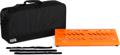
We recommend boards with built-in cable management capabilities like routing channels for neat and tidy visuals with little elbow grease. Routing channels help you hide cables you don’t want to see below the surface of the pedalboard without sacrificing connectivity options. Manufacturers like Holeyboard, Temple Audio, Voodoo Lab, MONO, and Gator all offer pedalboards to streamline your effects setup in mere minutes.
Don’t mind doing a bit of organizational work yourself? There are tons of options to choose from. If you’re looking for an ultra-compact solution, Vertex Effects’ two-level pedalboards provide plenty of space in a tiny footprint. It’s hard to go wrong with a Pedaltrain board, either; they’ve been a mainstay in the industry for years. Additionally, D’Addario’s XPND design lives up to its name by changing its size as your pedal collection grows or shrinks.
Invest in Accessories
No pedalboard build is complete without accessories! Adding the right accessories to your setup will elevate your board’s usefulness and tone at the same time. Here’s what we recommend.
Buffer
A buffer is essential if you’re running long cable lengths — like on a pedalboard. Adding one to the input and output of your board will help you preserve your tone.
Noise gate
Your pedalboard will likely generate noise when you’re not playing. While that’s not an uncommon occurrence, it’s certainly annoying. Cut out the noise with a noise gate.
Pedal power supply
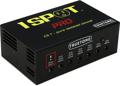
Daisy-chaining power from a single outlet to multiple pedals is a recipe for noise-related disaster and feeding suboptimal power to your effects. Invest in a dedicated pedalboard power supply with isolated outlets to keep everything running at its noise-free best. You’ll be able to feed strong power to every pedal, eliminate extra cords, and cut noise in one move.
It’s Never Too Late for a Spring Clean
Whether you’re assembling a pedalboard for guitar, bass, keyboard, or synthesizer, a tidy pedalboard is a happy pedalboard. While how you choose to clean up your pedalboard’s layout or cable configuration is up to you, we’re sure that you’ll be satisfied with the results. Not sure where to start? Contact your Sweetwater Sales Engineer at (800) 222-4700. They’re happy to help you start building the pedalboard of your dreams.