Stacking overdrive devices is nothing new. Back in the day, when amps had no gain control and you had to crank them to 11 just to get an AC/DC-like crunch, players such as Tony Iommi, Ritchie Blackmore, Brian May, and the late, great Jimi Hendrix were using pedals to build upon the relatively low-gain crunch of their amps. Hendrix used a Fuzz Face; Blackmore used an old tape machine; and Iommi and May used treble boosters to bolster their overdrive.
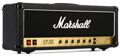
Then, fast-forward to amps with gain controls — the “Master Volume era” — and the same thing was still going on despite the increased amount of gain the amp was capable of. From Zakk Wylde pushing his Marshall JCM800 over the edge with his signature Dunlop overdrive to the likes of Killswitch Engage and Trivium using a Tube Screamer to drive the front end of high-gain amps such as the EVH 5150 or a Mesa/Boogie Dual Rectifier to new levels of gain — the dirt-stacking trend continued. The reason this practice is still done, even with amps fully capable of producing incredible amounts of gain by themselves, is because the stompbox of choice — be it boost, overdrive, or distortion — changes both the character and shape of the resulting tone.
While pushing the preamp of high-gain amp with a boost, overdrive, or distortion pedal has been commonplace for decades, a relatively new phenomenon is to stack said pedals to create desirable dirty tones while driving a clean or pushed-clean* “pedal platform” amp. Masters of this craft include the likes of Paul Gilbert and Andy Wood.
*Note: “Pushed-clean” is a common term for an amp on the edge of breakup, so effectively it’s “pushed” a hair beyond being completely clean.
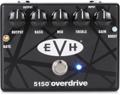
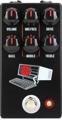
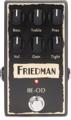
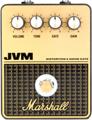
In my opinion, the reason for this has a lot to do with the sheer quality and quantity of great high-gain amp-in-a-box pedals out there. For example, there are the JHS Hard Drive, MXR EVH 5150, Wampler Dracarys, Catalinbread Sabbra Cadabra, Friedman BE-OD, Marshall JVM, Soldano SLO pedal, and the Diezel VH4 pedal, to name but eight!
The reason for using two or more dirt-delivering pedals at the same time? It’s exactly the same as the rationale behind using a stompbox to drive a high-gain amp — to quote the famous Greek philosopher Aristotle: “The whole is greater than the sum of its parts.” One pedal compliments the other and, in so doing, creates the desired overdriven sound you’re looking for. Just like front-ending an actual high-gain amp with an overdrive or boost pedal, the trick is often to back down the gain on the amp (or amp pedal) and then tweak the pedal driving it. The results, as proven on countless albums and stages all over the world, can be quite stunning!
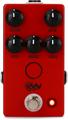
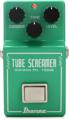
For example, let’s say I’m using a JHS Angry Charlie pedal to create a JCM800-like tone and I’d like to tighten up my sound. So, I’d put either a BOSS SD-1 or an Ibanez Tube Screamer in front of it with the gain and the volume turned down to roll off the low end while boosting the mids — just like I would with a Marshall 2203! In this case, the Angry Charlie is the foundation of my dirty tone while the SD-1 or TS9 is my shaper, if you will.
Due to all the amazing pedals out there, the possibilities are endless, and — despite what some may try to tell you on “the Googles” (credit: Henry Rollins) — there is no right or wrong. So, if you want to try three together, then go for it! For example, I could use a Wylde OD into a Marshall JCM800 pedal for my rhythm and then place a TC Electronic Spark boost pedal after for a louder lead sound. Don’t be afraid to experiment with the order either! Let your ears decide, not your eyes. Just because someone said or wrote, “pedal A in front of pedal B is the only way to go,” doesn’t mean it’ll be true for you. So, forget ’em! For instance, I really like the sound of my SD-1 into my Diezel VH4-2, but you might prefer them reversed. Try all options — nothing ventured, nothing gained!
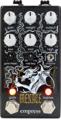
One irrefutable truth, though: If your last dirt box in line is a high-gain unit and the gain is cranked, then putting another pedal in front of it will help shape its sound but will not make it any louder because your signal is already flatlined — there’s no more headroom. Nada. That said, if you put a boost pedal after your fire-breather, then you can both shape and boost your signal. For example, if my amp is clean or pushed-clean and I’m perfectly happy with my Empress Effects Heavy Menace for my rhythm sound but want to make it louder and add a little more dirt for leads, then I can place a BOSS Blues Driver after it.
Many articles and videos have been made on this subject, and some of them hold wisdom worth remembering — including Don Carr’s fine article about stacking distortion pedals.
That said, please don’t forget this tonal truth: “Rules? There are no stinking rules! Sometimes they’re made to be broken.” As always, let your ears and fingers decide what’s right for you, not what someone else thinks or says, even if he or she happens to be one of your guitar heroes! As the saying goes, one man’s meat is another man’s poison.

To close, stacking dirt boxes is so popular that there are a bunch of two-in-one pedals out there, too, but those are for another article. Ditto the use of two of the most underrated stompboxes out there to fine-tune your distorted tone: graphic EQ and parametric EQ. Stay tuned for articles on both topics and, until then, have fun stacking your dirt pedals and experimenting with them!
If you want to talk techniques or the optimal gear to dial in the stacked sound you seek, then call your personal Sweetwater Sales Engineer today at (800) 222-4700. They’re happy to give personalized, expert recommendations to set you up for total tonal success!