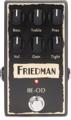
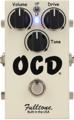
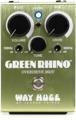
Have you ever used more than one distortion pedal at a time? If so, you’ve officially stacked — it’s that easy. Depending on your pedals and settings, your experiments may have met with mixed results, but the basic idea is solid; use one gain pedal to boost or color the sound of another. While the concept is simple, the details make all the difference.
Stacking overdrive/gain/boost/distortion/fuzz pedals can accomplish a variety of goals. One option is to set them up to be multiple gain stages. A common scenario is a clean amp with a light gain pedal followed by a heavier gain pedal. When dialed in correctly, this can be four distinct sounds: clean, dirty, heavy, or saturated.
Fuzz pedals add a different color palette to your overall sound but function in pretty much the same way as any other drive pedal. For example, if your fuzz pedal sounds best to you with the gain set high, treat it like a heavier-gain pedal. If it sounds better at a lower-gain setting, treat it like a lower-gain pedal.
You can also use drive pedal stacks to change the overall character of your existing rig. To give yourself a different set of sounds, start with a pedal that has the tonal characteristics of a specific amp, ideally one that is different from your amp. Then stack that pedal with another gain flavor, and you have two distinct amp tones that can both be overdriven.
Starting with a clean amp sound will offer more variety and flexibility if you’re stacking gain pedals; the differences will be more audible. However, the concept can work with a dirty amp too. Obviously, the less distorted your amp setting, the more you can influence the sound with drive pedals.
Tips for Stacking Pedals
Here are 5 tips to understand as you begin to stack pedals:
- The last pedal in the stack has the biggest influence on the overall tone.
- A clean boost can be used as gain boost in front of an overdrive pedal or a volume boost if placed after.
- Some pedals are great at specific jobs. Transparent drives are great for adding gain or boost to a sound you don’t want to alter, like a second channel or gain stage. TS-style drives boost mids, taper highs and lows, and add some compression and a bit of clean, undistorted signal to the mix. These are great for making a lead stand out or tightening up a chunky rhythm sound.
- All drive pedals have an inherent sound and EQ curve. Knowing what that curve is will help you know how and where to stack a pedal. To figure out what your pedal sounds like, try these steps:
- Start with the EQ controls set to flat (typically 12:00).
- Set the Gain control at 9:00 or 10:00, lower if the pedal still responds properly.
- Match the volume control so the level is the same when the pedal is engaged/disengaged.
- Play a chord with the pedal off. Turn the pedal on and play the same chord. Listen to the EQ differences in the two sounds. Are there more or less mids? Does the low end shift noticeably? Are the highs the same?
- Bring up the gain incrementally and toggle between on and off. Does the character of the pedal change? Is it a good thing?
- Do the same with the Volume control while adjusting the Gain to different settings. Some pedals sound better turned up or driving your amp harder.
- Finding the optimum gain staging between pedals is important. Too much gain or level can cause excessive hiss or hum, handling noise, weird EQ, and compression, and it can actually make your sounds seem smaller. Of course, there are times when total cacophony may be exactly what you’re looking for.
Trust your ears. As Duke Ellington said, “If it sounds good, it IS good.” There is no right or wrong, only what you prefer.
Drive Categories
Here is a short list to provide a starting point for stacking drive pedals. While painfully incomplete, hopefully it will give you some info for practical application and serve as a jumping-off point.
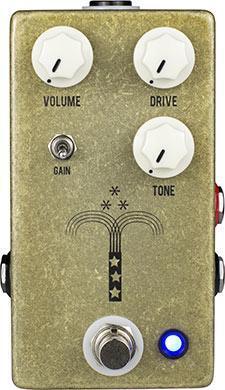
Transparent Drives
With even EQ spectrum, based on Bluesbreaker, etc.
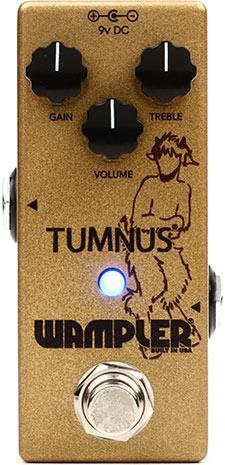
K-type
Based on the Klon Centaur, somewhere between Transparent and TS-style.
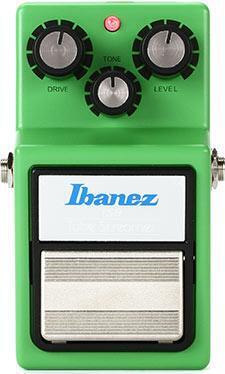
TS-style Drives
Based on Tubescreamer, OD-1, etc.
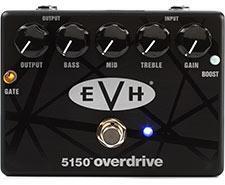
Amp-in-a-box Drives
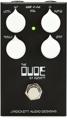
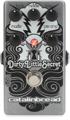
Designed to replicate the characteristics of a specific amp.
Rockett Audio Designs The Dude
Catalinbread Dirty Little Secret
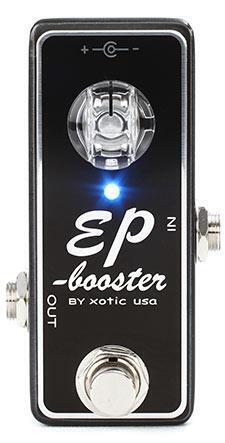
Clean Boost
Xotic EP Booster (adds color)
TC Electronic Spark Booster (has Gain option)
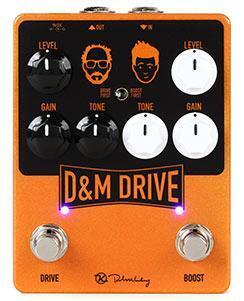
Dual Drives
Two different drive flavors in one enclosure.
EarthQuaker Devices Hoof Reaper
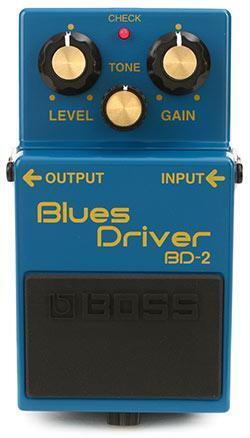
Unique Drives
Stack amazingly well but don’t neatly fit any of the previous categories.
I hope this primer on stacking distortion pedals helps you find more sounds that inspire you to create more music. If you have any questions about drive stacking or pedals, give your Sweetwater Sales Engineer a call at (800) 222-4700.