Whether you kneel at his altar or are already tired of seeing him on guitar magazine covers, there is no denying that Stevie Ray Vaughan is a true guitar legend. His ability to go from tear-jerkingly subdued to absolute savagery on a dime — and that’s just when he’s playing clean — along with having a Southern swagger all his own helped him rocket the blues back into the public’s consciousness when the sounds of Bananarama and A-Ha were all the rage. The difference between him and the aforementioned ’80s institutions is that no part of SRV’s magic has faded. And a whole lot of the reason for that is thanks to the man’s unequalled tone.
While we’re not brave enough to wade into the waters of the actual gear he used (or allegedly used), we did want to walk you through some of the gear techniques and general tonal qualities he preferred to help you get a handle on what made his sound so massive.
But before we do, remember that you will never sound like Stevie Ray Vaughan. Bummer, we know. But the good news is that these pointers may just help you to sound like the ultimate version of you!
The Guitar
If there is one piece of gear you need to at least approximate his Texas-bred tone, it’s a Fender Stratocaster or a solidbody electric guitar in the same vein. The bell-like chime and tubular response that come from those three single-coil pickups and 5-position switch are as close to required hardware as you’re going to find.
Oh, and if you’re up for the challenge, string that guitar up with 12- or 13-gauge strings. Even tuned down a half step, you’re going to have to work to get close to his thing.
Fender Stevie Ray Vaughan Stratocaster – 3-tone Sunburst
PRS John Mayer Silver Sky – Tungsten
Schecter USA Traditional – Candy Red with Maple Fingerboard and VS-1 Pickups
Fodera Emperor Standard Guitar – Vintage Sunburst
The Pedals
Following his signal down the cable, you’ll inevitably run into one or two Ibanez Tube Screamers. But really, any soft-clipped and mid-humped lower-gain overdrive pedal will do. The technique comes into play when you realize he often ran the gain very low and punched the snot out of his amps — or additional overdrive pedal — by cranking the pedal’s output.
Give his version of “Little Wing” a listen. I promise you, you’ll know the exact second he stomps those little green boxes.
And don’t forget to keep a vintage-voiced wah pedal close by to capture a bit of “Voodoo Child” magic.
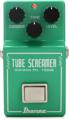
Ibanez TS808 Original Tube Screamer Overdrive Pedal
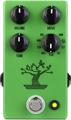
JHS Bonsai 9-way Screamer Overdrive Pedal
Walrus Audio Warhorn Mid-range Overdrive Pedal
Wampler Clarksdale V2 Delta Overdrive Pedal
The Amps
Now on to one of the most hotly debated subjects when it comes to SRV’s gear — his legendary wall of amplifiers. Fenders and Marshalls and Dumbles, oh my! There’s plenty of debate around the Internet about which models he preferred and why. But one thing that is not debatable is that he liked to play them all extremely loud!
It’s normal to associate cranked tube amps with driven tones and tons of distorted sustain. But that wasn’t Stevie’s bag. From his Steel String Singer to his Marshall Majors, he leaned on high-headroom amps that could shake the walls while keeping their tones clean and clear.
If you haven’t had the opportunity to get a great, loud clean from an amp head and 4 x 12″ cabinet, you’re missing out. Check out the many options we have here at Sweetwater, and you’ll understand why Stevie often chose that way of doing things.
Morgan Amps SW50R 50-watt Tube Head with Reverb – Twilight
Friedman Buxom Betty 50-watt Tube Head
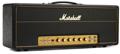
Marshall 1959HW 100-watt Handwired Tube Head
Supro Statesman 2-channel 50-watt Tube Head
Now Go Blast Your Own Path
We could get into tubes, speakers, which Tube Screamer he preferred, his left-handed tremolo, and his favorite toothpaste. But the truth is that none of it will make you an SRV clone. These are just helpful hints to get you closer to the ballpark that he played in. Just remember, what made Stevie so special was that he was Stevie Ray Vaughan no matter what he did.
Take a listen to “Let’s Dance” by Bowie; it’s unmistakingly SRV.
So go ahead and get a Strat with heavy strings and slam your high-headroom stack with a couple of Tube Screamers, then take that sound and make it your own.
Mitch Gallagher discusses how to achieve the Stevie Ray Vaughan tone.