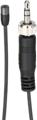
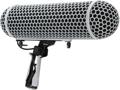
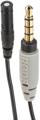
Gathering audio on location can pose unique challenges, regardless of whether you’re conducting an off-camera interview, shooting a live video spot, or recording sound for a movie. Naturally, you’re going to want to get the best sound you can, and both lavalier microphones and shotgun mics are the quintessential favorites for video and location recording. Each have pros and cons, so let’s explore when it is best to use one over the other.
Lavaliers
Lavalier microphones were born for the wide-angle lens and talent who like to move around a lot. These button-sized microphones are often called lapel mics, but before you go pinning one on, there are a few things you’ll want to know about them. First off, lavs typically come in omnidirectional and cardioid configurations, and these are great for different applications.
Cardioid Lavs
Cardioid lavs like the Shure WL185 or DPA 4080-BM block out off-axis background noise and are ideal for isolating actors when they’re close together, but you need to aim the mic at the actor’s mouth.
Omni Lavs
Omni lavs like the RODE smartLav+ or Sennheiser MKE 2 Gold provide a more natural sound and allow you to more freely position the mic, but they pick up a lot of ambient background noise and other actors.
Regardless of which you choose, the lavalier microphones’ diminutive size allows for positioning within scenes (in flower arrangements or behind set pieces), but they also provide a few hurdles you’ll need to avoid. First, since they’re usually mounted on clothing, you run the risk of turning a garment into a giant noise source, and when clothing rubs against the diaphragm of a lav, the sound is an awful scraping noise. Even with omni lavs, which are more forgiving than the cardioid variety, if the mic is placed too far from the center of the chest, and the speaker’s head moves too much, you’ll get some weird frequency artifacts. Finally, lavs are small but still visible. If you’re filming in close, they might not be the right choice.
Pro Tip: Headworn mics can also be super useful for these applications. Many these days are made in “nude” or skin-toned colors and are practically invisible under the right circumstances, and they get the mic far closer to the wearer’s mouth than a lav will. You can even use clever camera angles to completely hide them, even for close-ups.
Shotgun Mics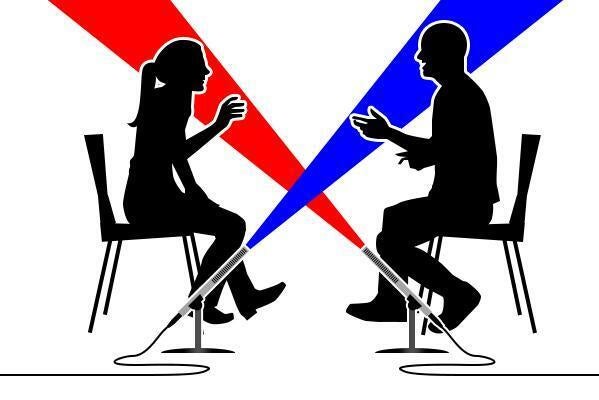
For close-ups and medium-angle shots, you’ll find you’re better served with a good shotgun mic like either the Audio-Technica AT8035 or Sennheiser MKH 8060. Boom-mounted shotgun mics let you pick up a focused area, with very little off-axis noise, and their tight polar pattern provides better performances at longer distances than typical condenser microphones. That said, you don’t want to back them away more than necessary, and you’re almost always better served by putting separate shotgun mics on each actor.
Shotgun microphones are also the kind of mic you want to use shooting outdoors with any kind of wind. A shotgun mic windscreen, known commonly as a dead cat (because of its furry covering), dead wombat, windsock, zeppelin, or blimp, will make microphones usable in outdoor settings where wind is an issue.
 Shotgun mics do present their own unique set of challenges, though. First, you may need a bit of additional equipment to make the best use of them. While it’s possible to stand-mound a shotgun mic for speakers who aren’t going to move, if you’re shooting any degree of action (even just someone walking around a bit) you’ll need a boompole and a special shockmount. Take it outdoors, and you can add a blimp with a dead cat to the list. But that’s only half of it — you’ll also need a crew who knows how to keep boom-mounted shotgun mics trained on the talent and out of the shot, which is harder than you might think.
Pro Tip: For face-to-face interviews, you can aim a couple of shotgun mics placed between the speakers up at their mouths (and off camera). They won’t pick up the voice talent they’re not aimed at, and the sound will probably be way better than what you’ll get from a lav.