Pulsar Audio may not be a familiar name yet; but, given the ultra-high quality of their plug-ins, that stands to change — they’re really propelling analog-modeled digital processing forward. One of the co-founders of Pulsar, Vincent Travaglini, agreed to sit down with Sweetwater, to tell us about the company, and to delve into the inner workings of their growing stable of top-shelf plug-ins.
A Common Vision
Co-founded by Niccolo Comin, François Reme, and Vincent Travaglini, Pulsar Audio is nestled in the city of Grenoble, a bustling French city that sits where the Drac River merges into the Isère River at the foot of the French Alps. All three co-founders had extensive experience in digital signal processing prior to creating Pulsar.
“All three of us worked for various audio plug-in and hardware companies before setting up Pulsar,” recalls Vincent. “That’s where we met!”
Even though they all had solid careers working with industry leaders like Arturia, Eiosis, and Slate Digital, the group felt compelled to create their own company.
“We started our own company because we had a common vision regarding overall plug-in quality,” explains Vincent. “We couldn’t achieve this when we worked for other publishers,” Vincent continues. “With Pulsar, we aim to be at the top of the market in terms of sound quality, features, ergonomics, and GUI quality.”
The Next Best Thing to Hardware
Even though the company is relatively young, Pulsar Audio plug-ins are at the top of the industry as far as quality goes — they’ve really nailed the analog-emulation process. Not only do their plug-ins sound like hardware, but they also behave like hardware. This is largely due to what the company calls Topology Preservation Technology. So, what is Topology Preservation Technology?
“It is common to see emulation plug-ins based on complex mathematical models but not taking into account the exact structure of the hardware,” explains Vincent. “The result is often an inaccurate behavior in certain use cases, such as with very high input levels, or with extremely short attack and release times for a compressor, and so on.”
According to Vincent, Topology Preservation Technology allows Pulsar to emulate hardware perfectly by preserving its processing structure. This enables the company’s plug-ins to replicate the hardware’s behavior — even in the extreme cases described above. Cranking a knob on a Pulsar plug-in creates an eerily similar result to cranking a knob on a comparable piece of hardware. Topology Preservation Technology also minimizes the unwanted artifacts inherent in digital audio, such as aliasing, inconsistency between processing for different sampling frequencies, and more.
More Than Mere Emulations
One of the highlights of Pulsar Audio plug-ins is that they are able to do things the original hardware can’t. Whether it’s a full-featured sidechain EQ section, modern metering and waveform displays, selectable saturation or transformer options, mid-side operation, or lookahead limiting, Pulsar plug-ins take full advantage of everything digital processing has to offer.
“Digital allows us the flexibility of routing and processing that analog did not allow,” says Vincent. “So, we add to our emulations the features that we would have loved to see in these machines to further extend their sound palette or to allow them greater ease and flexibility of use.”
A Saucerful of Secrets
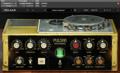
Most plug-in companies play it safe and release a cache of common, time-tested studio compressors when they first burst out of the gate. But Pulsar Audio chose a different route, opting to introduce themselves to the world with an emulation of the venerable Binson Echorec.
“For our first plug-in, we wanted something fun, creative, and very colorful, mainly for musicians,” recalls Vincent. “Being fans of Pink Floyd, we quickly thought of the Echorec, which we had already seen in a couple of recording studios.”
Pulsar really went all out with their Echorec plug-in. You can even place your “finger” on it to modulate the virtual unit’s delay for psychedelic-tinged repeats or uber-rich chorus effects.
A Smashing Good Time
The first question that’s usually asked when introduced to an analog-modeled 1176 plug-in is “Does it have an ‘all-buttons-in’ mode?” Pulsar really took this concept to heart when they designed their Smasher plug-in, which concentrates solely on the legendary “British Mode” of the 1176. So, why not model every function of the unit?
“We loved the unique grit of the Urei 1176 in British mode on basses, drum buses, or rooms,” explains Vincent. “When we started the development, we didn’t find this very organic grit in the existing emulation plug-ins, and we liked the principle of having very colorful plug-ins with only one precise function.”
Vincent likens the Smasher to any piece of hardware in your studio: “Either it works on your source or not,” he exclaims. “So, you try another plug-in like the analog studio workflow in the good old days!”
Studio engineers clearly dug this concept, as the Smasher’s popularity led to the development of the Pulsar 1178, an FET-style compressor based on the 1176’s lesser-known sibling. So, why not emulate the more popular compressor?
“The 1178 sounds very close to an 1176, just a little bit cleaner — its dynamic behavior is the same,” states Vincent. “What motivated us to make an 1178 more than an 1176 is the slightly different side, the ‘step aside’ from what already existed.”
Vincent expresses a great affection for using the 1178 as a mastering compressor. “It was frequently used this way in the ’80s and ’90s,” he notes. “It was one of the first stereo compressors produced in series, but it was a bit ‘forgotten’ afterwards — we wanted to remind users of this excellent and very versatile piece of hardware.”
A Potent in-the-box Mastering Chain
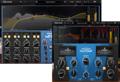
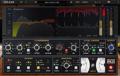
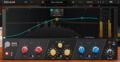
Many top-tier mastering houses use a variable-bias compressor and an all-passive equalizer in their mastering chain — it’s a tried-and-true staple. And now, thanks to Pulsar Audio’s Mu and Massive, you can harness this hit-making sound in your DAW.
According to Vincent, Pulsar’s team put a lot of blood, sweat, and tears into Mu’s design. “For the Mu, we based ourselves on a classic, unmodified Manley Vari-Mu, which itself is largely inspired by the Fairchild 670,” he recalls. “We worked a lot on the model, especially on its behavior in use with very important input levels, to be sure not to miss any detail and to be able to satisfy all the most demanding users of the machine, even those who are looking for a little ‘extreme’ colorations.”
The company put just as much attention to detail in Massive, which compares very favorably to a real-world all-passive EQ. “Due to the tolerance of the electronic components of the passive filtering network, all machines sound quite different,” Vincent notes. “From one machine to another, and even from one channel to another, the effective frequencies, gains, and bandwidth of the filters can vary a lot,” he continues. “So, we decided to emulate only one machine, an old Massive Passive in excellent condition.”
Vincent believes that Pulsar’s Massive and Mu combo makes a must-have complement to existing in-the-box mastering tools. “There are a number of excellent ‘digital sounding’ plug-ins for professional mastering, like Ozone, FabFilter, Waves, and so on,” he explains. “We wanted to offer a consistent ‘colorful’ alternative to existing EQs and compressors for in-the-box mastering.”
The Future of Pulsar Audio
The hardworking folks at Pulsar Audio aren’t content resting on their laurels. “We have a lot of ideas for the future, but I can’t talk too much about them,” advises Vincent. “We will, of course, continue making emulations, but we are also working on more creative tools for musicians.”
Interested in Pulsar Audio plug-ins? Give your Sweetwater Sales Engineer a call at (800) 222-4700 and turbocharge your computer-based workflow with serious, analog-fueled muscle!