What Is a Magic Bullet?
First, let me define what I consider a “magic bullet.” It’s something that makes things better. It’s a piece of gear that sparks an “Aha!” moment — something that immediately, when you plug it in, makes everything you do better. I’ve been very fortunate to experience this many times in my career, and I realized that many engineers and musicians have had similar experiences. For this article, I sat down with Nick Bowcott, Sweetwater’s guitar content specialist and founding guitarist for the band Grim Reaper. Nick has been playing guitar for a few years and has lots of “magic bullet” stories to share about pickups, pedals, and picks.
Fuston: Nick, what gear would you consider a “magic bullet”? Something you’ve discovered that opened your eyes or changed your perspective on tone or on playing?
Pickups
Bowcott: “It’s often been said that the easiest, cheapest, and most effective way to change the tonal personality of a guitar is to change the pickup (or pickups) — and, in my humble opinion, that’s 110% true. You can wax lyrical about things like the types of wood used in the body and neck for hours, but the pickups are a huge part of the sound. As their name suggests, their job is to literally ‘pick up’ the vibrations of the strings and convert them into electricity. So, if you go from a PAF to a Super Distortion, you’re going to change the way the guitar behaves with the amplifier itself because you’re hitting your amp with a different level of signal and a different EQ curve, too.”

“Discovering that was a big ‘Aha’ moment for me. When I was growing up, Eddie Van Halen was a huge influence, and he was playing homemade guitars using pickups he rewound and potted himself. As a result, I thought, ‘Maybe I don’t have to save up for an expensive, top-shelf guitar to get the sound I want.’ Plus, being a lefty in England in the later ’70s/early ’80s meant that left-handed axes were rarer than rocking horse droppings at that time! So, I decided to go the ‘let’s change the pickups’ route.”
“Since I was a broke, young student in the UK, unfortunately I couldn’t afford a DiMarzio Super Distortion. So, I bought the cheapest, highest-output humbucker I could find and threw it in the bridge position of a no-name Strat copy I had at the time — with the help of a chisel! The result was a huge sonic change, and everybody that heard it was like, ‘What did you do? Is that a new guitar?!'”
“I learned a lot that way: by swapping out gear, watching other players, and listening. A valuable lesson I learned along the way is that we’re often guilty of listening with our eyes, not our ears. When I had the honor of working at Marshall Amplification, somebody told me to compare amps with my back turned so I wouldn’t know which one I was plugged into. ‘Pick the one that sounds best to you, not the one you think will sound the best.'”
“At Marshall, when we were comparing amps, we’d put them behind a screen and listen without being able to see what we were hearing. There was a six-way switch, and all you knew is which switch you selected. For example, it might be three or four heads all going through the same speaker cab. You had to use the footswitch and pick which one you liked the sound and feel of the best. But in reality, the switch might not be doing anything at all — that button might be selecting the exact same amp you’ve just listened to — you never knew. Plus, there was a deliberate, slight gap in the sound every time you hit a different switch to reinforce the ‘you’re switching’ illusion! People would invariably ask, ‘Which one am I hearing?’ And we’d never tell them. We’d just ask them to pick the one they liked the best.”
“As a result, I learned to listen with my ears, not my eyes. What a concept!”
Were pickups a one-time eye-opener?
“No, it still impacts me to this day. What’s great now is that companies like DiMarzio and Seymour Duncan have specs on their sites that not only show a pickup’s output but also its EQ curve. For example, the Seymour Duncan JB has an EQ curve that pushes the front end of a tube Marshall amp like a JCM800 really nicely. Funnily enough, a lot of people assume that ‘JB’ stands for ‘Jeff Beck’ because that amazing man used those for many years, but it’s actually an acronym for ‘Jazz Blues.'”
Pedals
“It was the same with pedals. I’d often be biased toward a pedal because one of my heroes, like say Gary Moore, used it. In reality, though, the approach to a new pedal should be ‘Does it work for me?’ Honestly, I don’t deserve to be mentioned in the same sentence as Gary Moore, but, more importantly, what worked for him may not work for me.”
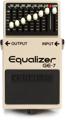
“It was the same thing when I started using a graphic EQ pedal. I learned that actually pulling the lows down made the guitar sound tighter. That was a huge thing for me. I originally did that with the old BOSS GE-7.”

“I discovered the trick of using a graphic EQ pedal to boost the mids of my guitar sound from Kerry King of Slayer. Slayer is one of the most vicious bands that’s ever walked this planet, and Kerry played a Marshall JCM800 with a BOSS half-rack RGE-10 10-band graphic equalizer in front of it. He used the graphic EQ to boost the mids, which is the exact opposite of what most guitarists playing thrash metal at the time were doing. He was doing this [draws a frown with his finger], and everyone else was doing that [draws a smiley face]. As Kerry so aptly put it when I asked him about his EQ curve: ‘You can’t have anything that resembles a smile in Slayer!'”
“When you think about it, Mr. King’s approach makes a lot of sense! After all, the guitar is essentially a midrange instrument, so boosting the mids is probably a good thing. And that’s essentially what iconic pedals such as the Ibanez Tube Screamer and BOSS Super Overdrive do: They boost the mids while rolling off the lows and some highs, too. Mids are good!”
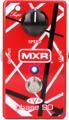
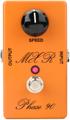
“Another ‘Aha’ moment was when I learned that Eddie Van Halen often used an MXR Script Phase 90 with the Speed control set between 9 and 10 o’clock to help his solos cut through the mix. He found that pulling it back [to that setting] and stepping on it for solos would lift the guitar in the mix. It made it broader and made it cut more. It’s a subtle but effective trick that I’ve been using for many years now, thanks to the genius of the late, great EVH.”
Was it a level bump, or is it EQ, a presence, or just texture?
“It just makes your lead tone sit better in the mix. It effectively elevates it. It could be all of the above, but whatever. It’s simple to do, it sounds cool, and it works. Try it if you don’t believe me. If you’re playing rhythm and you step on a Phase 90 set like that for a lead fill, you hear it. It’s a really slow sweep that’s not really that obvious. It adds texture. It just ‘thickens the soup,’ as Zakk Wylde likes to say. You use whatever ingredients make the sound yours.”
Picks
Any other discoveries you’d care to share?

“Yeah, picks. Years ago, my old pal Scott Uchida, who worked for Dunlop, reached out to me and said, ‘Hey, have you tried the new James Hetfield Black Fang picks? If not, trust me, you should.’ He told me that they’d worked really closely with James and had come up with a design that would have a ‘tiny but noticeable positive effect on your picking speed.’ My BS meter went off immediately! But then I tried the ones he sent me. I discovered that he was 110% correct, and I’ve been using them ever since! In fact, since then, James has further refined it, and the Black Fang has evolved into his signature Dunlop White Fang, and that’s my current pick of choice.”
“Everyone thinks a pick is just a triangular-shaped piece of plastic, but they’re wrong. The pick is literally where the rubber meets the road when you’re playing guitar. Consequently, how thick or thin a pick you use is really important. Ditto the shape. Paul Gilbert uses really skinny picks; Kirk Hammett (Metallica) uses small Jazz IIIs; Kerry King uses huge, triangular ones; and John Petrucci uses picks that are so thick and sharp, they’re like weapons!
Anything Else?
After all these years of playing, do you feel like you’ve discovered everything now?
“Not even close! Whenever someone tells me about something new and cool, I’m always eager to try it. And by being open-minded, listening with my ears and not my eyes, I’m always learning new things and adding to my tonal arsenal.”
Sweetwater Has Gear That’ll Change Your Life
The folks at Sweetwater are players. And producers. And beat makers, DJs, engineers, keyboardists, and drummers. Like Nick, they’re a passionate bunch, and they’re always searching for new tricks and tools to optimize their playing. We’ve got a warehouse full of great gear, guitars, and pickups that you need to hear. If you’re ready to discover something new that will push you to the next level, then call your Sweetwater Sales Engineer to find out about the next thing you need to discover. Call us at (800) 222-4700.