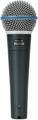
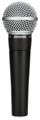
Understanding microphone polar patterns is easy, right? We’ve all seen the circular diagrams with beach balls (omni), hearts (cardioid), mushrooms (supercardioid) and a snowman (figure-8), but have you ever really explored the differences and listened to the on-axis versus off-axis sounds? Seems a little geeky, I know (well, maybe more than a little), but when I demonstrated this for my colleagues here at Sweetwater, the reactions were surprising. So, I decided to share these demonstration sound clips with you. Here’s what we’ll discuss:
- Microphone Polar Patterns on Paper
- Polar Pattern Fundamentals
- What Do We Mean by Degrees?
- Defining Different Polar Patterns
- Take a Look
- Take a Listen
- Frequency Response and Polar Patterns
- Bonus Round: More Microphones
Microphone Polar Patterns on Paper
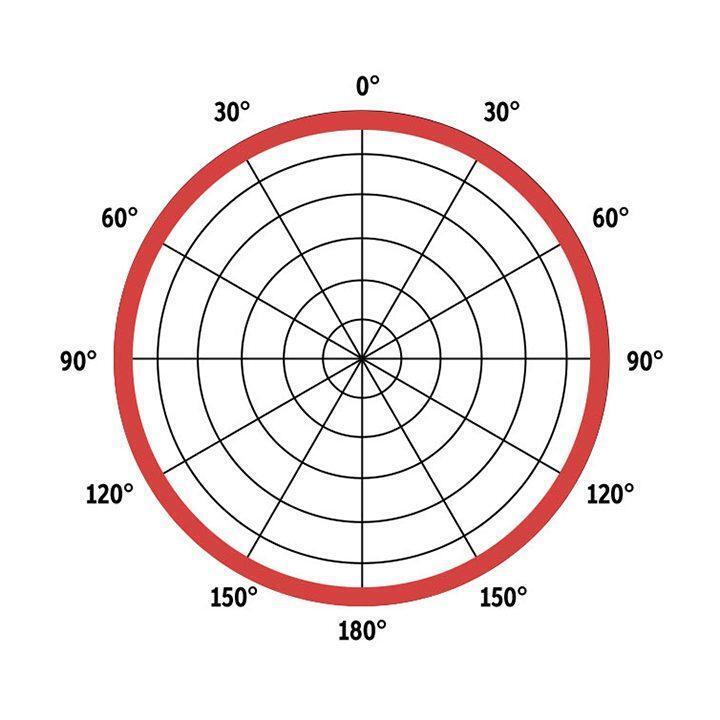
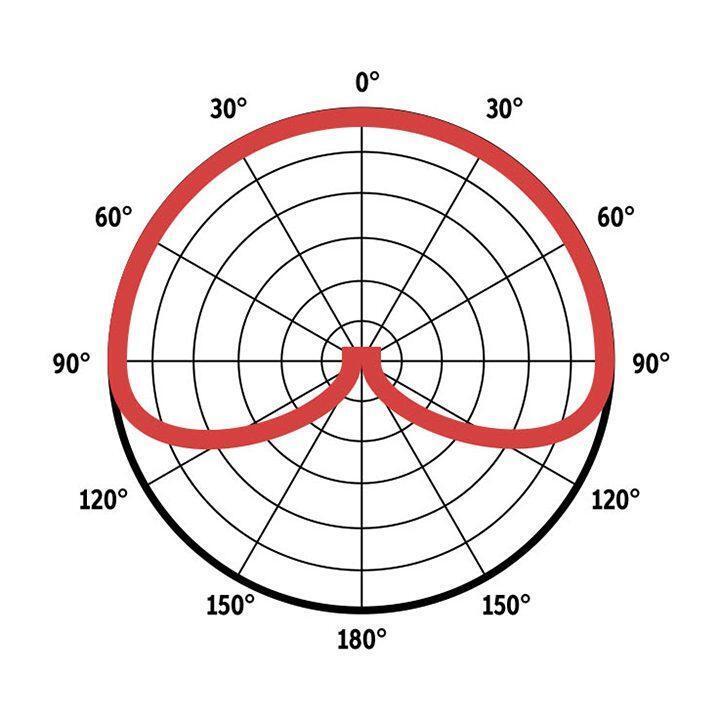
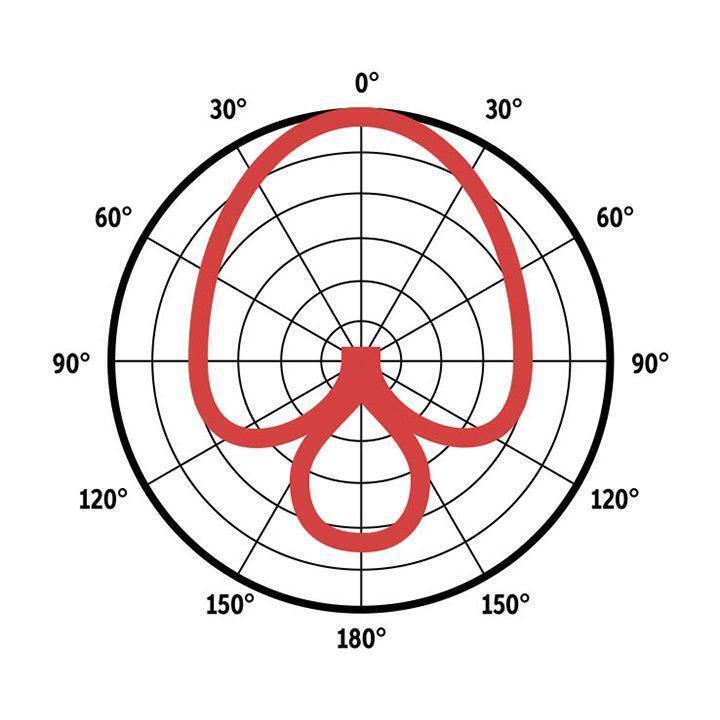
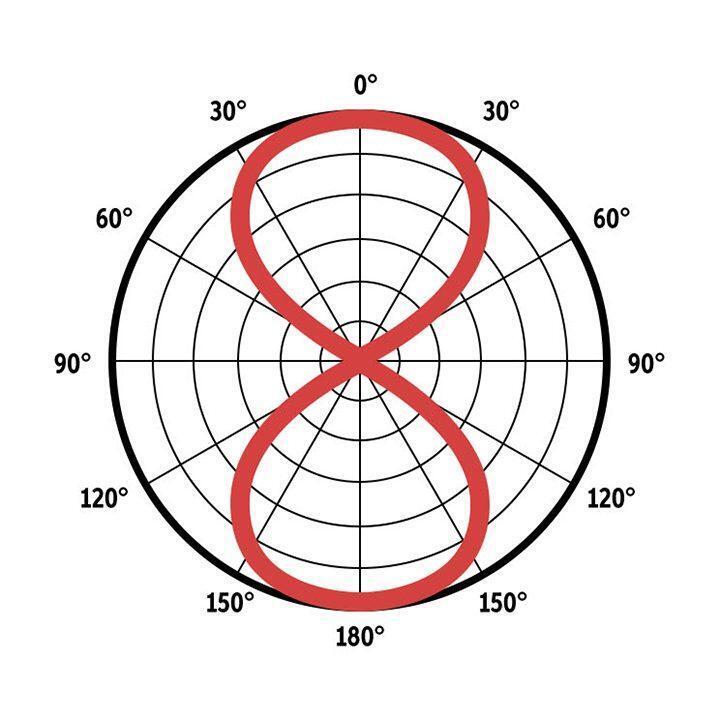
These are typical diagrams used to demonstrate polar patterns: omni, cardioid, supercardioid, and figure-8.
While the flat diagram on paper is accurate, it doesn’t really communicate how microphones behave in a 3-dimensional space. Take an omni microphone, for example. Its pickup pattern really does resemble a beach ball, and ideally it hears everything uniformly all the way around the mic, regardless of the plane (left-right, up-down). In the real world, though, that may not be the case, depending on the mic. That’s why we need to listen to truly understand microphone polar patterns. Let me start with a quick explanation of polar patterns.
Polar Pattern Fundamentals
There are several basic polar patterns, with their various sensitivities expressed in degrees.
What Do We Mean by Degrees?
The degrees we reference in this article mean the angle of incidence of the mic to the sound source. If you are standing in front of the microphone, then you are at 0˚, which is directly “on-axis.” If you move directly to the side of the mic, that is 90˚. Then if you move directly behind the mic, that is 180˚, as the image below shows.

Defining Different Microphone Polar Patterns
Omnidirectional Polar Pattern
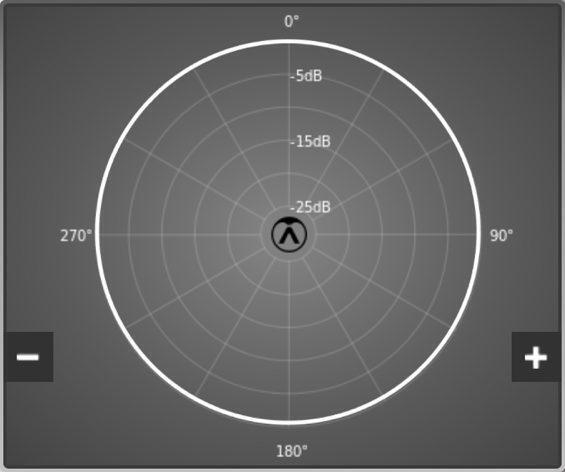
The omnidirectional polar pattern (called omni for short) is the easiest to understand. It picks up all sound uniformly around the mic, regardless of direction. The microphone in your phone is a common example of an omni mic. It works well when you’re doing a video chat — picking up everybody sitting around the phone, which is a good thing. But, as you’ve likely noticed, it also picks up everything around the phone, including things you’d rather not hear, like pets and ambient noises (planes, trains, and automobiles). It does not discriminate against any sound coming from anywhere.
The ideal omni microphone would pick up all frequencies equally around the mic. Note that I said “ideal.” In practice, that’s not always the case. Omni mics that you may recognize are the Earthworks TC30 small-diaphragm condenser and the Shure MX153T/O earset mics.
Figure-8 Polar Pattern
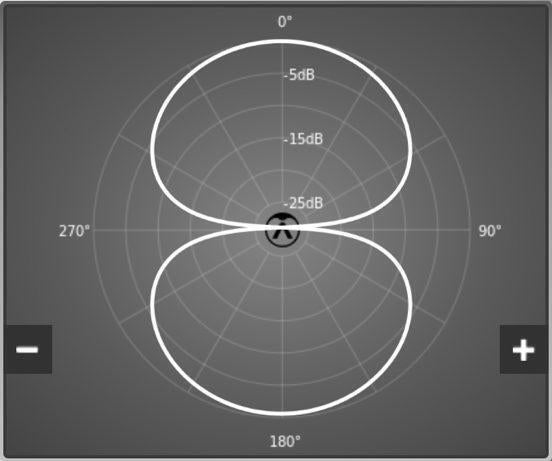
A figure-8 polar pattern (commonly associated with ribbon microphones) will pick up sounds uniformly only at the front and at the rear of the mic. Because it is a pressure-gradient mic, it responds to differences in air pressure between the front of the ribbon and the back of the ribbon. To demonstrate this, hold up a piece of paper flat in front of your mouth and blow. The pressure is greater on the side of the paper nearest your mouth and lower on the opposite side of the paper. What happens? The paper moves. Now rotate the sheet of paper by 90˚ so you are looking at the length of the paper. Now when you blow, the pressure on both sides of the paper is identical and the paper will not move. That’s exactly how the ribbon element responds in a ribbon microphone. So, when you are to the side of a ribbon microphone (either 90˚ or 270˚), and your voice is creating equal pressure on the front and the back of the ribbon, you are essentially invisible to the mic. That’s why there’s a null on the sides of a figure-8 mic. It doesn’t just decrease in level, it actually disappears. If you hear any sound from a ribbon mic when you are precisely 90˚ off-axis, then what you are hearing are reflections of the source bouncing into the front or back of the mic. The Royer R-121 or AEA N22 are common examples of figure-8 microphones.
Cardioid Polar Pattern
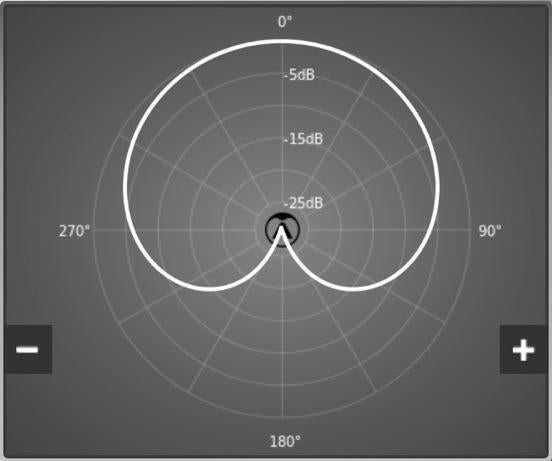
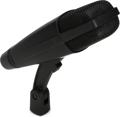
A cardioid polar pattern picks up sound across the front of the mic, but the sound diminishes as you get off to the sides. Probably the most popular style of microphone for live uses, it allows the mic to pick up what’s directly in front of it (the singer or instrument) and to reject what is beside or behind it, meaning it’s great at rejecting monitor speakers or adjacent instruments. The Shure SM57 and Sennheiser MD 421-II are typical cardioids.
Supercardioid Polar Pattern

A supercardioid polar pattern picks up sound similarly to a cardioid, but the pattern is even tighter. With the supercardioid, there are areas at the rear sides of the mic (typically at 120˚ off-axis) where the rejection is the greatest. The tradeoff is a rear lobe at 180˚ where the sound comes back up in level. See the polar pattern of the Shure Beta 58A below.
Hypercardioid Polar Pattern
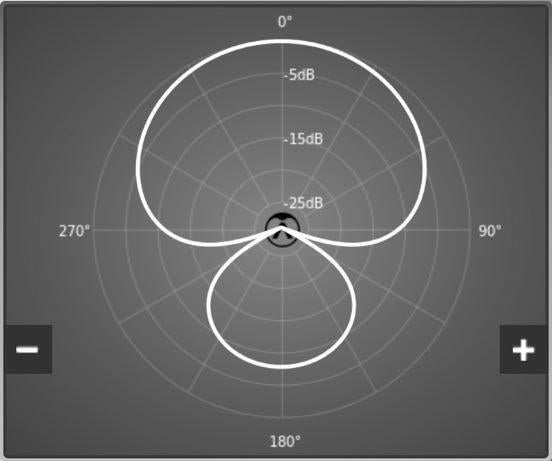
The hypercardioid polar pattern is narrower and even more focused than a supercardioid. There’s a larger pickup lobe to the rear of the mic.
Subcardioid Polar Pattern
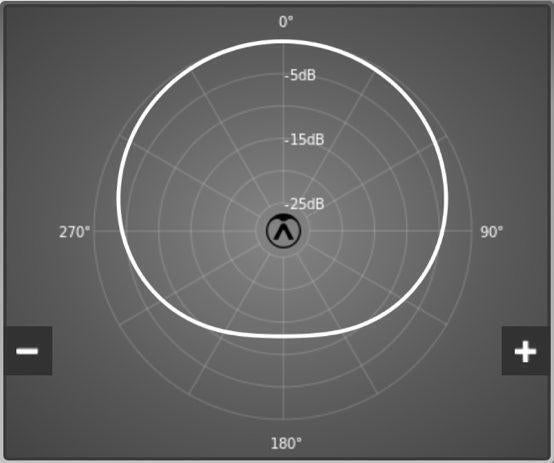
A subcardioid polar pattern is an omni with slightly reduced pickup from behind the mic for when you need global pickup but want to favor the front of the mic.
Shotgun (Lobar) Polar Pattern
A shotgun microphone with a lobar polar pattern is useful for highly directional pickup, such as voice pickup for film sets and noisy situations. Shotgun mics pick up primarily from the front of the mic and fall off drastically to the sides with some lobes to the side and the rear.
Multi-pattern Microphones
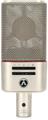
In a mic with dual diaphragms, such as the Austrian Audio OC818, the outputs of the diaphragms can be combined to allow the selection of a wide variety of polar patterns, covering omni, cardioid, supercardioid, figure-8, and multiple variations in between. While most dual-diaphragm mics have a switch that selects from a few patterns, the OC818, in conjunction with the Austrian Audio PolarPilot app (available for free in the App Store), allows incremental ranges between the standard patterns. Using the app, you can start in the omni pattern and then dial out as much of the back pickup as you wish (making it subcardioid). Or if you want to adjust the rear, off-axis, nulls, you can adjust them while listening to find the best pattern for your situation.
Take a Look
Before we listen to different mic polar patterns, here’s an interesting illustration of what to expect from each of these four patterns: omni, figure-8, supercardioid, and cardioid.
In omnidirectional, you can see that the level is the same as the sound source moves off-axis, from directly in front (0˚) to directly behind the mic (180˚). The sound dips in volume at each transition to visually differentiate the angles.
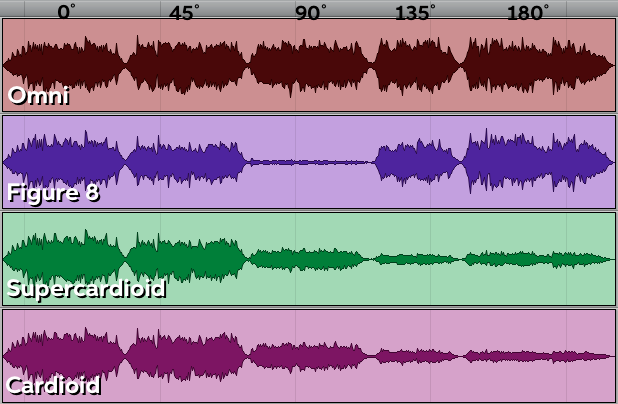
Tracks in Pro Tools showing the sound levels of four polar patterns at different angles.
In figure-8, the front and back of the mic (0˚ and 180˚) are exactly the same level (with the polarity reversed at 180˚) and the sound is down slightly at 45˚ and 135˚ off-axis. But there is a drastic difference at 90˚ — no sound pickup at all. The only reason that there is any remnant is because of the reflections in the room that are arriving at the front and back of the mic.
In supercardioid, you can see a slight decrease in level at 45˚, greatly reduced volume at 90˚, even less at 135˚, and then the volume increases slightly at 180˚.
In cardioid, there is less of a decrease in level (than supercardioid) from 0˚ to 45˚, somewhat reduced volume at 90˚, less volume at 135˚, and even less still at 180˚.
Now let’s see if you can hear what the image above demonstrates.
Take a Listen
For this part of the demonstration, I used a Kali Audio IN-8 loudspeaker as the sound source and positioned the OC818 directly in front of the speaker, midway between the HF/MF coaxial driver and the woofer. I rigged up a stand that would allow me to change the angle of the microphone without changing the mic’s distance from the speaker, so the level and height would be consistent (as confirmed with lasers!). Then, I used a pre-recorded music mix as the source material for the first test. I also used a dry lead vocal track from the same song to hear the off-axis response in the same way a mic would typically respond in the studio. We recorded these samples in Sweetwater Studio B, through my Millennia HV-3R preamp and straight into Pro Tools at 24-bit/96kHz. The song is “Plain Jane,” written by Sweetwater’s own Mike Ross and sung by Terry White. The session was engineered by Sweetwater’s Dave Martin, assisted by Bobby Dellarocco.

Lasers lighting up the OC818 in front of the Kali Audio IN-8 speaker allowed us to verify that the X (height) and Y (distance) axes stayed the same while pivoting the angle of the mic relative to the source.
What to Listen For
As you listen, pay attention not only to the volume as the angle changes, but also the frequency content and character of the sound. Here we go. We’ll start with the full music track.
Omni
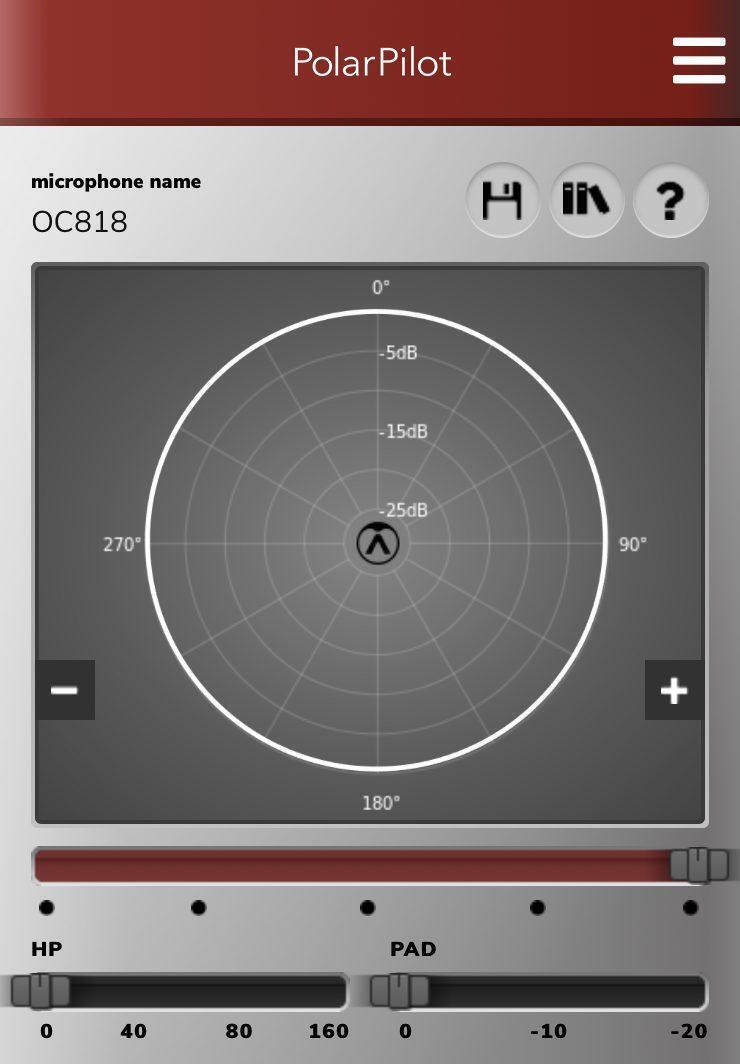
Here’s the GUI for the PolarPilot app for iPhone. The top display window shows the continuously variable patterns in real time as you adjust the slider in the red bar. Notice the stepped highpass (lower left) and pad (lower right) adjustments that are remotely controllable, as well.
Listen for the differences in the frequency response as the microphone moves from 0˚ to 45˚, 90˚, 135˚, and then 180˚. While the sound is very consistent, there’s a definite difference in the high frequencies as you move from 0˚ to 45˚. This is true for some omni mics and can be used to your advantage, so long as you are aware of it. However, note that some omni mics are truly flat all the way around the 360˚ arc.
Figure-8
One of the advantages of figure-8 mics is that the sound pickup is very consistent across the front and back of the mic, not only in level but also in character. You can see in the PolarPilot plot (above, “Defining Different Polar Patterns”) that the level is only down 3dB at 45˚ off-axis. That means that slightly off-axis sources will still sound true with minimum coloration. But as you move to the sides (90˚), the sound will absolutely disappear due to the characteristics of the pressure-gradient pickup.
Supercardioid
The advantage of the supercardioid pattern is its narrow pickup pattern in the front. The sonic price you pay for that narrow polar pattern are the two dips in the pattern at roughly 130˚ off-axis. This is accomplished by adding an out-of-polarity signal to the mic at those angles. Listen closely to the sample below and you can hear how drastically different the sound is when arriving at those angles.
Cardioid
A cardioid microphone will pick up sound evenly across the front and then drop off as you get 60˚ to 90˚ off-axis. Listen carefully to how the sound changes as you move to 90˚ and then to what happens at 135˚ and 180˚. There’s still sound being captured by the mic, but it sounds different, not just lower in volume.
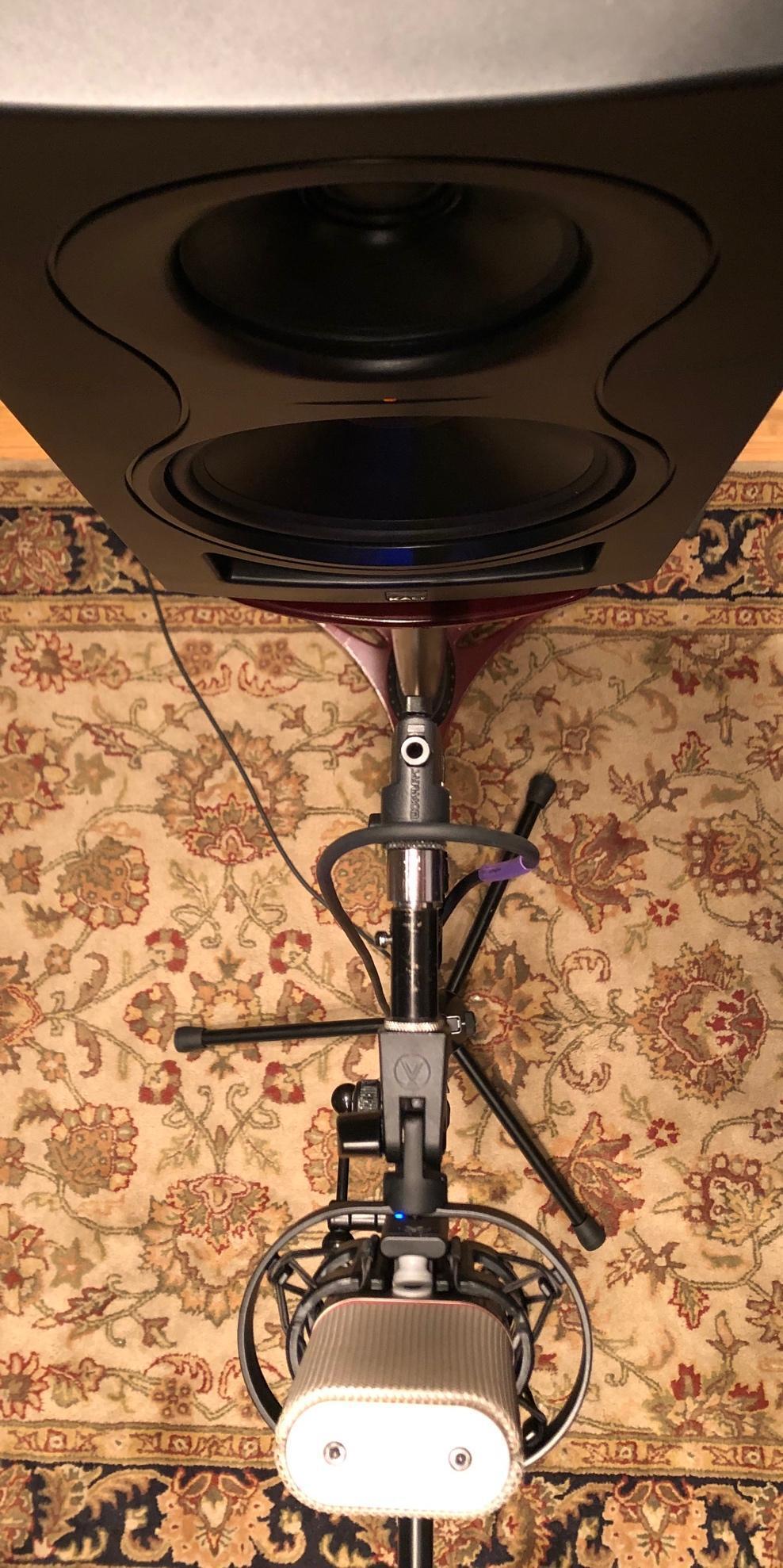
This overhead photo of the test rig shows how the mic was rotated while staying the same distance from the speaker.
Listen on Solo Voice
Here are the same polar patterns, again with the OC818 microphone, as they interpret solo voice from all the same angles as above. Listen to how the off-axis interpretation differs from 0˚ on an unprocessed single instrument such as the human voice.
Omni
Figure 8
Supercardioid
Cardioid
Frequency Response and Polar Patterns
Different microphones handle off-axis sounds differently. It’s important to understand this when choosing a microphone for a certain application. You can see this when looking at a microphone’s polar pattern specs supplied by the manufacturer. Let me show you how. Here’s the polar plot of the Sennheiser MD 421-II cardioid mic. The different lines (dots and dashes) represent different frequencies. On the left side of the diagram below, you can see that this cardioid mic acts like a subcardioid at 125Hz (the dotted line). Now look at the dotted line on the right side of the diagram, which is 16kHz. At 16kHz, the pickup pattern is very narrow, almost like a shotgun microphone.
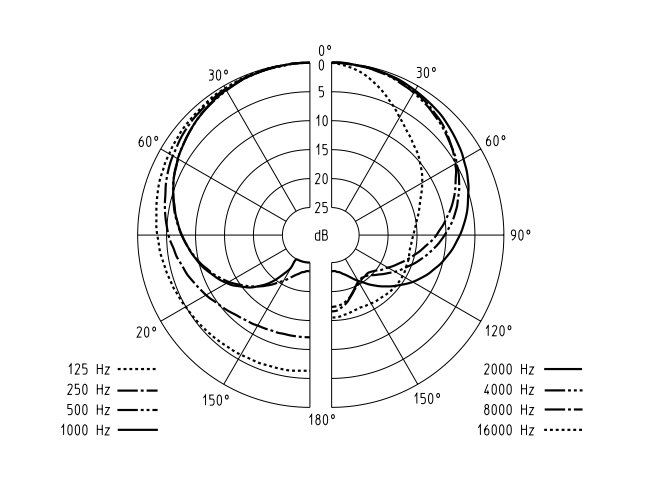
Polar pattern and frequency plot of the Sennheiser MD 421-II.
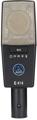
Now, let’s look at the microphone polar pattern of the AKG C414 XLS in omni (below). On the left side of the plot, you see that it is truly omnidirectional in picking up 125Hz, 250Hz, 500Hz, and 1000Hz. On the right side of the plot, look at the green line that represents 16kHz. The front and back of the mic pick up 16kHz at 0dB, just like the lower frequencies. But notice that when off-axis (90˚), 16kHz is down 20dB. That’s good to know when you are choosing a pair of mics to put in front of a percussion ensemble or a choir. So long as you know how your mics interpret off-axis sounds, you can use it to your benefit.
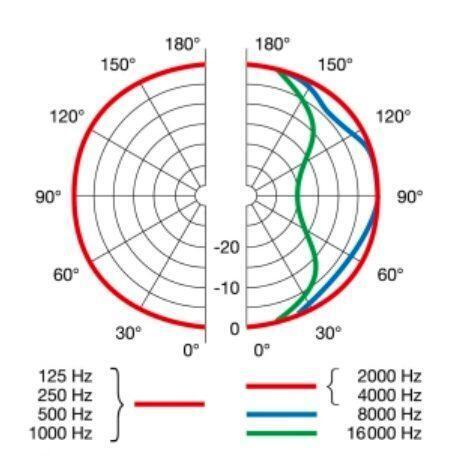
Polar pattern and frequency plot of the AKG C414 XLS set to omni.

Bonus Round: More Microphones
I did another round of listening tests that show the polar patterns of microphones you may know, such as the Shure SM58 and Royer R-121. For these demonstrations, instead of hearing just five positions around the mic, these are continuous sweeps from 0˚ around to 180˚. These samples will allow you to hear the different sound characteristics of the individual microphones as well as their polar patterns.
Listen how the sound changes as you move past 90˚, especially on the cardioid (Shure SM58 and Earthworks SR314) and supercardioid (Shure Beta 58A), noting the phasey sound as you reach the off-axis nulls on the back side of the mic. These samples were created using a PreSonus Sceptre S8 coaxial speaker on Sweetwater’s Performance Theatre stage.


Wrapping Up
I hope these sound samples have helped you to better understand microphone polar patterns and how important they are when choosing the right mic for the job. When you understand your mics and their characteristics, it’s much easier to achieve good-sounding results.
If you have concerns about finding the right microphone for your needs, our well-trained Sales Engineers are standing by, ready to answer any questions you may have. Call us at (800) 222-4700.
To learn more about microphones, check out these other articles: