

Podcasts are an ever-growing audio phenomenon and have been since their emergence in the early 2000s. With subject matter ranging from true crime and fictional epics to current news and politics, there is a show for every listener to enjoy. As a result, many contemporary businesses have found that creating a podcast is an excellent way to expand and drive the growth of their brands. In this guide, we’ll explain the ins and outs of starting, developing, and maintaining a professional-level podcast to help boost your company’s success to soaring new heights!
- Why You Should Start a Podcast for Your Business
- How to Start a Podcast
- Podcasting Gear Basics
- Choosing the Right Podcasting Gear for Your Business
- Starter Podcasting Gear
- Intermediate Podcasting Gear
- Advanced Podcasting Gear
- Recommended Podcast Accessories
- Sweetwater’s Podcasting Gear
- Sweetwater’s Five Tips for Better Business Podcasts
Why You Should Start a Podcast for Your Business
Apart from being an easy way to moderate the boredom of chores, road trips, and the workday, podcasts are a valuable tool for businesses to spread the word about their goods or services. However, every podcast requires work to reach its full potential, so after all is said and done: What’s in it for the business?
According to Ross Media Solutions, in 2020, 50% of all US households listened to podcasts. As a result, more than 68 million people tuned into their favorite podcasts every week. Hosting a podcast gives business owners a chance to extend their brands to a sea of fresh, potential clientele. A 2018 survey cited by Gerri Detweiler on Forbes.com found that prospects are far more likely to tune in as company size increases, with 72% of business owners with 100 to 500 employees being regular listeners of podcasts themselves.
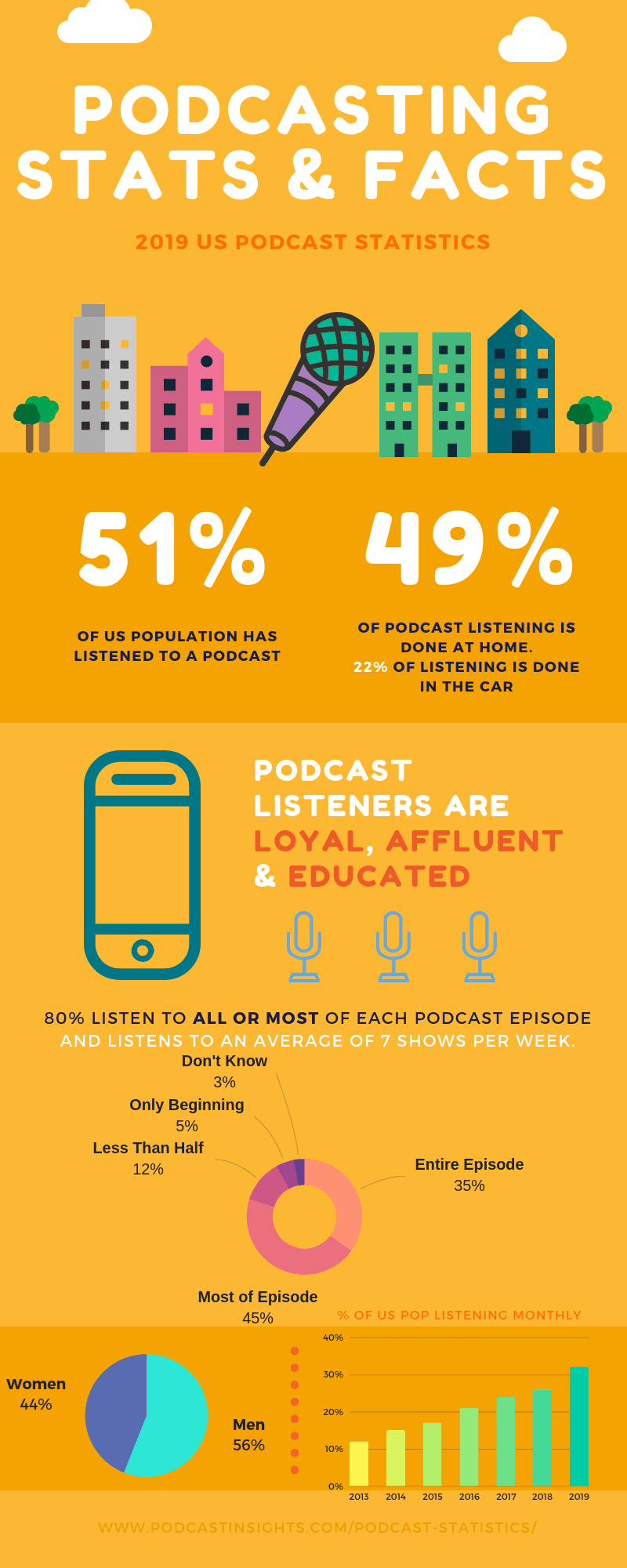
Beyond reaching a larger consumer base, podcasts are an excellent marketing strategy for businesses looking to create customer-focused content. Recorded audio has been used for years to create engaging article material, advertisements, and social media posts. If you have a podcast and transcript, then you can use these methods to create targeted content specific to your business. Since conversations tend to flow more naturally in casual environments, podcast owners also report higher brand recall from less marketing-driven material delivered within their show. A 2017 Nielsen.com report cited that 62% of respondents said a podcast made them consider new products/services. So, when it comes to enticing more interaction with your brand, hosting a podcast is a formidable course of action.
How to Start a Podcast
From the outset, starting a podcast can seem like a daunting task. However, the process is easier than you might think. Start by reading our article, “How to Start a Podcast.” In it, the first step to consider is the subject matter of your show. The most efficient option for businesses involves selecting content related to your industry. For example, a motion picture studio may share movie reviews or exciting new releases. Likewise, a sports brand could opt to discuss stats, news, and popular gear. Conducting interviews, sharing stories, and presenting game shows are popular choices, but possibilities are virtually limitless, so get creative!
Once you have an idea for a show and have given it a catchy name (don’t forget to research your name ideas to make sure no one else already is using them), it’s time to decide on your podcast’s host (or hosts) and prepare the first few episodes. As we will explain later, the content of your material largely depends on your business goals. Just ensure that whichever route you take in presentation, your content relates to your business and your listeners. No audience member wants to sit through an hour of constant advertising.
Podcasting Gear Basics
The breadth of your production will largely determine what gear you need. Smaller podcasts may be able to get away with less equipment. Larger shows, however, will require more capital to get up and running. Every podcast needs a few essential devices to get started. Thankfully, there’s a good chance you already have some gear lying around. Let’s consider what you’ll need to get recording!
Microphone
As a podcaster, your voice is your most essential tool. The quality of your voice is often the most noticeable feature to listeners, and, as such, it represents the quality of your work. While recording on your phone is possible, we wouldn’t recommend it. Likewise, a pop filter is essential for keeping vocal plosives from distracting your listeners. A USB microphone makes a good starting point for someone just getting into podcasting. If you don’t know what a USB microphone is, then check out our “Guide to USB Microphones” and “Best Podcast Microphones of 2022” articles.
Studio Headphones
You’ll need a good pair of headphones. Many of your listeners will be listening with headphones or earbuds, so checking your audio on those is good practice for the best results. If your headphones have built-in microphones, that’s even better; depending on the quality of the audio capture, they could fare well in several multi-guest podcasting scenarios.
Recording Device
Finally, you’ll need a solid recording device and editing software. Ideally, these may be in the same unit, like a laptop or tablet. Recording and mastering your podcast is more straightforward without the hassle of transferring data between multiple devices.
To recap: a microphone, headphones, and a recording device are the minimum for creating a successful podcast. If you want ideas on how to make your podcast sound better, then check out this article: “5 Easy Ways to Make Your Podcast Sound Better.” If you already have this equipment on hand, great! If not, then no worries. We compiled a list below of great (and affordable) gear options for every startup situation.
Choosing the Right Podcasting Gear for Your Business
Podcasting gear comes in several shapes and sizes, and choosing the right gear depends on the scope of your project. With so many choices available, searching for the perfect equipment can be intimidating. Sweetwater can alleviate the stress by offering different setup options for starter, intermediate, and advanced podcasters! For fun, we’ve listed a bundle of the gear we use for our Sweetwater Plugged In podcast. Let’s take a look!
Starter Podcasting Gear
Podcasting gear for beginners includes a quality vocal microphone and a set of studio monitor headphones. Plus, you’ll need an external device like a computer or tablet to save and edit your sound files. For a microphone, stick to something with a cardioid or supercardioid polar pattern. Cardioid microphones are known for their directional vocal audio capture and minimal ambience pickup, so they are generally the best option for podcasters. You don’t need to be picky with your headphones, but it’s critical that they are high quality and comfortable enough to wear for hours. Below are our recommended podcasting starter packs. They come with all the necessary gear, so there’s no need to go hunting for additional products.
Intermediate Podcasting Gear
Once you want to improve the quality of your setup, you’ll want a better microphone. While USB microphones are great for connecting directly to your computer, XLR mics offer more options. They require an XLR cable to plug into your recording device. If you don’t know the difference between the two types of mics, then check out “USB vs. XLR Microphones for Content Creation | Which Should You Choose?“
If you choose an XLR mic, then you’ll need an audio interface. Besides allowing you to connect your new microphone to your computer, an audio interface provides enhanced sound quality, volume controls, and more options for audio monitoring. Most models have microphone preamps and 48-volt phantom power, so there’s no need to worry about extra cabling or accessories getting in your way.
These bundles below represent excellent upgrade options from our starter gear. Still, if you only need an audio interface, then we recommend using a dedicated podcasting interface, such as the Focusrite Vocaster Two USB-C podcasting audio interface. With its dual microphone inputs, guest front-panel controls, and rear-panel connections, you’ll have access to all the necessary features in a simple, built-for-podcasting form factor.
Advanced Podcasting Gear
If you’ve listened to any high-end, popular podcasts, then you’ve noticed that many have two or more people talking at a time. If you plan to do that with your podcast, then you’ll need more microphones. The advanced podcasting bundle below features one microphone, but equipping yourself with two more, as well as extra headphones and cabling, will allow you to feature up to three guests with no problem. What makes this setup advanced? The addition of the RODE RODECaster Pro II podcast production console. It acts as a dedicated podcasting interface but includes many functions for seamless, professional control. The mixing faders on the front panel allow you to quickly turn mics up or down, so balancing loud and soft-spoken speakers can be done on the fly. Onboard DSP effects are included, allowing you to add reverb, delay, or pitch-shifting effects to your show. Finally, the RODE RODECaster Pro II has smart pads, like those used to trigger the sound effects you hear on popular podcasts.
Recommended Podcast Accessories
If you want to raise the production quality of your podcast, then we recommend a pop filter and a broadcast boom arm. A decent pop filter will ensure your microphone doesn’t pick up unpleasant plosives (audible thumps from consonants that “pop” the mic — like the letters “P,” “B,” and “D”) as you talk. A broadcast boom arm keeps your microphone out of the way and allows convenient placement during a show.
Sweetwater’s Podcasting Gear
As music fanatics, Sweetwater uses more than a set collection of gear. Every episode of our Plugged In podcastfeatures a rotating set of equipment, from microphones to mixers and everything in between. Several items stand out in terms of quality and versatility. Most notable is the RODECaster Pro II podcast production console, which we frequently use to activate audio clips, adjust volume levels, and drive headphones. Additionally, the PreSonus Revelator is one of our favorite mics to work with, as this USB-C mic comes with StudioLive voice effects processing that allows you to hone in on the perfect sound and add effects in the editing stage. Additionally, nearly every podcast-worthy microphone and mixer has shared time in the spotlight, so check out our options to see which fits your production environment best!
If you really want your podcast vocals to shine, then listen to these microphone options in “22 Podcast Mics Compared — Take a Listen!“
Sweetwater’s Five Tips for Better Business Podcasts
Having dabbled in podcasting ourselves, we’ve learned a thing or two about business-focused podcasting. We’ve conquered the same hurdles, questions, and issues you will likely face when getting your podcast up and running. To that end, we asked our own Mitch Gallagher, host of Sweetwater’s Plugged In podcast, to share some tips and tricks to help you get the process running smoothly from the start. We created a list of five essential pointers to consider when starting your show.
#1: Research Before You Record
When recording an interview, it pays to have some background knowledge on your subject. This is especially true for businesses; as potential clients listen, the amount of information and authority you give will likely sway them to engage with you. Researching your interviewees shows your guests that you are prepared, and you can find which questions your guests may have answered before. This keeps the content of the conversation organic and unique to your show.
#2: Stay Consistent
It might sound cliché, but it’s true: consistency is key. Consistency goes hand in hand with professionalism; in podcasting, this applies to every aspect of your show. Keeping the broad stretch of your content consistent with previous episodes keeps you from taking unnecessary segues where you could potentially lose your audience’s attention. Likewise, focusing on the consistency of your audio and production quality is critical to giving your podcast a clean and educated sound. This doesn’t mean you should avoid experimentation, however, as branching out and lightly exploring other content is what often allows a show to find its niche.
#3: Educate!
Ultimately, your podcast is about delivering information to your audience. Research has shown that up to 66% of podcast users listen to shows to learn something new. Incorporating new and exciting news, products, or sneak peeks into your episode can keep your fans hooked on listening. If you offer relevant information to your business or specific industry, then even better! Interviews are a great way to incorporate information never heard before, especially if you have prepared questions beforehand.
#4: Keep It Casual
We get it: as a business, you want to advertise your goods or services as consistently as possible. However, being too pushy about your products in a podcast setting may drive your audience away. The key is casually incorporating these into your content, such as discussing new or upcoming items of interest to a particular interviewee. Another effective (and popular) advertisement method is providing listeners with a unique discount code for a product they otherwise would not have known about.
#5: The Big Question — Why?
As a business podcaster, the most critical question is: “Why?” Why are you starting a podcast in the first place? What are your goals? Building a podcast that effectively grows your business is only possible with a business goal. Goals can be anything from selling more products to simply spreading the word about your brand. Whatever the case, asking yourself this question before creating your show allows you to form a foundation to build upon, ensuring your podcast grows efficiently and successfully for your established goals. It’s also important to put yourself in your audience’s shoes. Why should your listeners care about your content? Without a reason to listen, your fans won’t, so keeping your content relatable, meaningful, and engaging is vital.
Add the Polishing Touch with Sweetwater!
There you have it! You now have all the basics for establishing a business podcast! Now that the hard work is over, it’s time to have fun and get creative! Remember that getting up and running at peak potential may take a while, but you’ll find that the effort can reap massive rewards. Hopefully, this guide has helped you formulate your ideas and pick the correct gear. If you still have questions regarding recommended setups or equipment or need a second opinion, then call one of our Sweetwater Sales Engineers at (800) 222-4700. They are here to help.