Podcasts have been around for a long time and continue to grow in popularity. According to Podcast Insights, there are over 1.5 million podcasts, as of October 2020, with over 34 million total episodes. And those numbers are going to increase every time new stats are released. While there are plenty of professional podcasts out there, such as the influential The Joe Rogan Experience, the lion’s share was created at home by regular folks driven by their passion for something. At Sweetwater, we live and breathe professional audio, so when a podcast suffers from subpar sound, we notice. There are also missteps that beginners make that have nothing to do with audio quality but that are equally egregious. So, what are these pitfalls, and how do you avoid them? Here’s how.
Not Following a Script
One of the biggest rookie-podcaster gaffes is to hit the record button without a well-thought-out plan. Unless you’re a master at ad-libbing, you’ll need a script. Even if you think fast on your feet, crafting a solid road map is still essential for delivering a structured, confident-sounding podcast. There are several ways to go about this. Some podcasters read word-for-word from a detailed script. This method is great for individuals who tend to get tongue-tied under pressure or for situations when you’re attempting to explain a complex topic. The main drawback to this approach, however, is that your delivery can sound stilted and wooden. After all, you’re essentially reading out loud. A more flexible alternative is to write out a detailed episode plan with easy-to-follow bullet points. This approach enables you to include everything, point by point, that you’d write into a full script but leaves room for spontaneous verbiage. The end result will sound more conversational and will allow more of your personality to shine through.
Not Editing Your Podcast
Editing. Contrary to what some might say, it’s not a crutch for the weak. Quite the opposite, it’s an important step for achieving a pro-level podcast. Editing is a powerful process, allowing you to trim excess material from your recording and to rearrange segments to make your podcast as attention-grabbing as possible. This enables you to tighten up your story and ensure that your narrative is easy to follow. Beyond that, it’s during the editing phase that you insert transitions, music, and sound effects into your podcast, and when you deploy de-noising to eliminate the distracting sounds that inevitably pop up. Editing is performed in a DAW, such as Pro Tools, Cubase, or Studio One. For de-noising, we recommend a dedicated audio restoration product like iZotope’s RX.
When working with digital audio files, it’s important to remain organized. Using a consistent and intuitive filing system and file naming conventions is a great place to start. It’s also good practice to use dedicated tracks for each type of audio — voice-over, dialog, sound effects, music, etc. Also, giving each participant their own audio track can be a huge timesaver during editing.
Not Using Proper Microphone Technique
Your microphone is the conduit that connects you with your listeners. That’s why using proper mic technique is vital to a successful podcast. Even if you deliver top-shelf content, your listeners aren’t going to stay long if the sound of your voice is off-putting. So, what does proper mic technique entail? Well, before we dive into that topic, we’ll need to ensure that your levels are right. If your levels are too low, then you’re going to experience increased noise. If your levels are too high, then you’re going to experience clipping. For the best sound, tweak your settings so that peaks hit between -12dBFS and -10dBFS while you’re recording.

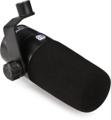
The first aspect of proper mic technique we’ll touch on is proximity control. This is especially important when using a cardioid microphone, such as the Shure SM7B, Electro-Voice RE20, or PreSonus PD-70. If you position the mic too close to your mouth, then its proximity effect will overwhelm your vocal delivery with an overabundance of low-end frequencies. If you position the mic too far away, then your voice will sound thin and distant. Your microphone should be close enough to produce a full, present sound with an intimate, conversational flavor. But don’t get so close that you’re eating the mic, or your speech will take on an unnatural, voice-of-god-like quality. Struggling with proper positioning of your mic? Try a boom arm like this desk-mounted model from Gator.
Your next consideration is to regulate the level of your voice. A good rule of thumb is to avoid the extremes — don’t whisper and don’t shout. Maintain a consistent speaking level. And, if you do need to raise or lower your voice, be mindful of your proximity to the microphone. If you’re going to raise your voice, back away from the mic. If you’re going to lower your voice, lean into it.
There’s a lot to proper microphone technique — this just scratches the surface. But following these fundamental guidelines is guaranteed to elevate the quality of your podcast.
Not Using a Pop Filter and De-esser
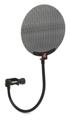
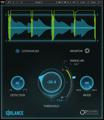
Of all the distracting sounds that can ruin your podcast, plosives are among the most annoying. Plosives are bursts of air created by p and b sounds (among others) that cause loud, low-frequency pops and thumps when they hit the microphone’s diaphragm. The easiest way to solve the plosives problem is with a pop filter. Another sonic podcast wrecker is sibilance. Sibilance refers to s, z, sh, and similar sounds that contain lots of high-frequency content. When these sounds are hyped or overemphasized, the result is very, very unpleasant. To tackle sibilance, you’ll need a de-esser. You can use a hardware unit or utilize a high-quality software plug-in, such as FabFilter Pro-DS or Waves Sibilance. Whether you use a hardware or software de-esser, you’ll achieve excellent results.
If you’re not sure whether your b‘s and p‘s will pop the mic, hold your palm in front of your mouth. Say “Peter Piper picked a peck of pickled peppers.” If you feel a blast of air on your hand whenever you say a p sound, then your mic is going to have problems. Practice saying those sounds without a huge blast of air, and you’ll fix the problem at the source.

Not Maintaining a Consistent Release Schedule
The last common podcasting mistake we’ve observed is probably the most vexing — not maintaining consistency. When a listener subscribes to your podcast, they’ll want to know what to expect. And their time is valuable! The first rule to being consistent is to release new episodes in a predictable manner. In other words, create a schedule and stick to it. If you don’t have the bandwidth to put out a quality episode every week, then go biweekly or even monthly. The main thing is that you remain consistent. And if, for some reason, your release schedule is going to change, then keep your listeners in the loop. Don’t leave them wondering when (or if) your next episode is going to drop.
It’s also important for your podcast to stay within a specific genre. If you want to cultivate a loyal audience, then it’s crucial that you find your niche and limit your material to topics related to it. For example, if you’re creating a geek culture podcast, stick to sci-fi and comic books. If you’re creating a guitar podcast, stick to guitars, pedals, and amps. The bottom line is that listeners aren’t going to tune in unless they know what to expect and you deliver material that’s tailored to their interests — and deliver it consistently.
Sweetwater — Your Ticket to a Great-Sounding Podcast
Creating a solid game plan, implementing careful editing, employing proper mic technique, minimizing plosives and sibilance, and maintaining a consistent schedule will go a long way in making your podcast compelling and enjoyable. If you have questions about how to maximize the quality of your podcast, then give your Sweetwater Sales Engineer a call at (800) 222-4700. We’ll be happy to share our expert knowledge with you and to help make your podcast the best it can be.