Without the emergence of drum machines, hip-hop, R&B, and myriad electronic-music styles wouldn’t exist as we know them, and beating at the heart of these infectious grooves, booming basses, and pulse-pounding rhythms is the drum machine that ignited this electrorevolution — the Roland TR-808. It wasn’t the first drum machine, nor did it provide the most realistic drum sounds — far from it. But, as the world’s first dedicated drum synthesizer (as opposed to sample-based drum machines, like the Linn LM-1 from Linn Electronics) that allowed you to program a complete drum track, the TR-808’s analog subtractive synthesis and sequencing capabilities provided vast creative potential that would take more than a decade for producers to fully realize. From the designers themselves, the TR-808 utilized faulty components, was riddled with sonic instabilities, and was only intended for creating demo tracks — and yet, it would go on to define the sound of numerous forward-thinking musical genres. Today is 808 Day, so let’s take a moment to reflect on why that is.
Who Invented the 808 Sound? The World’s First Programmable Drummer
The TR-808 Rhythm Composer was the brainchild of Roland founder Ikutaro Kakehashi, who approached musician/engineer Don Lewis to create drum machines. Up until this point, drum machines didn’t exist as we know them today — you either had the preset, pattern-based rhythms found on Hammond organs or greatly limited sample-based drum machines like the Linn LM-1. Roland soon realized it would be much more cost-effective to develop a synthesis-based drum machine as opposed to a sample-playback machine. With the ability to edit sonic parameters like tuning, decay, and volume accents, the TR-808 gave producers more creative potential than any drum machine before it.
In other words, the TR-808 Rhythm Composer was developed simply because something like it did not exist yet. But if necessity was the mother of the 808’s invention, then the blossoming popularity of hip-hop was the TR-808’s cool uncle that taught it how to bend the rules.
A New Sound for Hip-hop, R&B, Rave & Dance
When the TR-808 first emerged in 1980, the arguable “death of disco” — the foremost genre of popular dance music at the time — was only a year in the rearview, after 1979’s infamous promo-turned-riot Disco Demolition Night. Swirling social developments, cultural forces, and ideological divisions were brought to an explosive boil. In the fallout, the underground responsible for shaping disco’s multifaceted roots, which had been largely ousted by mainstream overinvestment in the disco movement, re-emerged with the TR-808 at the helm to sculpt the nascent hip-hop and dance genres.
Early adopters included Yellow Magic Orchestra — founding member Ryuichi Sakamoto’s 1980 solo record, B-2 Unit, was among the first albums to feature the TR-808 — as well as Indian disco duo Babla and Australian studio-pop trio the Monitors. But it wasn’t until 1982 that the world began to hear the TR-808’s potential.
Two releases stand out: Afrika Bambaataa and Soulsonic Force’s “Planet Rock” and Marvin Gaye’s “Sexual Healing.” “Planet Rock” would prove highly influential in the developing sound of electro-funk. “Sexual Healing” put the 808’s signature bass drum, clavs, claps, and cymbals in an R&B setting and continues, to this day, to be a masterclass in the use of the 808 in that genre.
Compared to other tracks released in the early ’80s that were mostly based on sampled drum breaks, the programmed rhythms of the TR-808 make these two songs stand out. Scouring YouTube for early examples of TR-808 grooves shows a steady increase of producers experimenting with the 808, and something interesting happens as the years progress. As intergrading forms of electronic and hip-hop styles flourished, the 808 was a sonic staple of the burgeoning rave, Miami bass, and Detroit techno movements.
By 1985, you’ll notice that bass drum sound starts to get longer and boomier. The 808 was beginning to show off its best-hidden secret — using the bass drum as a bass sound in its own right.
The Kick Drum That Wanted to Be a Bass
It’s difficult to define when exactly the 808’s bass drum began to be employed as a bass instrument in its own right, but you can definitely tell that by the end of the ’80s, producers were becoming quite comfortable with lengthening the decay time of the simple bass drum circuit. It would not be long before innovative producers learned to pitch the bass “drum” to a specific note, sample it with the new generation of sample workstations (like the Akai MPC), and then play it chromatically as a bass instrument.
Some producers even preferred the low tom sound as a bass drum sound (with appropriate tone and decay settings) and relied completely on the bass drum for their bass lines — and thus, that classic, trunk-rattling 808 bass sound was born. By the time Dr. Dre’s The Chronic was released in 1992, it was practically official — the Roland TR-808 was an indispensable tool for hip-hop producers.
One of the more famous and (somewhat) recent examples of the 808 bass sound can be heard on Kanye West’s “Love Lockdown” from his 2008 album 808s & Heartbreak. Right from the start, that deep, powerful 808 bass establishes the haunting tone for this composition. And, for the modern generation of budding producers, that bass is the 808 sound.
Want to Add the 808 Sound to Your Studio?
Fewer than 12,000 TR-808 units were originally manufactured between 1980 and 1983, but, with the prevalence of sampling in the late ’80s and early ’90s, any producer could add the sound of an 808 to their sampler of choice. But you know how musicians are — many producers craved the original hardware experience. Fortunately, Roland would finally bring the TR-808 into the modern producer’s tool kit.
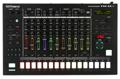
For those seeking hardware heat straight from the heart of the now-legendary drum machine, Roland’s TR-08 Rhythm Composer and TR-8S Rhythm Performer drum machines marry time-honored heft and satisfying, hands-on tactility with the performance power and versatile connectivity the modern producer needs.
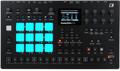
Of course, the 808’s enduring legacy has earned itself an array of hardware homages. While plenty of vendors and sound designers have provided their takes on the celebrated sound, Elektron’s Analog Rytm and Behringer’s Rhythm Designer RD-8 masterfully capture the classic character of the TR-808.
For DAW-focused artists and producers, seemingly endless options abound to craft the 808 style. But for software solutions that evoke the sonic soul of the OG, Roland’s own TR-808 plug-in as well as D16 Group’s Nepheton 2 plug-in pair analog aesthetics with the limitless potential of virtual voltage.
But wait, there’s more! DAW-less producers and Eurorack synthesists alike aren’t left out of the fun. In fact, thanks to the inspired minds at Tiptop Audio, an entire series of Eurorack modules pay tribute to the revered Roland TR-808 via distinct replications of different parts of the 808. This lets you wield the full flexibility of modular synthesis and customize how much 808 flows through your setup. Check out a few modules below and click here for the complete line of Tiptop Audio’s 808-inspired modules (and an entire line of 909-style modules)!
Roland Celebrates the Legacy with Collabs
The enduring influence of the 808 continues to inspire artists and producers across sonic styles to the point that “808” has become a stand-in signifier for earthshaking subs, cataclysmic kick drums, and titanic tune-bass tones. But the cultures born of and shaped by the Roland TR-808 extend well beyond music.
In 2024, Roland partnered with New Balance Numeric — the dedicated skateboarding division of the footwear giant — to celebrate 808 Day with the launch of New Balance Numeric pro-skater Tiago Lemos’s second signature shoe, aptly dubbed the 808. Lemos began skateboarding in the Jaguariúna streets of his native São Paulo, Brazil. Like the impact of the Fender Stratocaster on rock ’n’ roll, the Roland TR-808 defined decades of hip-hop music, including the tracks that scored the skate videos that heavily influenced Tiago Lemos in his early years. And with so much of this music produced with the TR-808, Lemos’s signature footwear pays homage to the iconic drum machine.
Roland Revolution: The 808, DIN Sync & the Key to MIDI
Aside from transforming the entire music-making landscape and sculpting the formative years of the electronic and hip-hop genres, the TR-808 laid the groundwork for one of the most influential technological advancements in contemporary music: MIDI.
As part of then-President of Roland Ikutaro Kakehashi’s vision for expressive, programmable performances and innovative electronic production, the TR-808 debuted the DIN Sync connection. This 5-pin plug utilized the same physical connector as the 5-pin MIDI option that would follow, but DIN Sync transmitted its signal on different pins than those used in a 5-pin MIDI connection. With the second pin as the ground, the first pin transmitting start/stop commands, and the third pin serving as the clock, DIN-equipped Roland gear used 24 pulses for every quarter note, resulting in the protocol’s other name, Sync24.
DIN Sync was developed to facilitate simultaneous, synchronized, interactive use of sequencers, drum machines, arpeggiators, synthesizers, and additional gear. A year after the TR-808’s debut, Roland launched the TB-303 Bass Synthesizer in 1981. Equipped with a DIN Sync connection, it was then possible to compose and sequence entire progressions of bass-synth parts and a complete rhythm section with the total performance power of each device in tow.
Hear one of the earliest examples of these two powerhouses performing together on Charanjit Singh’s “Raga Bhairav” from the 1982 LP Synthesizing: Ten Ragas to a Disco Beat.
During the same year, Roland developed its DCB — Digital Control Bus — proprietary data-interchange interface, which debuted in 1982. The 14-pin connection functionally bridged the foundational synchronization of DIN Sync with the broader control capabilities that would come with MIDI. The short-lived standard meant that only Roland’s Jupiter-8 and Juno-60 synths, as well as the JSQ-60 and MSQ-700 sequencers, would be built with the DCB port.
Funny enough, Kakehashi himself is responsible for the brief lifespan of DCB. At the time, Kakehashi felt the lack of any standardized method of synchronizing electronic instruments across manufacturers was only hindering growth for everyone. DCB was the byproduct of Roland’s desire to expand the control capabilities of DIN Sync, and because of Kakehashi’s belief that the concurrent Oberheim Parallel Buss was overly complicated, he reached out to Oberheim Electronics founder Tom Oberheim, as well as Sequential Circuits President Dave Smith, to collaborate on a solution.
After much discussion, and the eventual recruitment of Japanese music-tech compatriots Yamaha, Korg, and Kawai, it was agreed that Roland’s DCB would serve as the basis of the upcoming universal interface. By 1983, the future had arrived with MIDI.
Considering how immensely impactful MIDI has been on music creation, it’s no exaggeration to say that, without the TR-808, the entire world of contemporary production with electronic musical instruments may have never existed!
Learn More About the Roland TR-808
We’ve barely scratched the surface of the deeper cultural significance that the 808 represents for hip-hop, R&B, and electronic genres. For an inside look at the history of the Roland TR-808 drum machine, we highly recommend checking out the 2015 documentary 808, directed by Alexander Dunn.
And to take it straight from the resident Sweetwater synth scholar, Daniel Fisher:
“The TR-808’s sounds were generated through analog synthesis created with analog components, not samples of real drums, giving them a distinct character often described as ‘futuristic,’ ‘clicky,’ or ‘toy-like.’ This unique sonic quality, especially the deep, resonant bass drum, set it far apart from other drum machines of its time.”
“Despite its age, the TR-808 continues to inspire modern producers and remains a foundational element in various music genres. Its iconic sound has been adapted and reinterpreted through sampling, software emulations, and hardware re-creations, demonstrating its timeless appeal and ability to adapt to new musical landscapes.”
And if you’re wondering about the best way to add the 808 sound to your studio workflow, then give your Sweetwater Sales Engineer a call at (800) 222-4700.