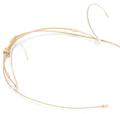
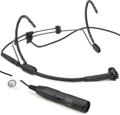
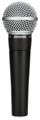
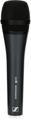
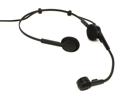
Choosing the right microphone is imperative for getting the most out of your live performances. Whether you should opt for a handheld or headset mic depends mainly on the type of show you’re doing.
Making this decision depends on how you are using the mic. Knowing a few things about the different polar patterns of microphones can help you make an optimal choice. Moreover, various types of performances can help decide what microphone is more useful. Paraphrasing what the French electronic rock duo Justice once said, music and religion share an ability to bring people together around a common point. From the house of worship to the church of noise and every venue in between, we’ll help you decide which microphone is best for your live performance!
Performance Considerations
Talking about microphone choices requires the consideration of two main things: stage activity and polar patterns. They’re a bit “chicken and egg,” but they’re of equal, mutually informative importance. Talking about stage activity, we’re not just differentiating how they’re used. Rock concerts, Sunday services, and musical theater have very different variables, but how you approach them is pertinent to choosing between a handheld or headset microphone.
Vocal Range and Proximity
It may be tempting to assume that the likelihood of needing a headset mic would be determined by how active you are on the stage, but this is only sometimes the case. Famed Van Halen front man David Lee Roth was known for his intricate, acrobatic performances that took him through all three dimensions of the stage. Still, he consistently used a handheld microphone, even using the mic stand as an instrument in his routine. Conversely, Sammy Hagar could be seen regularly using a headset microphone, riffing the night away as he pulled double duty on guitar and vocals. Many pianists that sing will utilize a stationary, handheld microphone despite keeping their hands plenty busy, and theater actors and worship leaders alike will opt for a hands-free headset mic, albeit of very different flavors.
Proximity (the distance between your mouth and the mic) is a significant factor in mic selection — specifically, the control you have (or don’t have) over that proximity. Headset microphones will always stay the same distance from your mouth. In contrast, a singer with a handheld microphone (even on a stand) can modify that distance to accommodate for fluctuations in volume or creative changes in space. No matter how much they may gesticulate or move around the stage, a worship leader or public speaker is likely to have a more even temperament in their delivery than a singer. Now, that’s not to say that somebody can’t use the same headset mic for lead vocals in a worship band before giving a sermon, but you’d want to be aware of this limitation before risking poor audio.
Handheld microphones offer much more artistic freedom for treating the mic as an instrument as they can be pulled in close for soft-spoken parts or held farther away to belt out a big finish. Even if you’re playing an instrument, having the microphone on a stand provides the same flexibility.
Stage Presence and Immersion
How you conduct yourself should factor into which microphone you choose. You don’t have to move like Jagger or Roth (we certainly can’t), but theatrics and acrobatics at the levels of Broadway and Beyoncé would require a headset mic. Pianists may not opt for one, but singers like Lady Gaga or Elton John have a finely honed parity between their piano and vocal performances that is less conducive to headsets.
Professional musical theater and highly choreographed shows add a layer of immersion to the performance that could be severely disrupted by needing to tote around or return to a microphone for every line. Speakers and worship leaders engage people on a personal level, and many find the handheld microphone distracting on either side of the message. By contrast, a four-piece rock outfit might depend on backing vocals and double-duty band leaders where onstage antics aren’t intertwined with vocal parts, making a headset mic more intrusive to their natural process. It’s not just about having a free hand!
Differentiating Microphone Patterns
Form and function are interrelated elements of microphone design, with polar patterns typically informing their uses. Headset microphones often feature an omnidirectional, cardioid, or hypercardioid pattern, while handheld mics typically have a cardioid or supercardioid pattern. The cardioid variants are similar in broad strokes, but their designs vary enough to warrant differentiating their applications.
Why does the polar pattern matter? In short, it determines how and from which directions a microphone picks up sound. As its name implies, an omnidirectional mic captures sound from every direction. Cardioid, supercardioid, and hypercardioid microphones focus on capturing audio in front of the capsule. Supercardioid patterns have a narrow angle, making them less susceptible to intrusive audio coming in from the sides. They also have a higher sensitivity to audio from the rear of the capsule than a standard cardioid microphone. Hypercardioid mics are even more directional with more focus up front and larger pickup at the rear.
We must remember that the artist’s comfort is a pragmatic aspect of taking the stage. It’s not just the physical contact they make with the microphone; it’s also the comfort of what allows them to be their most natural self. Mannerisms, pacing, and vocal range are a few of the personal quirks that should be considered.
Learn more about polar patterns in this article: “Microphone Polar Patterns Demonstrated.”
Headset Microphones: Omnidirectional
You’ll notice in the above graphic that sound from all angles is captured uniformly. This can be viewed as a double-edged sword as it allows more forgiveness with your orientation to the microphone but leaves plenty of room for unwanted input. As such, these are less useful in situations with ambient noise, making them an excellent choice for worship leaders or those with spoken word performances.
Headset Microphones: Cardioid and Hypercardioid
Though these polar patterns are different, their use cases largely overlap when it comes to headset microphones. Both patterns prioritize the front of the capsule for picking up audio — cardioid patterns allow for more leniency toward the sides while hypercardioid patterns are more precise at the front with a bubble of capture at the rear of the capsule. Performances with greater degrees of movement or choreography might benefit from a cardioid pattern as it offers greater flexibility. Hypercardioid microphones are an excellent choice for performers or instrumentalists with less physical range in their shows to ensure clarity without stray frequencies bleeding in.
Handheld Microphones: Cardioid
Depicted in the above graphic is the polar pattern of a cardioid microphone. Microphones with a cardioid polar pattern pick up sound most effectively across the front, trailing off as you move toward the sides of the capsule before dropping off just past the halfway point as you approach the rear. Their ability to capture sound around the sides can make them more forgiving with placement while offering more room to tailor your vocal delivery.
Vocalists in live bands frequently position their hand to cover the sides of the grille — not advisable. Gripping the mic in this fashion changes its directional pattern and affects the microphone’s sound.
Handheld Microphones: Supercardioid
Unlike its hypercardioid sibling, a supercardioid polar pattern is slightly more forgiving, allowing for a wider angle of pickup with less sensitivity at the back of the capsule. Still, it’s substantially more focused than a standard cardioid pattern, making it a fantastic choice for vocalists who want to really flex their pipes. Ideally, the microphone would be placed in a stationary position, such as on a floor stand, or positioned alongside an instrument, like a piano or drum kit. Of course, this will work at a lectern or podium. This comes at the cost of mobility, but it allows for a wider range of delivery.
Mastering the Mic
If headset and handheld microphones were at opposite ends of the spectrum, you’d have high-concept, heavily choreographed performers like Beyoncé on one end, and solo vocalists with unmatched range and character — in the vein of Adele or Whitney Houston — would be on the other end. The space in between depends on your onstage priorities, your personal preferences, and the polar pattern most conducive to the type of performance you’re going to give. If you’d like assistance nailing down the right microphone for you, or you’re reading to go ahead and take the plunge, contact your Sweetwater Sales Engineer at (800) 222-4700 to get the mic you need to hit the stage in style.