In the wonderful world of rock and metal guitar, an oft used adage is that good ol’ chestnut: “less is more.” My favorite reaction to this saying comes from a king of said domain. His name? Yngwie J. Malmsteen. His stance? “No! Less is not more. Less is less… more is more!”
And that, my friend, begs the question: “Which of these two sayings wins?” Well, IMHO, the answer is: “Both — it all depends on the situation and subject.” Here’s an example of when the “less is more” scenario rings true. Read on, and also watch the accompanying video to understand my rationale. And, in the case of the video, literally hear my rationale in action, too.
Gain: Should It Always Go to 11?!
Understandably, to a great many axe-wielding rockers, gain is a truly wondrous gift from the Tone Gods and there’s no such thing as “too much.” But, if truth be told, sadly there is indeed such a thing — even in the heaviest of metal. To quote Spinal Tap: “There’s a fine line between clever and stupid.” And, in the case of gain, when that line is crossed the results are rarely pretty. Yes sir, when too much gain is piled on, clarity and cut can both crumble. The result? A once menacing yet articulate overdrive that sat perfectly in the mix is reduced to an indistinguishable, mushy mess that disappears from the sonic landscape it once ruled.
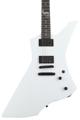
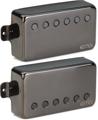
To illustrate this point in the video, I play a pretty Metallica/Megadeth-inspired riff twice. The gear I use on both occasions is an ESP LTD James Hetfield Signature Snakebyte and a Marshall JVM210H 100W 2-channel tube head. Both are capable of breathing high-gain fire, and the fact that the LTD comes loaded with EMG “Het” Set pickups is an extra incendiary bonus!

TONE NOTE: The Marshall JVM210H sound in the video was captured by running the head into a Mesa Cab Clone IR+. No guitar cabinet was hooked up.
The first time I play the riff (0:36 in the video), I have the Marshall’s Overdrive channel on the hottest of its three Modes, the Red one. And, of course, I have the Gain control maxed out on a Spinal Tap-approved “11” (well, 10 — see the photo below). The resulting tone, technically speaking, didn’t suck by any means! That said, even though the sound was remarkably articulate given the high-gain nature of the axe/amp, to my ears, it lacked the clarity and cut I’d really like. The solution? Read on…

Cardinal Sin Time: Turning Down the Gain…
For the second run-through of the same riff (1:34 in the video), I not only turned down the Gain control from 10 to about 6, I also changed the Overdrive’s Mode to Orange, which has less Gain than its Red sibling — effectively doubling down on my sin! As you can see in the photo below, I left the rest of the channel’s controls untouched. The result? As you’ll hear in the video, the riff is punchier and clearer — and has more definition and cut. In short, it sits better in the mix to my ears.

This seemingly illogical approach rings true both onstage and in the recording studio, my friends. You want your guitar to be heard loud and clear while complementing the overall sound of the band. “Everything louder than everything else” is one of my favorite tongue-in-cheek Motorhead slogans; but not even that Neanderthalian approach can rescue a guitar sound that has become sonically invisible within the mix due to too much gain.
Don’t take my word, though; let’s hear from one of the world’s most respected metal masters — James Hetfield of Metallica. Here’s what he told me when I interviewed him for a major guitar magazine’s cover story in the early ’90s.
There’s definitely a point when you can have too much gain happening and your sound becomes mush. Distortion sounds great and you can hide behind it when you’re playing like crap! But, when you back it off a bit, it helps with overall tonal definition and tightness. Also, you can hear the riff a lot better, too! I play much cleaner in the studio than I do live because of this.
James Hetfield, Metallica
I rest my case.
Doubling the Riff When Recording? Try Turning Down the Gain a Tad More!
As per Mr. Hetfield’s suggestion, my next experiment was to double a similar riff with the gain turned down even more! So, I left the JVM210H’s Overdrive channel on Orange Mode but backed off the Gain to about “11:30,” if the control was a clock’s face (see photo below). I then recorded the riff with the Snakebyte (3:34 in the video) before doubling it with the same settings using my Jackson Signature Adrian Smith axe. The result? A thick yet well-defined wall that can he heard at 3:58 in the video. To make it clear (awful pun, semi-intentional!), if you listen to the video in stereo, the Snakebyte is panned hard left while the Smith is hard right…

Mr. Hetfield is not the only metal rhythm master that has these feelings with regard to gain. I asked the much-respected Tommy Victor of Prong (one of the late, great Dimebag’s favorite rhythm aces) his thoughts on the subject of “Gain & Metal: Is More Really More?!?” Here’s my friend’s learned reply:
It depends on whether you’re in the studio or live. For recording, since I’m doubling rhythm parts, I don’t use much gain. When it’s doubled, it sounds thicker like there’s a lot of gain. Live I use a little more, but I don’t go crazy. I play other guys’ rigs, and it seems like they are out of control with the gain and the light strings. I think I try to make things difficult for myself, I tend to want to work harder. I’ll hit my fuzzed-out, noise-gate-breaking patch for feedback and solos. But I still like to hear the pick attacking the strings with little ‘mush’ when going back to the riffs.
Tommy Victor, Prong
If you’re a metal fan who’s unfamiliar with Tommy’s brutally precise and cuttingly clear rhythm work, I heartily recommend that you right that wrong immediately. You’ll quickly hear why Mr. Victor is held in such high esteem by his peers. And if you disagree: “Snap Your Fingers, Snap Your Neck”!! In fact, said classic Prong track is the perfect intro to the band!

More of Less: A Couple of Famous Examples of “Less Gain” in Action
The “less gain is sometimes more” premise is also true when it comes to dialing in that classic AC/DC sound. Many, myself included, are frequently guilty of using too much gain. Both of the Young brothers, especially the late, great Malcolm, used way less gain than you think. Listen closely to a classic cut like “T.N.T.” or “Problem Child” with headphones, and you’ll hear exactly what I’m talking about.
Another common example of this truth is Edward Van Halen’s amazing “brown sound” — especially on the groundbreaking Van Halen album. Once again, if you listen carefully to his sound on it, you’ll quickly realize that Edward’s tone is actually way cleaner than you might first assume.
Closing Thoughts
If you’ve never messed with dialing back your gain a tad, give it a shot — especially when recording. The resulting increase in definition, cut, and tightness may well surprise and delight you. And hey, if it’s good enough for the likes of giants such as Mr. James Hetfield and Tommy Victor, then it definitely warrants checking out!!