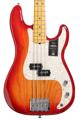
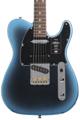
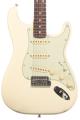
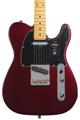
Easily the number one benefit of being part of Sweetwater’s Product Research Team is getting hands-on with the latest gear. So, you can imagine our excitement when Fender asked us to take its new American Professional Series for a test-drive. In true Sweetwater fashion, we weren’t content to just strum a few chords at our desks. Rather, three guitar-obsessed copywriters on our team — Cameron Day, Jon Lennon, and Mac McDonough — brought the full line of guitars and basses to an old-fashioned jam session at Jon’s house, enabling them to put these instruments through their paces in a real-world musical environment. In this article, we’ll document the three writers’ shared experience.
- What’s the Fender American Professional Series?
- The Experience
- Our Impressions
- Professional-grade Fender, Straight off the Shelf
What’s the Fender American Professional Series?
Meticulously engineered to be the ultimate off-the-shelf versions of the brand’s most iconic models, the Fender American Professional Series offers a careful balance of vintage and modern features. Replete with custom-voiced V-Mod III pickups, redesigned hardware, and advanced electronics, these instruments give players exactly what they need to perform at a professional level.
The Fender American Professional Series includes eight models:
The Experience
Throughout the session, the three writers passed around the various models and spent time with each instrument, including taking turns on bass, with Mac occasionally sitting in on drums. While all three musicians got their hands on the full range of instruments, by the time the rhythm of the jam session settled in, each player appeared to gravitate toward a certain model. Cameron spent most of his time with the Jazz Bass; Jon displayed an affinity for the Jazzmaster; and Mac seemed to really bond with the Stratocaster HSS.
For the first jam, the trio cooked up an improvised instrumental. Jon played the Jazzmaster plugged into a Walrus Audio Jupiter fuzz pedal and a Blackstar TV-10 A. Cameron wielded the Precision Bass and played through a Fender Bassman TV Ten and a Laney Digbeth DB-East-Pre. Mac used the Telecaster piped through a Warm Audio ODD Box, a Victory Amplification The Copper, and the power section of a Fender Tone Master ’59 Twin-Amp JB Edition. Jon began by playing a funky chord progression with a clean tone. Cameron added a solid bass line. Mac then came in with fusion-inspired leads. Halfway through, Jon kicked on his fuzz, which prompted Mac to take things up a notch by activating the Tele’s series mode. Before long, the music evolved into a grunge-flavored cacophony.

For the next jam, the trio switched instruments while plugging into the same rigs. Jon grabbed the Jaguar; Cameron picked up the Jazz Bass; and Mac strapped on the Stratocaster HSS. The second jam was another instrumental, and it picked up where the first left off, with Jon spitting out angular, fuzz-drenched riffs. Cameron cranked up the DB-East-Pre to achieve a fuzz-like tone. Mac stood right next to his amp and began mangling squeals and feedback with the Strat’s tremolo bar.
For the next several songs, which consisted mainly of Nirvana, Foo Fighters, and Smashing Pumpkins covers, Mac moved over to drums while Jon and Cameron made their way through the rest of the instruments. Amid this, Jon appeared to click with the Telecaster, and Cameron really seemed to connect with the two offset guitars. Toward the end of this stretch, Mac left the drums and jumped on the Precision Bass for a bit then finally the Jazz Bass.
The final jam of the day was another improvised instrumental, this time with each writer playing their favored instrument: Jon on the Jazzmaster, Cameron on the Jazz Bass, and Mac on the Stratocaster HSS. By this time, everything was really dialed in, and the trio concluded the session with a metal-adjacent grinder with lots of manic riffage from Jon, thunderous distorted bass from Cameron, and idiosyncratic shredding from Mac.
Our Impressions
After the session, we sat down to discuss our impressions of these instruments. We organized our discussion around four talking points: playability, electronics, hardware, and final thoughts.
Playability
The Fender American Professional Series respectfully adheres to each model’s iconic design while giving you the contoured comfort you need to power through extra-long shows and sessions. Moreover, all these instruments feature C-shaped necks and modern fingerboard radii, offering a perfect melding of classic feel and modern playability.

Jon: “Fender’s offset guitars have always intimidated me. But when I got the opportunity to really play the Jazzmaster and then the Jaguar, I understood the appeal. On the American Pro Series models, the feel was exactly what I expected; the bodies sank and settled in, making it easy to find a rhythm.”
Cameron: “The J and P Bass were a pleasure to play throughout our extended jams and freak-outs. I much prefer thinner necks, and the Jazz Bass’s Slim C profile was perfect for my taste, especially when you factor in the super-smooth rolled edges and sleek Super-Natural satin finish.”
Mac: “I found the Deep C necks on the guitars an absolute joy to play. They feel exactly the way you’d expect a classic Fender to feel, and the 9.5-inch radii make navigating the fretboard effortless. And I’m on the same page as Cameron as far as the basses go. As someone who only plays bass occasionally, I bonded with the Slim C necks immediately.”
Electronics
Fender really upped the ante with the American Professional Series electronics-wise, equipping these instruments with updated V-Mod III pickups specially voiced to deliver a balanced sound with plenty of warmth, clarity, and articulation. Additionally, all models include ClassicGear Precision pots, which are engineered for enhanced taper and feel, along with push-push tone controls that unlock various additional options.

Jon: “I plugged the Jazzmaster into my fuzz-laden rig, and it argued with me. So, I settled into the debate, and after a back-and-forth, that guitar had successfully convinced me of its value. Where the Tele and the Strat know exactly what they are the moment you plug them in, this guitar felt a little more fluid, like it was willing to dance along the edges of whatever I wanted. I flipped the little switch up top and used the dials, and it changed how I dialed in a tone.”
Cameron: “While I’m usually partial to the warmth and punch of the P Bass, the American Professional Jazz Bass won me over — especially when we started breaking out the fuzz boxes. Diming the J Bass’s bridge pickup through the DB-East-Pre was just perfect for the grungy, rough-around-the-edges tracks that dominated our jam session.”
Mac: “I loved the Telecaster right away, but when I hit the push-push tone knob and put it in series mode, that really took it over the top, pushing the drive pedal and amp into a gnarly distortion that was just plain fun.”
Cameron: “Totally. The addition of a series switch on the Jaguar, Jazzmaster, and Telecaster is undoubtedly one of my favorite changes in the entire series. During our jam, it allowed for more powerful, humbucker-adjacent sounds when we started experimenting with heavier tones.”
Jon: “The guitar has always been a static part of the equation for me — full-on, maybe the volume rolled back a bit — but the tone shaping happens on the pedals and the amp. With the Jazzmaster and, later, the Jaguar, the guitar became another piece of the puzzle to tweak, and it had enough unique controls built in to make the journey fun rather than frustrating.”
Mac: “What do you guys think about the new V-Mod pickups? I was particularly impressed by the bridge humbucker on the HSS Stratocaster; it delivers plenty of power, yet it sounds remarkably balanced with the single-coils. It’s way more consistent than most humbucker-equipped Strats, even without engaging the coil split.”
Jon: “These pickups are phenomenal. Between the Jaguar and the Jazzmaster, I coaxed out everything from pushed, mid-heavy overdrive to huge, muddy gain that clipped as if there were a hole in my speaker and even the gated, sputtery, raspy sort of fuzz tones you can find when you dial everything in just right.”
Mac: “Yeah, Jon really got a searing tone out of the Jaguar during the Nirvana covers. It pushed the Jupiter fuzz into all kinds of cool textures. It can get pretty aggressive, especially for single-coils.”
Hardware
Upgraded bridges put the Fender American Professional Series among the brand’s most comfortable — and stable — offerings to date. Tweaked to provide optimal resonance and sustain, these bridges represent a significant leap forward in hardware design.

Jon: “I’m not particularly knowledgeable about Fender’s offset models, and I’d never experienced the floating bridge on these guitars firsthand. But as someone who prefers a Tune-o-matic over a hardtail or Strat-style tremolo, it felt close to home. The 2026 redesign with slotted brass saddles not only added a unique aesthetic but also helped lock in tuning as I adjusted the setup while I played.”
Cameron: “I’m totally in agreement. I’ve tried just about every offset bridge mod out there, and this system — clearly inspired by the Fender Custom Shop RSD bridge — stands with the best of them. Even compared to the relatively streamlined Mustang-style bridge Fender has been using the past few years, this system clocks in with fewer moving parts, and it performed perfectly throughout the day on both guitars.”
Mac: “I couldn’t believe how stable the Strat’s upgraded 2-point tremolo is. Not only do the ClassicGear Radial bent-steel saddles keep everything well intonated, but the cold-rolled steel block anchors everything perfectly. I was able to manhandle the trem pretty enthusiastically, and the thing stayed in tune.”
Cameron: “It’s true — for the better part of 10 minutes, Jon and I listened as Mac put the HSS Strat’s tremolo through its paces with dives, squeals, and screams galore. I wouldn’t even know where to start with making those kinds of sounds.”
Final Thoughts
To wrap things up, each writer gave their general impression of the Fender American Professional Series from their personal, hands-on experience.
Jon: “Overall, my experience with the American Pro Series was extremely positive, and I understand the ideology now better than ever. These truly are instruments that aren’t trying to be anything more than the best version of themselves. They are unpretentious in the best way, representing the best of both the past and the present while respecting the needs of those who will ultimately be using them night after night.”
Cameron: “As a guitarist who trends toward the traditional side of Fender’s offerings, the American Pro Series delivers everything I could want in a modern Fender. Each model introduces intuitive upgrades that legitimately improve versatility and performance for working musicians, all while preserving the quirks that make these instruments so beloved. In essence, you’re getting a classic Fender with all the most common mods — high-mass bridges on the basses, expanded switching options on the guitars, and the ubiquitous offset bridge swap — already done for you.”
Mac: “For the American Pro Series, Fender endeavored to create definitive versions of all their iconic models. As someone who has played Fender instruments for more than 30 years, I feel that they’ve succeeded. Every model retains its classic identity while also giving modern players what they need. Pro players will be well served by these instruments.”
Professional-grade Fender, Straight off the Shelf
After a full day of jamming, one thing was clear to all three musicians: the Fender American Professional Series delivers. Across the Stratocaster, Telecaster, Jaguar, Jazzmaster, Jazz Bass, and Precision Bass, each model keeps the look and feel that made it iconic. Each also adds thoughtful upgrades that matter onstage and in the studio. The V-Mod III pickups sounded balanced and articulate. The push-push switches added new tonal options. The redesigned bridges and tremolo held tuning through everything we threw at them. Whether you’re chasing funk, fusion, rock, blues, grunge, or all-out metallic mayhem, these instruments are ready for the job. Players who want a dependable, professional-grade Fender straight off the shelf have plenty to be excited about.
Not sure which Fender American Professional is right for you? Call your Sweetwater Sales Engineer at (800) 222-4700. They’ll help you find the right model and the gear to go with it.