

As the drummer, taking control of your music’s pulse — whether in a group or solo setting — is an incredibly powerful and rewarding responsibility. It’s not just a skill but a lifelong creative endeavor, a form of communication, and a force with the power to move thousands all at once. Being the timekeeper also means you’ll have the most instrument components to configure, including hardware, sticks, heads, and more. So, to feel, play, and sound your very best behind the kit, you need to have a sufficient understanding of your instrument in addition to a drum setup tailored to your vision. Luckily, you’ve come to the right place!
In this comprehensive guide, Sweetwater is taking a thorough look at the basic elements of the drum kit and answering important questions that will make narrowing down your inaugural setup as clear and effortless as possible. Sweetwater is home to just about anything you could ask for in the rhythmic world, so we’ll be sure to link some of our favorite selections of instruments and drum kit gear that will help you get comfortably in the groove in no time.
Back to Top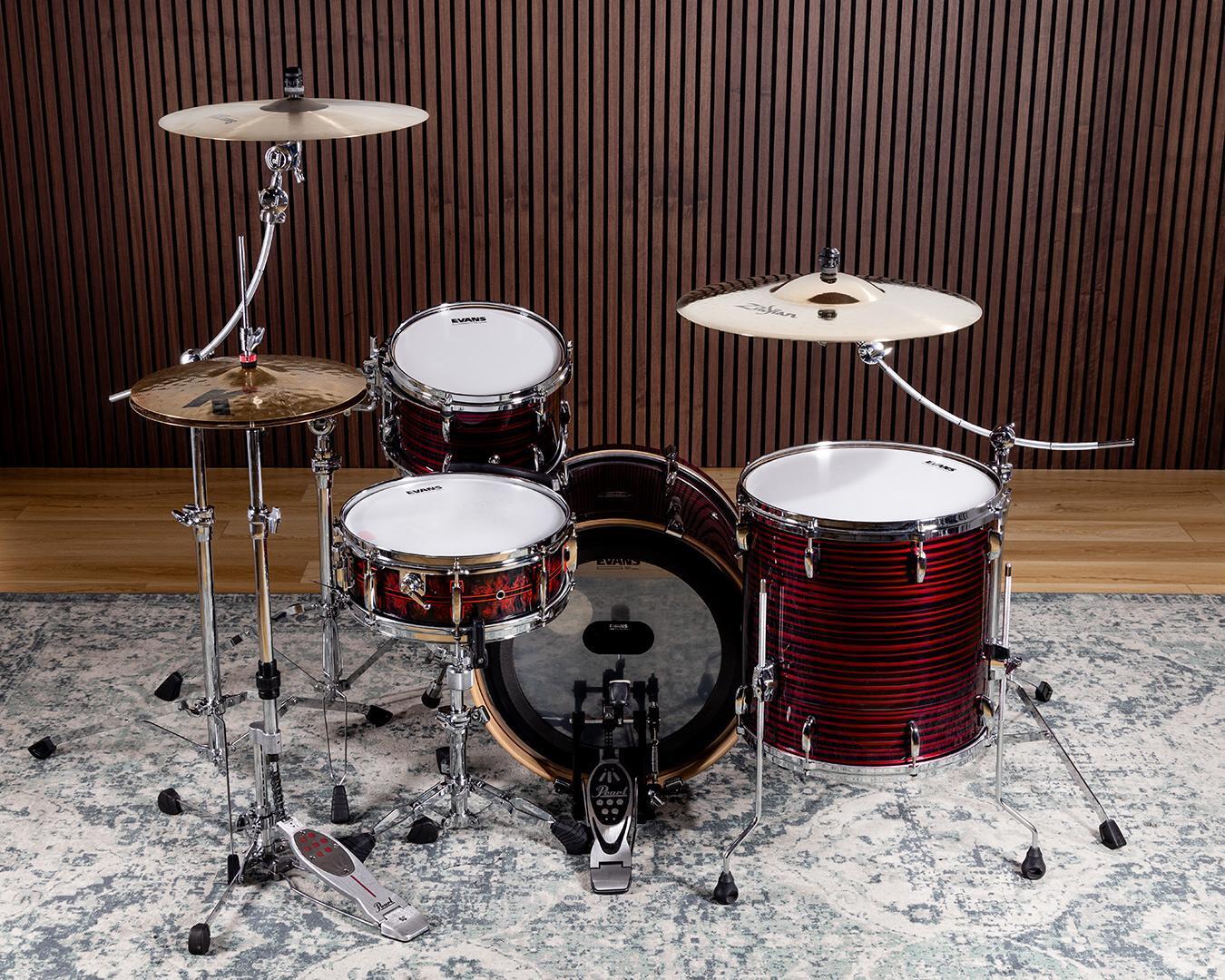
Foundational Elements
Let’s begin by diving into the basic components that make a drum kit. Every fully functioning kit will feature a foundational set of instruments, which usually includes four types of drums and three types of cymbals. Each of these elements comes sized and shaped to provide a different percussive frequency to create a balanced sound and versatile playing experience across the kit. Even electronic drum kits supply drum and cymbal pads of varying sizes that mirror this layout. We’ll also break down some equally crucial hardware components that every drummer needs to have in their configuration, regardless of sound or playing style.
- The core drums that form every kit
- How cymbals shape tone and dynamics
- Essential hardware every drummer needs
Kick Drum
What it does: Provides the low-end foundation of the kit and defines the overall groove.
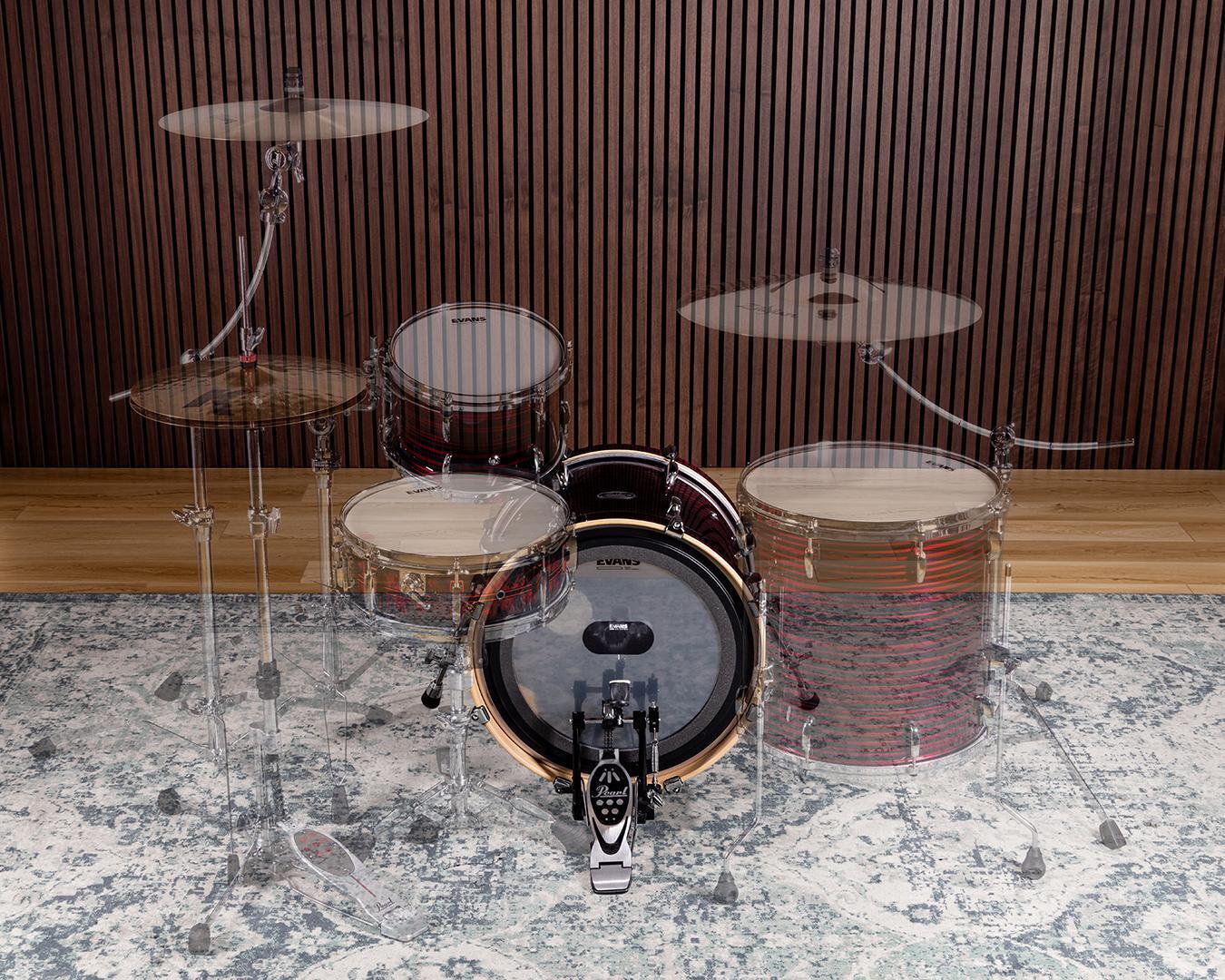
The kick drum, or bass drum, is the widest and deepest drum in the kit. It’s the only drum played with your foot by way of a separately attached kick pedal. Kick drums come in a wide range of diameters, from 14-inch and 16-inch drums in suitcase sets and travel kits to 24-inch and 26-inch shells in hard rock and big band-style configurations. Consider what type of music you want to make and then build around the boom of your kick drum! Hard hitters in rock and metal genres will benefit from kits with larger kicks while jazz, R&B, and pop percussionists can easily thrive without breaking into the 20s. If you want to play multiple genres, then drum kits with 18-inch, 20-inch, or 22-inch kick drums are your best bets.
Snare Drum
What it does: Provides sharp accents, backbeats, and dynamic expression that cut through the mix.
Just as the kick drum is an imperative piece of the drum-set puzzle, so, too, is its perpetually responding companion, the snare drum. Sometimes, you’ll find matching snare drums included with kits. However, it’s common practice for drummers to buy a snare drum separately since different shell materials can yield very different sounds. If that’s a route you’re excited to take, then dive into our “Snare Drum Buying Guide.” Wooden snare drums are often plied multiple times over (and in some cases steam bent), posing punchy authority across a mesmerizing assortment of earthy tonewoods to pick from, including poplar, maple, birch, mahogany, and many more — some even feature a hybrid blend! Metal drums, on the other hand, supply more prominent attack, with popular materials such as aluminum, steel, brass, and copper each delivering a characteristic variety of tone. The snappy sound of snare drums is attributed to the snare wires spread across the resonant head on the bottom, and different strand counts and materials help determine the tone and precision of the snare’s rattle. And don’t forget that snares are not mounted drums! So, unless your drum kit includes a hardware pack, you’ll need to buy a snare stand.

Rack Tom
What it does: Adds melodic movement and fills that connect grooves across the kit.
Rack toms, often called mounted toms, fill in the upper-register gaps between the thunderous low end of the kick drum and the trebly “crack” of the snare. These drums have the narrowest shells of the kit, typically ranging between eight and 13 inches in diameter. Ideal for fills and solos, these drums are conveniently mounted via a bass drum mount, a drum rack, or a stand and get positioned directly in the center of the kit. You’ll see no end of variety in rack tom configurations across the industry, with single-tom “groove-style” and double-tom setups usually providing enough variation for any job. However, extensive setups with three or more rack toms aren’t unheard of and provide greater creative potential.

Floor Tom
What it does: Expands the kit’s low-end voice for powerful fills and weightier rhythms.
Floor toms fill in the lower-register gaps between the kick and the snare. Equipped with adjustable legs, these drums are standing shells that you’ll see ranging anywhere from 12 to 18 inches across. While also great for fills and solos, floor toms can replace the hi-hats/ride cymbal to keep a steady, driving pulse with a lower and rounder impact at any intensity. While many drum kits only feature a single floor tom, two floor toms are great for lending additional low end and make excellent complements to the grounding presence of the bass drum.

Hi-hats
What they do: Control timing, groove feel, and rhythmic texture through foot-driven articulation.
A critical component of every drum kit is the hi-hat cymbals. Operated with your nondominant foot via a pedal-controlled hi-hat stand, this cymbal pair consists of mirrored top and bottom cymbals with the top cymbal secured by a device called a hi-hat clutch. When open, hi-hats provide that washy pulse perfect for higher-volume moments in the music. Closed, they give off a bright, short “click” for laying down grooves of any rhythmic complexity. A quick strike followed by lifting your foot off the pedal and then quickly stomping it back down will create some swinging accents. Simply lifting and tapping your foot injects a metronomic “chick” effect into your drum part.
- Operated by foot pedal
- Open = washy sound
- Closed = tight click
- Available in 2-leg, 3-leg, and remote setups
Hi-hats are usually the smallest cymbals in your kit and the easiest to get the most creative with. Your first kit may come bundled with a hi-hat pair and additional cymbals, but if it doesn’t, then one of our many expertly curated cymbal packs will provide all the brass and bronze options you need! It’s also important to note that hi-hat stands can come in 2-leg or 3-leg varieties as well as what’s known as a remote hi-hat stand. The 3-leg version is the most typical, but drummers who use two kick drums or a double kick drum pedal (more on these later) may opt instead for a 2-leg version to maximize floor space and facilitate moving their feet between different pedals. Remote hi-hat stands enable a drummer to place hi-hat cymbals virtually anywhere on their kit and are popular among drummers who use multiple hi-hat setups.
Finally, many drummers use a variation on the hi-hat clutch known as a drop clutch. A drop clutch lets you immediately close your hi-hat by pressing a lever that releases the top hi-hat cymbal. When you’re ready to play them open again, simply press on your hi-hat stand pedal, and voilà! In short, a drop clutch lets you open and close your hi-hats faster and easier than a standard hi-hat clutch.

Crash Cymbal
What it does: Delivers explosive accents that highlight transitions and musical peaks.
In between the hi-hats and the ride cymbal is the crash cymbal, a medium-size cymbal of brass or bronze specifically designed for explosive accenting. Crash cymbals typically fall in the 16-inch to 20-inch range but can vary significantly depending on their forging quality, surface traits, and overall desired effect. These cymbals are aptly named for their enormous attack backed by a medium decay that fades quicker than a ride cymbal but lingers with a satisfying, shimmery wash. Preconfigured drum kits usually only provide one crash cymbal, but doubling up on this type of cymbal will not only offer more tonal diversity but also improve accenting convenience wherever you need it in your setup.

Ride Cymbal
What it does: Maintains steady rhythmic patterns while shaping tone and dynamics.
Serving a more rhythmic function, the ride cymbal is the largest and heaviest cymbal in the drum kit. With common diameters measuring between 18 and 24 inches, these cymbals are percussive powerhouses that offer playing surfaces in both the bow and the bell. The bow provides a thinner tone with a musical wash and long decay while the bell offers a pinging attack with a sharp, focused impact with much less sustain. This dichotomy allows players to easily change rhythmic moods without having to jump back and forth across the kit. Play with more intensity along the bow and hear this cymbal absolutely come to life with metallic complexity and rich overtones!

Additional Hardware
What it does: Supports stability, positioning, tuning, and overall playability of the drum kit.
Now that the standard shells and cymbals are all accounted for, there are a few final bits of hardware to fill in the cracks and finish your kit. First, cymbal stands. We’ve covered snare and hi-hat stands, but your crash and ride cymbals will need a home, too! A straight cymbal stand consists of two to three sections of straight tubing that place the cymbal directly over the stand’s base. A boom cymbal stand usually has two to three straight sections of tubing, as well, but it also employs an arm (called a boom) so you can position the cymbal off axis with the stand’s base. This way, you can put your cymbal where you want it even if a stand won’t fit underneath (note the boom arms on the cymbal stands in the above photos). Straight stands and boom stands have their pros and cons: A straight stand tends to weigh less, but a boom stand offers more versatile cymbal positioning. These hardware stands come in classic single-braced and extra-sturdy double-braced styles and often come bundled in value packs. For a more detailed breakdown of their differences, read our article “Double-braced or Single-braced Drum Stands: What’s the Difference?”
- Straight stands are lighter; boom stands allow flexible cymbal positioning.
- Single-braced hardware saves weight, while double-braced designs add stability.
- Cymbal felts protect cymbals and help control movement and sustain.
- Drum keys are essential for tuning heads and tightening hardware on the fly.
- A comfortable drum throne improves posture, endurance, and overall performance.
Next, cymbal felts are the small yet critical final touch for your cymbals. These thick and fuzzy washers help control the cymbals’ movement without dampening their tonal qualities. An indispensable tool, drum keys are a drummer’s best friend! Having one as well as a backup or two on hand makes for speedy drumhead tuning and often-universal accessory tightening. Last, don’t forget about your seat! Whether you’re looking for something lightweight and low profile or something as cushioned as they come, we have a massive selection of drum thrones to choose from to ensure that you stay completely comfortable through your rehearsals, jams, and shows.
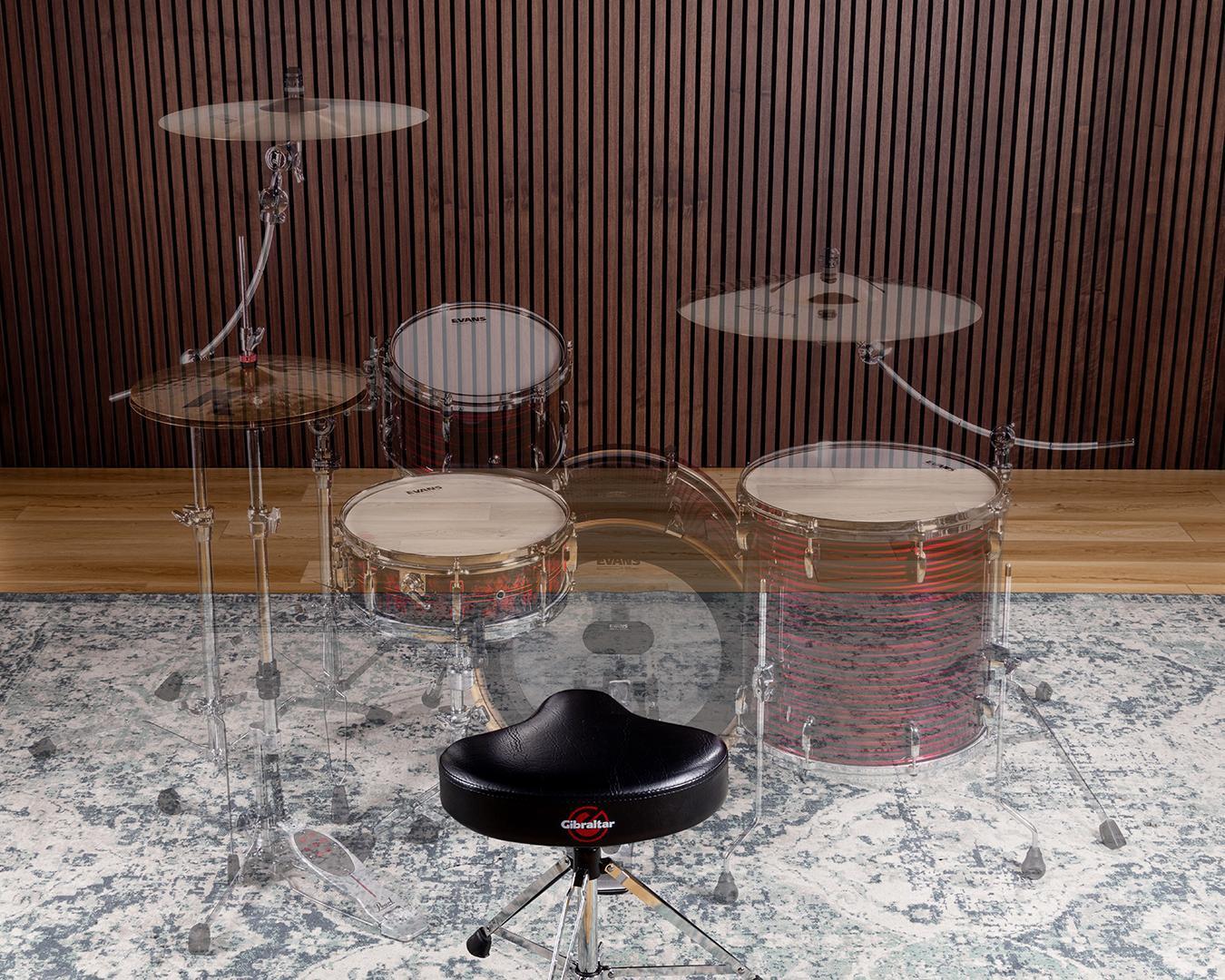
Like any instrument, proper care ensures not only dependable playability but also optimal sound! After you find a kit that speaks your language, refer to our SweetCare guide on drum care and maintenance.
Expanding Your Sound
As you advance on your drumming journey, you may consider adding other elements to your drum set so you have more sounds to play with. Acoustic drum sets can be supplemented with all manner of percussion instruments, including additional cymbals, piccolo snare drums, temple blocks, rototoms, octobans, mini timbales, and even gongs à la Alex Van Halen! Meanwhile, electronic drum sets (even beginner-level sets) likely already have many of these sounds available in their modules for you to play right away. Here are some common additions to drum sets:
- Creative add-ons that expand your sonic palette
- Performance upgrades for advanced techniques
- Practice tools and essentials to shape your personal sound
Cowbell
What it adds: Sharp, rhythmic accents that bring Latin-inspired groove and tonal contrast.
Cowbells are ubiquitous across many styles of music, including Latin genres, Afro-Cuban, rock, funk, and beyond. Cowbells also make a great entryway for you to begin studying Latin and Afro-Cuban rhythms in particular as many of the beginning clave and cáscara patterns found in these genres, when applied to drum set, can be played on an instrument such as a cowbell, woodblock, ride cymbal bell, or even the shell of a drum (usually a floor tom). The size and pitch of cowbells vary greatly. Historically, larger and lower-pitched cowbells have been preferred in rock whereas smaller and higher-pitched cowbells have been preferred in funkier styles. Latin genres run the entire range from small cha-cha cowbells to large mambo cowbells. Of course, there are no hard-and-fast rules in music — use whichever cowbell you think sounds best! The Meinl Percussion Mike Johnston Groove Bell signature cowbell is very popular at Sweetwater for its versatility. Its medium pitch suits a wide range of genres, and its two magnetic mutes allow you to adjust its overtones to better suit whatever your music calls for.
If you want to hear the wide range of cowbells that Sweetwater carries, then check out our cowbell shootout that features 11 of our most popular cowbells.
Double Bass Drum Pedal
What it adds: Faster, more complex bass drum patterns without needing a second kick drum.
Often referred to simply as “double pedals,” double bass drum pedals help you play complex bass drum rhythms with a single bass drum in lieu of having two bass drums in your kit. Double pedals are exceptionally popular among modern progressive rock, metal, and fusion drummers, so if that’s where you feel your drumming is headed, then a double pedal is practically a necessity. Choosing the right double pedal for your style is truly a matter of experimentation, as there are several components and qualities to consider: cams, footboards, drive styles (single-chain, dual-chain, strap), beaters (felt, wood, plastic), left-footed versus right-footed, and more.
- Lets you play double-kick patterns with one bass drum.
- Popular in metal, prog, and fusion styles.
- Drive type and cam shape affect speed and feel.
As always, your Sweetwater Sales Engineer is a terrific source of information when you’re looking to purchase a double pedal for your kit. Of course, you can always add another bass drum to your kit instead! The advantages and disadvantages of using dual bass drums versus double pedals are explored in greater detail in the inSync article “Double Kick Drum vs. Double Kick Pedal: Which Is Right for You?”
China Cymbal
What it adds: Aggressive, trashy accents that punch through heavy or high-energy music.
When it comes to modern rock and metal breakdowns, nothing keeps the pulse better than a China cymbal! This cymbal, sometimes called a “trash” cymbal due to the “trashy” nature of its tone, was one of the first cymbals ever added to the drum set and has long been very popular among drummers in many genres for its ferocious, attention-grabbing sound that simply explodes with bite and energy. China cymbals come in various sizes, including China splash cymbals, and are one of the best additions to your drum set if you want to play some sudden, dramatic accents. Another form of the China cymbal is called a Swish cymbal. This type of cymbal provides a rich wash like a China cymbal but with mounted rivets that vibrate when the cymbal is struck, giving it a “sizzle” effect. Many jazz drummers have employed a Swish cymbal for the pleasant crash and subsequent musical wash that the rivets create, and sometimes they even play it like a ride cymbal. Nowadays, sizzler accessories are available that get you a similar sizzle sound on your cymbals without needing to purchase a separate cymbal.
Splash Cymbal
What it adds: Quick, delicate accents that add color without overpowering the mix.
For those times when you need an accent but hitting a crash cymbal would be too loud and overbearing, opt for the lighter sound of a splash cymbal instead. Splashes are small cymbals generally intended for quick, delicate accents in quieter musical settings. Their diminutive size usually prevents them from standing out too much when things get loud and raucous, but they can be wonderful additions to verses and other softer sections of music. Splash cymbals come in a variety of sizes, though 8-inch, 10-inch, and 12-inch splashes are the most popular. If your drum set is already decked out with a hi-hat, a crash cymbal (or two), and a ride cymbal, then many Sweetwater drummers feel that adorning your kit with a splash cymbal is the next step. These cymbals are an excellent way to add more color to your kit without drastically changing your setup, and they’re also relatively inexpensive.
Cymbal Stack
What it adds: Dry, staccato textures that introduce modern, experimental character.
Compared to the other instruments we’ve covered so far, the cymbal stack may seem new on the scene. However, numerous prominent drummers have been stacking their cymbals for decades, including Louie Bellson, Terry Bozzio, Dave Weckl, Mike Portnoy, and many more. As the name describes, a cymbal stack is literally multiple cymbals (usually two or three) stacked on top of each other. A smaller cymbal normally gets stacked atop a larger one, though this doesn’t have to be the case, of course. Hi-hats, crashes, rides, splashes, Chinas — any cymbal is fair game for stacking! The resulting sound can vary wildly depending on the cymbals used. However, the most popular cymbal stacks at Sweetwater seem to sound slightly trashy, like the China cymbal, but also dry with more of a staccato sound and less sustain. Perhaps unsurprisingly, the cymbal stack tends to feature in many of the same genres that you’ll encounter China cymbals, as well, such as prog rock, metal, fusion, modern jazz, and gospel. You can also make your own cymbal stacks, and it’s an easy, fantastic way to breathe new life into some old (or even broken) cymbals. In fact, Sweetwater has an article to teach you how to do it! Check out “How to Stack Cymbals for New Sounds.”
Practice Pads
What it adds: Quiet practice and muscle-memory training away from your full kit.
Though not technically an addition to your drum set, every drummer should have at least one practice pad to build their chops away from the kit. Ideally, if your focus is drum set, then you’ll have a practice pad setup that simulates your drum set, such as this DW DWCPPADTS5 Go Anywhere Practice Pad Set with Stand or the TAMA True Touch 5-piece Training Kit. At the very least, you’ll benefit from giving your hands something to practice on when you can’t play your kit, when you’re warming up before a gig, or when you just want to give your ears a break. Practice pads come in a variety of sizes and materials ranging from silicone, rubber, Moongel, carbon fiber, mesh, and more. Many practice pads also have multiple surfaces, so you can experiment with different feels and rebounds and practice for different instruments (e.g., drum set versus marching snare). Finally, most practice pads can be mounted to a standard cymbal stand, and some can even be strapped to your leg! Sweetwater has our own exclusive practice pad bundle that gives you a stand, a 6-inch practice pad, and a pair of Vater 5A drumsticks for a comprehensive, all-in-one quiet practice solution. Just add your favorite metronome and method book!
Drumheads
What they add: Major tonal shaping — brightness, warmth, sustain, and feel.
Chances are, your first kit will come preconfigured with a set of drumheads. But when it comes time to swap them out, you need to know what you’re looking for and why it matters! Not only do drumheads provide the striking surface for your drumsticks, but their resonant qualities should complement the tone produced by the shells.
- Batter heads = struck surface; resonant heads = sustain and tone.
- Single-ply = brighter and more open.
- Double-ply = warmer and more controlled.
- Clear = louder attack.
- Coated = softer, darker tone.
- Mesh = ultra-quiet response for volume-sensitive environments.
The two types of drumheads found on nearly every drum are batter and resonant heads. Batter heads are the heads that you strike while resonant heads are on the underside of each drum to promote — you guessed it — resonance! From there, you’ll have your choice of single-ply or double-ply construction. Single-ply drumheads generally offer greater brightness and sustain, which is why almost every resonant head you’ll find boasts single-ply construction. For a hardier construction with a warmer and more controlled tonal response, double-ply drumheads are the way to go.
Every drumhead will also feature either a clear or coated design. Clear heads provide a very forward sound and perform beautifully at high volumes and in live settings. Conversely, coated heads possess a more dampened natural tone, making them fantastic choices for studio work and even softer applications. There are several styles of coated drumheads that serve different musical and aesthetic purposes. For instance, black drumheads help enhance low-end presence across your kit while models such as Remo Fiberskyn and Evans Calftone mimic the feel, look, and response of traditional calfskin drumheads. You can even add some translucent vibrancy with colorful drumheads such as Remo Colortone! Additionally, a coated drumhead is all but required for brush playing (see below), making coated drumheads the most popular choice for snare drums.
Finally, mesh drumheads are perfect for quiet after-hours practice sessions and volume-sensitive environments. For even more clarity on the fine details of drumhead variation, check out our “Why Drumheads Matter” article. And when it comes time to get tuned up properly, our inSync piece “How to Tune Drums” is your ultimate guide!
Drumsticks
What they add: Personal control over attack, dynamics, and playing comfort.
As drummers, our individual preferences will differ — and that’s for the better! Whether you’ve found your feel or have only just embarked on the earliest stages of your drumming journey, choosing the right set of drumsticks is an imperative step toward comfortably and effectively communicating your distinct energy across the kit and through your music. Drumsticks can be separated into four categories: sticks, brushes, mallets, and rods. We’ll take a brief look at their differences, but for extra detail, you can read more about how to pick the perfect pair in our “Drumsticks Buying Guide.”
- Sticks = power & versatility
- Brushes = light textures
- Mallets = soft swelling tones
- Rods = controlled volume with punch
Sticks
Sticks are your standard tools for drum kit. While their differences may seem minute, the subtle variations in construction, size, and shape can affect both how your kit sounds and how the sticks handle in your grip. Hickory sticks hit the sweet spot in terms of weight, shock absorption, and durability. Maple provides lighter playability while oak is commonly used for a weightier feel in hand. For extreme durability, companies such as Ahead, with their aluminum-core synthetic drumsticks, represent the pinnacle of modern drumstick engineering. Additionally, widths can vary significantly to fit the playing styles and hand sizes of all players, from the extra-thin grip of 7As to the universal comfort of 5As to the beefy hold of 5Bs and beyond.
The final considerations for your pair of sticks will be the tip material and shape. Wood tip drumsticks offer a deeper, more traditional tone with excellent natural responsiveness on cymbals and remarkable rebound to match. Wood tips come in multiple shapes that result in slight differences in power and tonal extraction from your instrument, with the most popular profiles being oval, acorn, teardrop, ball, and barrel. The other side of the coin is nylon, which promises better consistency with every strike plus superior durability that makes for a longer-lasting pair — something that drummers in heavier genres appreciate.
Brushes
The feathery touch of drum brushes enables light, low-volume timekeeping. Often made from thin strands of wire, brushes attack with much less intensity and focus than drumsticks and can be swept across the surfaces of drumheads and cymbals, excellently serving the styles of jazz and Latin music.
Mallets
While traditionally seen in concert and keyboard percussion applications, mallets can serve an equally expressive role when played on a drum kit. Like brushes, you’ll notice a huge decrease in attack intensity but with better focus that makes cymbal swelling and marvelously round drum patterning an effortless endeavor for live applications where less volume is needed.
Rods
Rods, rutes, or bundled dowels bring together multiple thin, wooden sticks to form a single striking device. Rods deliver a middle-ground dynamic presence between those of drumsticks and brushes, making them a superb secret weapon for achieving driving grooves that won’t overpower the mix.
Drum Kit Setup
Why it matters: The way your drums are arranged affects comfort, technique, and long-term playing health.
Standard Setup
Since a drum set is made of multiple parts, how you arrange those parts is paramount if you’re going to play comfortably and proficiently. The first order of business is determining your dominant hand. If you’re right-handed, then, according to what we’ll call “standard setup”: the hi-hats should be on your left side, the ride cymbal should be to your right side, and your toms should be ordered from left to right (smallest/highest to largest/lowest).
- Hi-hats sit on your non-dominant side.
- Ride cymbal sits on your dominant side.
- Toms move from high to low across the kit.
- Snare near navel height is a strong starting point.
- Knees roughly at 90° when using pedals.
Alternatively, if you’re left-handed, then your hi-hats should be on your right side, your ride cymbal should be to your left side, and your toms should be ordered from right to left. How high you sit on your throne is largely a matter of personal preference, but having your snare drum approximately level with your navel is considered a good starting point as it enables you to maintain proper technique while also being able to comfortably play rimshots without hitting your thigh. When playing your bass drum and hi-hat pedals, your knees should be approximately at 90 degrees, though this can vary depending on what feels most comfortable to you. Finally, since your hands are (presumably) crossed when playing the hi-hat, you want to make sure that the hi-hat cymbals are high enough for you to comfortably raise your snare drum hand to get a good stroke without your arms touching.
Open Handed Setup
Key difference: Your arms stay uncrossed, which can improve fluidity and reduce physical strain.
We said that your hands would be “presumably” crossing because there is a style of drumming known as “open handed” drumming. The idea behind open handed drumming is that your arms never cross. For example, a right-handed open handed drummer would play their hi-hat with their left hand instead of their right hand like in standard setup. Open handed drummers may also choose not to arrange their toms in the typical left-to-right or right-to-left order. Instead, they may be ordered in a back-and-forth arrangement more like marching tenors. Proponents of open handed drumming claim that this technique facilitates fluidity and economy of motion behind the kit due to the arms never crossing and potentially obstructing each other. Billy Cobham, Simon Phillips, and Mike Mangini are notable drummers who play open handed. Open handed drumming is considered an advanced style of drumming, but it can be fun to experiment with for drummers of all skill levels.
Drum Rugs
Your kit’s foundation: Drum rugs help protect your space, keep your kit from sliding, and provide a consistent playing surface whether you’re at home or on stage.
Last, let’s touch on drum rugs. Even if your practice space is carpeted, we highly recommend a drum rug for two reasons. First, a drum rug will prevent your bass drum spurs and other hardware from damaging your carpet. Second, as you play, your drumsticks will continuously chip and lose shavings of wood, and a drum rug keeps these particles out of your carpet. Plus, gigging drummers at Sweetwater know that a quality drum rug is essential once you get out and start performing. Inevitably, you’re going to encounter a venue with a bare stage or lackluster flooring, and your kick drum and/or hi-hat will slide all over the place. In addition to their awesome utility, drum rugs also come in many different colors, styles, and patterns. This makes them a wonderful way to display your personality and style. Using a drum rug is a simple (and fun!) way to make sure you can play your drums comfortably and consistently no matter where you are.
For a more detailed look at the specifics of setting up your kit, read our SweetCare guide or check out our video below!
Questions to Consider
Still deciding? These quick answers tackle some of the most common questions drummers ask before choosing their first kit.
What Is a Drum Kit vs. Drum Set vs. Shell Pack?
With so much industry jargon to learn, it can often feel deceiving when you see drums listed with different names that offer different quantities of instruments and gear. You will often hear drummers use the terms drum kit and drum set interchangeably, both terms referring to drums that are completely set up and performance ready. However, when shopping for drums, you’re more likely to see the word “set” used when looking at all-inclusive bundles that include not only the drum shells but all the additional components, too, such as a cymbal pack, hardware stands, a bass drum pedal, and a drum throne. Beginner drums are commonly offered in this all-inclusive “set” format because it keeps costs down while reducing the stress of picking out every component when all new drummers really want to do is start playing!
- Drum kit / drum set = full playable configuration.
- Drum set (retail) often means an all-inclusive bundle.
- Shell pack = drums only — no cymbals or hardware.
Conversely, when you read or hear the term shell pack, this refers to a set of drums that includes a kick drum, rack tom(s), and floor tom(s) but not a snare, cymbals, stands, or pedals. Shell packs still provide drumheads and attached shell hardware, such as hoops and lugs, but will require additional purchases (e.g., cymbals, cymbal stands, bass drum pedal, snare drum/stand, etc.) to get fully up and running. Many drums for intermediate, advanced, and professional players are only available in a shell pack format.
What Components Are Included in a 5-piece Drum Set?
Another way drum kits are distinguished is by their shell counts. For example, a 5-piece drum kit means you’ll get five shells — that much is certain. However, the shells provided can vary from company to company and from kit to kit. Most often, a 5-piece drum kit will feature a kick drum, two rack toms, a floor tom, and a matching snare. But this isn’t a set-in-stone rule; it’s always smart to triple-check what is included with your purchase. Instead of four shells and a snare drum, that 5-piece could be five shells, such as a kick drum and four toms without a snare drum. On top of this, any provided hardware that’s unrelated to the shells will likely be a kick-mounted double tom mount and floor tom legs. In the case of full beginner drum sets, it’s a fair assumption that you’ll be looking at 5-piece options that bring all the goodies to the table, including a snare drum.
How Does a Drum Kit Differ from an Electronic Drum Set?
While acoustic drum sets and electronic drum sets are fundamentally played the same way, they differ greatly in other aspects, each with its own pros and cons. The most obvious difference is how they produce sound.
- Acoustic = natural sound, louder, no electronics needed.
- Electronic = quiet practice, headphone monitoring, built-in sounds.
Acoustic drum sets produce sound by relying 100% on the physical impact of a striking tool (drumstick, kick drum beater, etc.) on a drum’s batter head. The resulting sound is shaped by many variables, such as the size and material of the drum shell, the kind of drumheads on the drum, how tightly/loosely the drumheads are tuned, the striking tool used, and where/how the drum is stricken. Acoustic drum sets produce sound without the need for amplification or headphones to hear them.
Conversely, while electronic drum sets may mimic the configuration of an acoustic kit, they produce sound in a much different manner. They use pads that resemble drumheads, which are held in a frame or a drum shell and contain triggers that act like switches to produce a voltage when the pad is struck. These triggers sense how hard the pad is hit (velocity) as well as where the pad is hit (location). This velocity/location data is then communicated to a drum module (sometimes called a “brain”). The module interprets the signal data and assigns a sound sample that corresponds appropriately to the velocity and location of the player’s strike. For you to hear these samples, they must be sent from the drum module’s outputs through audio cables that connect to an interface or mixer. Most electronic drum modules also have audio outputs for monitoring via headphones or an amplifier.
If you’re unsure whether acoustic or electronic drums are best for you, then consult our tailor-made article, “Acoustic vs. Electronic Drum Sets: Which Should You Choose?” If you already know that an electronic drum kit is your preferred choice, then we highly recommend checking out the offerings in Roland’s unparalleled V-Drums lineup — check out our buying guide here to find the best fit!
How Much Should You Spend on Your First Drum Kit?
The short answer? Not a lot! The good news for beginners is that, as opposed to separately purchasing hardware packs, cymbal packs, and all the expensive necessities on top of a pro-grade shell pack, getting started with a full drum set doesn’t have to cost an arm and a leg. In fact, for younger players, finding downsized shells and all-inclusive kits between $300 and $500 is very easy. Plus, Sweetwater offers plenty more beginner- and intermediate-level drum kits between $500 and $1,000 suitable for all ages with a huge number of options in various configurations. Remember, any drum kit is great for learning and advancing your chops, and there’s always room to upgrade down the road once you find your rhythm behind the kit.
To find a great set for a rhythmic youngster, our “Best Drum Sets for Kids” article is a fantastic place to begin!
What Is the Best Beginner Drum Set?
The “best” beginner drum set depends on multiple factors. First and foremost, consider the physical stature of the drummer. For example, children looking to learn drums will initially need a smaller drum set than a teen or adult, who can probably start learning on a standard-size kit. Next, consider the practice space. A drum set that’s going to be in a basement or a garage will likely have more space to span than one destined for a bedroom or an apartment. This naturally leads to the next question: How loudly will they be able to play? Again, a bedroom/apartment drummer will probably need to keep the volume low relative to their basement/garage drumming compatriot. Additionally, consider what the drummer’s goals are. Do they want to become the best drummer they can possibly be, or do they just want to have fun and maybe jam with some friends? Also, do they want to record and/or play live shows at some point? Finally, we must address the necessary question: How much are they willing to spend?
All things considered, many Sweetwater drummers feel that the simplest answer is this: If you’re not limited by space or volume restrictions, then it’s best to learn on an acoustic drum set. However, if you have limited space or need to keep the volume down, then an electronic drum set may be a better fit. The reasons behind this view are manifold, and acoustic and electronic kits each have advantages and disadvantages, which is why many professional drummers own both kinds of kits. You can learn more about these differences in detail by reading this Sweetwater inSync article, “Acoustic vs. Electronic Drum Sets: Which Should You Choose?”
That said, Sweetwater’s most popular beginner acoustic drum sets are currently the Pearl Roadshow 5-piece drum set and the TAMA Imperialstar 6-piece drum set. Regarding electronic kits, the Alesis Nitro Max electronic drum set is our most popular. Please note that if you decide on an electronic drum set, then you’ll also need a pair of headphones or an amplifier to hear what you’re playing — in which case check out our article “5 Best Amps for Electronic Drums.” If you feel that an acoustic drum set is more your jam, then be sure to read our “Best Drum Sets in 2025” article.
If you’re still unsure as to which kit is right for you, then your Sweetwater Sales Engineer is just a phone call away at (800) 222-4700 and can provide you with knowledgeable, personalized advice.
What Should You Look for in an Affordable Drum Set?
Given that beginner drum kits today tend to be all-inclusive, it’s easier than ever to find most, if not all, of what you need with a single inexpensive purchase. What should that include? Your kit should include four shells at a minimum — a kick drum, a rack tom, a floor tom, and a snare drum. Your cymbals should also include, at minimum, a hi-hat pair, a crash cymbal, and a ride cymbal. Now that the instruments are accounted for, ensure that you have a stand for each cymbal in addition to a basket stand for your snare drum. The final pieces of the puzzle are a kick pedal and a drum throne, both of which are often, but not always, bundled with all-inclusive kits. Once again, count each of these crucial components and factor in the prices of any potential missing pieces before following through with your purchase.
- Kick drum
- Rack tom
- Floor tom
- Snare
- Hi-hats, crash, ride
- Stands, pedal, throne
- Sticks
Our “Acoustic Drums Buying Guide” is loaded with helpful insights to make it much easier to track down the right kit for you.
What Is the Difference Between Compact & Full-size Drum Kits?
A “compact drum set” can mean different things to different people, but Sweetwater drummers generally think of a compact drum set synonymously with a “travel drum set.” This type of drum set resembles a standard drum set only with smaller drums and perhaps fewer duplicate elements (toms, cymbals, etc.). Compact/travel drum kits are primarily meant for gigging drummers who need a lighter, more convenient kit for gigs where a standard drum set would be too loud or take up too much space. Compact/travel drum sets can also be useful for children or physically smaller individuals to begin learning to play the drums. The Ludwig Questlove Pocket Kit is an excellent example of a compact/travel drum set. There are other variations on this theme, such as the TAMA Cocktail-Jam and the Toca Percussion KickBoxx Pro. Finally, some drummers choose to make a cajon the centerpiece of their compact/travel drum set, as seen in this Meinl Percussion Cajon Drum Set.
What Is the Best Drum Set Configuration for Beginners?
Whether you choose an acoustic or electronic kit, Sweetwater drummers suggest that beginning drummers start with a 4-piece or a 5-piece drum set with a hi-hat, a ride, and one or two crashes. These configurations strike a wonderful balance between simplicity and variety, enabling you to focus on the fundamentals while also giving you enough sonic options to explore the drum set creatively without feeling overwhelmed. As you progress, you may find that a 4- or 5-piece drum set is really all you need to achieve your musical goals. In fact, many professional drummers across a wealth of genres play 4-piece and 5-piece drum kits.
How Do You Know if a Drum Set Is Right for Your Needs?
Talking to your Sweetwater Sales Engineer at (800) 222-4700 is a great place to start! They can ask you various questions about your drumming goals, preferred music genres, favorite drummers, favorite brands of drums/cymbals (if any), drumming history, available space, budget, and even your favorite colors for drum shells and hardware options. From there, they’ll be able to point you toward your perfect kit. With so many different styles, sizes, and price points available, there’s sure to be one that’s right for you!
What Is the Typical Price of a Drum Set?
At Sweetwater, we pride ourselves on being able to supply drums to percussionists of every background and experience level. So, from beginners to sold-out-stadium performers, you’ll find that prices can vary significantly! However, on average, the most popular drums that we sell range between $500 and $1,700. That range alone comprises more than 30 series among 12 of the industry’s top manufacturers, offering quality drum kits that can easily accommodate beginners, intermediate players, and professionals alike.
Find Your Groove at Sweetwater!
Ready to start playing? Sweetwater can help you take the next step.
We sincerely hope you’ve enjoyed this comprehensive look at the drum set, its components, the ways you can arrange it, and all the fun things you can add to make your kit your own. Are you feeling inspired to grab a pair of sticks and embark on your own drumming journey? Don’t hesitate! An amazing musical adventure awaits you. Your Sweetwater Sales Engineer is ready and waiting to provide you with answers to any questions you may have regarding drumming gear or the art of drumming itself. Give them a call today at (800) 222-4700.