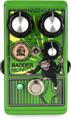
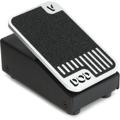
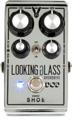
New in stock at Sweetwater Sound: One of the coolest looking little guitar multi-effects pedals we’ve seen, the DOD GS30 comes complete with control pedal and carrying handle. It can do eight effects at a time and has a unique jam-a-long feature that lets you sample and learn your favorite guitar licks. Retail price $219.95.
We’re going to give you the first few responses to our Drum Recording Summit. As explained in the 7/23/99 issue of inSync we’re looking for any tips and techniques you may have used to successfully record drums. We’ve had many amazing responses so far, but we know there’s more out there. Consider this a reminder to get yours in. We’ll publish a bunch more of them next week. These are edited, but they will all ultimately be put up on our Web site in their entirety.
Special Note: We are getting many amazing responses. We’ll be posting them here soon (also stay tuned to the daily inSync issues). Another tip for better results is to be specific. Some responses have had a tendency to offer generic advice such as, “just work with it until it sounds good.” While that’s a very valid point it’s easier to see in this context that it isn’t very helpful. We really want to know specifically what you do that works.
Brook Finlayson
Audio Verité
Gadsden, AL
I use a Pair of Oktava Mk-219’s to mic the whole kit, an RE-20 or M-88 on kick, and SM-57 on snare. I try to get the sound I want with two mics before doing anything else. I position them to get the complete kit in balance with the room.
“3. What mic positions have worked best?” I like one mic a few inches over the rack toms facing the snare and another over the floor tom (just a few inches over) facing the snare. Cool stereo image and in your face sound, but watch out for phasing. Experimenting with stereo miking techniques is a good idea with drums. I mic the kick to beef it up a bit or to give me a signal I can use to blend in a kick sample at mixdown (heresy, I know). The snare mic can also be used to add some meat, but is rarely needed. What it is good for is for sending the snare to reverb without necessarily mixing the dry snare in the mix. Especially useful for rim shots.
I let a good drummer do whatever he needs to make them sound good, but I may use pillows or blankets on the kick drum. I see the drum set as a single instrument, not 8 or 10 or 20, in a single (albeit large) space. I think it helps to keep that in mind.
A good room is crucial to the above miking techniques. My own room has a space with parquet floor, vaulted ceiling (13′), and diffusers where the drums normally go. This is in the main room. I also have a dead corner if I need a more sterile sound.
In the headphones drummers usually want a little more bass, but nothing special. I use a Rane headphone amp and closed headphones, which usually help with the bass.
David KlausnerSweetwater Sound
Regarding the snare: Every studio I have ever worked at used a 57 on snare for rock tunes. There is something about the sound of a 57 on snare that makes you say, “hey, that rocks!” It’s the same reason I keep a Marshall in my studio; because you’ve heard that sound so often on rock records, when you hear a Marshall you think, “This is rock.” Experimenting with very small changes in mic position can yield large changes in sound.
One trick with the 57 is to remove the cheapo transformer (not easy, because the thing is potted in God-knows-what) and hook the capsule right to the XLR. It does reduce the output (not an issue on snare), but also opens up the sound a little while retaining “that character”.
Supplementing with a condenser on the snare side also helps. No matter how hard the drum is hit, the snares are about the same volume, so the harder it is hit, the less snare in the mix, and the mic on the bottom can bring that back up.
I’ve also had great results supplementing with a great shotgun mic suspended 10-12 feet above the snare, and pointed at it. This picks up the whole surface of the drum, but has great rejection of the rest of the kit.
Gregg Petrine
186 STUDIOS
The “sound” from a drum does not come from a close mic position (It is part of the sound). So your choice of mic’s (for close position) becomes a matter of what is solid, not necessarily expensive or pristine sounding, that is why you see such a wide variety of close mics being used. The “sound” of the kit mainly comes from the overhead mic & the room mic. The close position mic is the Last step in the chain. This is a good rule of thumb to follow.
Try this and I guarantee solid results
- Shure 57(close mic snare drum)
- AKG C1000 condenser (overhead position)
- Use two (c 1000’s) if your budget allows (XY stereo position)
- Just work on one drum at a time (start with snare)
- Play with the overhead positioning (this is the most important mic)
- Mix the overhead in a stereo spread and add close position mics for impact.
- You will begin to see and hear what overheads mean to the mix.
- A small amount of reverb added to the close mic drum makes it come alive.